
Why Building Brand Authority Matters More Than Ever
Building brand authority is the process of earning a reputation as a trusted, go-to expert in your industry — so that customers, search engines, and even AI tools recognize and recommend you over competitors.
Here’s a quick breakdown of how to build it:
- Define your niche — be the expert in something specific, not everything
- Create high-quality content — blogs, research, case studies, and thought leadership
- Earn third-party validation — media mentions, awards, testimonials, and reviews
- Stay consistent — same voice, same values, across every channel
- Measure and adapt — track traffic, rankings, mentions, and customer sentiment
Think about the last time you Googled a question and clicked the result you already recognized. That’s brand authority at work.
In today’s digital landscape, audiences are overwhelmed with content. Every niche has thousands of blogs, videos, and social posts competing for attention. The brands that cut through aren’t always the loudest — they’re the most trusted.
And trust isn’t claimed. It’s earned.
Whether you’re a local service business, a B2B company, or an e-commerce brand, authority is the difference between being a commodity and being the obvious choice. It affects your search rankings, your conversion rates, and whether customers come back — or refer their friends.
The good news? You don’t need to be a Fortune 500 company to build it. You just need a clear strategy and the discipline to execute consistently.
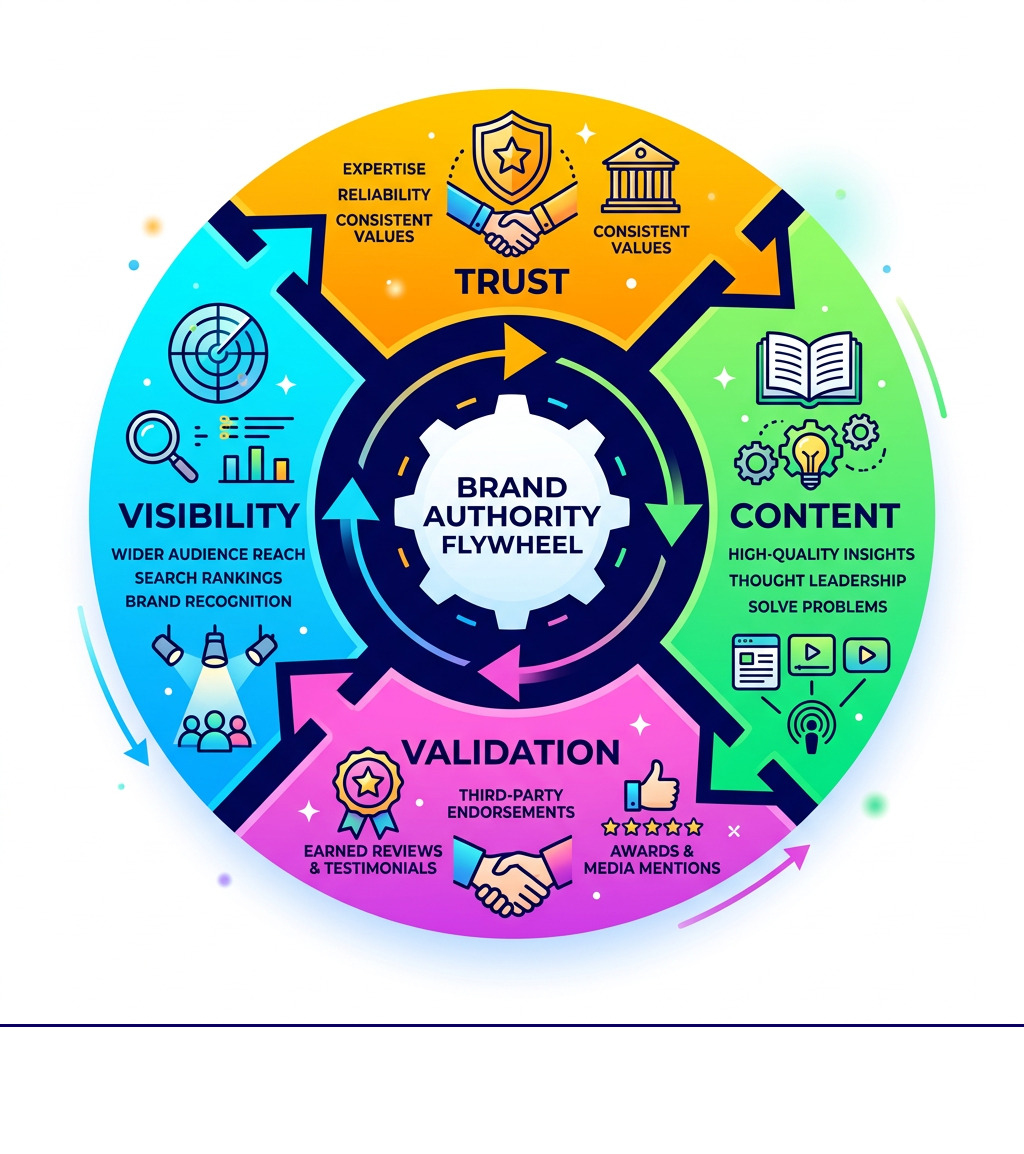
Defining Brand Authority in a Competitive Market
In the wildest corners of the internet, everyone has an opinion. You can find one influencer telling you napping is the secret to success, while another claims napping is for the weak. In this sea of conflicting noise, brand authority is the lighthouse. It is the status a business achieves when it is no longer just “selling a product” but is viewed as a subject-matter leader.
Brand authority is essentially a measure of trust. It is determined by how many people view a brand as the definitive source for answers in their industry. When a brand has authority, its name becomes synonymous with expertise. It’s like being the “cool kid” in school, except instead of having the best sneakers, the brand has the most reliable data and the best customer solutions.
Building this reputation requires a deliberate focus on online-reputation-building. It isn’t just about what a company says about itself; it is about the “trust signals” it sends to the world. These signals include everything from the quality of its blog posts to the way it handles a grumpy customer on social media. In a competitive market, authority acts as a “moat,” protecting a business from competitors who might have lower prices but lack the hard-earned trust of the public.
Brand Authority vs. Brand Awareness and Domain Authority
It is easy to get these terms mixed up, but they serve very different roles in a marketing strategy. Think of them as three different parts of a person’s reputation:
- Brand Awareness is simply familiarity. It’s the “I’ve heard of them” factor. You might know a brand exists, but that doesn’t mean you’d trust them with your bank account or your plumbing.
- Domain Authority (DA) is a technical SEO term. It’s a comparative metric, often predicted by machine learning, that describes how well a website is likely to rank on search engine result pages (SERPs). It’s heavily based on your backlink profile.
- Brand Authority is the emotional and intellectual “weight” of the brand. It is the perception of expertise and trustworthiness.
| Feature | Brand Awareness | Domain Authority | Brand Authority |
|---|---|---|---|
| Primary Goal | Familiarity | Search Ranking | Trust & Expertise |
| Measured By | Reach, Impressions | Backlinks, Root Domains | Mentions, Reviews, Traffic |
| Focus | Being Seen | Being Indexed | Being Respected |
While they are different, they often feed into each other. High-quality content that builds brand authority naturally attracts the backlinks that increase domain authority, which in turn increases brand awareness by putting the brand at the top of search results.
Why Building Brand Authority is Essential for Business Growth
If a business is viewed as an authority, it stops competing on price alone. When people trust a brand as the expert, they are often willing to pay a premium for that peace of mind. This “brand premium” is why some people will pay significantly more for a specific smartphone or a piece of software even when a cheaper alternative exists.
Beyond pricing, authority is a magnet for talent. The best professionals want to work for industry leaders, not obscure followers. Furthermore, it is the ultimate tool for customer retention. A customer who trusts a brand’s expertise is far more likely to return and refer others.
The numbers back this up: research indicates that over 70% of customers trust businesses with positive reviews and testimonials. Social proof is a “must-have staple” because it provides the validation humans instinctively seek. From infancy, humans are trained to follow those in authority. By positioning a business as that expert voice, it taps into a fundamental psychological principle of influence.
The Impact of Authority on SEO and Organic Traffic
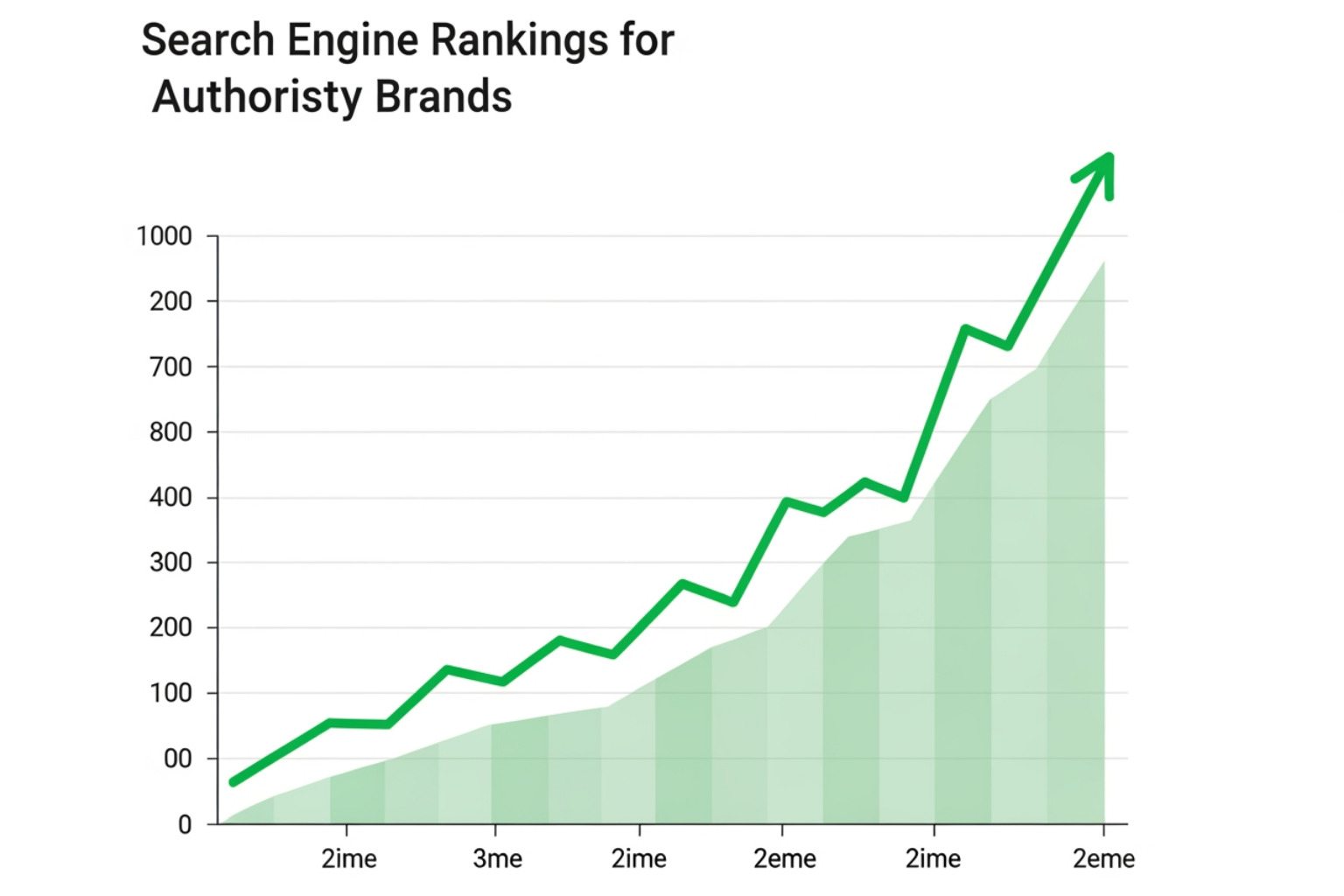
For years, SEO was about keywords and backlinks. But the game has changed. Google’s algorithms now place a massive emphasis on E-E-A-T (Experience, Expertise, Authoritativeness, and Trustworthiness). Search engines aren’t just looking for the most relevant words; they are looking for the most reliable source.
When a business succeeds in building brand authority, its SEO metrics usually skyrocket. Authoritative brands see higher click-through rates (CTR) because users recognize the name in the search results and click on it instinctively. This creates a virtuous cycle: higher CTR signals to Google that the result is helpful, which keeps the brand at the top of the rankings.
This leads to results-driven-seo where the traffic coming to the site is of higher quality. These visitors aren’t just browsing; they are looking for expert guidance, which leads to better user retention and higher conversion rates.
How AI and Generative Search Recognize Building Brand Authority
The rise of AI search engines like ChatGPT, Claude, and Perplexity has added a new layer to the authority challenge. These models don’t just “rank” links; they “cite” sources. AI models act like digital bouncers—they only let in brands they can verify through triangulated trust signals across the web.
According to Princeton research on generative engine optimization, adding citations and statistics to content can improve AI visibility by up to 40%. AI models are trained to prefer sourced claims over “generic fluff.” They look for:
- Entity Recognition: Does the AI know who the brand is and what it specializes in?
- Knowledge Graphs: How does the brand relate to other known experts and topics?
- Citation Patterns: Is the brand being mentioned in reputable publications?
Prominent media mentions account for roughly 27% of the citations used by large language models. This means that strategic-marketing-services-visibility must now include a plan for appearing where AI “listens”—in podcasts, webinars, and high-tier news outlets.
Core Strategies for Building Brand Authority
The biggest mistake a business can make is trying to be everything to everyone. To build authority, a brand must first define its niche. It is much easier to be the “Beyonce” of a specific segment than a generic backup singer in a crowded market.
Niche focus allows a brand to own a specific topic cluster with depth and lived experience. Once the niche is defined, the brand must consistently demonstrate thought leadership. This isn’t just a buzzword; it’s a strategy of providing original, expert-driven insights that solve real customer pain points.

A solid plan for outsmart-the-competition-a-marketers-blueprint-for-success involves mapping out these insights across multiple formats—blogs, videos, and social media—to ensure the brand’s voice is heard wherever the audience hangs out.
High-Quality Content Marketing and Original Research
Content is the “golden egg” of brand authority. However, not all content is created equal. To stand out, a brand should move beyond “me-too” content and focus on “information gain”—providing something new that hasn’t been said a thousand times before.
One of the most powerful ways to do this is through original research and proprietary data. When a brand publishes its own findings—such as a comprehensive industry trends report—it becomes the “primary source.” Other websites then link to that data, journalists cite it, and AI models recommend it. This positions the brand as a pioneer in the field.
For businesses looking to scale this, following the-b2b-content-agency-checklist-dont-get-stuck-with-a-dud is essential. High-quality content must be evidence-based, future-focused, and, most importantly, helpful. Case studies and whitepapers that show real-world results are far more authoritative than a generic “Top 10” list.
Leveraging Social Proof, Awards, and Third-Party Validation
You can tell everyone how great you are, but it carries much more weight when someone else says it. This is why testimonials, case studies, and awards are crucial.
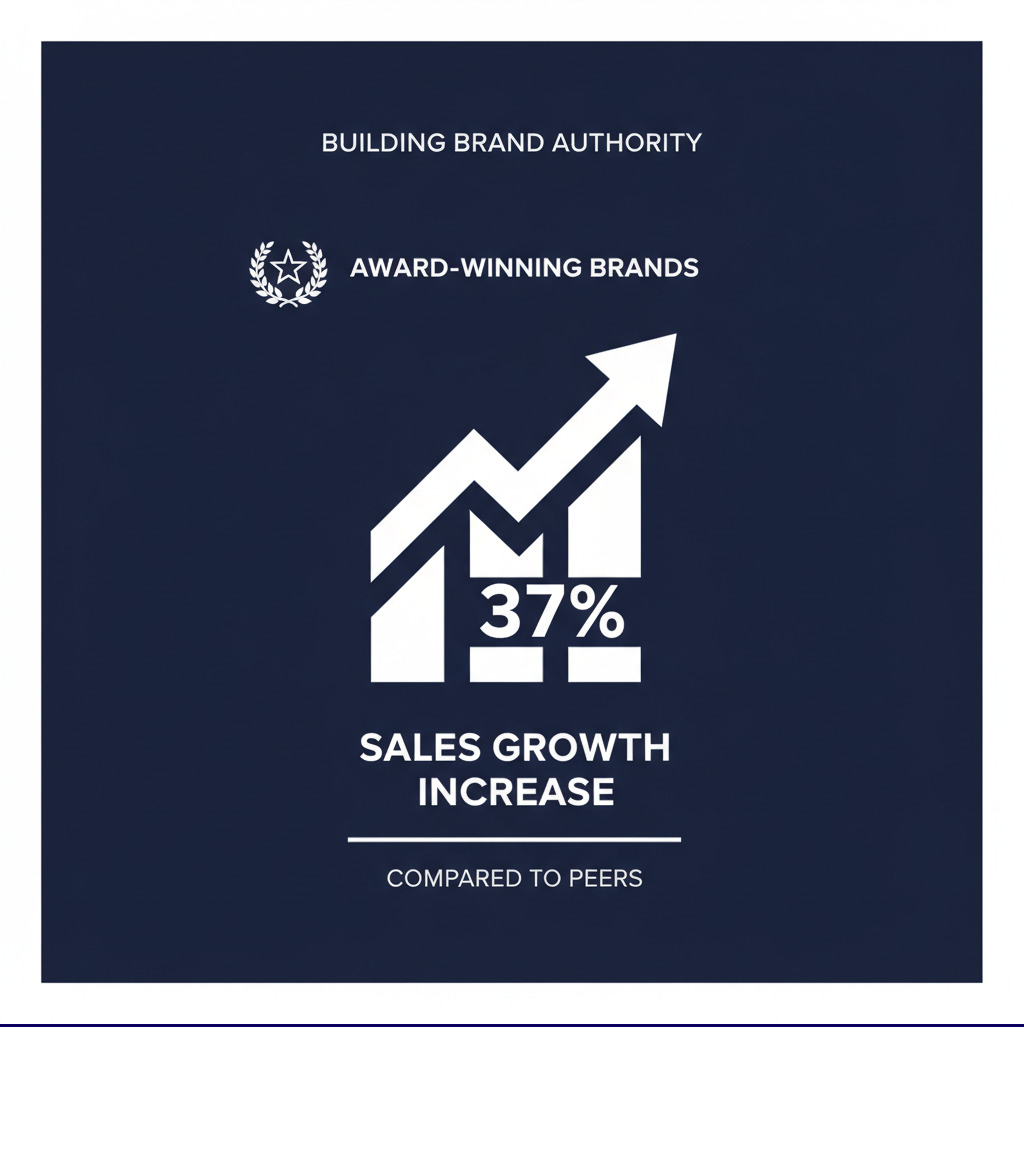
Research on corporate award winners shows that these businesses see 37% more sales growth and 44% higher stock price returns compared to their peers. Even an award nomination can provide a significant credibility boost. It acts as a third-party “seal of approval” that reduces the perceived risk for a new customer.
Managing this effectively requires a dedicated online-presence-manager who can ensure that these accolades are featured prominently on the website, social media, and email signatures. Whether it’s a local “Best of Canton” award or a national industry certification, these symbols of authority matter.
Guest Posting and Media Coverage for Building Brand Authority
If brand authority is a digital “superhero cape,” guest posting and media coverage are the fabric it’s made of. Appearing on reputable third-party sites allows a brand to borrow some of their established authority.
This is often referred to as Digital PR. Tactics include:
- Guest Posting: Writing informative articles for industry-leading blogs.
- Newsjacking: Reacting quickly to breaking news cycles with expert commentary.
- Podcast Appearances: Sharing insights via natural conversation on popular shows.
These efforts don’t just build trust; they are vital for link building services. High-quality backlinks from authoritative news sites or industry journals are like “votes of confidence” in the eyes of search engines.
Measuring Success and Maintaining Consistency
Building brand authority is not a one-and-done project; it’s a continuous discipline. To know if the strategy is working, businesses must track specific Key Performance Indicators (KPIs).
Key metrics include:
- Brand Sentiment: Is the online conversation about the brand positive, neutral, or negative?
- Share of Voice: How often is the brand mentioned compared to its competitors?
- Branded Search Volume: Are more people searching for the brand name specifically?
- Citation Frequency: How often are AI models and media outlets citing the brand?
Using a professional analytics dashboard helps in online-visibility-boost efforts by providing a clear picture of where the brand stands in the market. Consistency is the glue that holds all of this together. If a brand sounds like a professional expert on its blog but like a sarcastic teenager on Twitter, the “voice conflict” will undermine trust.

Common Mistakes to Avoid When Establishing Authority
The road to authority is littered with brands that tried too hard or gave up too soon. One common mistake is producing “shallow content”—articles that are long on words but short on actual value. If a reader finishes an article and feels like they didn’t learn anything new, the brand’s authority takes a hit.
Another pitfall is inconsistent messaging. Brands must “walk the walk.” If a company claims to be an authority on customer service but has a 48-hour response time for emails, the authority vanishes instantly.
When choosing a partner to help with these efforts, businesses should consult the-no-nonsense-guide-to-choosing-your-next-content-marketing-agency. Avoiding “cliché-ridden” content and ensuring a “human-in-the-loop” approach to AI-generated drafts is essential for maintaining a distinctive and authoritative voice.
Frequently Asked Questions about Brand Authority
How long does it take to build brand authority?
Building a solid reputation doesn’t happen overnight. While technical signals like Schema markup can have a quick impact, building “entity authority” through media mentions and original research typically takes 90 to 180 days of consistent effort. It is a marathon, not a sprint.
Can small businesses compete with large brands in authority?
Absolutely. In fact, small businesses often have an advantage in niche markets. By owning a specific topic with more depth and “lived experience” than a large, generalized corporation, a small business in Canton, OH, can become the go-to authority for its local or specialized audience.
What are the best metrics to track brand authority?
The best metrics include branded search volume (people looking for you by name), the quality and quantity of earned backlinks, customer review scores on platforms like Google and Yelp, and “share of model”—how often AI assistants like ChatGPT cite your brand as a source.
Conclusion
Authority is the ultimate currency. It is what turns a casual browser into a loyal customer and a search engine result into a trusted recommendation. By focusing on a specific niche, producing high-quality original research, and consistently earning third-party validation, any business can elevate its status from “just another company” to an industry leader.
At MDM Marketing, we understand that building brand authority requires a blend of data-driven strategy and authentic storytelling. Based in Canton, OH, our team specializes in helping brands transform their online presence through measurable, sustainable growth. With a 93% client retention rate and a focus on transparent reporting, we ensure your brand doesn’t just get seen—it gets respected.
Ready to stop chasing algorithms and start building a reputation that lasts? Contact MDM Marketing for a consultation today and let’s build your authority together.
About Jay McCullough
This author hasn't written a bio yet.