
Why Professional SEO Reporting Matters for Your Agency
White label SEO reports allow agencies to deliver branded, professional SEO performance data to clients without revealing the underlying reporting platform. They help you demonstrate value, build trust, and maintain your brand identity while saving time.
Quick Answer – White Label SEO Reports Include:
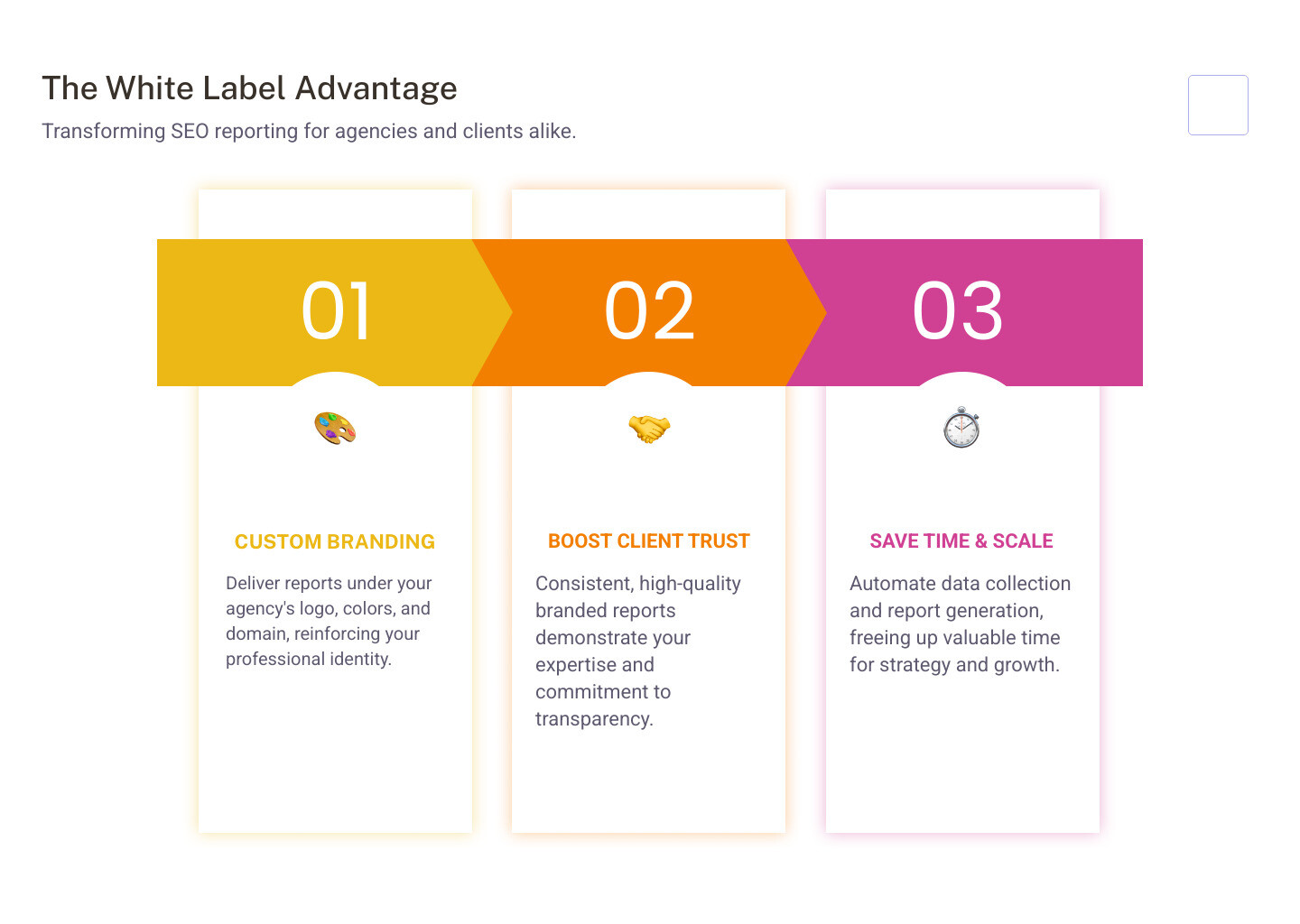
- Customized branding with your logo, colors, and domain
- Automated data collection from Google Analytics, Search Console, and other tools
- Key metrics like organic traffic, keyword rankings, and conversion rates
- Scheduled delivery options (weekly, monthly, quarterly)
- Professional formatting that impresses clients and prospects
Many agencies still waste hours weekly pulling data from multiple platforms, copying it into spreadsheets, and formatting reports manually. This approach is time-consuming and prone to errors and inconsistent branding.
White label reporting solves this by automating data collection and presenting everything under your agency’s brand. Clients see professional reports that reinforce your expertise, while you get to focus on strategy instead of data entry.
Unlike generic reports that may show a tool provider’s logo, white label reports look as if your team created them in-house, complete with your company’s visual identity and personalized insights.
Why Your Agency Needs White Label SEO Reports
Imagine starting your week with professionally branded client reports already sent, instead of scrambling to pull data from multiple platforms. This is the reality for agencies that adopt white label SEO reports.
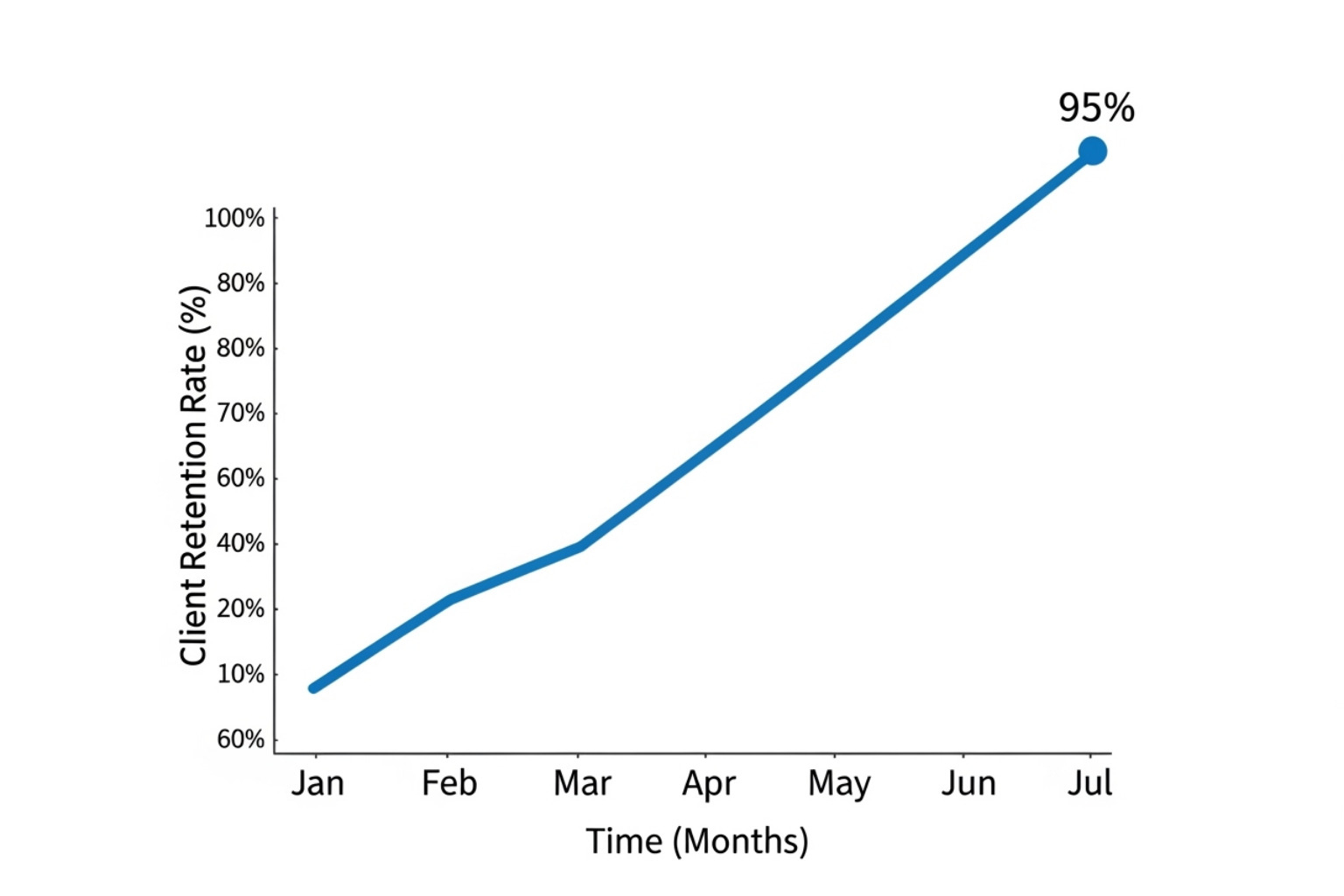
The impact goes beyond professionalism, leading to stronger client relationships, clearer ROI demonstrations, and significant time saved weekly. Over 7,000 agencies have already switched from manual reporting for good reason.
When growing your agency, every hour counts. White label SEO reports don’t just save time; they help you build a professional reputation that keeps clients coming back and referring others. They also free up your team to focus on creating winning SEO strategies, not wrestling with spreadsheets.
If you’re feeling overwhelmed by the reporting workload, you might also want to explore how to Streamline Your SEO Efforts Using Outsourced Services.
Build Client Trust and Boost Retention
Clients often judge your expertise by the professionalism of your reports. When your logo and color scheme appear consistently across every report and dashboard, you build something powerful: trust.
From your client’s perspective, they are investing in your services and want to feel confident they chose the right partner. White label SEO reports eliminate confusion about who is doing the work because everything appears to come directly from your agency.
Transparency becomes your superpower when clients can easily understand their results. Consistent communication through well-branded reports shows you’re organized and professional. This isn’t just about looking good; it’s about fostering loyalty and reducing churn.
When clients see clear, comprehensive data presented under your brand month after month, they develop confidence in your abilities. This connection transforms one-time clients into long-term partnerships.
For more insights on showcasing your agency’s value effectively, check out Strategic Marketing Services Visibility.
Demonstrate Clear ROI and Value
Proving SEO value can be challenging. Results take time, and clients need to see the connection between your work and their business growth.
White label SEO reports excel at connecting SEO activities to business goals. Instead of just showing numbers, you’re telling a story. You’re highlighting key wins, like improved keyword rankings that led to more qualified leads, and justifying marketing spend by showing how organic traffic increases translated into actual sales.
Showcasing performance trends over time is key. For example, a construction client’s local visibility might improve by 150% in six months, resulting in 30% more project inquiries. That’s the kind of clear ROI story that encourages clients to renew their contracts.
Visual data presentation makes complex SEO concepts accessible, even to non-technical clients. When you can show a direct line from your SEO efforts to their bottom line, you become a business partner, not just a service provider.
Speaking of construction companies, you can see how targeted SEO efforts work in practice by reading about SEO for Construction Companies.
Save Time and Increase Efficiency
Automated reporting eliminates late nights spent manually pulling and formatting data from Google Analytics, Search Console, and other tools.
Automated data aggregation is a game-changer. You set up your reports once, and they run automatically. Scheduling reports means your clients receive updates like clockwork—weekly, monthly, or quarterly—preventing last-minute scrambling and missed deadlines.
A centralized dashboard provides one clean, organized interface for all your client data, so you can ditch manual spreadsheets. This leads to fewer errors, more consistency, and significantly less stress.
One agency owner told us: “We were spending 8-10 hours per week just on report creation. Now we spend maybe 2 hours reviewing automated reports and adding strategic insights.” That’s 6-8 hours weekly returned to focusing on strategy, not data entry.
This efficiency boost enables agency scalability. When reporting is automated, you can take on more clients without proportionally increasing your workload, allowing for profitable growth.
To learn more about creating efficient marketing workflows, explore Mastering Effective Web Marketing Strategies for Modern Needs.
Crafting the Perfect Report: Key Components and Customization
A great white label SEO report is more than just charts and numbers; it’s a carefully crafted story showing how your work benefits the client’s business.
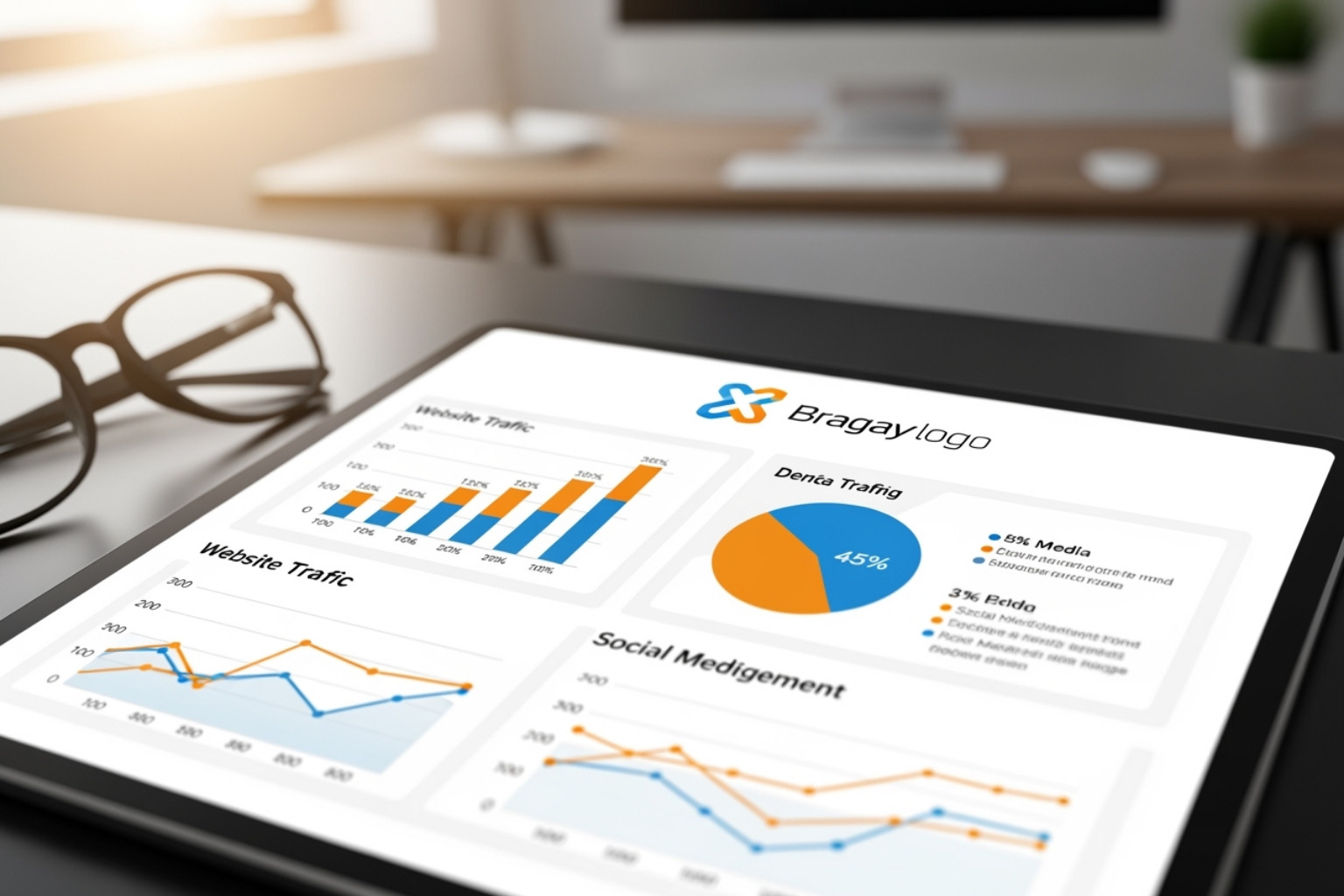
Your report should feel personal and custom-made, not like a generic template. Whether your client is a tech-savvy CEO or less familiar with SEO, your report needs to speak their language while showcasing your expertise.
The best reports provide context, offer smart recommendations, and present insights relevant to business goals. This is how you transform from a vendor into a trusted SEO partner.
Essential Metrics to Include in Your White label SEO reports
Every client wants to know if their SEO investment is working. Focus on metrics that drive business growth, not vanity metrics.
Organic traffic is central to any good SEO report because it shows how many people found your client’s website via search engines. When organic traffic grows, it’s a clear sign your SEO efforts are working.
Keyword rankings tell the story of visibility. As target keywords climb in search results, more potential customers can find your client. Explain what these ranking improvements mean for their bottom line.
Click-through rates reveal if your title tags and meta descriptions are compelling. A high ranking without clicks is like an empty storefront. For businesses building local authority, tracking Google Local Citations is crucial for appearing in local search.
Your backlink profile analysis demonstrates the impact of your link-building efforts. High-quality backlinks from reputable sites boost your client’s authority and rankings. This connects to strategies in Insights on How to Build Quality Backlinks for SEO Growth.
Conversion rates are where SEO meets business results. If organic traffic doubles but visitors don’t convert, something needs fixing. Track how many organic visitors fill out contact forms, make purchases, or call the business.
Domain authority and bounce rates provide additional context about website health. High bounce rates can signal content or technical issues that need attention.
Customizing Reports to Reflect Your Brand Identity
This is where white label reporting shines. Your reports should prominently feature your agency’s brand on every page.
Your logo should be front and center on the cover and in the header of every page. This is professional branding that builds trust and recognition.
Brand colors should be used throughout the report for charts, graphs, and headers. Consistent colors reinforce your agency’s professional brand.
Custom headers and footers provide space for contact information, website links, or a tagline. This keeps your agency top-of-mind and makes it easy for clients to reach out.
Personalized commentary separates professional agencies from report mills. Explain the data with your expert analysis. Celebrate wins and honestly acknowledge challenges. This personal touch shows you care about their success.
White label domain URLs take branding to the next level. Let clients access their dashboard through your agency’s domain, not a generic platform URL. This creates a seamless experience that reinforces your professionalism, as highlighted in Why Us.
Telling a Story with Data: Adding Insights and Next Steps
Raw data is just puzzle pieces. Your job is to assemble them into a clear story for busy business owners.
Start with the big picture by summarizing key developments, like a 40% jump in organic traffic or new top-10 rankings. Lead with wins that matter to their business.
Explain the why behind every number. If rankings dropped, was it due to a Google update or increased competition? If traffic spiked, which content drove that growth? Context provides actionable insights.
Connect every metric to their business objectives. If their goal is lead generation, show how improved local rankings are bringing in more qualified prospects. If they want to enter new markets, show how your content strategy is capturing search volume in those areas.
Outline clear next steps based on current performance. This could be refreshing underperforming content, launching a Contextual Link Building Service for key pages, or expanding keyword targeting.
The best reports position you as a trusted advisor with a clear plan. They turn complex SEO data into business intelligence that drives smart decisions.
Choosing the Right White Label SEO Reporting Tool
The market is full of tools promising the perfect white label SEO reporting solution. Picking the right one isn’t about finding the flashiest dashboard; it’s about finding a platform that fits your agency’s specific needs.
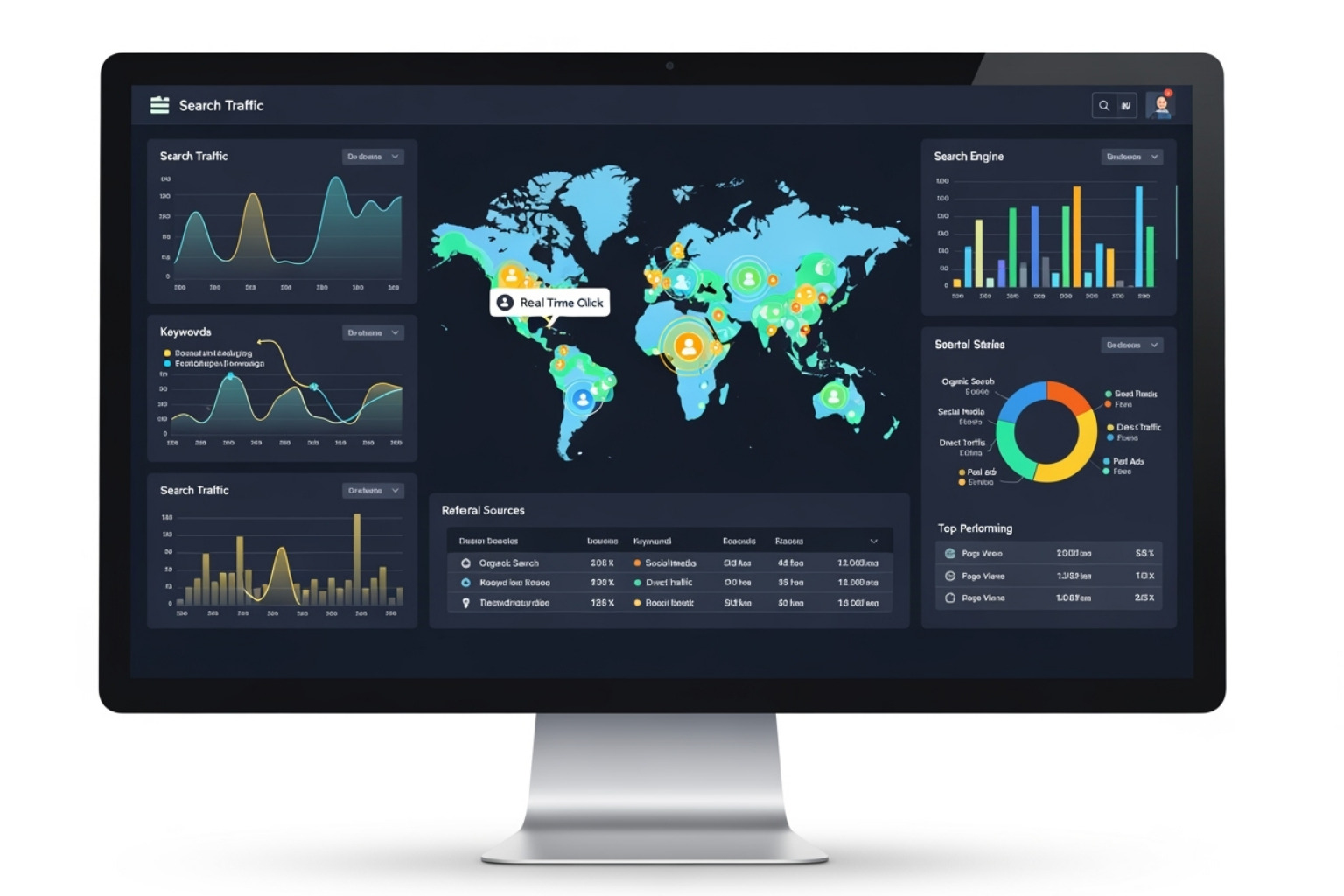
Think of it this way: you wouldn’t buy a sports car to haul construction equipment. The same logic applies to reporting tools. The goal is to find a platform that simplifies your workflow, improves presentations, and scales with your agency.
Assessing Your Agency’s Needs and Budget
Before you get impressed by fancy features and slick demos, honestly assess what your agency needs. This crucial first step will help you make a smart decision.
Start by considering your number of clients. Are you managing five local businesses or fifty enterprise accounts? This is important, as some platforms charge per client or per report, which can become expensive as you grow.
Next, think about your required integrations. Your reporting tool must play nicely with the data sources you rely on, like Google Analytics and Search Console, backlink analyzers, or local SEO platforms. A tool that can’t integrate with your essential sources creates more work.
Scalability for growth is another key factor. A basic tool might work now, but will it handle a doubled client base next year? Look for platforms that can grow with you, offering more advanced features and higher data limits as you expand.
The pricing model also deserves careful attention. Some tools charge per user, others per report, and some by the number of client dashboards. Understanding these pricing structures prevents future surprises. For insights into how different solutions can support various business models, check out our Use Cases.
Key Features to Look For in a Reporting Platform
Once you have a clear picture of your needs, you can evaluate platforms based on what they deliver. Focus on features that solve your agency’s real problems.
Integration with key data sources is non-negotiable. Your platform must connect seamlessly with Google Analytics, Google Search Console, and other daily SEO tools. Automation only works if the tool can access your data.
Automation and scheduling capabilities are essential. You should be able to set up a report once and have it deliver automatically on a schedule (e.g., weekly or monthly). Manual data pulls defeat the purpose.
Look for a high level of customization. Beyond just adding your logo, can you adjust color schemes, fonts, and layouts? Can you create custom widgets for the metrics your clients care about most? More control means more professional reports.
Consider whether you prefer interactive dashboards versus static PDFs. Interactive dashboards allow clients to explore data, while PDFs offer a formal, shareable option. The best tools offer both formats.
Evaluating Ease of Use and Customer Support
A powerful tool is worthless if your team can’t use it or if support is lacking. Ease of use and solid customer support are essential.
A user-friendly interface can save your team hours of frustration. When evaluating platforms, consider if a new team member could create a report without extensive training. A clunky interface during a demo is a major red flag.
The onboarding process reveals a company’s commitment to customer success. Quality providers offer guided tours, tutorials, and dedicated onboarding specialists to get your team up to speed quickly.
Training resources are crucial for long-term success. Look for platforms with detailed help documentation, video tutorials, and regular webinars to help your team master features and troubleshoot issues.
Responsive customer support is a lifesaver. The best providers offer multiple support channels (live chat, email, phone) with fast response times. Some platforms boast customer satisfaction rates around 95% with average response times under three minutes for live chat.
A smooth tool lets you focus on strategy, while a clunky one creates stress and wastes time. For insights into managing user access, you might find it helpful to understand issues like Why is My Google Business Profile Only Visible to Managers?.
Frequently Asked Questions about White Label SEO Reports
Agencies exploring white label SEO reports often have questions about implementation, client relationships, and best practices. Here are answers to the most common concerns.
How do white label reports help with upselling services?
White label SEO reports are an excellent tool for upselling and growing client accounts. By presenting comprehensive performance data, you can naturally identify new opportunities.
Identifying opportunities becomes simple. For example, if local keywords perform well but national terms lag, you can propose expanded content strategies or more aggressive link building.
Showcasing gaps in strategy is another powerful approach. If a report reveals technical SEO issues are hindering a strong content strategy, you’re providing helpful, data-backed advice, not a sales pitch.
Recommending additional services feels authentic when backed by performance metrics. If organic traffic is growing but conversions are flat, you can naturally discuss conversion optimization or landing page improvements.
Using data to justify new investments transforms the conversation. For construction companies, showing strong organic performance but weak local visibility naturally leads to discussions about Local SEO for Construction Companies.
You’re not selling; you’re consulting. The reports highlight opportunities that genuinely benefit your clients.
Can I create different report templates for different clients?
Yes. A key advantage of white label SEO reports is the flexibility to create different templates for various clients and situations.
Template creation is straightforward in most modern tools. You can create templates for different industries, client sizes, or reporting needs, such as a “monthly executive summary” for CEOs and a “detailed technical report” for marketing managers.
Customizing KPIs per client is essential. An e-commerce client cares about conversion values, while a local business focuses on map pack positions and calls.
Tailoring reports to the audience makes a huge difference. C-suite executives want to see ROI and growth trends, while marketing managers need actionable data. Tailor your reports to speak their language.
Saving templates for efficiency allows you to reuse a perfect template for similar clients. This saves setup time and ensures reporting consistency.
The goal is to make each client feel their report was crafted just for them.
How often should I send SEO reports to clients?
The ideal frequency depends on client needs and project phase, but some general guidelines apply.
Reporting frequency should match the pace of your work and client expectations. Weekly reports are ideal for new projects or rapid changes, keeping clients informed and allowing for quick adjustments. Monthly reports are the standard for most established clients, providing enough time for meaningful data changes while maintaining engagement.
Quarterly reports are perfect for strategic reviews, diving deeper into trends, competitive analysis, and long-term planning.
Aligning with client expectations is crucial. Discuss reporting frequency during onboarding to set expectations early.
Project milestones like website launches or algorithm updates may warrant special reports with specific insights.
For agencies working with contractors, weekly reports during busy seasons can be valuable for demonstrating ongoing value. Learn more about managing these relationships through a Contractor SEO Agency approach.
Consistency is key. A reliable reporting schedule builds trust and long-term client relationships.
Conclusion
White label SEO reports are more than data presentations; they are strategic assets that can transform your agency’s operations and growth. Think of them as your secret weapon for turning complex SEO metrics into compelling client stories.
When you adopt these reporting solutions, you improve your agency’s capabilities. You’ll boost client trust and retention by delivering professional, branded reports that make clients feel valued. Your reports become a testament to your expertise, building client confidence.
The ability to demonstrate clear ROI becomes effortless when your data tells a coherent story. Clients will see how your SEO work translates into business growth, rather than being confused by spreadsheets.
Perhaps most importantly, you’ll achieve unparalleled efficiency. Reclaim hours spent on manual data collection and dedicate that time to strategy. This allows your team to focus on creating effective SEO campaigns that deliver results.
At MDM Marketing, we’ve seen how the right combination of technical SEO expertise and compelling storytelling can transform businesses. Based in North Canton, OH, we understand that great white label SEO reports aren’t just about presenting numbers—they’re about crafting narratives that inspire action and demonstrate value.
The shift to white label reporting is about elevating your agency’s professionalism, expanding your capacity, and increasing profitability. Every report reinforces the client’s decision to choose your agency.
Ready to transform your client relationships and open up new levels of growth? A data-driven approach combined with compelling content makes all the difference. Explore our outsourced SEO services and find how we can help you deliver the kind of branded excellence that keeps clients coming back for more.
About Jay McCullough
This author hasn't written a bio yet.