Why Contractors Are Turning to PPC Marketing to Win More Jobs
PPC marketing for contractors is a paid advertising strategy where you only pay when someone clicks your ad. It puts your business at the top of search results instantly, targeting homeowners actively searching for services like “emergency plumber near me” or “kitchen remodeling contractor.”
Key benefits of PPC for contractors:
- Immediate visibility – Your ads appear at the top of search results within hours, not months
- Targeted reach – Show ads only to people in your service area searching for your specific services
- Cost control – Set daily budgets and only pay for actual clicks
- Measurable ROI – Track every lead and calculate your return on investment
- Local targeting – Reach customers in specific ZIP codes or within a radius of your location
The construction industry is competitive, and traditional marketing like door hangers is fading. Today’s homeowners search for contractors on Google, compare options, and often book within 24 hours.
PPC advertising lets you appear directly in front of these high-intent customers at the exact moment they need your services. According to industry data, PPC campaigns convert 50% better than organic traffic alone, and Google search ads deliver an average ROI of 200%. For contractors, this means spending $1 on ads can generate $2 in revenue.
The challenge is that many contractors waste money on poorly structured campaigns by targeting the wrong keywords, using generic homepages, or failing to track results.
This guide breaks down everything you need to know about PPC marketing for contractors. You’ll learn how to choose the right platforms, target high-intent keywords, write ads that convert, and measure real results. Whether you’re running your first campaign or looking to improve existing ads, this blueprint will help you generate more qualified leads and grow your business.
Why PPC is a Game-Changer for Your Contracting Business
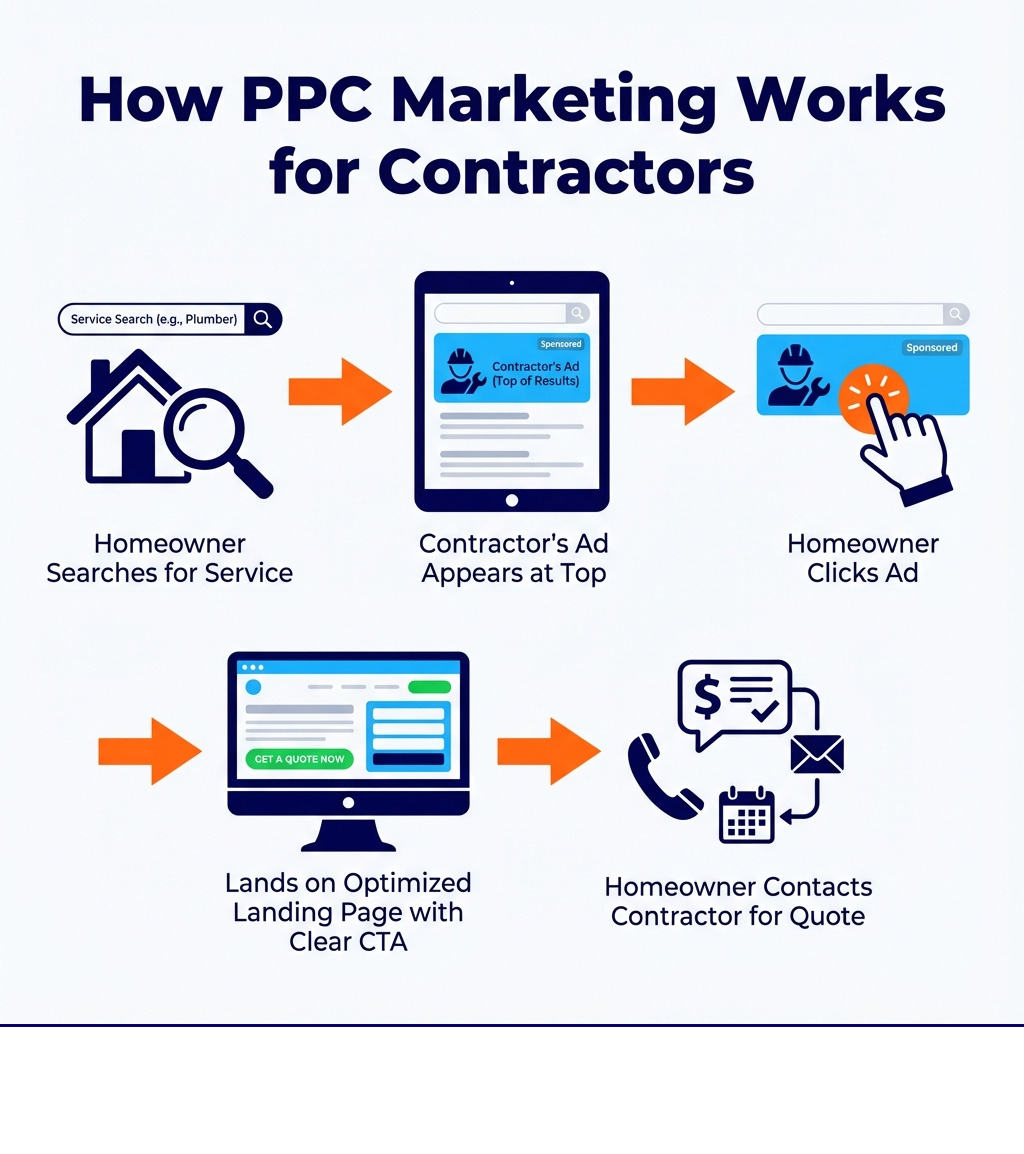
In today’s digital landscape, homeowners no longer use the Yellow Pages; they use search engines for everything from “roof repair near me” to “best kitchen remodeler in Canton, OH.” If your business isn’t visible online, you’re missing potential clients. That’s why PPC marketing for contractors is a crucial strategy for success.
PPC offers immediate visibility that traditional methods can’t match. It puts your ad at the top of Google search results the moment a homeowner searches for “emergency plumber,” bypassing the slow climb of organic rankings to reach high-intent customers directly.

While SEO builds long-term authority, PPC provides instant results. This targeted approach ensures your marketing dollars reach people who are already in need, leading to higher conversion rates. PPC campaigns can convert 50% better than organic traffic, and for every $1 spent on Google search ads, contractors can see an average ROI of 200%. PPC also boosts brand awareness by up to 80%. Even if users don’t click, seeing your company name builds recognition and trust, making them more likely to remember you later.
Understanding the Core Benefits of PPC
Investing in PPC marketing for contractors offers a suite of benefits custom to the unique needs of the industry:
- Cost Control: With PPC’s pay-per-click model, you set a daily budget and only pay when someone clicks your ad. This allows for precise financial control.
- Measurable Results: Every aspect of your campaign is tracked, from clicks to conversions. This data enables you to see what’s working and optimize for maximum ROI.
- Local Targeting: PPC platforms excel at local targeting, letting you show ads only to customers in your service radius, specific ZIP codes, or neighborhoods. This eliminates wasted ad spend.
- Competitive Advantage: PPC levels the playing field, allowing smaller contractors to compete with larger firms by strategically bidding on keywords.
- Fast Lead Generation: PPC campaigns are designed to quickly capture high-intent, urgent leads (like for a burst pipe), filling your pipeline with qualified prospects.
- Increased Brand Awareness: Repeated exposure to your brand through PPC ads builds familiarity and trust with potential clients.
Types of PPC Campaigns for Contractors
PPC isn’t a one-size-fits-all solution; it encompasses various campaign types, each with its own strengths. Here’s a breakdown of the most effective types for contractors:
| Campaign Type | Platforms | Best Use Cases | Typical Cost Model |
|---|---|---|---|
| Search Ads | Google Ads, Bing Ads | Appearing at the top of search results for high-intent queries (e.g., “HVAC repair Canton OH,” “kitchen remodel cost”). Ideal for capturing urgent needs and specific service searches. | Cost-Per-Click (CPC) |
| Display Ads | Google Display Network, social media | Building brand awareness and reaching potential customers who aren’t actively searching but might be interested (e.g., showing home renovation ads on lifestyle blogs or social media feeds). Great for retargeting and visual storytelling. | CPC or Cost-Per-Mille (CPM – cost per thousand impressions) |
| Video Ads | YouTube Ads, social media | Showcasing your craftsmanship, team, and customer testimonials. Excellent for building trust and demonstrating expertise (e.g., a short video walkthrough of a completed project). | Cost-Per-View (CPV) or CPM |
| Social Media Ads | Facebook Ads, Instagram Ads, LinkedIn Ads | Targeting specific demographics (e.g., homeowners in a certain income bracket interested in home improvement), remarketing to website visitors, and generating leads through visually engaging content. LinkedIn can be effective for B2B commercial contractors. | CPC or CPM |
| Local Service Ads (LSAs) | Appearing at the very top of Google Search results with a “Google Guaranteed” badge. Ideal for home service providers as it’s a pay-per-lead model, connecting you directly with customers who call or message you from the ad. | Cost-Per-Lead (CPL) | |
| Call-Only Ads | Google Ads | Maximizing phone calls, especially for urgent services. These ads appear primarily on mobile devices and allow users to call your business directly with a single click, bypassing your website. | CPC |
For contractors, Search Ads and Local Service Ads are often the most effective for capturing immediate, high-intent leads. Display and Social Media Ads can be powerful for building brand awareness and nurturing leads over time. You can learn more about specific PPC services and strategies by visiting our dedicated page: More info about PPC services.
Choosing the Right PPC Platform
Selecting the right platform is crucial for your PPC marketing for contractors strategy.
- Google Ads: As the king of PPC, Google is where most clients begin their search. It allows you to target high-intent users with search ads, reach broad audiences with display ads, and showcase work on YouTube. Its geo-targeting is especially effective for local services.
- Microsoft (Bing) Ads: Don’t overlook Bing Ads. It powers searches on Yahoo and MSN, often has an older audience, and lower competition can mean more cost-effective clicks. It’s a smart place to replicate successful Google campaigns.
- Facebook & Instagram Ads: These platforms are powerful for visual storytelling and targeted segmentation. Showcase before-and-after photos, run video ads, or target homeowners by interests or income. They are excellent for brand building and generating leads for project-based services.
- Local Service Ads (LSAs): A must-have for home service contractors, LSAs appear at the top of Google with a “Google Guaranteed” badge, building trust. You pay per qualified lead, not per click, making it highly efficient. To maximize performance, ensure your Google Business Profile is fully optimized.
The Blueprint for Effective PPC Marketing for Contractors
Effective PPC marketing for contractors requires a strategic approach that goes beyond simply throwing money at ads. It involves meticulous planning, creative execution, and continuous optimization.
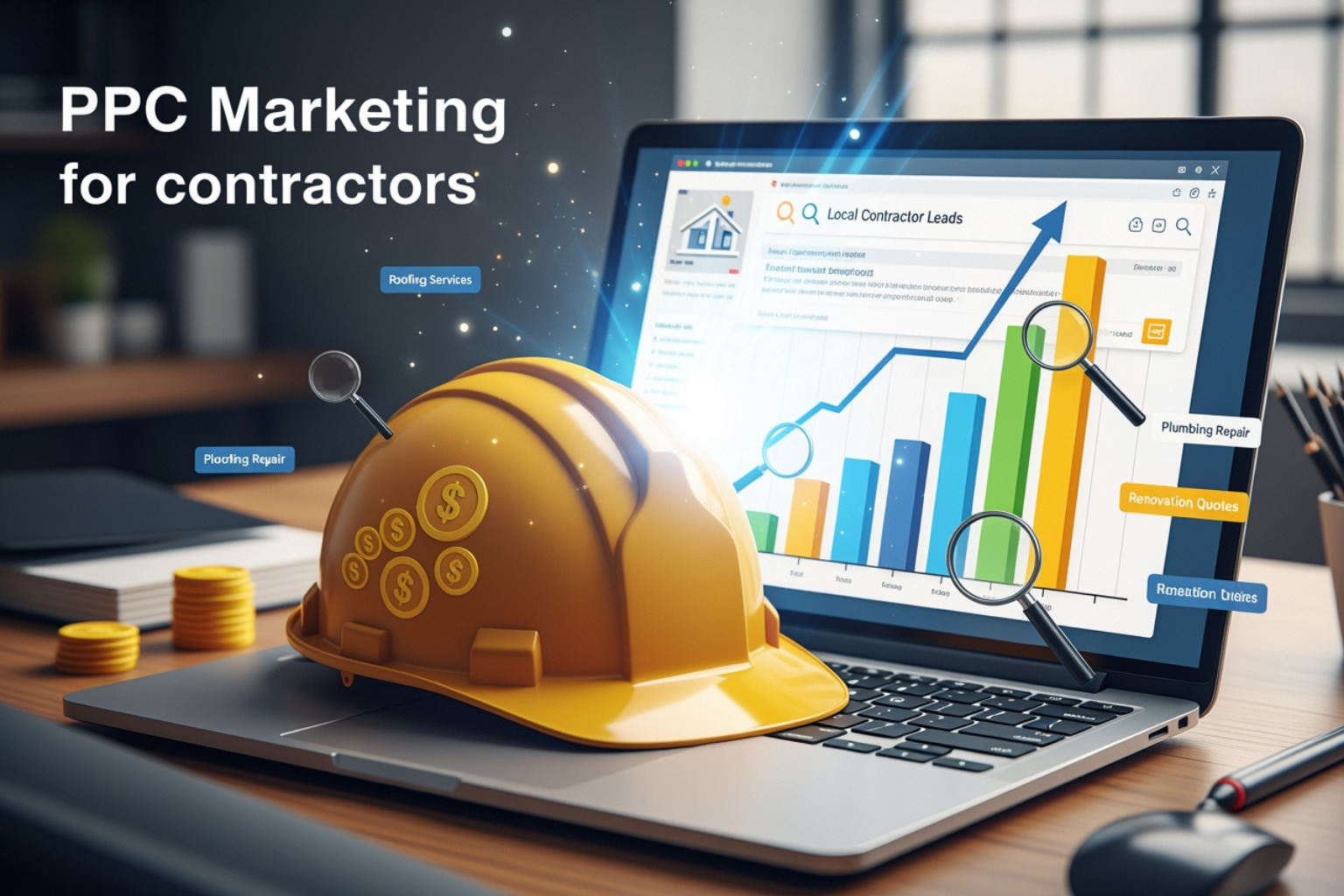
Google Ads operates like an auction, showing ads based on a bid amount and Quality Score. Your Quality Score reflects the relevance of your keywords, ad copy, and landing page. A higher score can lead to better ad positions at a lower cost.
Mastering Keyword Research and Targeting
Keyword research is the bedrock of any successful PPC campaign. For contractors, it’s about identifying exactly what potential clients are typing into search engines.
- High-Intent Keywords: These phrases (e.g., “HVAC repair Canton, OH”) indicate a user is actively looking to hire and ready to engage.
- Commercial Intent Keywords: These often include terms like “contractor,” “service,” “company,” “quote,” or “cost.” For example, “commercial roofing company” or “bathroom renovation cost.”
- Long-Tail Keywords: Longer, specific phrases (e.g., “install hardwood floors in living room Canton, OH”) have lower search volume but higher conversion rates due to clear intent and less competition, making them a cost-effective strategy.
- Negative Keywords: Excluding irrelevant search terms is crucial. Negative keywords (e.g., “DIY,” “jobs,” “free”) prevent your ads from showing for irrelevant searches, saving money and preventing wasted clicks. Find more guidance on [Using negative keywords](https://support.google.com/google-ads/answer/2453972?hl=en#:~:text=Negative%20keywords%20let%20you%20exclude,return%20on%20investment%20(ROI).
Keyword Research Tools: Tools like Google’s Keyword Planner tool are invaluable for finding relevant keywords, estimating search volumes, and understanding bid ranges. Other marketing tools can also help you analyze competitor keywords and identify new opportunities.
Crafting Ad Copy That Converts
Once you have your keywords, the next step in PPC marketing for contractors is to write compelling ad copy that grabs attention and encourages clicks. Your ad is often the first interaction a potential client has with your business, so it needs to stand out.
- Highlight Unique Selling Propositions (USPs): Highlight what makes you different: 24/7 emergency service, guarantees, or local experience. For example, “24/7 Emergency AC Repair – Licensed & Insured!”
- Use Strong Calls-to-Action (CTAs): Tell people exactly what you want them to do. “Call for a Free Estimate,” “Schedule Your Consultation Today,” or “Get a Quick Quote” are clear and action-oriented.
- Address Pain Points: Speak directly to the customer’s needs or problems. “Leaky Roof? We Offer Fast, Reliable Repairs” is more effective than a generic ad.
- Include Local Cues: Reinforce your local presence with “Canton’s Top Remodelers” or “Serving Stark County Since 1995.”
- Leverage Ad Extensions: Ad extensions are crucial for adding extra info like your phone number, location, and service links. They make your ad larger and more informative, increasing visibility and click-through rates.
AI for Ad Copy: If you’re short on time or struggling with writer’s block, consider using AI. Generative AI tools can help you craft engaging ad copy that aligns with your brand guidelines, generating multiple variations to test.
Designing High-Converting Landing Pages
Getting a click on your ad is only half the battle; the other half is converting that click into a lead. This is where your landing page comes in. A landing page is a standalone web page designed specifically for your PPC campaign, with a single goal: conversion.
- Headline-Ad Message Match: Your landing page headline must match your ad’s message. If the ad promises a “Free Roof Inspection,” the landing page must reinforce it to prevent high bounce rates.
- Clear Call-to-Action (CTA): Just like your ad, your landing page needs a prominent, unambiguous CTA. “Request a Free Quote,” “Call Now,” or “Book Your Service” should be easy to find and click.
- Trust Signals: Build trust on high-value projects by including testimonials, ratings, certifications, awards, and photos of your team or completed work.
- Mobile-First Design: This is non-negotiable. With over 60% of home-service searches happening on phones, your landing page must be mobile-optimized, load quickly, and have click-to-call buttons.
- Fast Load Speed: A slow-loading page will kill your conversion rates. Users expect instant gratification; if your page takes more than a few seconds to load, they’ll likely hit the back button.
A polished, user-friendly landing page can turn casual clickers into committed clients. We’re proud of the results we’ve achieved for our clients; you can See our work and how we help businesses convert clicks into customers.
Advanced Strategies to Maximize ROI
Once you have the basics of PPC marketing for contractors down, it’s time to explore advanced strategies that can significantly boost your return on investment. These tactics help you refine your targeting, optimize your ad spend, and re-engage interested prospects.
Dominating Your Service Area with Geo-Targeting
For contractors, local success hinges on reaching the right people in the right place. Geo-targeting allows you to do just that.
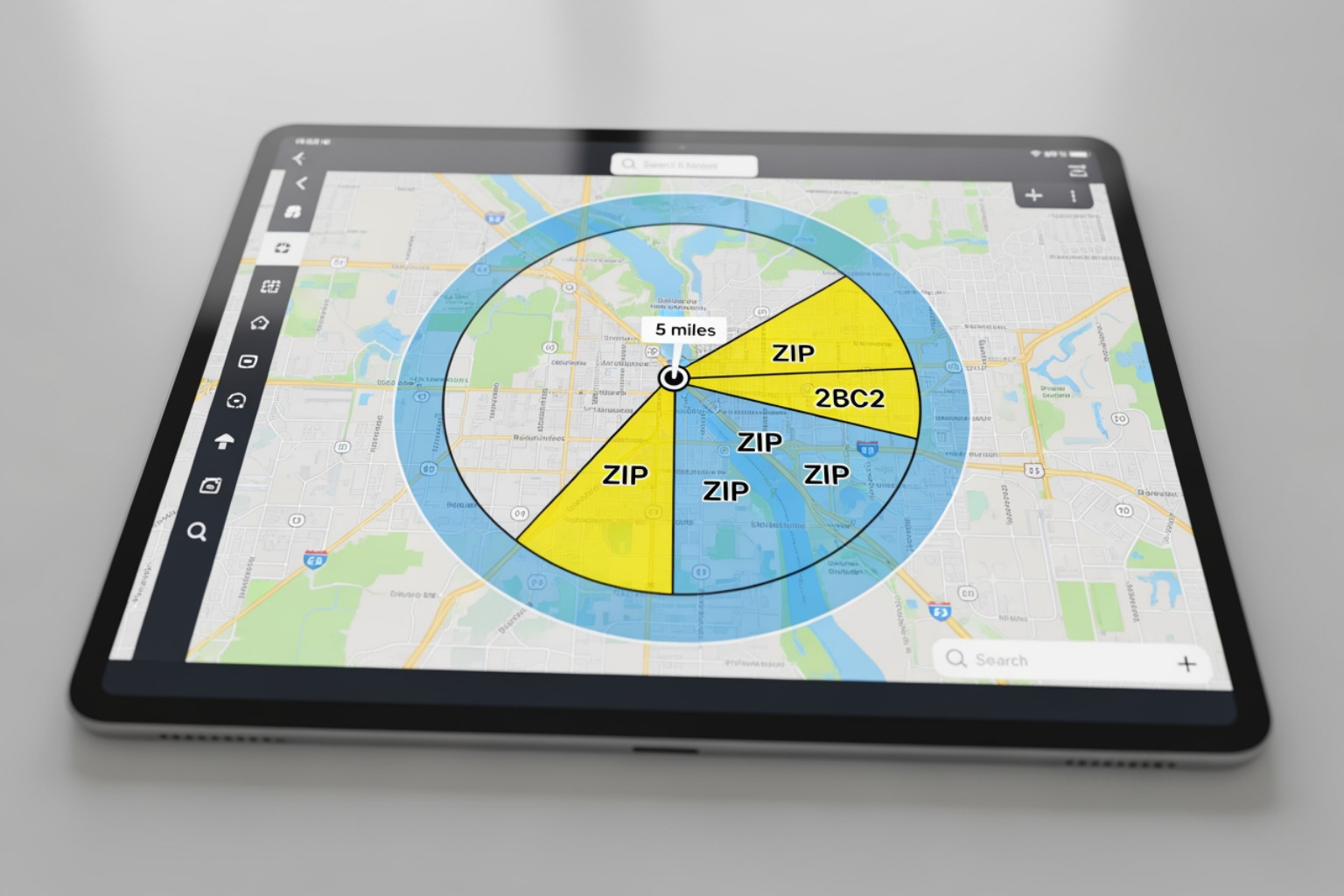
- Radius Targeting: This allows you to show your ads to users within a specific radius (e.g., 5, 10, or 20 miles) of your business location. It’s perfect for service businesses that operate within a defined travel distance.
- ZIP Code Targeting: For even more precision, you can target specific ZIP codes or cities where you know your ideal customers reside or where demand for your services is high. For example, if you’re a high-end remodeler, you might target affluent ZIP codes in the Canton, OH area.
- Location Exclusions: Just as important as targeting specific areas is excluding irrelevant ones. If there are parts of your state or regions adjacent to your service area where you don’t offer services, exclude them to prevent wasted clicks and maximize your budget efficiency.
Effective Setting up location targeting is crucial. Combining precise geo-targeting with local keywords (e.g., “Canton HVAC service”) ensures your ads are seen by those most likely to become paying customers. This strategy also complements your broader Local SEO for Construction Companies efforts.
Smart Bidding and Budget Optimization
Optimizing your ad spend is critical to maximizing your ROI in PPC marketing for contractors. Google Ads offers various bidding strategies to help you achieve your campaign goals:
- Maximize Clicks: This strategy aims to get you as many clicks as possible within your budget. It’s often a good starting point for new campaigns to gather data and understand traffic volume.
- Target CPA (Cost Per Acquisition): Once you have sufficient conversion data, Target CPA allows you to tell Google your desired cost for each conversion (e.g., a new lead). Google’s AI then optimizes bids to achieve that target, making your lead acquisition predictable. Google recommends at least 30 conversions in 30 days for this to work effectively.
- Manual CPC (Cost-Per-Click): This gives you complete control over your bids at the keyword level. It’s ideal for experienced advertisers who want to bid higher on high-performing keywords and lower on less effective ones.
- Ad Scheduling: Don’t forget to schedule your ads! If you’re a residential contractor, it might make sense to show ads during typical homeowner hours (e.g., 7 AM – 9 PM). If you’re a commercial contractor, targeting business hours (e.g., 7 AM – 6 PM, Monday-Friday) will be more effective.
Adjusting your budget and bidding strategy isn’t just about spending more; it’s about Spending your budget smarter.
Powerful Ad Formats: Call-Only and Retargeting Ads
Two ad formats are particularly potent for contractors seeking immediate engagement and higher conversion rates:
- Call-Only Ads: These ads are specifically designed to drive phone calls. They appear predominantly on mobile devices, and when a user clicks the ad, it directly initiates a call to your business. For urgent services like emergency plumbing, HVAC repair, or roof leaks, call-only ads are incredibly effective. They bypass the need for a landing page, connecting high-intent users directly to your team.
- Retargeting Ads (Remarketing): Most website visitors won’t convert on their first visit. Retargeting allows you to show ads specifically to people who have previously visited your website but didn’t take action. This keeps your brand top-of-mind and encourages hesitant leads to return and convert. You can segment your audience (e.g., people who visited your kitchen remodeling page but didn’t fill out a form) and show them custom ads (e.g., “Still dreaming of that new kitchen? Schedule a free design consultation!”). Retargeting is excellent for increasing brand recall and nurturing prospects through the sales funnel.
Measuring Success and Avoiding Pitfalls
Even the most well-designed PPC marketing for contractors campaign needs continuous monitoring and optimization to ensure it delivers real results. Without proper tracking, you’re essentially flying blind.
Key Metrics to Track for PPC Success
To truly understand the performance and ROI of your PPC campaigns, you must track the right metrics:
- Click-Through Rate (CTR): This measures how often people click your ad after seeing it. A high CTR indicates your ad copy and targeting are relevant and compelling.
- Conversion Rate: This is arguably the most important metric. It tells you the percentage of ad clicks that result in a desired action, such as a phone call, form submission, or online booking. Construction companies achieve an average conversion rate of 2.2% through Google Ads campaigns.
- Cost Per Lead (CPL): This calculates how much you’re paying for each qualified lead generated by your campaigns. It’s essential for understanding profitability.
- Return on Ad Spend (ROAS): This metric tells you how much revenue you’re generating for every dollar spent on advertising. For example, a 200% ROAS means you’re earning $2 for every $1 spent.
To monitor your ads, you should track your key metrics to be sure your ads perform as expected. Setting up Conversion tracking is critical for this. You’ll need to install a tracking code on your website to accurately record these actions.
Common Mistakes in PPC Marketing for Contractors and How to Avoid Them
Even experienced contractors can fall victim to common PPC pitfalls that drain budgets without delivering results:
- Poor Keyword Selection: Targeting overly broad keywords (e.g., “construction”) will attract irrelevant clicks. Avoid by: Focusing on high-intent, long-tail, and local keywords.
- No Negative Keywords: Failing to exclude irrelevant search terms is a fast way to waste money. Avoid by: Regularly reviewing search terms reports and adding negative keywords. Setting up negative keywords is crucial.
- Weak Ad Copy: Generic, uninspired ads get ignored. Avoid by: Highlighting your USPs, using strong CTAs, and addressing customer pain points.
- Sending Traffic to Homepage: Your homepage is rarely optimized for a single conversion goal. Avoid by: Creating dedicated, service-specific landing pages that align with your ad message.
- Ignoring Mobile Optimization: With most home service searches happening on phones, a non-mobile-friendly experience is a deal-breaker. Avoid by: Ensuring your landing pages are responsive, fast-loading, and easy to steer on mobile.
- Not Tracking Results: Without conversion tracking, you can’t measure ROI or optimize your campaigns effectively. Avoid by: Setting up comprehensive conversion tracking for calls, forms, and bookings from day one.
- Failing to Refine Targeting Over Time: Customer behavior and market conditions change. Avoid by: Regularly reviewing your geo-targeting, ad scheduling, and audience settings to ensure they remain optimal.
In-House vs. Hiring an Agency for PPC Marketing for Contractors
Deciding whether to manage your PPC marketing for contractors in-house or hire an agency is a common dilemma.
- Managing In-House: This offers direct control but demands a significant time commitment and a steep learning curve. Effective PPC requires expertise in keyword research, ad copy, bidding, landing page optimization, and data analysis. Without this knowledge, you risk burning through your budget with minimal returns.
- Hiring a PPC Agency: A professional agency brings expertise, advanced tools, and dedicated time to manage and optimize your campaigns. They understand the contracting industry and can implement strategies to maximize your ROI, allowing you to focus on running your business. Agencies like MDM Marketing have a proven track record, boasting a 93% client retention rate and an average 280% ROI increase for clients. We emphasize measurable outcomes and clear communication. You can learn more about Why Us? | MDM Marketing.
Frequently Asked Questions about PPC for Contractors
What is a realistic starting budget for a contractor’s PPC campaign?
A realistic starting budget for PPC marketing for contractors typically begins around $2,000 per month for local service areas. This allows for sufficient testing of different ad variations and keywords, while maintaining a consistent ad presence during business hours. The exact budget will depend on your service area’s size, local competition, and your growth goals. It’s crucial to start with a budget that allows for meaningful data collection and optimization.
How quickly can I expect to see leads from a new PPC campaign?
One of the biggest advantages of PPC is its speed. You can expect to see leads almost immediately, sometimes within hours of your campaign going live, as your ads appear at the top of search results. However, achieving optimal performance and consistent, high-quality leads typically takes about 90 days. This timeframe allows for enough data collection for smart bidding algorithms to learn, for A/B testing of ad copy and landing pages, and for continuous optimization to refine targeting and reduce wasted spend.
Is PPC better than SEO for contractors?
PPC and SEO are not mutually exclusive; they are complementary strategies. PPC offers immediate visibility and fast lead generation, making it excellent for capturing urgent demand and filling your pipeline quickly. SEO, on the other hand, builds long-term organic authority and credibility, providing sustainable, cost-effective traffic over time. The most successful contractors use both PPC and SEO together. PPC can provide instant wins while SEO builds your brand’s digital foundation, creating a comprehensive online presence that maximizes lead flow and business growth.
Conclusion
PPC marketing for contractors is a powerful tool for any contracting business looking to thrive in today’s digital-first world. By mastering keyword research, crafting compelling ad copy, optimizing landing pages, leveraging advanced targeting, and diligently tracking performance, you can transform your online advertising into a consistent, high- ROI lead-generating machine.
Don’t let your competitors capture all the high-intent leads. Accept these smart PPC strategies to ensure your business appears exactly when and where potential clients are searching. This proactive approach will not only secure your next project but also contribute to long-term growth and sustainable lead generation, allowing you to build the contracting empire you’ve always envisioned.
Ready to take control of your lead flow and see real returns from your marketing efforts? The experts at MDM Marketing are here to help you steer the complexities of PPC and build campaigns that truly convert. Contact Us | MDM Marketing today to start building your empire.
About Jay McCullough
This author hasn't written a bio yet.