
Why Construction Marketing Matters More Than Ever
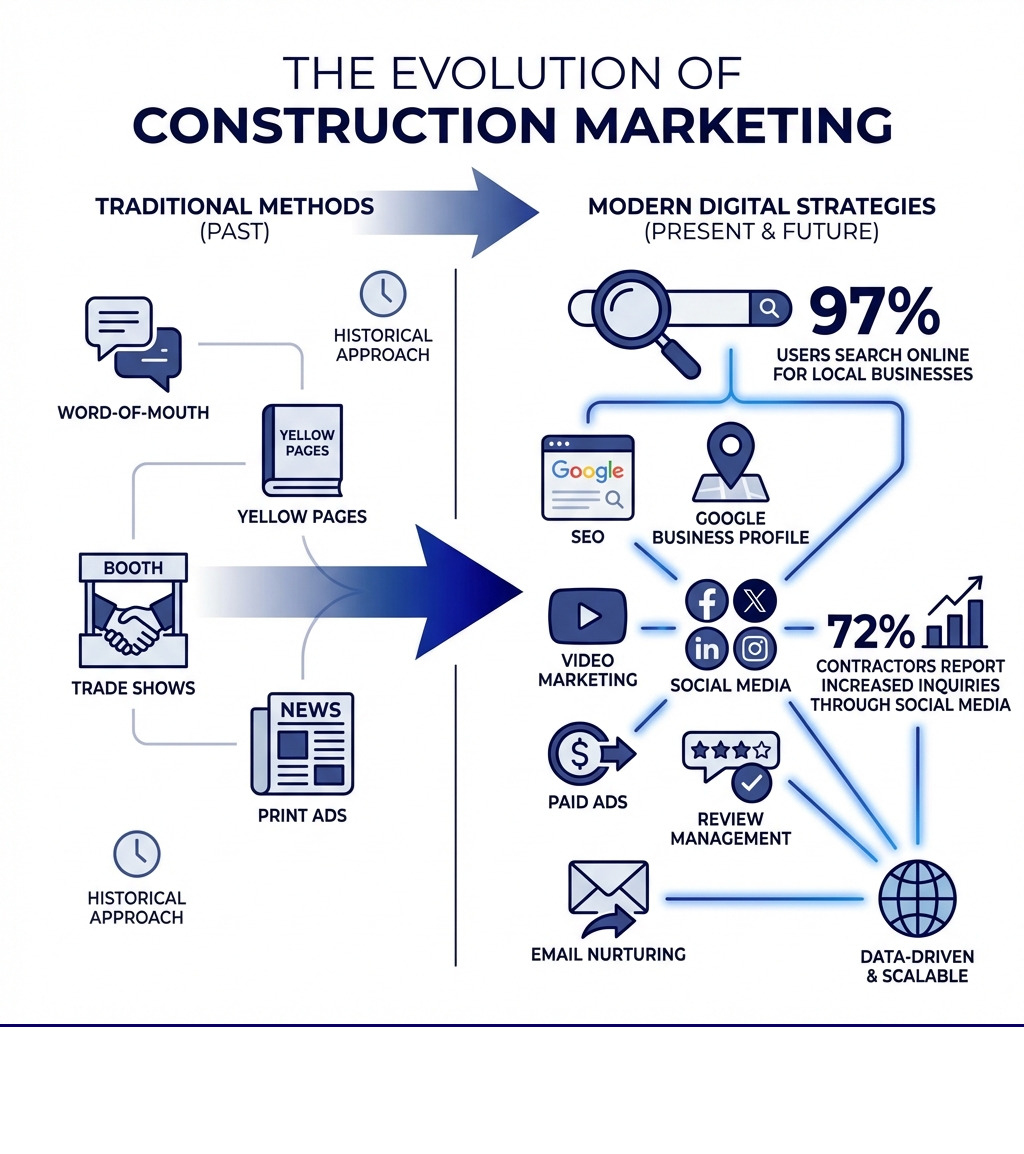
Construction marketing is the strategic use of digital and traditional channels to build trust, generate qualified leads, and win contracts for construction companies. It encompasses website optimization, SEO, content creation, social media, paid advertising, reputation management, and relationship-building tactics designed specifically for the construction industry.
Key Components of Construction Marketing:
- Digital Presence: Professional website, SEO, Google Business Profile
- Reputation Management: Reviews, testimonials, industry certifications
- Content Marketing: Project portfolios, case studies, educational content
- Paid Advertising: Google Ads, social media ads, local search ads
- Relationship Building: Referral programs, networking, client retention
- Traditional Marketing: Job site signage, trade shows, direct mail
The construction industry is changing fast. More than half of customers learn about your brand online before they ever pick up the phone. That means if you’re not showing up in search results, on social media, or in local business listings, you’re handing potential projects to competitors who are.
But here’s the good news: most construction companies still aren’t doing marketing well. Many rely on word-of-mouth alone or treat marketing as an afterthought. This creates a massive opportunity for businesses willing to invest in a smart, measurable marketing strategy.
Whether you’re a residential builder, commercial contractor, or specialty subcontractor, the companies winning the most profitable projects are the ones building strong digital authority, showcasing their expertise, and making it easy for prospects to find them.
This guide breaks down 20 practical ideas to construct a marketing plan that actually works. These aren’t theoretical concepts—they’re proven tactics backed by industry data and real results from construction companies just like yours.
Foundational Strategies: Building Your Brand & Digital Authority
At its core, construction marketing is about building trust and credibility. Without a solid foundation, even the flashiest campaigns can fall flat. These strategies focus on establishing who you are, what you stand for, and why clients should choose you.
1. Define Your Brand Identity
Your brand identity is more than just a logo; it’s the sum of your company’s values, mission, and personality. In the construction industry, trust is fundamental to gaining business. A clear, consistent brand identity helps potential clients understand what makes your company unique and reliable. This includes everything from your company’s voice in communications to the quality of your work. When homeowners recognize your brand, they’re more likely to trust you with high-value projects. Defining your target audience—whether they are homeowners, developers, architects, or industrial clients—is crucial for tailoring your messaging to resonate effectively. A well-defined brand ensures consistent messaging, which builds recognition and assures clients that your business feels reliable no matter where they find you.
2. Launch a Professional, Mobile-Optimized Website
In today’s digital landscape, your website is often the first impression a potential client has of your business. It needs to be professional, visually appealing, and, crucially, mobile-optimized. With 85% of people in the United States owning a smartphone and 54% of global web traffic coming from mobile devices, a clunky, slow, or non-responsive website is a turn-off. Homeowners now expect a professional online presence.
Your website should load quickly, have clear navigation, and guide visitors to act with prominent calls to action. A smart design not only looks polished but also improves the user experience (UX), making it easy for visitors to find project portfolios, contact information, and service details. You can easily check your site’s mobile performance with a free tool from Google. For more insights on crafting compelling online content, explore resources on Construction Website Content.

3. Showcase High-Quality Project Portfolios
Construction is a visual industry, and your past work speaks volumes. High-quality professional photography and videos of successful projects are non-negotiable. Potential clients want to see the quality of your craftsmanship. Before-and-after photos can dramatically illustrate the change you provide, while clear, well-lit visuals often become the deciding factor for clients comparing multiple builders. These visuals should be prominently displayed on your website and social media. Remember to humanize your brand by including images of yourself and your team. People like to do business with people they feel they know and can trust, and showing your team helps potential customers connect with the real people behind the projects.
4. Master Online Reputation Management
What others say about you online holds immense weight. In fact, 87% of consumers read online reviews for local businesses. Managing your online reputation means actively encouraging satisfied clients to leave reviews, monitoring feedback across various platforms, and responding thoughtfully to both positive and negative comments. Positive feedback proves your business is trustworthy and provides value, selling your next customer before you even meet them. A structured approach to collecting and showcasing reviews builds immense trust and credibility. It’s an ongoing process that directly impacts your ability to generate leads and win projects. For assistance in navigating this crucial area, consider professional help with managing your online reputation.
5. Build Credibility on Review Sites & Industry Associations
Beyond your own website, establishing a strong presence on trusted third-party review platforms is vital. Homeowners rely heavily on sites like Yelp. Encouraging satisfied clients to share their experiences here can significantly boost your credibility. Additionally, engaging with reputable industry associations like NAHB and CBUSA lends credibility and offers access to valuable resources, industry insights, and networking opportunities that can lead to referrals and collaborative projects. These affiliations demonstrate your commitment to industry standards and best practices.
The Digital Blueprint: Effective Online Construction Marketing Channels
Once your brand foundation is solid, it’s time to explore the digital tools that will amplify your message and connect you with potential clients actively searching for your services.
6. Implement a Data-Driven SEO Strategy
Search Engine Optimization (SEO) is the art and science of getting your website to rank higher in search engine results. This means when someone in Canton, OH, types “home remodeler near me” or “commercial construction services,” your business appears prominently. Local SEO strategies are particularly powerful, as 97% of search engine users looked online to find a local business. A strong SEO strategy involves thorough keyword research, on-page optimization (making sure your content uses those keywords naturally), technical SEO (ensuring your site is fast and crawlable), and building quality backlinks. The payoff can be significant: SEO is 85% more likely to improve site traffic compared to PPC alone. For a deeper dive into making your construction company a search engine superstar, explore SEO for Construction Companies.
7. Establish Authority with Content Marketing
Content marketing is about creating and distributing valuable, relevant, and consistent content to attract and retain a clearly defined audience. For construction companies, this means more than just listing services. It involves writing informative blogs, detailed case studies, or even white papers that establish your company as an industry authority. Educational content, professional images, and consistent reviews tell homeowners, “This builder is the real deal.” In fact, 69% of construction marketers consider unique content to be their most valuable marketing tactic. By answering frequently asked questions (FAQs) and sharing your expertise, you build trust and position your company as a reliable source of knowledge. This approach not only helps with SEO but also nurtures leads by providing genuine value. To refine your content strategy, consider exploring content marketing services.
8. Leverage Social Media for Engagement and Brand Awareness
Social media is no longer just for personal updates; it’s a powerful tool for construction marketing. More than half of the world’s population uses social media, and 72% of contractors report increased client inquiries through these platforms. The key is to choose the right platforms where your target audience spends their time. LinkedIn is excellent for B2B connections with industry professionals, developers, and architects. Instagram is highly visual, making it perfect for builders and remodelers to showcase “before-and-after” project photos and inspire potential clients with beautiful designs. Facebook offers broad reach and active community groups. Post project milestones, awards, and even community-related projects or sponsorships. Engaging with your audience and showing the human side of your business can significantly boost brand awareness and lead generation. If you need a hand navigating the social landscape, check out resources on how to get help with social media.
9. Invest in Compelling Video Marketing
Video content is king, and its dominance in consumer engagement continues to grow. An astonishing 84% of people were persuaded to buy a product or service by watching a brand’s video. For construction companies, this translates into a powerful opportunity. Use video marketing to offer virtual project tours, showcase craftsmanship, capture authentic client testimonials, or even provide behind-the-scenes glimpses of your team at work. Drone footage can give stunning aerial views of large-scale projects, and 3D renderings can allow clients to visualize their future space before construction begins. Video engages audiences on an emotional level and builds trust faster than text or static images. It’s also incredibly shareable, with video content generating 1200% more shares than text and images combined.
Targeted Acquisition: Attracting High-Value Clients with Precision
With a strong digital presence, it’s time to focus on precisely targeting and acquiring high-value clients. These strategies help you cut through the noise and connect with those most likely to become your next big project.
10. Dominate Local Search with Local SEO
For most construction companies, especially residential builders and smaller contractors, attracting nearby customers is paramount. This is where local SEO shines. When an online user types “home remodeler near me” or “general contractor Canton OH,” you want your business to appear at the top. This involves optimizing your Google Business Profile (GBP) with accurate information, photos, services, and regular updates. Local citations (mentions of your business name, address, and phone number on other online directories) also play a crucial role. Since 97% of search engine users looked online to find a local business, dominating local search is a direct path to attracting high-quality leads. Learn more about boosting your visibility in your community with Local SEO for Construction Companies.
11. Build Trust with Verified Business Badges
In a competitive market, anything that signals trustworthiness to potential clients is gold. Verified business badges, like the Google Guaranteed badge, are incredibly powerful. When your construction business is Google Guaranteed, it means your company has undergone and passed Google’s rigorous vetting process, instantly earning a high level of trust with online users. This badge screens for fair business practices, company legitimacy, and overall product and service quality, increasing traffic and conversion rates. Additionally, Local Services Ads (LSAs) are specialized search ads designed for service-based businesses like yours, allowing your company to appear near the top of search results for relevant local queries, further boosting credibility and lead generation.
12. Drive Immediate Traffic with Paid Advertising (PPC)
While SEO builds organic visibility over time, paid advertising (PPC) offers a way to drive immediate, targeted traffic to your website. Platforms like Google Ads, LinkedIn Ads, and Meta Ads (Facebook/Instagram) allow you to reach potential clients who are actively searching for your services or fit a specific demographic profile. For example, you can target users searching for “new home construction Canton OH” or professionals on LinkedIn involved in real estate development. PPC ads can boost a business’s brand awareness by an average of 80% and are known to generate double the number of website visitors compared to SEO. While it requires an investment, PPC offers measurable results and can be highly effective for lead generation and brand visibility. To explore how targeted ads can benefit your business, find PPC services.
13. Nurture Leads with Strategic Email Marketing
Email marketing remains one of the most effective tools for lead nurturing and customer retention. It allows you to build relationships at scale while still feeling personal and relevant. Sending segmented email marketing campaigns—tailoring your messages to specific groups of prospects or past clients—can drive as much as a 760% increase in revenue. Use email to share project updates, offer valuable tips, announce new services, or highlight successful case studies. For past customers, it’s an excellent way to stay top-of-mind and encourage repeat business or referrals. Consistent messaging builds recognition and ensures your business feels reliable. To harness the power of direct communication, explore our email marketing services.
14. Implement a Structured Referral Program
Word-of-mouth has always been golden in construction, and a structured referral program formalizes this powerful marketing channel. Past customers are some of your most valuable marketing assets, and maintaining these relationships can lead to repeat business and strong referrals. A structured program turns happy clients into enthusiastic promoters of your business. This could involve offering incentives for successful referrals, sending thank-you gifts, or creating a loyalty program. When trusted professionals or previous clients recommend you, homeowners feel more confident moving forward with your team, leveraging the power of social proof and established trust.
Integrated Growth: Advanced & Niche Marketing Strategies
To truly excel, construction marketing needs to be adaptable, integrating various approaches and catering to the specific nuances of your sector and target audience.
15. Complement Digital with Traditional Marketing
While digital strategies dominate, traditional marketing methods still hold significant value, especially in a local market like Canton, OH. The key is to integrate them seamlessly with your online efforts. Eye-catching job site signage, branded truck wraps, and professional brochures are valuable touchpoints. Your offline materials—yard signs, truck wraps, business cards—should guide people back to your online presence, perhaps with a clear website address or a QR code. Since marketers sent out 18% less direct mail in 2020, this traditional channel could actually help you stand out. Multi-channel marketing is now considered the most effective form of marketing.

16. Develop Niche Strategies for Your Construction Sector
Construction marketing isn’t one-size-fits-all. The approach for a residential builder differs significantly from that of a commercial contractor or an industrial construction firm. Residential marketing might prioritize local news coverage, high-quality photography of finished homes, and fostering relationships with local owners and developers. Commercial and industrial firms might focus more on detailed proposals for RFPs, building relationships with architects and developers, and showcasing specialized expertise. Architecture firms and specialty contractors must also build reputations, maintain trust, document projects, and produce written proposals. Adapting to shifting economic conditions and market demands requires marketing that tracks a company’s priorities, allowing for diversification of project types or regions as needed.
17. Explore Emerging Trends in Construction Marketing
The marketing landscape is constantly evolving, and the construction industry is no exception. Staying ahead means exploring emerging trends. AI-powered search, for instance, is changing how users find information, making robust SEO even more critical. Social video dominance means platforms like TikTok and YouTube are becoming increasingly important for showcasing work dynamically. SMS campaigns receive far better open and engagement rates than email, making them powerful for project updates or quick promotions (just ensure you follow all laws and rules for ethical SMS marketing). Account-Based Marketing (ABM) can be highly effective for B2B construction, targeting specific high-value clients with personalized campaigns. Livestreaming on social media allows for real-time engagement and shows project progress dynamically.
18. Market to Different Stakeholders Effectively
Construction projects involve numerous stakeholders, each with unique needs and perspectives. Effective construction marketing requires tailoring your approach to each group.
- Homeowners: Focus on transparent communication, visual proof of quality, online reviews, and a professional digital presence that builds trust. They want to see the final result and feel confident in your team.
- Developers & Architects: Emphasize your technical expertise, project management capabilities, successful track record, and collaborative approach through detailed proposals, case studies, and professional networking.
- Subcontractors: Build strong relationships through clear communication, fair practices, and consistent opportunities. Marketing can even help foster these relationships for future collaborations.
- Public Entities: When responding to RFPs, companies need persuasive proposals that go beyond price alone. Marketing teams can collaborate with technical staff to craft compelling narratives that articulate how the company will competently complete the project to specifications, on time, and within budget, highlighting why their proposed method or materials are superior. This requires strong organizational and communication skills to manage all necessary information.
19. Track Your Marketing ROI with Analytics
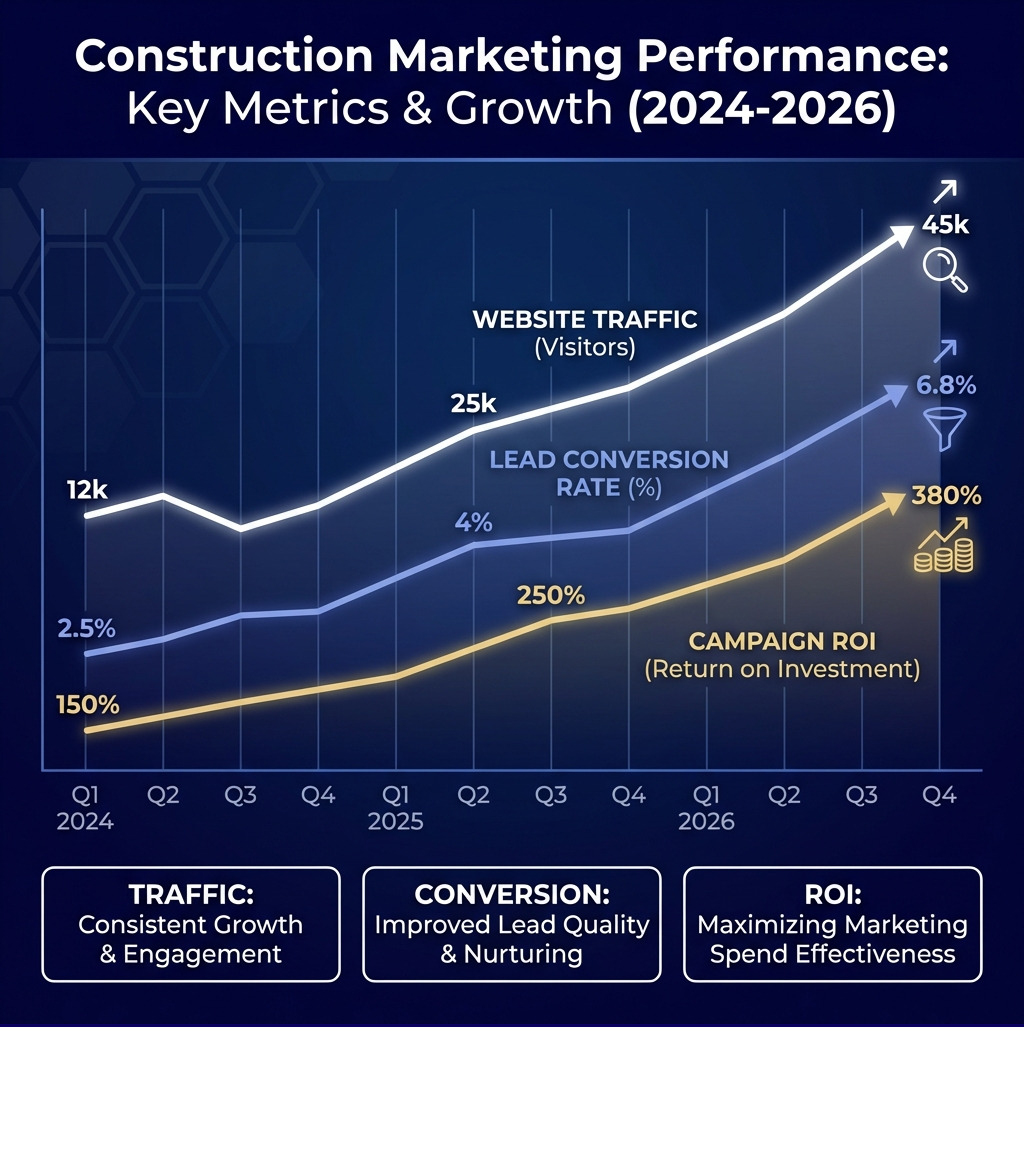
The beauty of modern digital construction marketing is its measurability. To ensure your efforts are paying off, you must track the Return on Investment (ROI) of your campaigns. Tools like Google Analytics allow you to monitor user behavior, website traffic, conversion rates, and lead sources. By understanding what’s working and what isn’t, you can refine your approach, invest more in high-performing channels, and eliminate tactics that aren’t producing results. Data-driven decisions are essential for optimizing your marketing spend and maximizing your growth. To gain deeper insights into your campaign performance, learn about our analytics services.
20. Create a Formal Construction Marketing Plan
Finally, all these ideas need to be brought together into a cohesive, formal construction marketing plan. This plan acts as your roadmap, outlining your goals, target audience, chosen strategies, budget allocation, and assigned responsibilities. A smart, modern construction marketing strategy helps you stand out, generate high-quality leads, and grow your business in a competitive market. It should be a living document, regularly reviewed and adapted as market conditions change or your company’s goals shift. Without a plan, your marketing efforts can become scattered and ineffective. For a structured approach to developing this essential document, consider reviewing resources like the 6 Steps to an Effective Construction Marketing Plan – White Paper.
Frequently Asked Questions about Construction Marketing
What are the primary goals of construction marketing?
The primary goals of construction marketing are to build trust and credibility, generate qualified leads, establish a strong brand reputation, win contracts, and foster lasting relationships with clients and partners. Marketing efforts help position a company as honest, transparent, safety-conscious, and trustworthy, which is fundamental to securing new business.
What is the most effective marketing channel for a construction company?
There isn’t one single “most effective” channel; a multi-channel approach is key. However, a strong online presence, centered around a professional, mobile-optimized website, robust SEO (especially local SEO), and an optimized Google Business Profile, forms the backbone of modern construction marketing. This is complemented by strong content marketing (portfolios, case studies), active social media engagement, and proactive online reputation management (reviews).
How much should a construction company spend on marketing?
While the exact amount can vary based on company size, goals, and market position, statistics suggest that construction firms that allocate around 3% of their revenue towards marketing tend to achieve higher profits. The focus should always be on measuring the ROI of each marketing activity and scaling what proves effective. It’s crucial to start with a foundational budget that allows for essential digital presence and then strategically invest more as campaigns demonstrate measurable returns.
Conclusion: Build Your Business with a Solid Marketing Foundation
In an increasingly competitive and digitally-driven world, construction marketing is no longer a luxury—it’s a necessity for growth and survival. By focusing on building trust, establishing a robust digital presence, employing targeted strategies, and continuously measuring your results, your construction company can stand out, attract high-value clients, and secure a steady flow of projects.
From optimizing your website and leveraging social media to nurturing leads and managing your reputation, each of these 20 ideas contributes to a comprehensive marketing plan. Consistency and adaptability are your allies.
If you’re ready to transform your online presence and achieve sustainable growth, the experts at MDM Marketing are here to help. They specialize in crafting customized digital strategies that align with your unique goals, offering services from SEO and content marketing to PPC and social media management. Contact us for a custom construction marketing strategy today and start building a stronger future for your business.
About Jay McCullough
This author hasn't written a bio yet.