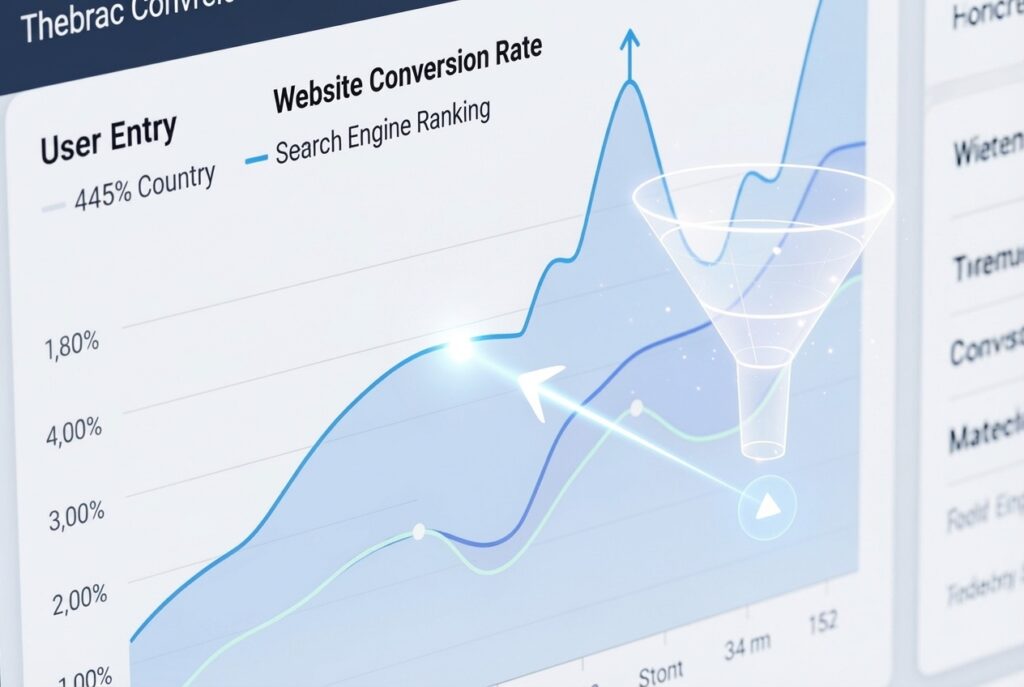
Why Your Website Traffic Isn’t Translating to Business Results
Conversion rate optimization SEO is the practice of improving your website to both rank higher in search results and turn more visitors into customers. It’s about attracting the right audience and then guiding them smoothly toward taking action—whether that’s making a purchase, filling out a form, or signing up for your service.
Here’s what you need to know:
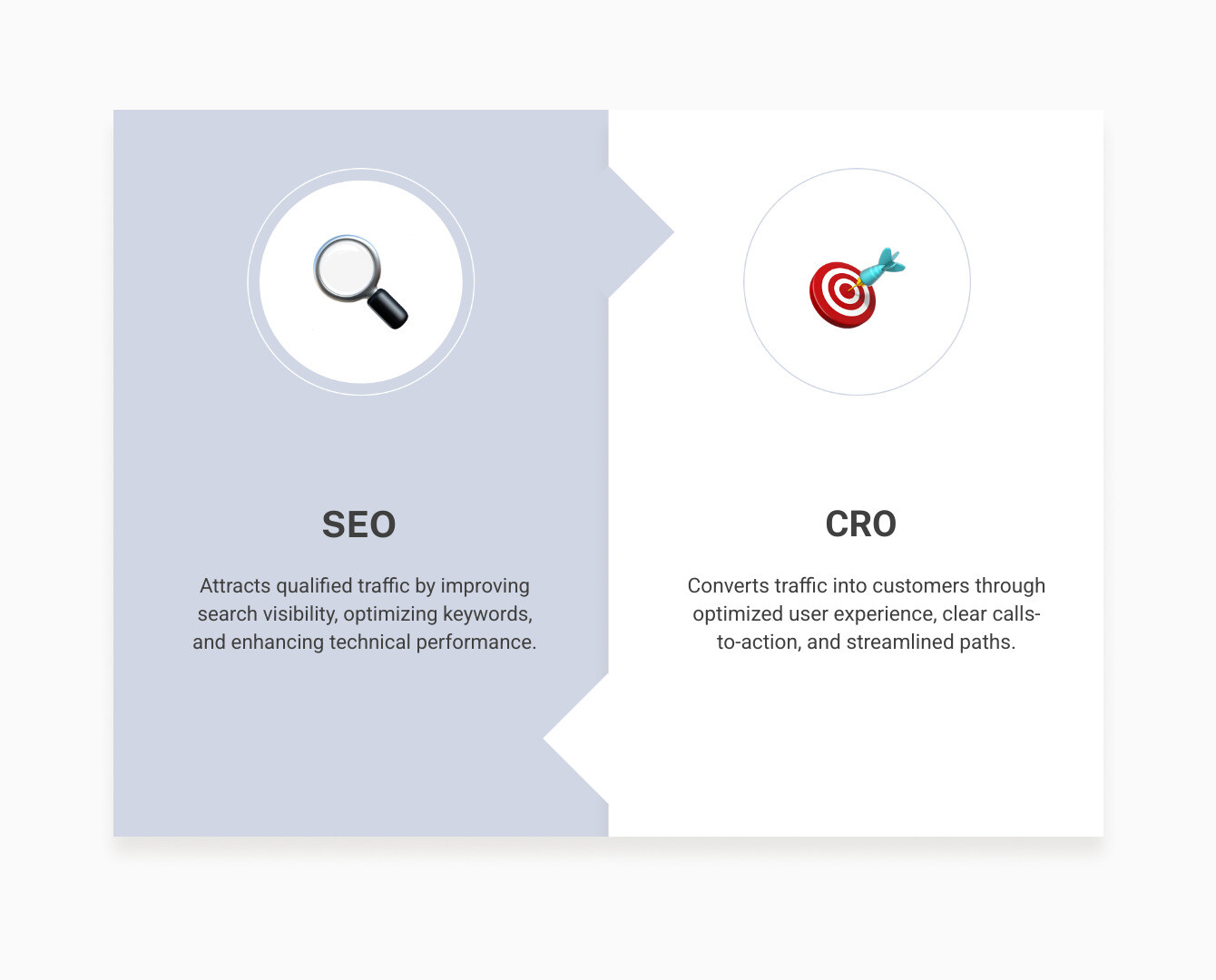
- SEO brings people to your website by improving your visibility in search engines.
- CRO ensures those visitors complete desired actions once they arrive.
- Together, they create a powerful system that maximizes your return on investment.
- The goal is not just more traffic, but more qualified traffic that converts.
If your organic traffic is climbing but sales remain flat, you’re likely treating SEO and CRO as separate strategies. Getting people to your website is only half the battle; the other half is ensuring your site is optimized to convert them. When you align both, you create a growth engine that compounds over time. Better rankings lead to more qualified traffic, which leads to more conversions, signaling to search engines that your site deserves even higher rankings.
The Symbiotic Relationship: Understanding SEO and CRO
Imagine your website is a storefront. Search Engine Optimization (SEO) is the sign that draws people in, while Conversion Rate Optimization (CRO) is the great in-store experience that convinces them to buy. One without the other is ineffective. Both are essential for business success.
SEO and CRO are two sides of the same revenue coin. When integrated, they create a sustainable growth engine. The shared goal is to understand users, meet their needs, and guide them to a desired action. This synergy means improvements in one area often benefit the other. For example, a great user experience (a CRO focus) generates positive signals like longer dwell times, which Google interprets as a sign of quality, potentially boosting rankings (an SEO benefit).
This compounding growth is a game-changer. By attracting the right traffic and optimizing its journey, you increase sales and lower your customer acquisition cost (CAC). Why spend more on new traffic when you can get more from the traffic you already have?

What is Conversion Rate Optimization (CRO)?
CRO is a systematic process to increase the percentage of website visitors who complete a desired action, or “conversion.” It’s about making the most of your existing traffic. Common conversion goals include:
- Purchasing a product
- Filling out a lead form
- Signing up for a newsletter or trial
- Downloading a resource
Your conversion rate is the number of conversions divided by the total number of visitors, multiplied by 100. For example, 200 purchases from 10,000 visitors is a 2% conversion rate.
While a “good” conversion rate varies by industry and goal, website conversion rates typically fall between 2% and 5%. The key is to continuously improve upon your own baseline rate.
How Does CRO Improve SEO Effectiveness?
While SEO gets visitors to your site, CRO ensures they have a positive experience. This focus on user experience (UX) indirectly boosts SEO performance:
- Positive User Signals: A well-optimized page encourages engagement, increasing dwell time and reducing bounce rate. These signals tell search engines your content is valuable, which can improve rankings.
- Increased Click-Through Rate (CTR): CRO helps you write compelling meta titles and descriptions, encouraging more clicks from search results. A higher CTR can signal to Google that your page is a good match for a query.
- Content Relevance: CRO uses user behavior analysis to create more relevant, high-quality content that addresses user intent—a critical factor for both SEO and conversions.
- Google’s User-Centric Focus: Google’s algorithms reward sites with excellent UX (fast speeds, mobile-friendliness, easy navigation). CRO drives these improvements, creating a cycle where better conversions lead to better rankings.
Investing in CRO is also an investment in your long-term SEO success. For more insights on optimizing your online presence, explore MDM Marketing’s SEO Services.
Why Aligning CRO and SEO is a Game-Changer
Traditionally, SEO and CRO teams work in silos, leading to inefficiencies like high traffic with low lead quality or optimized pages that no one can find. Aligning them creates a unified strategy with powerful benefits:
- Increased ROI: By both attracting and converting visitors, you maximize the return on your marketing spend and get more value from existing traffic.
- Qualified Traffic: An aligned strategy targets keywords with commercial intent, ensuring visitors are more likely to convert.
- Compounding Growth Engine: Better user experience leads to better rankings, which brings more qualified traffic that converts at a higher rate, creating a self-reinforcing loop of growth. Companies with a thoughtfully coordinated remarketing approach often see 30-50% higher conversion rates from their organic traffic.
- Sustainable Growth: Unlike paid ads, optimized organic content that ranks and converts well provides long-term value and builds a robust online presence.
A Strategic Framework for Integrated Conversion Rate Optimization SEO
Achieving synergy between SEO and CRO requires a strategic, data-driven framework. This continuous improvement cycle uses evidence, not guesswork, to refine your website’s ability to attract and convert users.
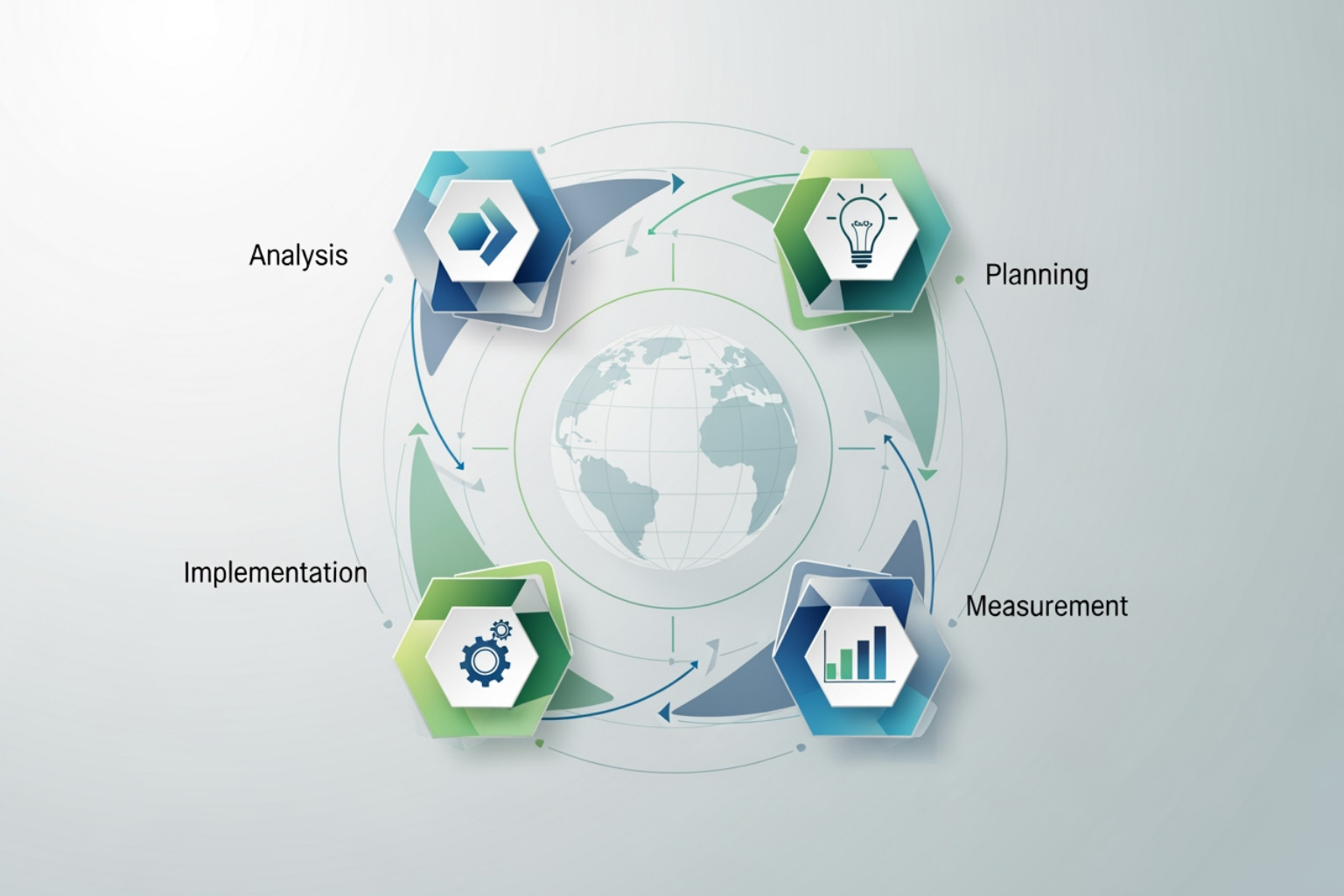
Step 1: Audit and Analyze Your Starting Point
Before optimizing, you must understand your current performance by analyzing quantitative and qualitative data.
- Quantitative Data (The “What”): Use tools like Google Analytics 4 and Google Search Console to identify high-traffic, low-conversion pages, drop-off points in funnels, and top-performing traffic sources.
- Qualitative Data (The “Why”): Understand user motivations and pain points. Use heatmaps and session recordings to see how users interact with your site. Gather direct feedback through on-site surveys, user testing, and interviews with your sales or support teams.
Combining these data sources helps you identify the most impactful areas for your Conversion rate optimization SEO efforts.
Step 2: Map Keywords to the Buyer’s Journey
Not all visitors are ready to convert. Mapping keywords to the buyer’s journey ensures your content aligns with user intent at every stage.
- Top-of-Funnel (TOFU): Users are researching a problem (e.g., “why is my website slow”). The goal is to capture their interest with informational content, perhaps in exchange for a newsletter signup.
- Middle-of-Funnel (MOFU): Users are comparing solutions (e.g., “best website speed optimization services”). Content should differentiate your offerings.
- Bottom-of-Funnel (BOFU): Users are ready to buy (e.g., “MDM Marketing pricing”). The goal is a direct conversion like a demo request or purchase.
This approach ensures you provide the right content and conversion opportunity at the right time. To learn more about tailoring your digital strategy, read Mastering Effective Web Marketing Strategies for Modern Needs.
Step 3: Optimize Content for Dual Intent
Create content that satisfies both search engines and your business goals. This means providing value while guiding users toward the next step.
- Make Content Scannable: Most users skim. Since 43% of people skim blog posts, use clear headlines, subheadings, bullet points, short paragraphs, and visuals to improve readability and engagement.
- Showcase a Compelling Value Proposition: Clearly and concisely articulate what makes your product or service the best solution.
- Use Strong Calls-to-Action (CTAs): Guide users with clear, action-oriented, and visually prominent CTAs like “Get a Free Quote” or “Download Now.” Ensure they are contextually relevant to the user’s stage in the buyer’s journey.
Optimizing for dual intent ensures every piece of content works harder for both your rankings and your bottom line.
Step 4: Master Landing Page Optimization
Landing pages are where conversions happen. They must be technically sound, user-friendly, and persuasive.
- Technical SEO Foundation: Ensure pages have clean HTML, fast-loading code, descriptive alt text for images, and schema markup to help search engines find and understand them.
- Singular Call-to-Action (CTA): Focus on one primary action to avoid confusing visitors. Make the CTA impossible to miss.
- Minimalist Form Design: Reduce friction by only asking for essential information. Use clear labels, provide real-time error feedback, and consider multi-step forms for longer processes.
- Trust Signals: Build confidence with testimonials, reviews, security badges, and privacy policies placed near conversion points.
- A/B Testing: Continuously test headlines, CTAs, images, and layouts to identify what resonates with your audience and improves conversion rates.
Optimizing landing pages creates a seamless experience that turns visitors into customers. For assistance in making your online presence more effective, consider Strategic Marketing Services for Visibility.
Key Tactics for Boosting Both Rankings and Conversions
Beyond the strategic framework, several high-impact tactics can significantly boost both your search rankings and conversion rates by enhancing user experience and building trust.

The Power of Page Speed and Mobile-First Design
Speed and mobile-friendliness are non-negotiable for both SEO and CRO. Google’s Core Web Vitals directly influence rankings, and user expectations are high.
- Page Speed is Conversion Speed: A one-second delay in page load time can reduce conversions by 7%. In fact, sites that load in one second can see conversion rates up to 3x higher than sites that take five seconds. Speed is critical to your bottom line.
- Mobile-First is the New Standard: With over half of web traffic coming from mobile, and Google using mobile-first indexing, an unoptimized mobile site hurts both your SEO and conversions. This is especially true since 80% of B2B buyers use mobile for research.
- Achieving a Seamless Experience: Implement responsive design with a mobile-first approach to ensure a consistent experience on any device. This includes fast load times, thumb-friendly navigation, simplified forms, and readable text.
Use tools like Google’s PageSpeed Insights to regularly test and improve your site’s speed.
Building Trust with Social Proof and Authority Signals
In a crowded market, trust is currency. Use social proof and authority signals to reduce user anxiety and encourage conversions.
- Testimonials and Case Studies: Feature real stories from satisfied customers with specific, credible results.
- User Reviews and Ratings: Encourage and display user reviews and star ratings, as 80% of people are more likely to buy from a store with user-generated content.
- Client Logos and Awards: Display logos of recognizable clients and any industry awards to instantly build credibility.
- Security Badges: Show security seals (like SSL certificates) to reassure users their data is safe, especially during checkout.
- Strategic Placement: Place these trust signals near key conversion points, like CTA buttons or forms, to alleviate last-minute doubts.
By showcasing social proof, you convince potential customers that your business is reliable. Explore how MDM Marketing has delivered results for clients by viewing our Use Cases.
Using A/B Testing and User Feedback for Continuous Improvement
Effective Conversion rate optimization SEO relies on continuous, data-driven improvement.
- A/B Testing (Split Testing): This method compares two versions of a webpage element (like a headline or CTA button) to see which performs better. It allows you to base decisions on actual user behavior, not guesswork.
- Gathering Qualitative Insights: While A/B tests show what works, user feedback explains why. Gather these insights through:
- On-site Surveys: Ask visitors about their experience directly.
- User Testing: Observe real users interacting with your site to uncover usability issues. A 15-minute test can be a small investment for a high return.
- Heatmaps and Session Recordings: Visually analyze where users click, scroll, and get stuck.
Combining quantitative data from A/B tests with qualitative user feedback provides a comprehensive understanding of your users, enabling you to make smarter optimizations.
Measuring Success and Avoiding Common Pitfalls
In Conversion rate optimization SEO, success is measured by metrics tied to business objectives, not just traffic. It’s also crucial to understand common pitfalls that can derail your integrated efforts.
The Right Metrics for Integrated Conversion Rate Optimization SEO
Look beyond vanity metrics and focus on KPIs that reflect actual business growth.
| Vanity Metrics (What people see) | Business Metrics (What truly matters) |
|---|---|
| Website Traffic | Conversion Rate by Source |
| Keyword Rankings | Organic Lead Quality |
| Page Views | Cost Per Acquisition (Organic) |
| Bounce Rate (raw) | Revenue from Organic Search |
| Social Media Followers | Customer Lifetime Value (Organic) |
Key metrics for integrated Conversion rate optimization SEO include:
- Organic Lead Quality: Are organic leads progressing through your sales funnel?
- Conversion Rate by Landing Page: Which pages and keyword clusters drive the most conversions?
- Assisted Conversions: How does organic search contribute to conversions earlier in the customer journey?
- Cost Per Acquisition (CAC) for Organic: How does CRO lower the cost to acquire a customer through search?
- Revenue from Organic Search: What is the direct revenue impact of your SEO and CRO efforts?
Use tools like Google Analytics 4, Google Search Console, and CRM integration to track these metrics and prove ROI. For deeper dives into optimizing your organic channels, explore MDM Marketing’s Outsourced SEO Services.
Common Mistakes When Aligning SEO and CRO
Integrating SEO and CRO can yield incredible results, but avoiding these common mistakes is key to sustainable growth:
- 1. Chasing Traffic Volume Over Quality: Optimizing for high-volume keywords that don’t convert wastes resources and provides misleading data.
- 2. Ignoring the Mobile User Experience: A poor mobile experience hurts your SEO rankings (due to mobile-first indexing) and kills conversion rates, as most users browse on mobile.
- 3. A/B Testing That Harms SEO: Implementing A/B tests without considering SEO implications (like improper redirects or content cloaking) can inadvertently damage your rankings.
- 4. Not Connecting Marketing to Revenue: Focusing on vanity metrics makes it impossible to prove business impact and secure investment for your efforts.
- 5. Keeping SEO and CRO in Silos: Independent teams with separate goals lead to conflicting priorities and missed opportunities. Alignment requires shared goals and integrated workflows.
Real-World Examples of Success
Integrated Conversion rate optimization SEO drives powerful results.
-
Case Study 1: E-commerce Checkout Boost
- An e-commerce store with high cart abandonment optimized mobile page speed and added trust signals to its checkout process. They also implemented a fully responsive design.
- Results: This led to a 125% increase in checkout conversion rates, a 610% boost in organic traffic for top keywords, and an 18X return on investment.
-
Case Study 2: B2B Content Driving Demos
- A B2B SaaS company’s blog generated traffic but few leads. They aligned content with the buyer’s journey by adding relevant CTAs and downloadable resources to key articles.
- Results: By creating clear conversion paths, the company achieved a 183% increase in demo requests from organic traffic. For example, one well-known publisher reported a 240% conversion boost on one article simply by adding a related template.
These examples show that when SEO and CRO work together, they multiply your results.
Frequently Asked Questions about CRO SEO
What is a good conversion rate for SEO?
A “good” conversion rate depends on your industry, goals, and traffic source. While the average conversion rate is between 2% and 5%, this varies widely. For example, signing up for a newsletter will convert higher than making a large purchase.
Instead of focusing on a universal average, aim to continuously improve your own baseline conversion rate. A small percentage increase can lead to a significant lift in business results.
Does conversion rate directly affect SEO rankings?
No, conversion rate is not a direct ranking factor. Google doesn’t see your internal conversion data.
However, there is a strong indirect impact. The factors that improve conversions—like fast page speed, great user experience (UX), mobile-friendliness, and high-quality content—are the same factors Google rewards. A site with good UX generates positive user signals (e.g., longer dwell time, lower bounce rate), which tells Google your site is valuable and can lead to higher rankings over time. Optimizing for conversions inherently optimizes for many things Google values.
Can you do CRO without SEO?
Technically, yes. You can optimize pages for traffic from paid ads or social media. However, doing CRO without SEO is highly inefficient.
CRO needs traffic to be effective, and SEO provides a sustainable, organic stream of qualified visitors. As the saying goes, “SEO without CRO is expensive traffic going nowhere. CRO without SEO is perfecting pages nobody finds.”
Combining them creates a powerful growth loop: SEO attracts qualified visitors, and CRO converts them at a higher rate. This integrated approach maximizes your ROI and builds a powerful business asset.
Conclusion
The path to online success requires a unified Conversion rate optimization SEO strategy. SEO and CRO are not separate disciplines but two halves of a powerful growth engine that drives both visibility and revenue. By attracting the right audience and providing a seamless path to conversion, you can transform your website into a dynamic, revenue-generating machine.
This requires a commitment to a data-driven process: auditing performance, understanding user journeys, optimizing content, and relentlessly testing and learning. In a competitive market like Canton, OH, every conversion counts.
MDM Marketing combines technical SEO with compelling content to deliver measurable results, ensuring your website not only ranks high but also converts effectively. To learn how we can lift your digital performance, Contact Us today to boost your website’s performance.
About Jay McCullough
This author hasn't written a bio yet.