
Why Your Local Business Needs to Dominate Local Search
Local SEO optimization is the process of improving your business’s visibility in location-based search results on Google and other search engines. Here’s what you need to know:
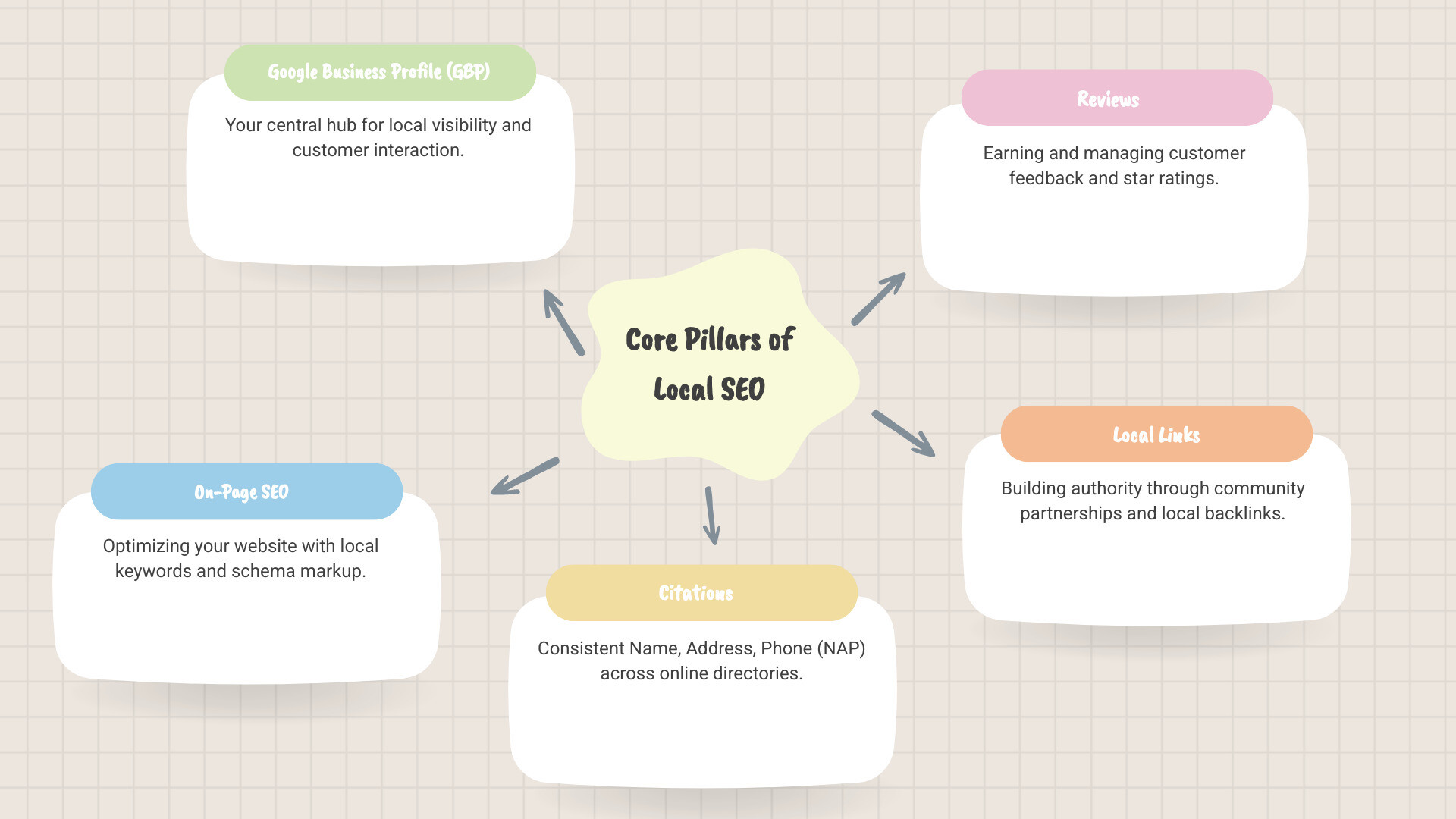
Quick Answer: Core Local SEO Optimization Steps
- Claim and optimize your Google Business Profile – Your most important local SEO asset
- Ensure NAP consistency – Keep your Name, Address, and Phone number identical everywhere online
- Build local citations – Get listed in relevant online directories and local sites
- Earn and manage reviews – Encourage customer feedback and respond professionally
- Create location-specific content – Optimize your website pages for local keywords
- Build local backlinks – Connect with community organizations and local press
When someone in your area searches for what you offer, they’re not just browsing. They’re ready to act. 86% of people use the internet to find local businesses, and these searchers have immediate needs and high purchase intent.
Local SEO is how you show up for these high-value moments. It’s different from regular SEO because it focuses on geographic targeting. Instead of competing nationally, you’re optimizing to appear in two critical places: the Local Pack (that map with three business listings at the top of search results) and the local organic results below it.
The payoff is huge. When you rank well locally, you don’t just get visibility. You get foot traffic, phone calls, and sales. Roughly 80% of local searches convert into actual business.
Think about it this way: someone searching “emergency plumber near me” at 10 PM isn’t comparison shopping. They need help now, and whoever appears first wins that customer.
Local SEO helps you become that first choice in your community. It builds your reputation, drives qualified traffic, and turns online searches into real-world customers.
How Local Search Works: Google’s Ranking Signals for Local Businesses

Understanding how local search engines, particularly Google, decide which businesses to show is the first step to becoming a hyperlocal hero. Google is a fully automated search engine that constantly explores the web, using sophisticated algorithms to match user queries with the most relevant results. When a search has local intent, Google employs a different set of signals and displays results in a unique way, often featuring the “Local Pack” or “Map Pack” prominently at the top.
The Local Pack is a highly visible section of the search results page that displays a map and typically three local business listings relevant to the user’s query and location. This section enjoys significant click-through rates, especially on mobile devices, making it a coveted spot for any local business. Studies have shown that a significant percentage of people who perform a local search, in some cases nearly half, click on a local 3-pack listing.
Google’s local algorithm is primarily driven by three core pillars: Relevance, Distance, and Prominence. These factors dictate how your business ranks in local search results:
-
Relevance: How well your business matches what the user is searching for. Google assesses this by looking at your business categories, the content on your website, and keywords used within your Google Business Profile. For instance, if someone searches for “HVAC repair Canton, OH,” Google will prioritize businesses accurately categorized as HVAC services with relevant content about repairs.
-
Distance: How far your business is from the searcher’s location. This is a straightforward factor, as Google aims to provide results that are physically close to the user. Even if a user doesn’t specify a location, Google will use their device’s location to provide “near me” results. This is why having a physical presence or a defined service area in a place like Canton, OH is crucial.
-
Prominence: How well-known and reputable your business is. This is where your overall online authority comes into play. Signals for prominence include the quantity and quality of your Online reviews, the volume and consistency of your online citations (mentions of your business across the web), and your website’s backlink profile (links from other reputable websites). A business with many positive reviews and mentions across various platforms will be deemed more prominent than one with a sparse online footprint. Google delivers billions of local search results every month, so appearing prominently for relevant queries significantly increases your chances of attracting customers.
The Ultimate 4-Step Local SEO Strategy
To truly dominate local search, a systematic and comprehensive approach is required. Here’s a 4-step strategy designed to lift your business’s local visibility and attract more customers in Canton, OH, and surrounding areas.
Step 1: Master Your Google Business Profile (GBP)
Your Google Business Profile (GBP) is arguably your single most important asset for local SEO optimization. It’s the information hub that Google uses to display your business in the Local Pack, Google Maps, and local organic results. Shockingly, only 56% of local businesses have claimed their Google Business Profile listing, leaving a massive opportunity for others to stand out.
The first critical step is to claim and verify your profile. If you’ve been wondering Why your Google Business Profile is only visible to managers?, it’s likely a verification issue or settings that need adjustment. Once claimed, focus on absolute accuracy and consistency for your NAP (Name, Address, Phone number) across your GBP and all other online platforms. Inconsistent NAP data can confuse Google and hinder your rankings.
Beyond the basics, a fully optimized GBP includes:
- Accurate Categories: Choose categories that precisely describe your primary business function.
- Detailed Services/Products: List all the services or products you offer.
- Key Attributes: Highlight unique features like “wheelchair accessible” or “free Wi-Fi.”
- High-Quality Photos: Upload appealing and professional photos of your storefront, products, and team. Businesses with photos often get more clicks.
- Engaging Q&A Section: Monitor and answer questions from potential customers.
- Regular Google Posts: Use this feature to share promotions, events, updates, or blog posts. This keeps your profile active and provides fresh content for Google and users.
Google controls a massive share of the search market, making your GBP a gateway to potential customers. For more in-depth guidance, explore Google Business Profile Optimization Tips.
Step 2: Fortify Your Website with On-Page SEO
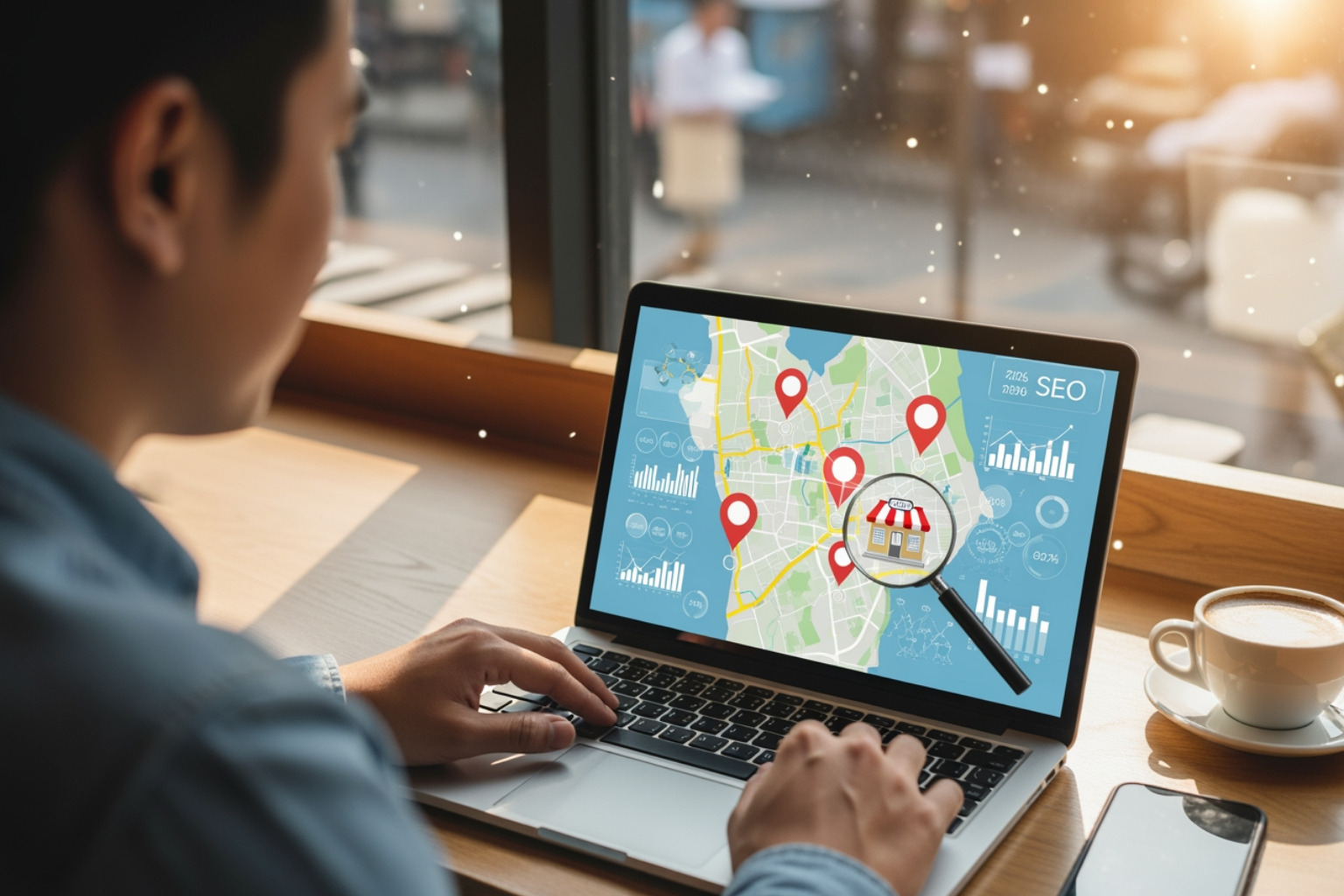
Your website plays a crucial role in supporting your local search efforts. Effective on-page local SEO optimization helps Google understand your business’s relevance to local queries.
Start with Local Keyword Research. Think about how customers in Canton, OH would search for your services. This includes phrases like “plumber Canton, OH,” “best coffee shop near me,” or “Canton auto repair.” Use tools like Google Keyword Planner to find new business-related keywords and analyze search volume for your specific service areas. Don’t forget to scan the SERPs (Search Engine Results Pages) for suggestions from “People also ask” sections.
Integrate these local keywords naturally into your website’s on-page elements:
- Title Tags & Meta Descriptions: Include your primary service and location (e.g., “HVAC Repair in Canton, OH – [Your Business Name]”).
- Header Tags (H1, H2, H3): Use local keywords in your headings to structure your content and signal relevance.
- Website Content: Naturally weave local keywords into your service descriptions, “About Us” page, and blog posts.
- Location-Specific Pages: If you serve multiple areas around Canton, OH, consider creating unique landing pages for each. Ensure these pages offer distinct, valuable content, perhaps showcasing local testimonials or specific projects in that town, rather than just duplicating content. For example, a construction company might feature specific projects completed in North Canton or Massillon. This is especially relevant for businesses like those served by SEO for Construction Companies.
Finally, implement Local Business Schema markup on your website. This is a type of structured data that helps search engines explicitly understand critical business information like your name, address, phone number, hours, and customer reviews. This can improve your presence in search results with rich snippets. Google’s own local business schema guide is an excellent resource, and there are many online tools that can help you generate the code. Don’t forget to embed a Google Map of your business location on your contact or about page to visually reinforce your presence and aid Google’s understanding.
Step 3: Build Authority with Citations and Local Links
Building authority for your local business involves both citations and local backlinks, which signal trust and prominence to search engines.
Citations are simply mentions of your business’s NAP (Name, Address, Phone number) across the web, even without a direct link to your website. Think of them as digital mentions that confirm your business’s existence and legitimacy. The key here is consistency. Every instance of your NAP should be identical across all platforms – Yelp, Yellow Pages, industry-specific directories, and social media profiles. Inconsistent NAP data can confuse Google and dilute your local search ranking efforts. Building consistent Google Local Citations is a foundational step. Specialized tools can help identify existing citations and uncover opportunities for new ones.
Local Link Building involves acquiring backlinks from other reputable, locally relevant websites. These links act as “votes of confidence” and significantly boost your website’s authority in the eyes of search engines. Unlike national link building, local link building focuses on your community. Strategies include:
- Sponsoring Local Events: Many event websites will link back to their sponsors.
- Joining Your Chamber of Commerce: Often, membership includes a listing and a link from their website.
- Leveraging Local Press: Pitching interesting stories about your business to local news outlets or offering your expertise can result in valuable mentions and links.
- Forming Partnerships: Collaborate with complementary local businesses for cross-promotion and potential link exchanges (ensure these are natural and valuable).
- Community Involvement: Actively participating in local initiatives can lead to organic mentions and links from community organizations.
For businesses in the trades, such as those served by a Contractor SEO Agency, building local links can involve showcasing completed projects or contributing to local home improvement blogs.
Step 4: Engage Customers with Content and Reviews
The final step in your local SEO optimization journey is to actively engage with your customer base through compelling content and diligent review management.
Local Content Marketing is about creating content that resonates with your local audience in Canton, OH. This could include:
- Blog Posts: Write about local news, community events, seasonal tips relevant to your area, or even profiles of local heroes.
- Project Case Studies: Highlight successful projects or customer stories specifically within your service area.
- “Best of Canton” Guides: Position your business as a local expert by creating helpful guides to local attractions, restaurants, or activities.
- Educational Content: Answer common questions your local customers have, demonstrating your expertise.
This type of content not only attracts local searchers but also provides valuable material to share on local social media channels, further boosting your online presence.
The power of reviews cannot be overstated. Online reviews serve as powerful social proof, influencing 95% of customers who read them before making a purchase. Moreover, Google uses review signals (quality, quantity, and recency) as a factor in its local pack rankings. A survey found that 99% of your audience reads reviews, and 92% now consider business owner responses to reviews to be part of providing high-quality, modern customer service.
Effective Reputation Management is critical:
- Encourage Reviews: The easiest way to get reviews is to simply ask your customers. Make it easy for them by providing a direct link to your Google Business Profile review page.
- Respond to All Feedback: Respond promptly and professionally to every review, positive or negative. Google itself confirms that responding to reviews helps strengthen your local presence. Ignoring reviews, especially negative ones, can be perceived worse than receiving a low rating, as it suggests disengagement.
The synergy between your SEO efforts and your Google Business Profile is clear, as highlighted in topics like SEO and GMB. A well-managed review strategy reinforces your local SEO.
Essential Tools for Tracking Local SEO Performance

Implementing a robust local SEO optimization strategy is only half the battle; the other half is tracking its performance and making data-driven adjustments. Fortunately, several powerful tools, both free and paid, can help you monitor and improve your local visibility.
Free Google Tools are indispensable for any local business:
- Google Search Console: This tool helps you monitor your site’s presence in search results, identify technical issues, and understand how Google crawls and indexes your pages. It’s excellent for understanding how Google views your website.
- Google Analytics: Provides invaluable insights into your website traffic, user behavior, and conversion rates. You can see where your local traffic is coming from and what they do on your site.
- Google Business Profile Insights: Accessible directly from your GBP dashboard, these insights offer data on how customers find your business (direct vs. findy searches), where they see your listing (Search vs. Maps), and what actions they take (calls, website visits, direction requests).
- Google Keyword Planner: While primarily for paid search, this tool is useful for finding new business-related keywords and getting search volume data for specific locations like Canton, OH.
Local Rank Tracking is crucial to see how your business performs for local keywords. Specialized tools can monitor your position in the Local Pack and organic results across granular geographic levels (e.g., different neighborhoods in Canton, OH, or surrounding towns). This helps you understand if your optimization efforts are translating into higher rankings.
Citation and Review Management Tools streamline two critical aspects of local SEO. Features to look for include:
- Listing Management: Automatically distributing and updating your NAP information across numerous online directories.
- Review Monitoring: Alerting you to new reviews and providing a centralized dashboard to respond.
- Competitor Analysis: Many tools also allow you to see where your local competitors are listed and what their review profiles look like, helping you identify opportunities.
MDM Marketing offers comprehensive Our Local SEO Services, leveraging these tools and expertise to provide transparent reporting and continuous optimization for your business.
Frequently Asked Questions About Local SEO Optimization
Navigating local search can raise many questions. Here are some of the most common ones businesses ask:
How long does it take to see results from local SEO optimization?
The timeline for seeing results from local SEO optimization can vary. Generally, you can expect to see initial impacts within a few weeks to several months. Factors influencing this include:
- Competition: In less competitive industries or areas, results might appear sooner (weeks). Highly competitive markets may take longer (several months).
- Industry: Some industries naturally have faster-moving search results.
- Consistency of Strategy: Consistent effort in optimizing your Google Business Profile, building citations, earning reviews, and improving your website will yield results faster.
- Starting Point: If your online presence is minimal, the initial gains might be more dramatic, but reaching top positions will still require sustained effort.
While some changes can take effect in hours, others could take several months. It’s generally wise to wait a few weeks to assess whether your work has had beneficial effects.
What is the difference between local SEO and traditional SEO?
The core difference lies in their geographic focus and target audience.
- Traditional SEO (or “Standard SEO”) aims to improve a website’s visibility for a broad, geographically diverse audience, often on a national or global scale. It focuses on general keywords, broad backlinks, and overall website authority.
- Local SEO hones in on a specific region or service area, targeting local searchers with high purchase intent. It optimizes for location-based searches (“plumber near me,” “Canton auto repair”) and relies heavily on specific ranking signals like a well-optimized Google Business Profile, consistent NAP citations, and customer reviews, in addition to general SEO best practices. Local SEO is essentially a specialized, more focused version of traditional SEO.
What are the most important first steps for local SEO optimization?
If you’re just starting with local SEO optimization, these are the most critical initial steps:
- Claim and fully optimize your Google Business Profile (GBP): This is your foundation. Ensure all information is accurate, complete, and engaging. As we mentioned, only 56% of local businesses have done this, so it’s a huge opportunity.
- Ensure NAP Consistency: Your Name, Address, and Phone number must be identical across your GBP, website, and all other online directories and listings. Inconsistencies can confuse search engines.
- Conduct Local Keyword Research: Identify the specific phrases local customers in Canton, OH, use to find businesses like yours. Integrate these into your GBP and website content.
These steps lay a strong groundwork for all subsequent local SEO efforts, setting your business up for success.
Become a Hyperlocal Hero with a Winning Strategy
Becoming a hyperlocal hero in Canton, OH, isn’t just a dream; it’s an achievable goal with a dedicated and data-driven local SEO optimization strategy. Local SEO is not a one-time fix but a continuous process that requires ongoing attention and adaptation. The rewards, however, are immense: increased visibility, highly qualified local leads, and tangible business growth.
At MDM Marketing, we understand the unique challenges and opportunities local businesses face. Our expert team helps businesses like yours achieve measurable growth through custom digital marketing strategies custom to your specific goals and local market. We combine thorough findy and analysis, develop a precise custom strategy, ensure seamless implementation across all channels, and provide continuous monitoring, optimization, and transparent reporting. With a proven track record of helping businesses achieve significant increases in organic traffic and conversion rates, MDM Marketing is your partner in changing your local online presence and achieving sustainable growth.
Ready to dominate your local market and turn local searches into loyal customers? Contact us today to transform your local online presence!
About Jay McCullough
This author hasn't written a bio yet.