
SEO for Construction: Transform Your Business 2025
Why Construction Companies Are Going Digital—And Why You Should Too
SEO for construction is the process of optimizing your website and online presence so potential clients can find you when they search for services like “commercial builder near me” or “kitchen remodeling contractor.” It involves improving your website’s technical performance, creating helpful content, building authority through backlinks, and dominating local search results—all to generate more qualified leads without relying on paid ads.
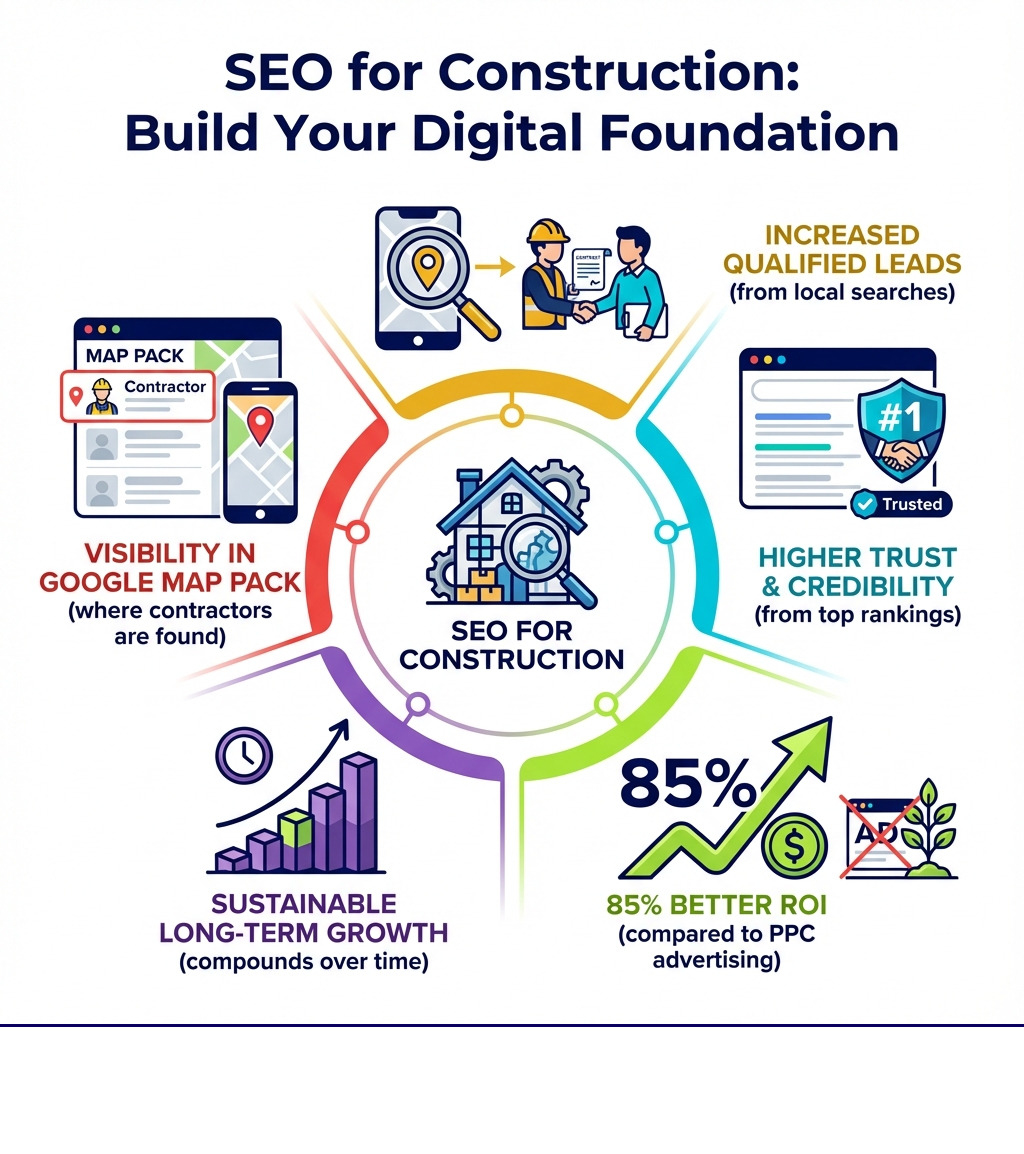
Here’s what SEO for construction delivers:
- Higher visibility in Google search results when customers are actively looking for your services
- More qualified leads from people searching for specific construction services in your area
- Better ROI than traditional advertising—85% more likely to improve traffic than PPC
- Long-term growth that compounds over time, unlike ads that stop working when you stop paying
- Increased credibility by appearing at the top of search results and in the Google Map Pack
Yellow Pages are dead. Direct mail barely works anymore. Today, when someone needs a contractor, they pull out their phone and search Google.
The numbers tell the story: 1.7 million people search for contractors every month, and 96% of people find local businesses online. If you’re not showing up in those searches, you’re invisible to the customers who need you most.
But here’s the problem: only 0.63% of searchers click anything on the second page of Google. If you’re not ranking on page one, you might as well not exist.
The good news? Unlike huge national brands, construction companies have a massive advantage with local SEO. You don’t need to compete with everyone—just the contractors in your service area. And with the right strategy, you can dominate those local searches and build a sustainable pipeline of leads that doesn’t depend on expensive ads.
Key terms for seo for construction:
Why SEO is the Blueprint for Growth in the Digital Age
In today’s digital-first world, having a strong online presence is essential for any construction business that wants to compete and grow. The construction industry is massive, with spending consistently exceeding $1.8 trillion annually, demonstrating a huge market opportunity for contractors who can effectively reach online customers, according to the U.S. Census Bureau. If you’re not leveraging search engine optimization (SEO), you’re essentially leaving money on the table.
More consumers are searching online now than ever before. When people want to find a product or service, they often type a keyword or phrase into search engines like Google. In fact, 72% of consumers find information about local businesses this way. This shift in customer behavior means that your website’s visibility directly translates into potential projects.
SEO for construction helps attract higher-quality leads because it targets individuals who are actively searching for your services. Unlike traditional advertising that casts a wide net, SEO puts your business in front of “warmer prospects” who already have a need and are looking for a solution. This leads to higher conversion rates and more valuable client relationships.
From a return on investment perspective, SEO is a powerhouse. It is 85% more likely to improve site traffic compared to PPC (Pay-Per-Click) advertising. While PPC can offer immediate visibility, it requires continuous investment. SEO, on the other hand, builds sustainable, long-term growth that compounds over time. Once you rank well, you continue to receive organic traffic without paying for every click.
Your competition is almost certainly investing in SEO. The research shows that 73% of construction companies plan to increase spending on SEO, with 66% outsourcing it to reputable agencies. If your competitors in Canton, OH are optimizing their online presence, you need to as well to stay relevant.
Building credibility is another significant benefit. Appearing at the top of search results, especially in the Google Map Pack, builds immediate trust with potential clients. Businesses with complete Google Business Profiles are twice as likely to earn trust from prospective clients. When a construction company consistently ranks high, it signals expertise and authority, reassuring customers before they even make contact.
Lastly, SEO for construction fosters sustainable growth. While SEO efforts take time to mature—typically 3 to 6 months on average to deliver substantial results—the benefits are compounding. Once established, your online presence becomes a consistent lead-generating asset, allowing your business to grow without constantly chasing new marketing campaigns. It’s an investment that pays dividends long into the future.
The Core Components of a Winning SEO Strategy for Construction
Think of a successful construction project: it requires a solid blueprint, strong foundations, precise execution, and continuous oversight. SEO is no different. A winning seo for construction strategy isn’t a one-and-done task; it’s an integrated, long-term approach built on several foundational elements.

These foundational elements are:
- Technical SEO: Ensuring your website is healthy and easily crawlable by search engines.
- On-Page SEO and Content: Optimizing the actual content and structure of your web pages.
- Local SEO: Dominating searches within your specific service area, crucial for contractors.
- Off-Page SEO: Building authority and trust for your website from external sources.
An integrated approach to these components is vital. Neglecting one area can undermine the effectiveness of others. For example, even the most compelling content won’t rank if technical issues prevent search engines from finding it.
Technical SEO: The Unseen Foundation of Your Website
Technical SEO is the backbone of your website’s search performance. It deals with the “behind-the-scenes” elements that ensure search engines can efficiently crawl, index, and understand your site. If your website isn’t technically sound, all other SEO efforts might be in vain.
- Website Speed: Visitors may leave if your site takes too long to load. Google promotes sites with faster page load speeds. Tools like Google PageSpeed Insights help identify specific optimization opportunities. Simple actions like reducing image sizes can significantly speed up your site. Many construction websites feature high-resolution project photos, which can slow down load times if not optimized.
- Mobile-Friendliness: With at least 60% of internet searches carried out from mobile devices, and Google’s mobile-first indexing, your website must be mobile-friendly. Check your site’s mobile compatibility using Google’s free tool.
- Site Architecture: A well-structured website with clear navigation helps both visitors and search engines understand your site. Whatever website platform you use, ensure logical internal linking and a hierarchy that makes sense.
- HTTPS Security: A secure website builds trust. Ensure your site uses HTTPS, which protects user information. You can obtain an SSL certificate from your hosting provider to enable this feature.
- Schema Markup: This is structured data that you can add to your HTML to help search engines better understand the content on your pages. For construction companies, schema can highlight services, business hours, reviews, and project types, making your listings richer in search results.
On-Page SEO and Content: Building Your Digital Portfolio
On-page SEO focuses on optimizing the content and HTML source code of a page to rank higher and earn more relevant traffic. For construction companies, this means showcasing your work, expertise, and services in a way that resonates with both search engines and potential clients.
- Keyword Research: This is the process of identifying the words and phrases your target audience uses when searching for construction services. Focus on service-based and local keywords like “commercial construction Canton OH” or “home additions Canton OH.” While many advanced tools exist, even free tools like Google Search Console and Google’s Keyword Planner can help. Remember to use “search empathy” – think about the words real customers use, not just industry jargon. Instead of “commercial roofing restoration services,” they may search for “fix my leaky roof.”
- Service Pages: Create dedicated, detailed pages for each service you offer. For example, instead of a single “Services” page, have separate pages for “Kitchen Remodeling,” “Bathroom Renovations,” and “New Home Construction” in Canton, OH.
- Project Portfolios and Case Studies: Your work speaks volumes. Showcase your completed projects with high-quality images, detailed descriptions, and testimonials. This not only demonstrates your capabilities but also provides keyword-rich content. For example, Construction Concepts of Illinois features several testimonials and images of completed projects on its homepage.
- Blog Content: Create educational and informative blog posts that answer common questions potential clients might have. Topics like “How to choose a general contractor in Canton, OH,” “Cost of building a custom home,” or “Benefits of sustainable construction” can attract informational searches. This positions you as an industry expert and generates valuable long-tail keyword traffic.
- Meta Descriptions and Title Tags: These are the snippets of text that appear in search results. They should be compelling, include your target keywords, and encourage clicks. Ensure title tags are under 60 characters and meta descriptions under 160 characters.
- Before-and-After Galleries: Nothing tells a story like a dramatic change. These are highly engaging and visually appealing, perfect for demonstrating your expertise and attracting potential clients.
Here’s a quick comparison of SEO focus for residential vs. commercial construction:
| Feature | Residential Construction SEO | Commercial Construction SEO |
|---|---|---|
| Target Audience | Homeowners, property managers (B2C) | Businesses, developers, institutions (B2B) |
| Keyword Intent | Informational (“how to remodel a kitchen”), Local (“kitchen remodeler Canton OH”), Transactional (“best home builder near me”) | Informational (“trends in office building design”), Commercial (“commercial construction services Canton OH”), Transactional (“request for proposal general contractor”) |
| Content Strategy | Focus on aesthetics, lifestyle, cost guides, DIY tips, before-and-after galleries, testimonials. More emotional and aspirational. | Focus on technical expertise, project management, safety, compliance, ROI, case studies, whitepapers, certifications. More professional and data-driven. |
| Platform Focus | Google Business Profile, local directories, social media (Pinterest, Instagram for visuals). | LinkedIn, industry-specific platforms (Blue Book, ENR), professional associations, B2B directories. |
| Trust Signals | Customer reviews, local awards, clear communication, project photos. | Certifications (LEED, OSHA), detailed project portfolios, client testimonials from businesses, safety records, financial stability, employee qualifications (e.g., Novak Construction lists employee certifications in staff profiles). |
| Sales Cycle | Shorter, more direct inquiries. | Longer, more complex, often involving RFPs and multiple stakeholders. |
Learn more about our Content Marketing services.
Local SEO for Construction: Dominating Your Service Area
For most construction companies, business is local. Whether you’re building homes, renovating offices, or paving driveways, your clients are typically within a specific geographic area. This makes local SEO not just important, but absolutely critical for your success. 96% of people find local businesses online, and most local searches on mobile devices result in a call or visit within 24 hours.
- Google Business Profile (GBP): This is your single most important tool for local SEO. Claim and fully optimize your Google My Business profile. This means accurate business name, address (NAP), phone number, hours of operation, a compelling description, high-resolution photos of your work, and service areas. Businesses with complete profiles are twice as likely to earn trust.
- Local Citations: Ensure your business information (NAP) is consistent across all online directories like Yellow Pages, Bing Places, and industry-specific portals. Inconsistent information can confuse search engines and hurt your rankings.
- Online Reviews: Encourage satisfied customers to leave positive reviews on your GBP. Google uses review count and rating for ranking local search results. Respond to all reviews, positive and negative, to show you’re engaged and value customer feedback.
- Location-Specific Pages: If you serve multiple towns or neighborhoods within the Canton, OH area, create dedicated landing pages for each location. These pages should feature unique content relevant to that specific area, showcasing projects completed there and using local keywords.
- Google Map Pack: This is the coveted 3-pack of local businesses that appears at the top of local search results, often ahead of traditional organic listings. Optimizing your GBP is key to appearing here.
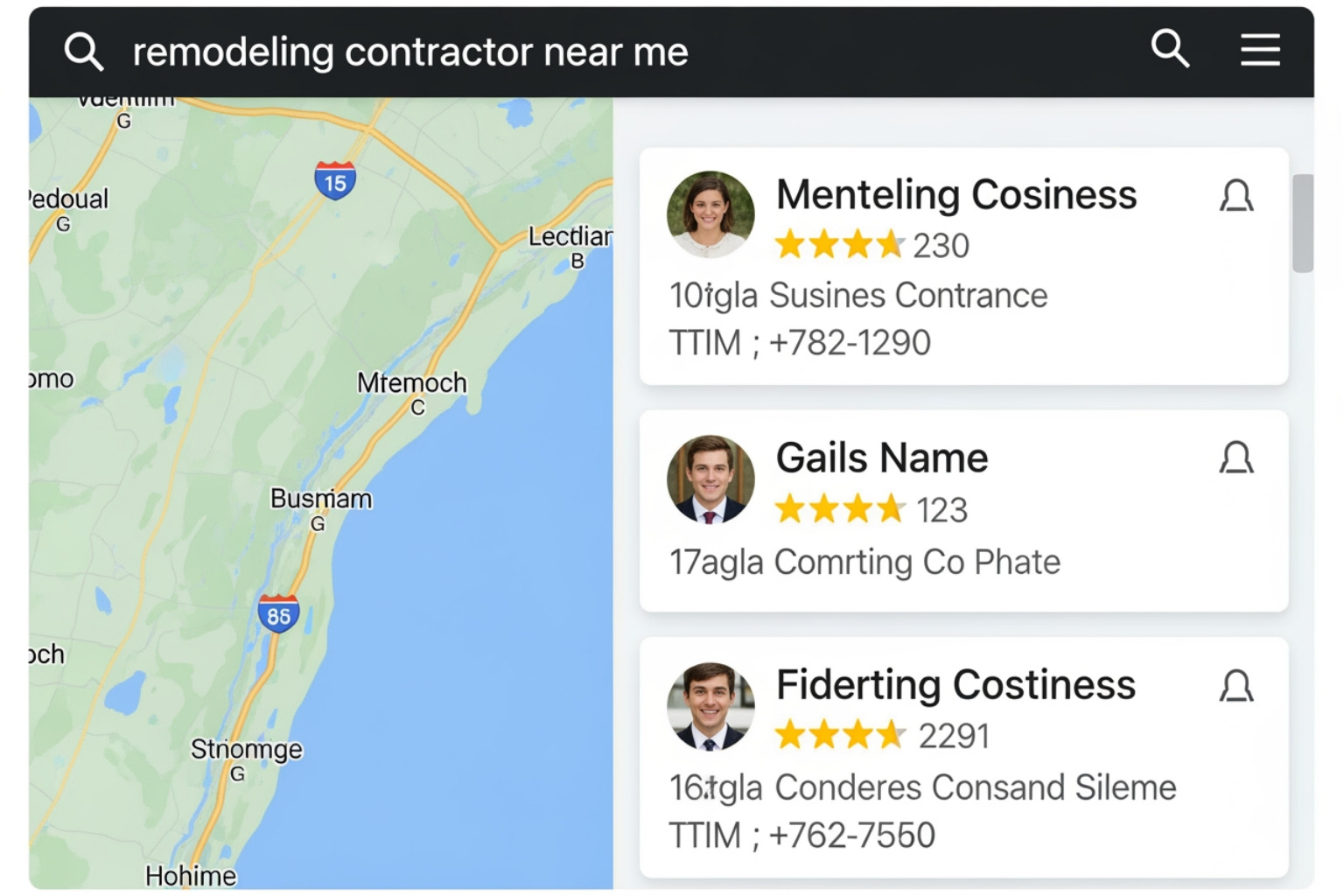
For a deeper dive, read our guide on Local SEO for Construction Companies or explore our GMB Optimization Services.
Off-Page SEO: Building Authority and Trust Beyond Your Site
Off-page SEO refers to actions taken outside of your website to impact your rankings. The primary goal is to build your website’s authority and credibility in the eyes of search engines, which largely comes down to backlinks. Think of backlinks as votes of confidence from other reputable websites.
- Backlinks: Earning backlinks from reputable websites improves your authority and search rankings. Focus on quality over quantity. A single link from a highly respected industry publication is worth far more than dozens from low-quality, irrelevant sites.
- Brand Mentions: Even unlinked mentions of your company name or services on other websites can contribute to your online authority.
- Digital PR: This involves activities that generate positive coverage and mentions of your business online. This could include:
- Offering knowledge to reporters on platforms like Qwoted, Featured, or Help a B2B Writer.
- Connecting with journalists who cover the construction news beat.
- Sending press releases for nominations, awards, or significant project completions.
- Link Sources: Where can construction companies find these valuable links?
- Industry Suppliers: Partner with your material suppliers and ask for a link from their “dealers” or “partners” page.
- Local Business Associations: Organizations like the Associated General Contractors often list member websites. Local chambers of commerce in Canton, OH are also excellent sources.
- Complementary Service Providers: Collaborate with architects, interior designers, or real estate agents you work with.
- Niche Directories: List your business in reputable construction-specific directories.
- Guest Blogging: Offer to write an article for a relevant industry blog or a local news site.
Explore our Link Building services.
Measuring Success and Avoiding Common Pitfalls
Implementing an seo for construction strategy is like building a house: you need a plan, skilled execution, and regular inspections to ensure everything is on track. Measuring your success and avoiding common mistakes are crucial for long-term growth.
Key Metrics to Track:
- Keyword Rankings: Monitor your position in search results for your target keywords. Are you moving up for “commercial builder Canton OH” or “kitchen remodeling Canton OH”?
- Organic Traffic: Track the number of visitors coming to your site directly from search engines. This indicates increased visibility.
- Lead Conversions: This is the ultimate metric. How many website visitors are filling out contact forms, calling your office, or requesting quotes? This shows the quality of your traffic.
- Phone Calls: Many construction clients prefer to call directly. Track phone calls generated from your website and Google Business Profile.
- Google Analytics and Google Search Console: These free tools are indispensable for tracking website performance, identifying technical issues, and understanding user behavior.
Common SEO Mistakes Construction Companies Should Avoid:
- Neglecting Local SEO: Given that 96% of people find local businesses online, ignoring your Google Business Profile or local citations is a huge missed opportunity.
- Thin or Duplicate Content: Search engines prioritize high-quality, unique, and helpful content. Sparse pages or content copied from other sites will not rank well.
- Keyword Stuffing: Overloading your content with keywords in an unnatural way is an outdated tactic that can lead to penalties. Weave keywords naturally into your text.
- Ignoring Mobile Users: With most local searches happening on mobile, a non-responsive website will drive away visitors and harm your rankings.
- Inconsistent NAP Information: Inaccurate or inconsistent Name, Address, and Phone number details across online listings confuse search engines and potential clients.
By regularly monitoring these metrics and proactively avoiding common pitfalls, you can ensure your seo for construction strategy is effective and continuously improving. See how we track results with our Analytics services.
The Future of SEO for Construction: AI and Evolving Algorithms
The digital landscape is constantly evolving, and seo for construction must adapt. With advancements in Artificial Intelligence (AI) and machine learning, search engines are becoming more sophisticated, emphasizing user intent and conversational queries.
- AI in Search: Google’s algorithms are now powered by AI, allowing them to understand context and nuance better than ever before. This means content that genuinely answers user questions and demonstrates expertise will be favored.
- Voice Search: As smart speakers and virtual assistants become more common, voice search is on the rise. People use more natural, conversational language when speaking their queries (e.g., “Hey Google, find a general contractor near me in Canton, OH”).
- Answer Engine Optimization (AEO): This is a new frontier. AEO aims to get your content featured in AI-generated responses from tools like ChatGPT, Bing AI, and Google’s AI Overviews. For construction companies, this means structuring content to directly answer specific questions with clear, factual information that AI systems can easily understand and cite.
- Structured Data: Implementing schema markup (as discussed in Technical SEO) becomes even more critical for AI. It provides explicit clues to search engines about the meaning of your content, making it easier for AI to process and present.
- FAQ Content: Creating dedicated FAQ sections or blog posts that directly answer common questions is an excellent AEO strategy. Each answer should be concise yet comprehensive.
- Conversational Language: Write content in a natural, conversational tone that mirrors how people speak and ask questions.
- AI-Powered Tools: AI can assist with keyword research, content generation (though human oversight is crucial), and data analysis, helping construction companies refine their SEO strategies more efficiently.
Adapting your seo for construction strategy to these evolving trends ensures you remain visible and competitive. Learn about our AI Integration services.
Frequently Asked Questions about SEO for Construction
How long does SEO take for a construction company?
SEO is a marathon, not a sprint. While some initial improvements in website health or minor keyword rankings might be seen within 3 to 6 months, substantial results—like significant increases in organic traffic, top rankings for competitive keywords, and a steady flow of qualified leads—typically take 6 to 12 months, or even longer in highly competitive markets. It’s a long-term investment that builds authority and trust over time, much like building a robust structure. Unlike paid ads that stop delivering traffic when you stop paying, SEO provides compounding returns.
What’s the difference between residential and commercial construction SEO?
While the core principles of SEO remain the same, the application differs significantly for residential and commercial construction:
- Target Audience: Residential SEO targets homeowners (B2C), while commercial SEO targets businesses, developers, and institutions (B2B).
- Keyword Intent: Residential clients often search for aesthetic, lifestyle, or cost-related terms (e.g., “kitchen remodeling ideas,” “cost to build a deck”). Commercial clients focus on technical specs, ROI, and project management (e.g., “commercial general contractor for office build-out,” “sustainable construction solutions”).
- Content Strategy: Residential content is more visual and aspirational (before-and-after photos, design guides). Commercial content is data-driven, highlighting expertise, safety records, and case studies.
- Platform Focus: Residential SEO heavily relies on Google Business Profile and visual platforms like Instagram. Commercial SEO leans towards LinkedIn, industry-specific directories like The Blue Book, and professional associations.
- Trust Signals: Residential clients value customer reviews and local awards. Commercial clients look for certifications, detailed project portfolios, and business client testimonials.
Understanding these differences is crucial for tailoring an effective seo for construction strategy.
Is SEO better than PPC for contractors?
Neither is inherently “better” than the other; they serve different purposes and can be highly complementary.
- SEO (Search Engine Optimization): Offers long-term value and sustainable ROI. It builds organic authority and trust, generating free, qualified traffic over time. SEO is 85% more likely to improve site traffic compared to PPC. However, it takes time (3-6 months for initial results, 6-12 months for substantial impact).
- PPC (Pay-Per-Click): Provides immediate results. You pay for each click, and your ads appear at the top of search results almost instantly. This is great for quick visibility, promotional offers, or targeting specific, time-sensitive campaigns. However, traffic stops the moment your budget runs out.
For many construction companies, a balanced approach works best. PPC can provide immediate leads while SEO builds a lasting digital asset. Seo for construction is a foundational investment that continuously delivers value long after the initial effort.
Conclusion
In the competitive world of construction, having a robust online presence isn’t just an advantage—it’s a necessity. SEO for construction is the blueprint for attracting higher-quality leads, building unwavering trust, and securing sustainable growth in a digital-first market. From optimizing your website’s technical foundations and crafting compelling content to dominating local search results and building authority across the web, each component of an effective SEO strategy works in harmony to lift your business.
By embracing SEO, you’re not just investing in temporary visibility; you’re building a long-term asset that generates a consistent pipeline of qualified clients. You’re ensuring that when potential customers in Canton, OH, or anywhere you serve, search for the services you offer, your company is not just found, but chosen.
At MDM Marketing, we specialize in data-driven SEO and copywriting solutions custom for the construction industry. We combine technical expertise with emotion-evoking content to boost your online visibility and fuel your growth.
Don’t let your competition dig into your market share. Take the next step towards changing your online presence and securing your future projects. Contact us for a custom SEO plan to build your online presence today.
About useraccess
This author hasn't written a bio yet.