
Why Manual SEO Reporting is Broken (And How White Label Dashboards Fix It)
A white label seo dashboard is a customizable reporting interface that displays SEO performance data with your agency’s branding, not the software provider’s.
Key Features:
- Custom Branding: Add your logo, colors, and domain.
- Automated Reporting: Get real-time data updates without manual work.
- Client Access: Provide 24/7 dashboard access for transparency.
- Data Integration: Connect Google Analytics, Search Console, and other tools.
- Professional Presentation: Build trust with polished, professional reports.
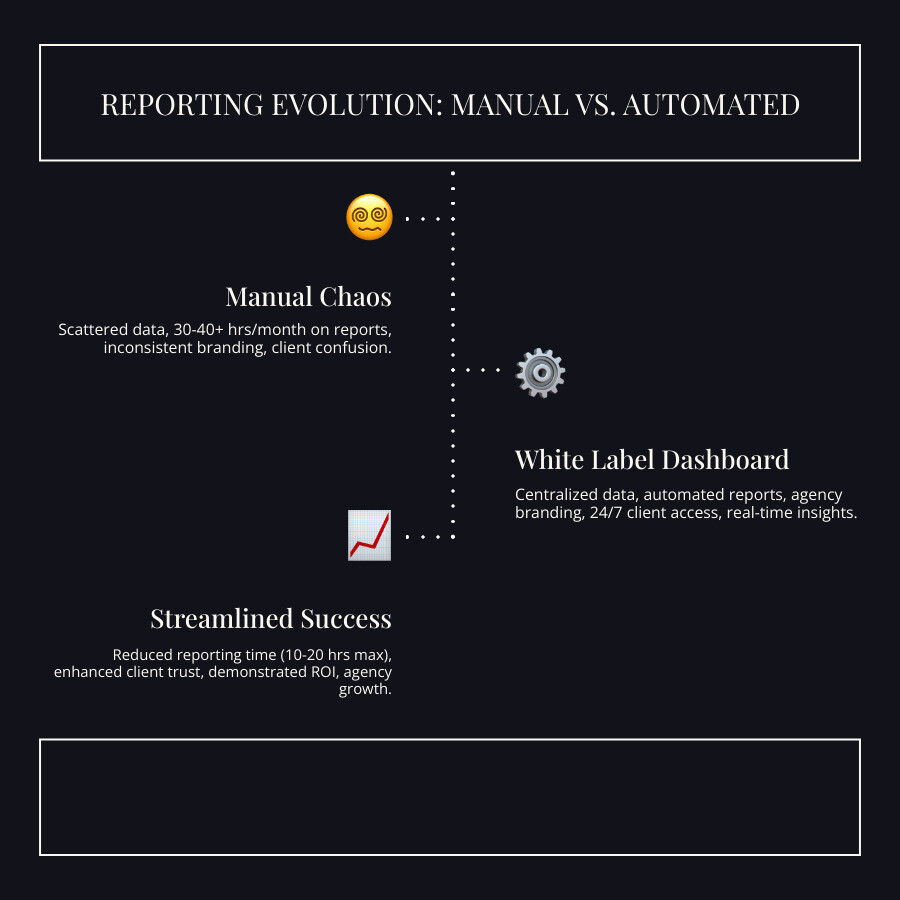
Manual SEO reporting is chaotic. As one agency owner noted, “We used to spend 30-40 hours on monthly reporting. We’re now down to 10-20 hours max while providing even more detailed information.”
The problem worsens as you scale. Managing reports for dozens of clients means endless spreadsheet updates and manual data entry. One small change can send you back to square one.
White label SEO dashboards solve this by:
- Centralizing client data in branded interfaces
- Automating report generation and delivery
- Providing real-time insights without manual updates
- Building client trust through a professional presentation
This shift from manual chaos to automated professionalism saves time, transforms how clients perceive your agency, and opens doors for growth.
What is a White Label SEO Dashboard and Why Your Agency Needs One
Think of a white label SEO dashboard as your agency’s secret weapon for professional reporting. It’s a powerful platform built by a third party, but it looks and feels like it’s completely yours. Your clients log into a dashboard with your logo, brand colors, and domain name, making your agency look like you’ve invested heavily in proprietary technology without the development costs.
A white label SEO dashboard serves as your centralized client reporting tool, pulling data from multiple sources into a format that makes sense to clients. No more confusing spreadsheets or generic reports. The professionalism alone can transform client perception. As one agency owner said, their dashboard made them “look polished and professional” while saving them “an incredible amount of time.”
The real magic is in the time savings and scalability. Instead of manually creating reports, you set up the dashboard once and let automation handle the rest. This frees your team to focus on strategy. For agencies looking to maximize efficiency, exploring how to Streamline Your SEO Efforts Using Outsourced Services can provide additional insights.
Improved client communication is another key benefit. With 24/7 access to their data, clients feel more connected and confident in your work. Most importantly, these dashboards excel at demonstrating ROI by showing how your SEO efforts translate into business results. This transparency builds trust and makes contract renewals easier. In today’s market, a professional reporting system is a necessity that provides a significant competitive advantage.
The Core Benefits for Your Agency
Implementing a white label SEO dashboard brings a ripple effect of positive changes.
Boosted brand perception: Polished, branded reports make your agency appear more established and trustworthy.
Increased efficiency: Automated reporting can save agencies 30-40 hours per month, redirecting that time toward strategic activities.
Improved client satisfaction: Easy access to clear, branded reports leads to happier clients who stick around longer and refer more business.
Data-driven decision making: With all key metrics in one place, your team can spot trends and make strategic adjustments based on real data.
Reduced overhead: Get enterprise-level reporting capabilities without the high cost and maintenance of building an in-house system.
Focus on strategy: Automation allows your SEO experts to spend their time optimizing campaigns and solving problems instead of compiling data.
How Dashboards Improve the Client Experience
A white label SEO dashboard transforms the client reporting experience.
24/7 access to data: Instead of waiting for reports, clients can log in anytime to check progress, which builds trust and keeps them engaged.
Transparency and trust: Professional, branded dashboards signal that your agency is established and has nothing to hide, differentiating you from competitors.
Clear performance visualization: Intuitive charts and graphs make complex SEO data digestible for non-technical clients, helping them understand the value of your work.
Interactive elements: Clients can adjust date ranges and drill down into specific metrics, making them feel more connected to the process.
Consistent reporting: A professional standard across all clients reinforces your agency’s reliability. For additional insights on building authority, check out Insights on How to Build Quality Backlinks for SEO Growth.
This improved client experience makes clients more likely to renew contracts, increase budgets, and refer new business.
Building Your Dashboard: Essential Metrics and Data Sources
Creating your white label seo dashboard is about choosing the right metrics to tell a clear story of success. It’s not about cramming in every data point, but about connecting your SEO work to real business results.
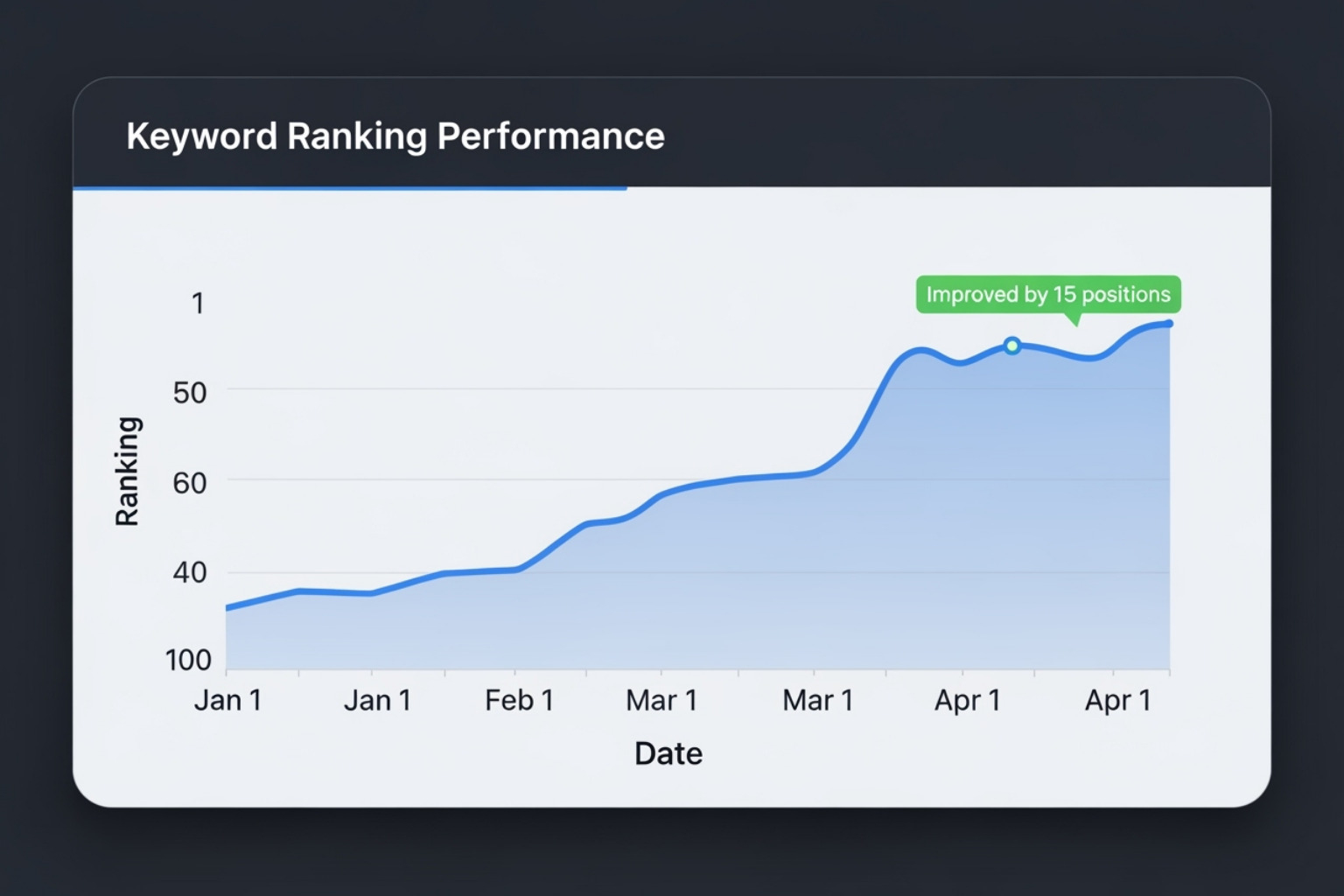
The magic happens when you integrate data from different sources into one unified view. Instead of clients jumping between Google Analytics and Search Console, they see everything in one place. This integration transforms scattered data into a compelling narrative about their growth.
Your dashboard becomes a storytelling platform where each metric connects to business goals. When a client sees keyword rankings improving alongside increased phone calls, they understand the real impact of your work. For insights on how your Google Business Profile fits into this picture, check out SEO and GMB.
Key SEO Metrics to Include
An effective white label seo dashboard includes metrics that matter to your clients. Start with organic traffic trends to show the fundamental health of their SEO. Break this down by device, location, and landing pages for deeper insights.
Keyword rankings and visibility are the backbone of SEO reporting. Track positions for target terms, but also show the search queries generating actual clicks and impressions to guide content strategy.
Your backlink profile analysis demonstrates authority-building work. Include total backlinks, referring domains, and quality scores. Tracking new and lost links shows ongoing effort. For more on this, explore Link Building 2025.
Technical SEO health is crucial for the complete picture. Include site speed metrics, mobile-friendliness scores, and crawl errors to show that the technical foundation is solid.
Most importantly, connect everything to conversions and goal completions. Whether it’s form submissions, phone calls, or sales, this is where SEO’s business impact becomes crystal clear.
Essential Local SEO Metrics
Local businesses need specialized metrics in their white label seo dashboard. Google Business Profile insights are crucial—track views, clicks for directions, and calls directly from the profile.
Local pack rankings deserve special attention. Track rankings for location-specific keywords and monitor how often the business appears in the coveted map pack.
Customer reviews and ratings reflect the business’s reputation and impact local search performance. Show the average star rating, recent review trends, and response rates.
Geo-specific traffic reveals which areas drive the most visitors. Break down organic traffic by city or region to show local market penetration.
Don’t forget citations—the consistency of business information (Name, Address, Phone) across online directories. Monitoring NAP consistency is fundamental to local SEO. For more details, see Google Local Citations.
Integrating Your Key Data Sources
The power of your white label seo dashboard comes from integrating multiple data sources. Google Analytics (GA4) provides website traffic and conversion data, while Google Search Console adds the search-specific layer.
Google Business Profile is essential for local businesses. Rank tracking tools monitor keyword positions, and backlink analysis tools track authority-building progress.
For comprehensive marketing, you can also integrate PPC platforms like Google Ads and social media analytics. The best platforms integrate with dozens of sources, and many allow CSV file uploads for any unique data not covered by direct integrations. This ensures your dashboard tells the complete story of digital marketing success.
The Ultimate Guide to Customizing Your White Label SEO Dashboard
An effective white label seo dashboard needs to fit your agency perfectly while impressing your clients. The goal is to transform a generic tool into something that feels uniquely yours, reinforcing your professionalism.
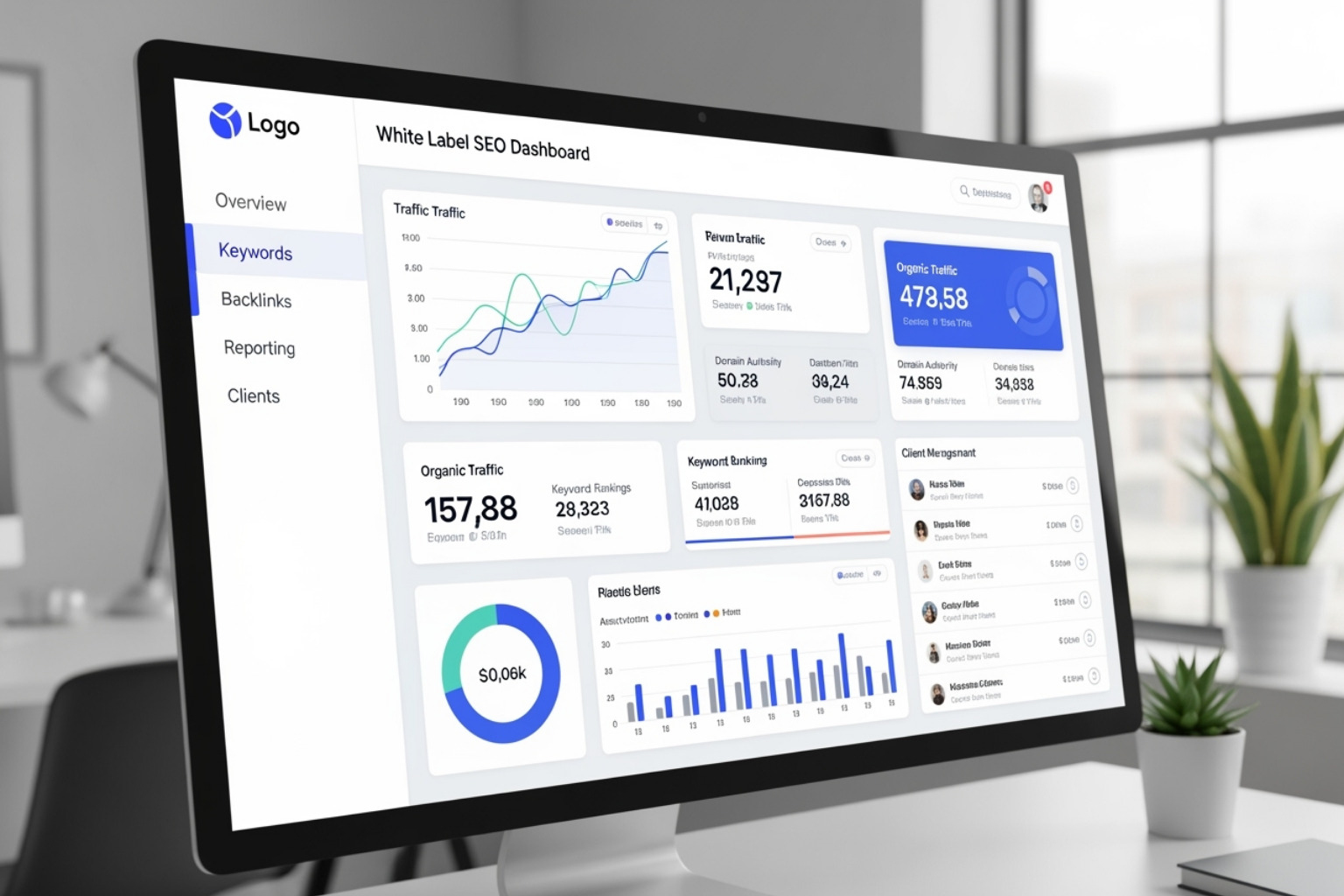
Customization creates a seamless brand experience. When clients log in, they shouldn’t see a third-party provider; they should feel like they’re accessing a premium tool your agency built for them. This goes deeper than just adding a logo—it’s about creating a user experience that tells your client’s unique story through data.
Step 1: Applying Your Agency’s Branding
Your white label seo dashboard should be a natural extension of your agency’s identity.
Adding your logo is the foundation. It should be prominently placed at the top of every dashboard and report, completely replacing any third-party branding.
Custom color schemes create instant brand recognition. Use your exact brand colors (hex codes) to ensure perfect consistency and show attention to detail.
Branded headers and footers are powerful trust builders. Include your agency’s contact information and website so your brand stays front and center, even on printed reports.
Some platforms even allow custom fonts to match your brand guidelines, a subtle touch that separates premium agencies. The key is to follow solid data visualization design principles to keep charts clean and readable.
Step 2: How to set up a custom white label SEO dashboard
Go beyond surface-level branding to create a completely integrated experience that feels authentically yours.
Custom domains are game-changers. Hosting your reports at “reports.youragency.com” instead of a generic URL reinforces that this is your proprietary tool.
Removing third-party branding should be absolute. Every login screen, interface, and report should be scrubbed clean of external references.
Custom email notifications maintain brand consistency. When automated reports are sent, they should come from your domain with your branding.
Branded PDF reports serve as offline marketing tools. Since clients often share these, every page should showcase your agency’s professionalism with watermarks and branded headers.
This level of customization positions your agency as a sophisticated partner. For more insights on building marketing visibility, check out Strategic Marketing Services & Visibility.
Step 3: Tailoring Dashboards for Individual Clients
While branding creates consistency, tailoring each white label seo dashboard to individual clients is where you provide real value.
Defining client-specific KPIs is the first step. A local restaurant cares about calls from its Google Business Profile, while an e-commerce site focuses on organic revenue. Feature these priority metrics at the top of the dashboard.
Adding annotations and comments transforms raw data into meaningful insights. Explain a traffic spike or a ranking drop to provide context and position yourself as a strategic advisor.
Customizing widgets lets you highlight what matters most. Drag and drop the most relevant charts to prime real estate and configure date ranges that make sense for their business cycle.
Creating unique layouts means arranging information in a logical flow that tells each client’s story. This individualized approach shows clients you understand their business and is the difference between generic reporting and a strategic partnership. This is especially important in niche industries, similar to how SEO for Construction Companies requires specific metrics.
Overcoming Challenges and Driving Agency Growth
Implementing a white label seo dashboard has its challenges, but they are temporary, while the growth benefits are long-lasting. Think of it as a short-term investment for a long-term professional image and improved workflow.

Adopting these dashboards creates a powerful cycle: better reporting leads to happier clients, stronger retention, and more opportunities for upselling. A well-implemented dashboard becomes your secret weapon for proving value and justifying marketing spend. For agencies looking to expand, exploring Outsourced SEO Services can provide valuable insights into scaling effectively.
Common Implementation Challenges and How to Solve Them
Most agencies face predictable challenges when rolling out a white label seo dashboard.
Choosing the right platform: With so many options, this can feel overwhelming. Solution: Focus on your must-haves, like key integrations (Google Analytics, Search Console), full branding capabilities, and scalable pricing. Use free trials to test the user experience before committing.
Managing costs: There’s a monthly fee, but it’s often less than the cost of the hours saved on manual reporting. Automated tools require you to set up a report once per client, eliminating hours of tedious data entry.
Avoiding data overload: Raw numbers without context are confusing. Solution: Focus on storytelling with data. Choose metrics that connect to client goals, use clear headings, and add context to explain what the numbers mean.
Staff training and adoption: Resistance to change is common. Solution: Invest in proper training, designate a team champion to lead adoption, and emphasize how the tool frees up time for more strategic, high-impact work.
How a white label SEO dashboard boosts client retention
A white label seo dashboard transforms how clients perceive your agency, which is key to retention.
Demonstrating consistent progress: Clients can log in anytime to see their campaign’s momentum in real-time. This constant visibility builds confidence in your work.
Building trust through transparency: Unrestricted access to performance data eliminates the “black box” feeling many clients have about SEO. This open-book approach builds trust.
Setting clear expectations: When you and your client look at the same data, it’s easier to align on what success looks like. Custom dashboards let you highlight the metrics that matter most for their goals.
Highlighting successes: Ranking improvements and traffic spikes are front and center in compelling visualizations, making wins feel substantial.
Justifying marketing spend: When clients can clearly see the connection between your work and their business outcomes (more leads, more sales), renewals become natural progressions. This continuous demonstration of value is why agencies partner with data-driven companies. Learn more about this philosophy at Why Us.
Frequently Asked Questions about White Label SEO Dashboards
Setting up your first white label seo dashboard can bring up questions about implementation, data, and client expectations. Here are the most common ones.
How long does it take to set up a white label dashboard?
The initial setup of a white label seo dashboard varies. The foundational work—connecting data sources like Google Analytics and Search Console, and configuring your agency’s branding (logo, colors, custom domain)—can take a few hours to a couple of days.
However, once you’ve created your templates, deploying a dashboard for a new client becomes remarkably fast—often taking just minutes. This is the benefit of automated white-label SEO reporting tools: you do the heavy lifting once, then replicate it quickly. Automation handles all ongoing updates, so your time investment is front-loaded for long-term efficiency.
Can I track more than just SEO data in the dashboard?
Yes. Most modern white label seo dashboard platforms are comprehensive marketing command centers. This is valuable for agencies offering multiple services or wanting to provide a complete performance picture.
Beyond SEO metrics, you can integrate data from PPC platforms (Google Ads), social media analytics (Facebook, LinkedIn), email marketing platforms, and call tracking software. This shows the complete customer journey and how different channels work together.
Many platforms also allow you to upload custom data via CSV files. This means you can include specific metrics that don’t have a direct integration, ensuring a truly holistic view of your client’s marketing efforts in a single, branded interface.
Will my clients know I’m using a third-party tool?
No, not if you set it up correctly. The purpose of white-labeling is to present the software as your own proprietary solution, which builds your agency’s credibility.
A properly implemented white label seo dashboard achieves this through several key features. Custom domains mean clients access their data via a URL like reports.youragency.com. Full branding integration ensures your logo and colors appear throughout the interface, replacing any trace of the original provider.
All mentions of the software provider are removed from the interface, exported reports, and email communications. Custom email notifications are sent from your agency’s email address with your branding. This creates a professional experience where clients associate the sophisticated reporting capabilities directly with your agency, enhancing your perceived value.
Transform Your Reporting with MDM Marketing
A white label seo dashboard is more than a reporting tool; it’s a strategic asset that transforms how your agency operates, builds credibility, and nurtures client relationships.
By shifting from manual reporting to automated, branded dashboards, you save time and fundamentally change how clients perceive your agency’s professionalism. Efficiency skyrockets, brand credibility soars, and client relationships strengthen through transparency and 24/7 access to performance data.
By embracing customization, agencies can turn their biggest time drain into a powerful sales and retention tool. At MDM Marketing, we’ve seen how the right approach to data storytelling can transform agency-client relationships. Based in North Canton, OH, we specialize in helping businesses leverage data-driven insights to create compelling narratives that drive real growth.
Our expertise in combining technical SEO with engaging content means we know how to make the numbers tell a story that connects your efforts to bottom-line results. When you’re ready to lift your client reporting from a chore to a competitive advantage, we’re here to help. Our data-driven approach ensures every report is grounded in insights that drive measurable growth. Contact Us to learn how we can help transform your reporting into a powerful engine for agency growth.
About Jay McCullough
This author hasn't written a bio yet.