Why Automated Content Marketing is Changing How Businesses Scale
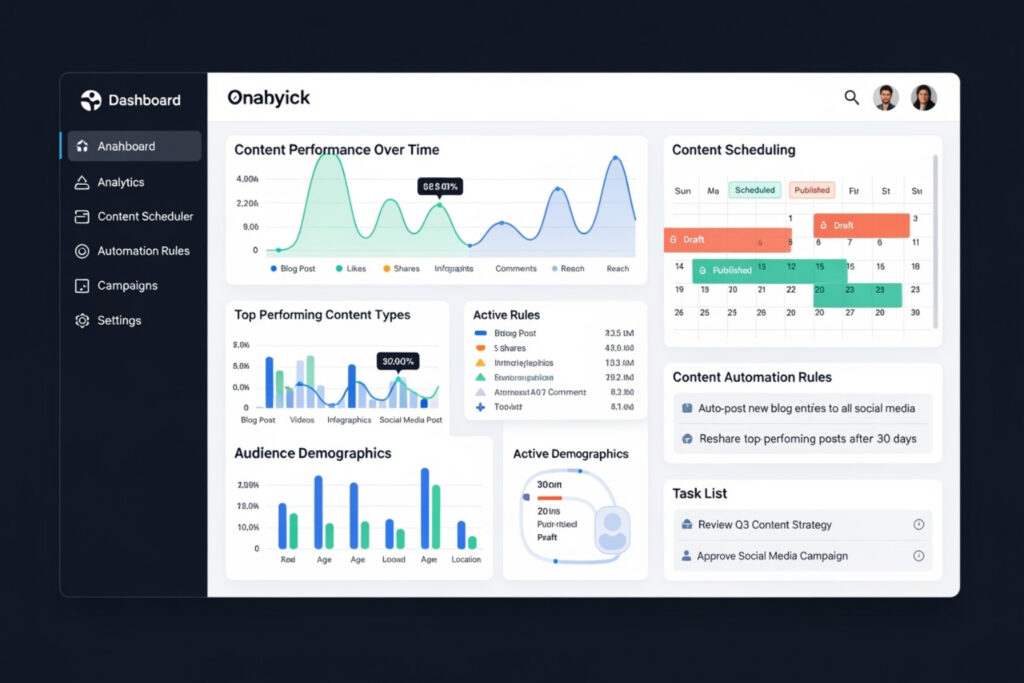
Automated content marketing uses technology like artificial intelligence to streamline content creation, distribution, and performance tracking. As the demand for digital content grows, manual creation becomes unsustainable. Automation offers a solution by handling repetitive tasks, allowing your team to focus on strategy and creativity.
This isn’t about replacing humans with robots. It’s a hybrid approach that combines AI’s efficiency with human oversight. AI can draft a blog post in minutes, but a human adds the emotional intelligence, brand personality, and strategic thinking that machines can’t replicate.
The benefits are clear: significant time savings, reduced costs, and the ability to scale content production. However, challenges like maintaining authenticity and ensuring accuracy require a balanced approach. The key is using automation to amplify human creativity, not replace it.
The Strategic Imperative: Why Automate Your Content?
Keeping up with content demands feels like a treadmill that keeps speeding up. Your audience expects fresh content, search engines reward consistency, and your team is already stretched thin. This is where automated content marketing becomes a strategic necessity, changing a time-consuming manual workflow into an efficient, scalable system.
Instead of spending hours on repetitive tasks, your team can focus on the strategic and creative work that moves the needle. Automation tools can analyze data, spot content gaps, and generate high-quality drafts in seconds, offering a significant cost saving compared to expanding your team. They also act as a quality control guardian, catching errors and ensuring brand consistency across all content.
Let’s look at how these two approaches compare:
| Feature | Manual Content Workflow | Automated Content Workflow |
|---|---|---|
| Tasks | Brainstorming, manual research, writing, editing, scheduling, posting, basic analytics | AI-driven ideation, content generation (drafts), automated proofreading, scheduled distribution, real-time performance tracking |
| Time | Weeks to months for a campaign | Days to weeks for a campaign, seconds for drafts |
| Resources | Large content team, external freelancers/agencies | Smaller core team, AI tools, automation platforms |
| Cost | High (salaries, fees) | Lower (subscription fees, reduced labor) |
| Consistency | Varies based on individual input | High (brand voice templates, automated checks) |
| Scalability | Limited by human capacity | High (can generate content at scale) |
| Error Rate | Prone to human error | Reduced through automated checks, but requires human oversight |
| Personalization | Manual segmentation, limited tailoring | Hyper-personalization at scale through data analysis |
The bottom line is that automation helps you work smarter, not just faster. It frees your team to do what humans do best—think strategically and create content that truly connects.
Key Benefits of Automated Content Marketing
- Time Savings and Scalability: Produce more content, from blog drafts to social posts, without burning out your team. What once took hours can now be drafted in minutes.
- Data-Driven Insights: AI analyzes performance data to identify content gaps, suggest relevant topics, and predict what will resonate with your audience.
- Improved Personalization: Deliver custom messaging and content recommendations to different audience segments at scale, improving engagement.
- Improved SEO Performance: Many tools incorporate SEO best practices, from keyword research to meta description optimization, helping your content rank better.
- Consistency and Reliability: Effortlessly maintain a consistent publishing schedule and brand voice, which builds trust with your audience and search engines.
- Cost-Effectiveness: Reduce expenses on hiring and freelancer fees, allowing you to allocate resources more efficiently and streamline your SEO efforts using outsourced services where it makes sense.
Risks and Challenges to Steer
Automation isn’t a magic bullet. Without careful management, it can create problems.
- Loss of Authenticity: AI struggles with genuine emotional connection. Over-reliance can lead to robotic content that fails to engage your audience.
- Potential for Inaccuracies: AI can confidently present flawed or fabricated information. Human fact-checking is non-negotiable to protect your brand’s credibility.
- Maintaining Brand Voice: Capturing the subtle nuances of your brand’s personality requires constant human refinement and oversight.
- Ethical and Legal Concerns: Issues around copyright, data privacy, and algorithmic bias are complex. The accountability ultimately falls on you, not the tool.
- Low-Quality Output: Automation can lead to keyword-stuffed or unhelpful content that hurts your SEO. Google prioritizes helpful content created for humans.
The key is balance. Use automation for speed and scale, but keep humans in charge of strategy, creativity, and quality control. This balanced approach is crucial for sustainable success, much like understanding how to build quality backlinks for SEO growth.
Your 5-Step Blueprint for Implementing Automated Content Marketing
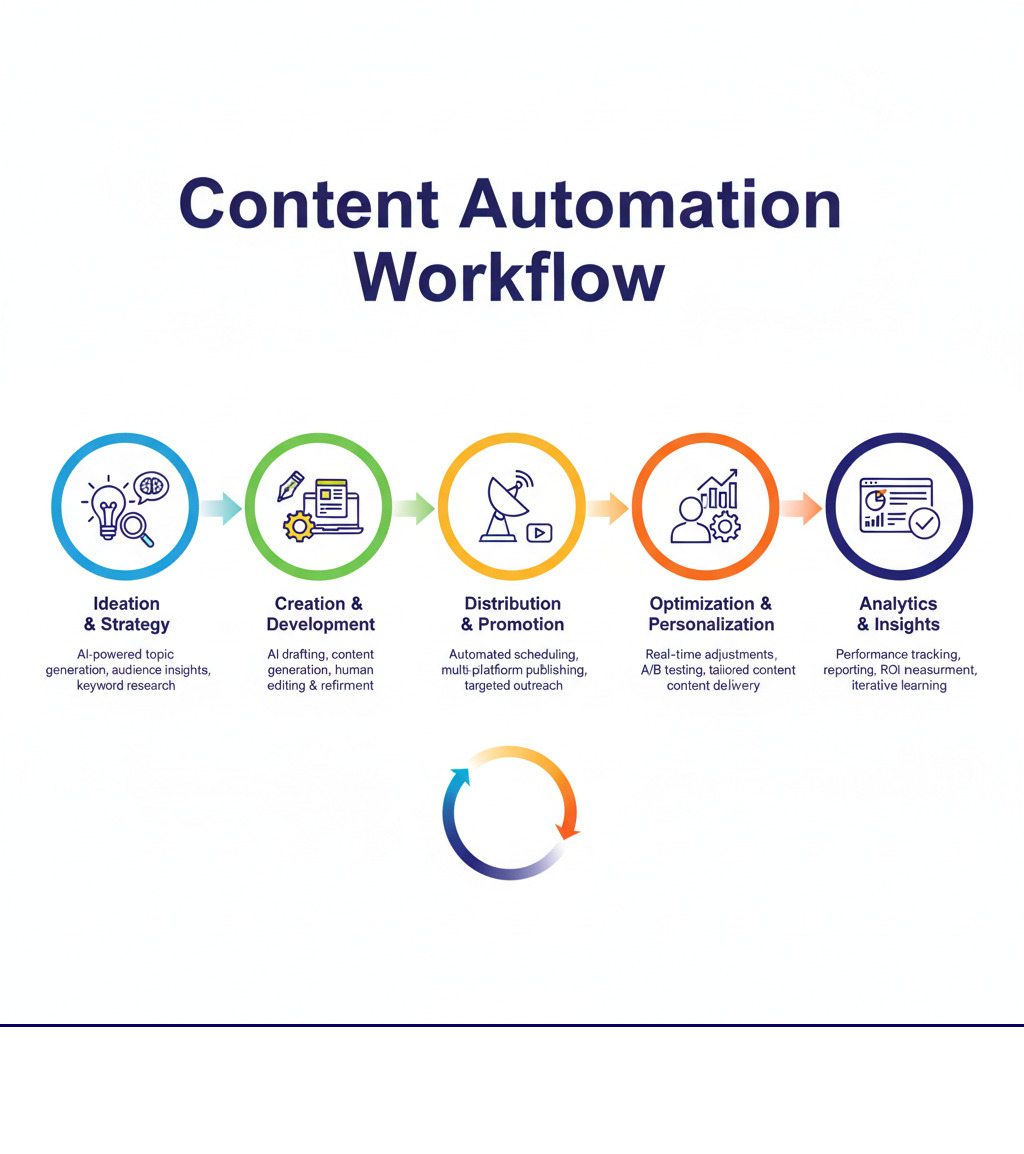
Implementing automated content marketing requires a structured approach. This blueprint walks you through five essential steps to build a system that scales content production without sacrificing the human touch.
Step 1: Strategy and Goal Definition
Before you choose any tools, define what you want to achieve. Start with a content audit to see what’s working and identify repetitive tasks prime for automation. Analyze your target audience to understand their pain points and preferences. Then, set clear, measurable objectives, such as increasing organic traffic by 30% in six months. Finally, decide which content types (e.g., social posts, blog drafts) are best suited for automation and create a content strategy that aligns with your business goals, much like mastering effective web marketing strategies for modern needs.
Step 2: Selecting the Right Technologies
With a strategy in place, select tools that match your specific needs and budget. Prioritize integration capabilities to ensure your new tools work seamlessly with your existing systems (CMS, CRM, etc.). Look for a suite of tools covering ideation, creation, optimization, distribution, and analytics. Choose platforms that are user-friendly and can scale with your business. Many offer free trials, so test them before you commit.
Step 3: Preparation and Setup
This detailed work is crucial for success. Create content templates and develop a comprehensive style guide to ensure consistency and maintain your brand voice. Build a centralized asset library for easy access to images, logos, and brand documents. Configure your automation workflows by mapping out rules and triggers—for example, automatically promoting a new blog post on social media. Finally, invest in team training and establish clear quality control processes, which is as critical as implementing effective GMB optimization services.
Step 4: Execution and Distribution
Put your system into action. Use automated scheduling to maintain a consistent publishing cadence on your blog and social media channels. Leverage email newsletter automation to send personalized content based on user behavior, dramatically improving engagement. Automate content repurposing by turning a blog post into a series of social updates or a newsletter section. This integrated approach ensures your content reaches the right people at the right time, similar to how SEO and GMB work together.
Step 5: Performance Tracking and Optimization
Automation is not a “set it and forget it” solution. Continuously monitor, learn, and improve. Set up comprehensive analytics by connecting your tools to platforms like Google Analytics. Track key metrics like traffic, engagement, and conversions. Use A/B testing to optimize headlines, calls to action, and formats. Feed these performance insights back into your system to make data-driven adjustments, creating a continuous learning loop that makes your content marketing smarter over time.
The Marketer’s Automated Toolkit: Technologies and Applications
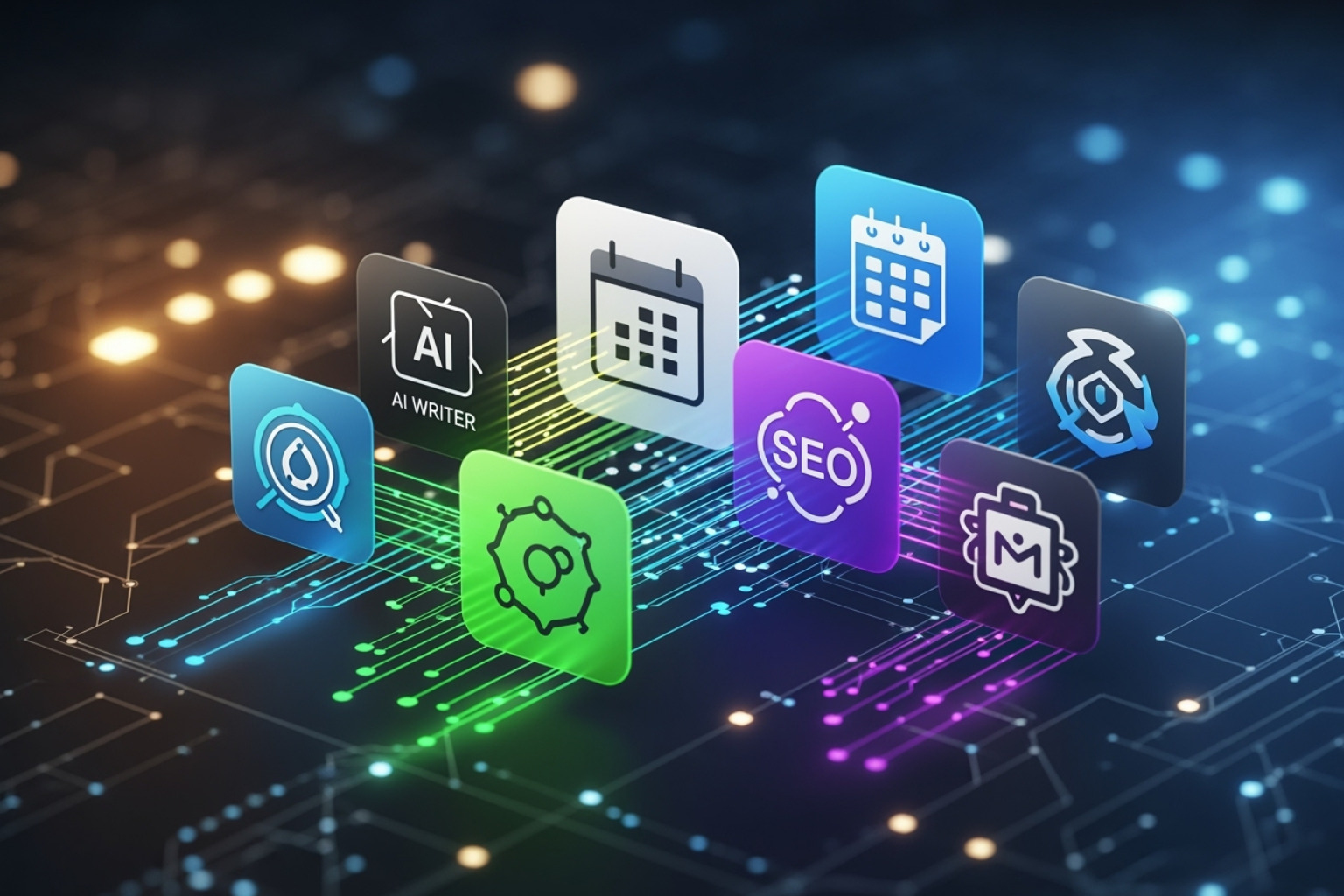
The world of automated content marketing runs on a collection of specialized tools designed to handle every stage of the content lifecycle. Think of them as your team’s best assistants, working together to create something more powerful than any single tool could achieve alone.
Automating for SEO and Ideation
Great content starts with a solid, data-driven idea. Automation condenses hours of research into minutes.
- Keyword Research & Topic Clustering: Tools analyze search data to find relevant terms and map out entire content ecosystems, suggesting pillar pages and related subtopics. This data-driven approach directly supports our SEO services.
- Competitor Analysis & Trend Prediction: AI scans competitor content to find performance gaps and analyzes search patterns to spot emerging trends, giving you a first-mover advantage.
Automating for Copywriting and Creation
Once you know what to write, automation dramatically speeds up the creation process.
- AI Writing Assistants: Modern tools generate drafts for blog posts, social media captions, and emails based on your keywords and brand voice. They provide a solid starting point for human refinement.
- Scaled Content Generation: Quickly create hundreds of unique product descriptions or dozens of ad copy variations for A/B testing, helping our content marketing services deliver better results through constant optimization.
- Multimedia Creation: Beyond text, AI can now generate images, assist with video editing, and create infographics, allowing for a rich, diverse content presence.
Automating for Distribution and Promotion
Creating content is pointless if no one sees it. Automation is essential for consistent and effective distribution.
- Social Media Scheduling: Plan and queue posts across all platforms weeks in advance, ensuring a steady brand presence at optimal times.
- Email Marketing Automation: Trigger personalized email sequences based on user behavior, such as a follow-up series after a whitepaper download.
- Audience Segmentation & Chatbots: AI can segment your audience for targeted content delivery and power chatbots to provide instant, personalized information 24/7. These tools integrate seamlessly with our social media services, ensuring your content actively reaches and engages your audience.
The Human Touch: Balancing Automation with Authenticity
The real magic of automated content marketing happens when you combine AI’s efficiency with human creativity and judgment. Think of AI as a capable assistant that handles the heavy lifting, while your team provides the strategic vision and emotional depth that technology can’t replicate.

This partnership is essential because AI doesn’t understand what makes your audience laugh, what their deepest concerns are, or how to build the authentic connections that create loyal customers.
The Crucial Role of Human Oversight and Creativity
AI-generated content always needs a human editor. Fact-checking is non-negotiable, as AI can state incorrect information. Human editors also transform acceptable drafts into exceptional content by refining the structure, improving flow, and polishing the language with grammar and style-checking tools.
Most importantly, humans add personality and tell compelling stories. AI can mimic a brand voice, but it struggles with humor, empathy, and the creative insights that make content memorable. Strategic direction—the why behind your content—must always come from human insight.
Ensuring Quality, Originality, and Brand Consistency
Quality control is the difference between content that builds your brand and content that damages it.
- Establish a Manual Review Process: Every piece of AI-generated content must be reviewed by a human for accuracy, tone, and brand alignment.
- Check for Originality: Always run plagiarism checks, as AI can sometimes unintentionally duplicate content from its training data.
- Focus on Value: Refine AI drafts to ensure they are truly helpful. Google prioritizes helpful content that demonstrates expertise and provides real value to the reader.
Ethical Considerations and Legal Implications
As automation becomes more common, navigating the ethical landscape is crucial.
- Be Transparent: Consider disclosing when content is AI-assisted to build trust with your audience.
- Protect Data Privacy: Ensure your use of AI complies with regulations like GDPR and CCPA.
- Understand Copyright: The law around AI-generated content is still evolving, so stay informed.
- Take Accountability: Your business is ultimately responsible for everything you publish, regardless of how it was created. This means having robust human oversight and a commitment to quality.
The Future of Content: What’s Next for Automation and AI?
The evolution of automated content marketing is just beginning. The tools of tomorrow promise to be more intelligent, personal, and deeply integrated into business operations.
We’re moving toward predictive analytics that will forecast which topics and formats will resonate before you publish. Hyper-personalization will become a reality, with content that adapts dynamically to individual users in real-time. The quality of AI-generated multimedia, including video, images, and audio, is improving at an incredible pace, enabling richer content experiences without a proportional increase in production costs.
As technology advances, voice and visual search optimization will become critical, and AI will help structure content for these new findy methods. Content automation will achieve deeper integration into business strategy, flowing seamlessly from marketing to sales and customer service to ensure a consistent, personalized customer journey.
The future isn’t about AI replacing marketers. It’s about a partnership where technology handles complexity and scale, freeing humans to focus on the strategic thinking, creativity, and emotional intelligence that truly make content connect.
Frequently Asked Questions about Automated Content Marketing
Can AI-generated content be penalized by Google?
No, Google does not penalize content simply because it was created by AI. The focus is on quality. If your content is original, valuable, and genuinely helps users, it can rank well. However, if you use AI to produce low-quality, spammy, or unhelpful content designed to manipulate search rankings, you risk being penalized. The key is to use AI as a tool and ensure every piece is refined by a human to meet Google’s standards for helpful content.
Is automated content creation suitable for all industries?
Yes, automation can benefit nearly any industry, but the approach must be adapted. For e-commerce or digital marketing, it’s a game-changer for high-volume needs like product descriptions and social posts. In highly specialized or regulated fields like healthcare, law, or finance, accuracy is critical. For this compliance-driven content, AI should only be used to create a first draft. Every piece must be thoroughly reviewed and verified by a human subject matter expert to avoid serious errors.
How can I avoid AI-generated content sounding robotic?
Treat AI as a collaborator, not a replacement. Always have a human edit the AI-generated first draft to inject personality, smooth out awkward phrasing, and add emotional depth. Incorporate real stories, customer examples, and anecdotes to make the content more relatable. Define your brand voice with a detailed style guide and use it to train your AI tools, but always have a human review the output to ensure it truly captures your brand’s unique tone. This hybrid approach delivers both efficiency and authenticity.
Conclusion
Automated content marketing is a fundamental shift in how businesses create and distribute content. It saves time, cuts costs, and enables you to scale production while personalizing experiences for your audience. Most importantly, it frees your team from repetitive tasks to focus on the high-impact strategic and creative work that connects with people.
However, success requires navigating challenges like maintaining an authentic voice and ensuring accuracy. The future isn’t a choice between humans and machines; it’s a hybrid model. The most effective strategies use AI for speed and data analysis while relying on humans for emotional intelligence, creative storytelling, and strategic vision. Automation amplifies human talent, not replaces it.
At MDM Marketing in North Canton, OH, this balanced, data-driven philosophy is at the core of what we do. We blend technical precision with content that genuinely moves people, helping businesses stand out.
Ready to see how the right balance of technology and human creativity can transform your content strategy? Contact us today to discuss how a smart, sustainable approach can deliver real results.
About Jay McCullough
This author hasn't written a bio yet.