
Understanding Inbound Links SEO: Your Path to Higher Rankings
Inbound links seo is the practice of earning hyperlinks from other websites to your own. Search engines use these links as crucial signals for ranking your content. If you’re struggling with low online visibility, understanding inbound links is essential to improving your website’s performance.
Quick Answer: What You Need to Know About Inbound Links SEO
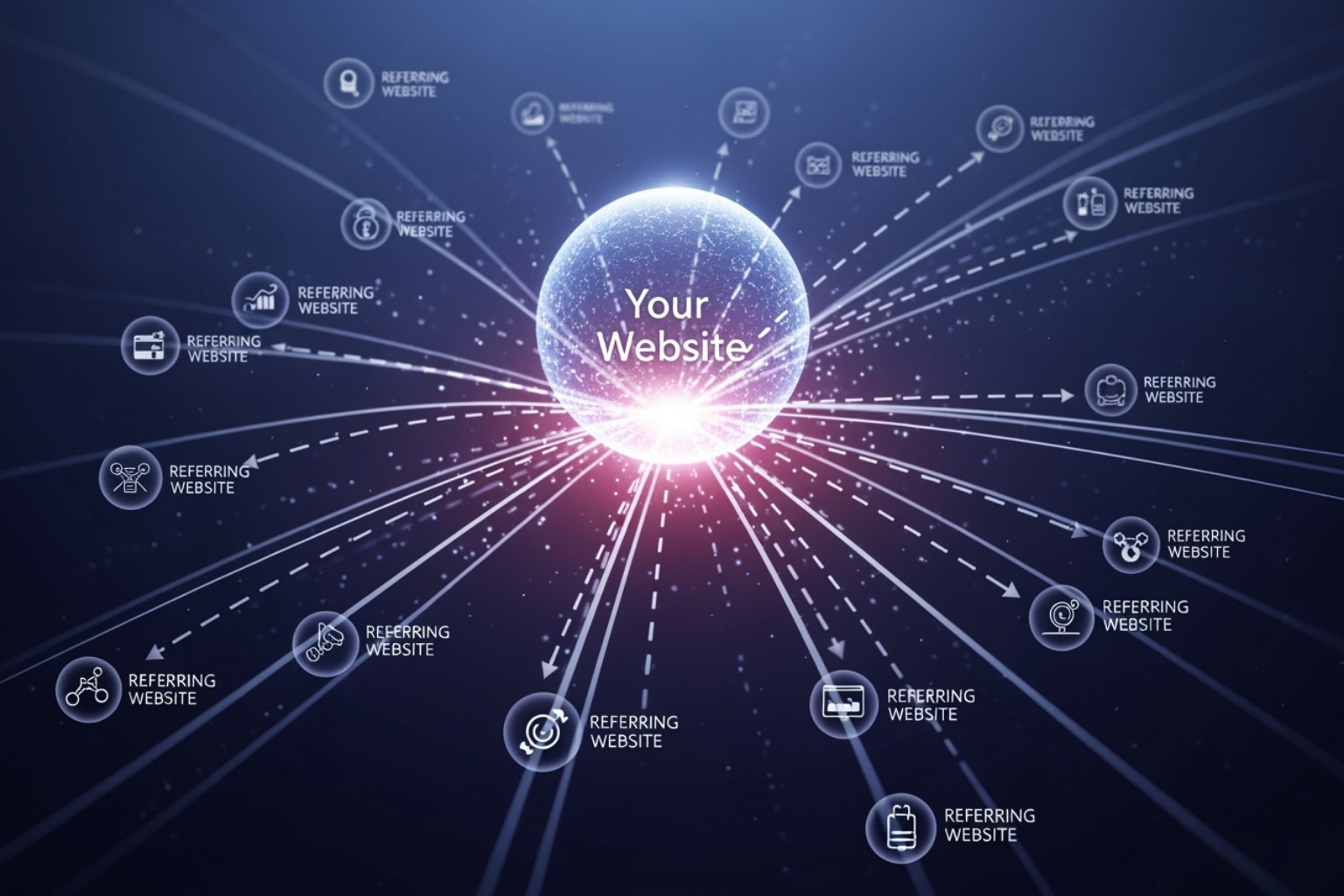
- Inbound links (or backlinks) are links from external websites pointing to your site.
- They act as digital endorsements, signaling trust and authority to search engines.
- Quality matters more than quantity—one link from a reputable site beats dozens from low-quality sources.
- High-quality inbound links help you rank higher and drive targeted traffic.
- Building them requires creating valuable content and genuine relationship building.
Think of inbound links as digital endorsements. When a respected website links to yours, it tells search engines and users: “This content is valuable enough to reference.”
While Google’s algorithm has evolved, backlinks remain a powerful signal for quality and trust. Pages in Google’s top position have 3.8 times more backlinks than pages in positions 2-10. The challenge is that over half of SEO professionals find link building to be their biggest hurdle. However, understanding the fundamentals makes it much less intimidating.
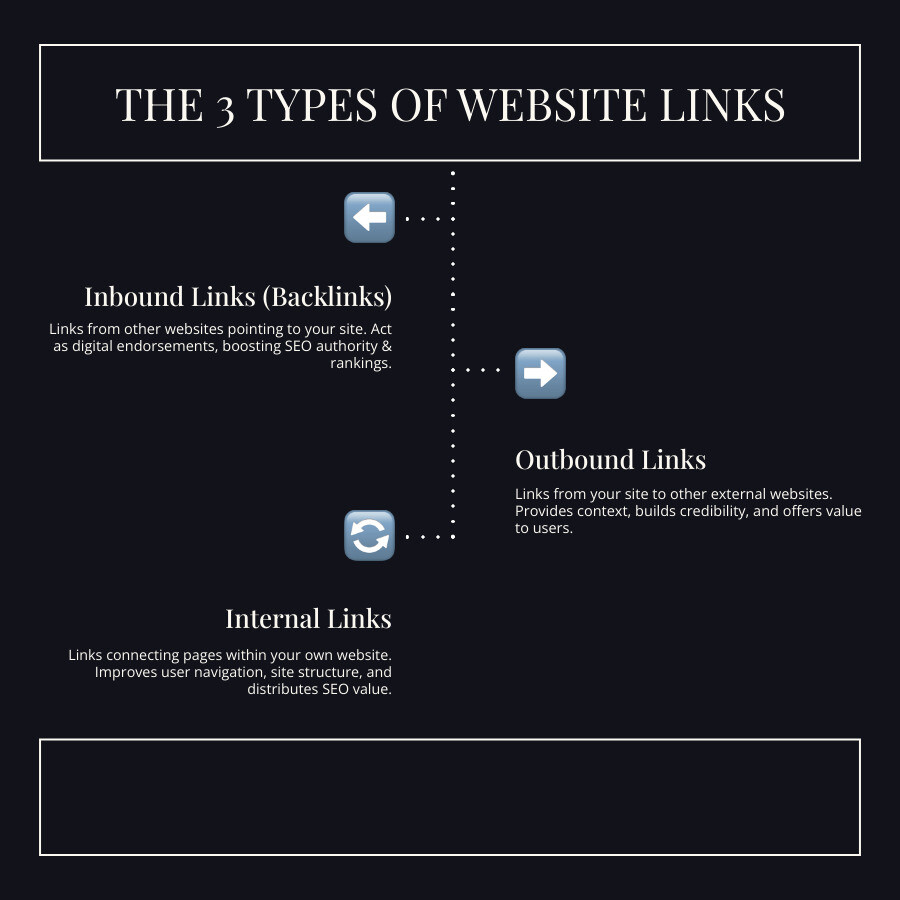
Inbound links seo terms at a glance:
Why Inbound Links are the Currency of the Web
In the digital world, inbound links act like currency. When another site links to yours, they’re spending their credibility to endorse your content, signaling its value. Each quality link brings you closer to the visibility, traffic, and authority needed to succeed online.
When a site links to you, you gain immediate benefits: referral traffic from interested users, increased website credibility, and a lasting Search Engine Optimization (SEO) boost.
These votes of confidence add up. Google’s original PageRank concept was built on this idea: links are endorsements, and endorsements from respected sources matter more. While Google has evolved beyond the simple PageRank formula, this core truth hasn’t changed. Your website authority is still heavily influenced by who’s willing to vouch for you with a link.
The mechanics are fascinating. How Google ranks results involves hundreds of signals, but quality backlinks remain one of the most powerful. If you’re serious about growth, check out our insights on how to build quality backlinks for SEO growth to understand what moves the needle.
The Direct Impact on Rankings and Authority
Search engine algorithms are trust-evaluation machines. Inbound links give them clear answers about which websites deserve to rank at the top.
Each quality link is a trust signal. When a respected site links to you, Google sees it as a professional endorsement that carries weight. This trust builds domain authority (for your whole site) and page authority (for specific pages). Links without the ‘nofollow’ attribute pass “link equity,” sharing their authority with you.
The higher rankings correlation is hard to ignore. Pages in Google’s top spot typically have 3.8 times more backlinks than pages in positions 2-10. This isn’t a coincidence; it’s cause and effect. Google cares about links because they improve the user experience by helping people find valuable resources.
Beyond SEO: Referral Traffic and Brand Credibility
Beyond SEO, inbound links drive immediate, targeted traffic. Visitors from relevant sites are already interested in your topic, which leads to higher conversion rates.
Brand visibility also grows with each link on a respected site, introducing your brand to a new audience. Over time, this builds industry trust that money can’t buy. You become the name that keeps coming up in important conversations.
The best links come from building relationships. Genuine connections with industry professionals lead to natural, high-quality links. A single link from a respected publication validates your expertise, introduces you to a new audience, and opens doors to future collaborations. Unlike paid ads, quality inbound links provide lasting value for years.
Anatomy of a High-Value Inbound Link
Not all inbound links are equal. A link from an authoritative, relevant site is far more valuable than one from a spammy source. Understanding this difference is key to an effective inbound links seo strategy.
A high-value inbound link has five key ingredients: source authority, topical relevance, anchor text, link placement, and its dofollow versus nofollow attribute.
Defining ‘Good’ Inbound Linking: Authority and Relevance
A good link comes from an authoritative, trusted website. As Google notes, when “other prominent websites on the subject link to the page, that’s a good sign that the information is of high quality.” When these prominent sites point to you, search engines take notice.
Topical relevance is also crucial. A link from a page on a similar topic is much more valuable than one from an unrelated site. This tells search engines your content belongs in that niche conversation. The quality of the source page’s content matters, too; a well-researched article linking to you is a stronger signal. Google’s view on high-quality information emphasizes this distinction.
Technically, links can be dofollow or nofollow. A dofollow link passes link equity—or “SEO juice”—to your site, boosting your authority. A nofollow link tells search engines not to pass this equity, but it can still drive referral traffic and increase brand visibility.
| Feature | Dofollow Link | Nofollow Link |
|---|---|---|
| SEO Value | Passes link equity (PageRank), boosts authority | Does not pass link equity directly |
| Search Engine | Interpreted as a vote of confidence | Instructs search engines to ignore for ranking |
| Primary Goal | Improve search engine rankings and domain authority | Drive referral traffic, brand awareness |
| Examples | Editorial links from reputable blogs, resource pages | Social media links, comment sections, sponsored content |
The Critical Role of Anchor Text
Anchor text—the visible, clickable text of a hyperlink—provides crucial context about the linked page to both users and search engines.
Good inbound links use natural anchor text that accurately describes the linked page without being spammy. Types of anchor text include:
- Branded anchors: Your company name (e.g., “MDM Marketing”).
- Generic anchors: Phrases like “click here” or “learn more.”
- Naked URLs: The web address itself (e.g.,
https://mdmmarketing.io/). - Keyword-rich anchors: Specific keywords like “inbound links seo guide.”
- Partial match anchors: Natural phrases containing a keyword, like “their approach to inbound links seo.”
While keyword-rich anchor text can help, overdoing it can trigger Google penalties. What Google considers unnatural links includes manipulative, keyword-stuffed anchor text. The goal is organic, useful anchor text. A diverse mix of anchor types creates a healthy, trustworthy backlink profile.
Mastering Inbound Links SEO: White-Hat Strategies for Earning Links
Earning quality inbound links is a “white-hat” strategy focused on genuine value, not manipulative shortcuts. It requires patience, creativity, and a commitment to ethical practices. At MDM Marketing, we focus on sustainable growth through contextual link building services that work.
Create Link-Worthy Content
If your content isn’t exceptional, no one will link to it. The foundation of earning inbound links is creating something genuinely valuable that others in your industry want to reference.
What makes content “link-worthy”?
- Comprehensive guides become go-to resources in your niche.
- Original research or data provides unique findings that others will cite.
- Free tools or templates that solve real problems are link magnets.
- Infographics and data visualizations make complex information shareable.
- Evergreen content remains relevant and attracts links over time.
- Expert roundups compile insights from industry voices, building relationships.
- Detailed how-to articles become resources people bookmark and share.
Long-form content (1,500-2,000+ words) often performs well, but only if it’s deep, insightful, and genuinely helpful. Quality trumps length. Maintaining a blog with regular, creative content gives you more opportunities to create link-worthy material. For more insights, check out our guide on Mastering Effective Web Marketing Strategies for Modern Needs.
Proactive Outreach and Relationship Building
Even brilliant content needs promotion. Proactive outreach is about connecting with others in your industry and offering real value.
- Guest blogging: Write for another high-quality site in your niche to gain exposure, credibility, and a link back to your site.
- Broken link building: Find broken links on other sites, create better replacement content, and suggest they link to you instead. It’s a win-win.
- Unlinked brand mentions: Find where your brand is mentioned without a link. Politely ask the site owner to make the mention clickable.
- Resource page link building: If you have exceptional content, suggest it for inclusion on relevant resource pages that curate valuable links.
- Influencer outreach: Build authentic relationships with influencers for mentions, shares, and backlinks. This takes time but has a high payoff.
- Digital PR: Connect with journalists and publications seeking expert sources to earn quotes and high-authority links.
Authenticity is key to all these tactics. Building real relationships is a long-term strategy that pays dividends and aligns with modern trends in Link Building 2025 that prioritize sustainable growth.
Local SEO vs. Traditional SEO: The Role of Geographic Inbound Links
For inbound links seo, location is critical. For local businesses, the strategy shifts from broad outreach to building deep community roots. For a plumber in North Canton, OH, a link from the local Chamber of Commerce is more powerful for local search than a link from a national blog.
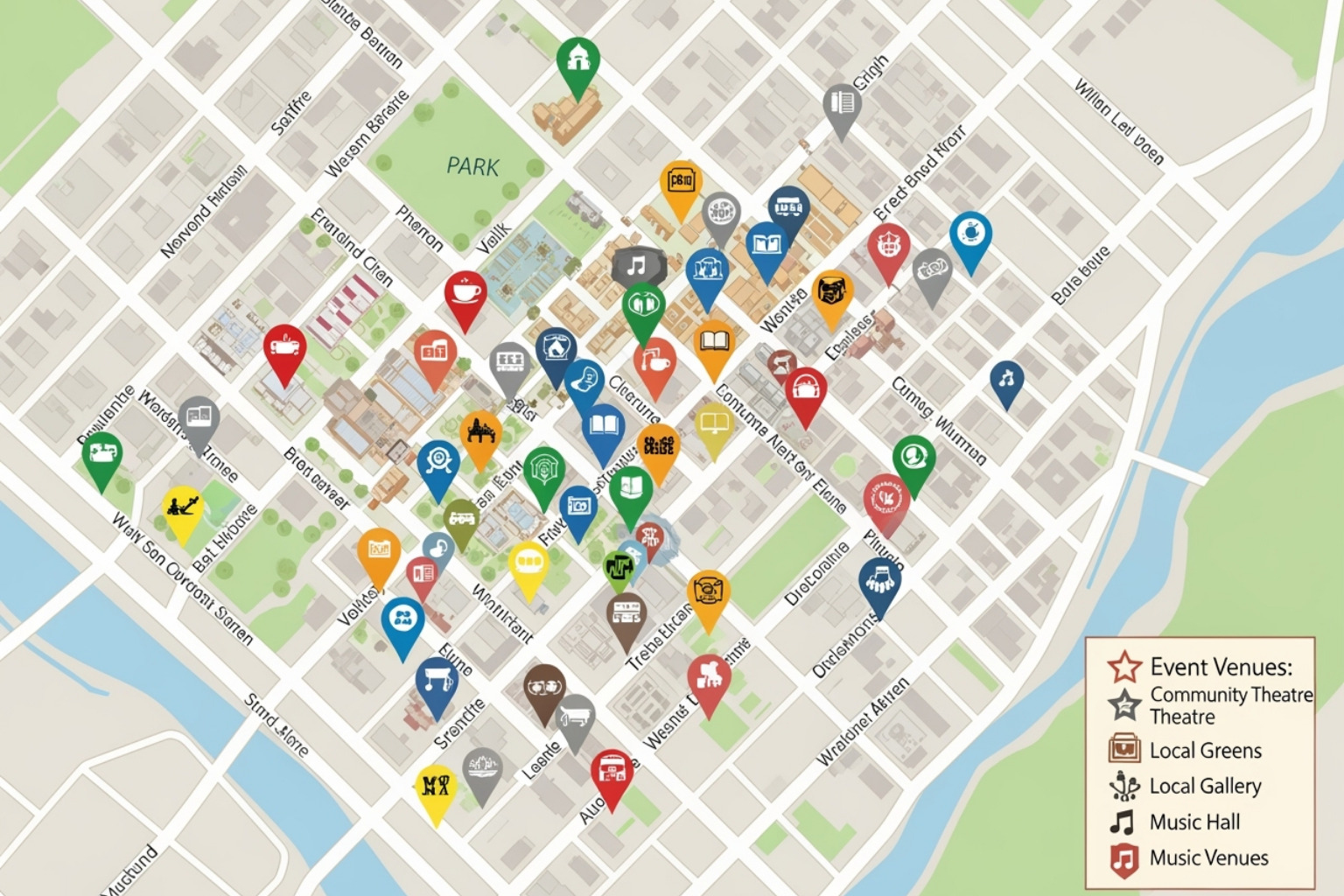
Google’s local algorithm prioritizes geographic signals that prove your business is a trusted part of the local community. These signals tell search engines, “This business is woven into the fabric of this town.” For construction companies and other location-dependent businesses, this approach is essential. The relationship between local presence and search visibility is so critical that we’ve dedicated an entire guide to Local SEO for Construction Companies.
Local inbound links seo often aligns with good business practices. When you’re actively engaged in your community, links tend to follow naturally. You’re not just building backlinks—you’re building relationships that boost your search rankings.
Strategies for Acquiring Local Links
Building a strong local link profile requires getting involved in your community. The most effective local links come from authentic participation.
- Local sponsorships: Sponsoring local teams, charities, or events often results in valuable links from their websites, reflecting real community investment.
- Joining local business associations: Memberships in groups like the Chamber of Commerce provide directory listings and links from trusted community institutions.
- Local directories and citations: Listings in Yelp, Yellow Pages, and other local directories reinforce your geographic relevance. Understanding Google Local Citations is crucial here.
- Community event participation: Participating in local events creates opportunities for mentions and links from news outlets, organizers, and other participants.
- Local meetups and networking groups: Engage with local groups through online platforms or in person. Hosting a meeting can earn you links from the group’s page.
- Connecting with local bloggers and journalists: Build relationships with local media to stay on their radar for stories, earning valuable local links.
The key is authenticity. Genuine community participation earns links that reflect real-world connections, which is exactly what local search algorithms are designed to reward.
Maintaining a Healthy Backlink Profile
Your backlink profile is like a credit score: it takes time to build but can be damaged quickly. You must actively monitor, evaluate, and manage your links to ensure they help, not hurt, your inbound links seo performance.
A healthy backlink profile has diverse, relevant links and is free from toxic or spammy ones. This ongoing management is what separates sustainable SEO growth from a temporary spike. Many businesses find that streamlining SEO efforts through outsourced services provides the expertise and consistency they need.
Best Practices for Evaluating Your Inbound Links SEO Performance
Regularly check your inbound link profile to understand what’s working and identify opportunities.
- Use link analysis tools: SEO platforms provide comprehensive data on your backlinks. Using an inbound link checker can help identify which posts already have link equity.
- Analyze referral traffic: Look at your website analytics. High-quality links should drive engaged visitors who convert, not just clicks.
- Focus on quality metrics: A handful of authoritative, relevant links will always outweigh hundreds of low-quality links from sketchy sites.
- Audit frequently: A thorough review at least quarterly is a good baseline. Check more frequently if you’re running active campaigns or see unusual ranking fluctuations.
Pitfalls to Avoid: Black-Hat Tactics and Toxic Links
Black-hat link-building tactics are a trap that can destroy your SEO work. Google’s algorithms are sophisticated at detecting manipulation, and the penalties can be severe.
- Link schemes: Avoid buying or selling links, excessive link exchanges, and large-scale article marketing with keyword-stuffed anchors. Google explicitly doesn’t approve of buying links.
- Private Blog Networks (PBNs): These networks, created just for link building, are easily detected and lead to harsh penalties.
- Automated link building: Software that generates mass low-quality links is a major red flag for search engines.
- Over-optimized anchor text: Using the same exact-match keyword anchor text repeatedly signals manipulation.
- Spammy comments and forums: Dropping irrelevant links doesn’t help and can harm your reputation.
If you find toxic links pointing to your site (sometimes from negative SEO), use Google’s Disavow Tool to tell Google to ignore them. Regularly monitoring your backlink profile for suspicious links is essential for a healthy inbound links seo strategy.
Frequently Asked Questions about Inbound Links
Navigating inbound links seo can be overwhelming. Here are answers to some of the most common questions.
How many inbound links do I need to rank?
There is no magic number of links needed to rank. Quality beats quantity. A few authoritative, relevant links are more powerful than hundreds of low-quality ones. While top-ranking pages have more backlinks, these are high-quality links.
Analyze your competitors to set a realistic benchmark. See how many quality backlinks they have for your target keywords. Keyword difficulty and your site’s overall topical authority also play a huge role. Focus on earning relevant, authoritative links rather than chasing an arbitrary number.
How long does it take for new inbound links to affect SEO?
The impact of new links is gradual, typically taking weeks to months to affect SEO. There are no overnight results.
First, search engines must crawl and index the new link. This can take days or weeks, though links from high-authority sites are often found faster. The authority of the linking site also influences how quickly you’ll see an impact.
This delay is also strategic. A gradual, natural growth in your backlink profile signals that your content is genuinely valuable. A sudden spike in links can raise red flags. Be patient with your inbound links seo efforts for sustainable, long-term growth.
Can social media links count as inbound links for SEO?
Technically yes, but they don’t work like traditional inbound links. Most social media links have a nofollow attribute, meaning they don’t pass direct “SEO juice” or link equity to boost your rankings like a dofollow link would.
However, social media provides significant indirect SEO benefits. It drives referral traffic, and high user engagement on your site sends positive signals to Google. Social media also amplifies your brand visibility, increasing the chance that bloggers and journalists will find your content and provide valuable dofollow links.
An active social media presence creates brand signals that contribute to your overall online authority. While not a direct factor for inbound links seo, social media is a vital part of a complete digital marketing strategy.
Conclusion
Inbound links seo builds your website’s reputation. Each quality link is a digital endorsement that builds authority, drives traffic, and establishes your brand as an expert. There are no shortcuts. Building a strong backlink profile is a long-term strategy rewarding patience and quality. Sustainable success comes from creating helpful content and building genuine relationships, not from manipulative tactics.
Maintaining a healthy backlink profile requires ongoing attention through regular audits and ethical practices. The search landscape evolves, but the core principle remains: earn links by being genuinely valuable.
For businesses in competitive markets, a data-driven approach to inbound links seo is essential. MDM Marketing’s approach combines technical precision with content that connects with people. Our focus on custom, results-driven solutions means your link-building strategy is built around your specific goals.
The path to higher rankings starts now. If you’re ready to stop guessing and start growing with a partner who understands the science and art of SEO, it’s time to take action. Take the next step with Outsourced SEO and find how MDM Marketing can transform your website’s authority and performance. Your future customers are searching—make sure they find you.
About Jay McCullough
This author hasn't written a bio yet.