
Why the Best AI Advertising Campaigns Matter for Your Business
The best AI advertising campaigns of 2025 have transformed how brands connect with audiences—delivering personalization at scale, cutting production costs by up to 90%, and generating millions of views with budgets that would barely cover a single traditional ad shoot.
Top AI advertising campaigns that delivered measurable results:
| Campaign | Brand | Key Result | AI Technology Used |
|---|---|---|---|
| “Never Done Evolving” | Nike | 50M views, 34% engagement increase | AI video synthesis, machine learning |
| Unique Jar Labels | Nutella | 7M jars sold (100% sell-through) | Generative design AI |
| “Create Real Magic” | Coca-Cola | 156% user engagement increase | DALL-E, generative art |
| Jen AI Spokesperson | Virgin Voyages | 28% booking conversion lift | AI avatar, personalized video |
| NBA Finals Commercial | Kalshi | $2,000 cost vs. $1-2M typical | Generative video AI |
The numbers tell a clear story. Companies using AI in advertising save an average of 3 hours and 10 minutes per piece of content. The global AI market has surpassed $184 billion in early 2025—up nearly $50 billion from 2023—and 86% of advertisers now use or plan to use generative AI for video ads.
What makes these campaigns work isn’t just the technology. It’s how brands combine AI’s speed and personalization with human creativity and strategic thinking. From Harley-Davidson’s 2,930% increase in leads to JPMorgan Chase’s 450% CTR boost with AI-generated copy, the results prove AI advertising delivers when executed properly.
This article breaks down the campaigns that actually worked, the tools they used, and what you can learn from them—whether you’re running a local service business or scaling a national brand.
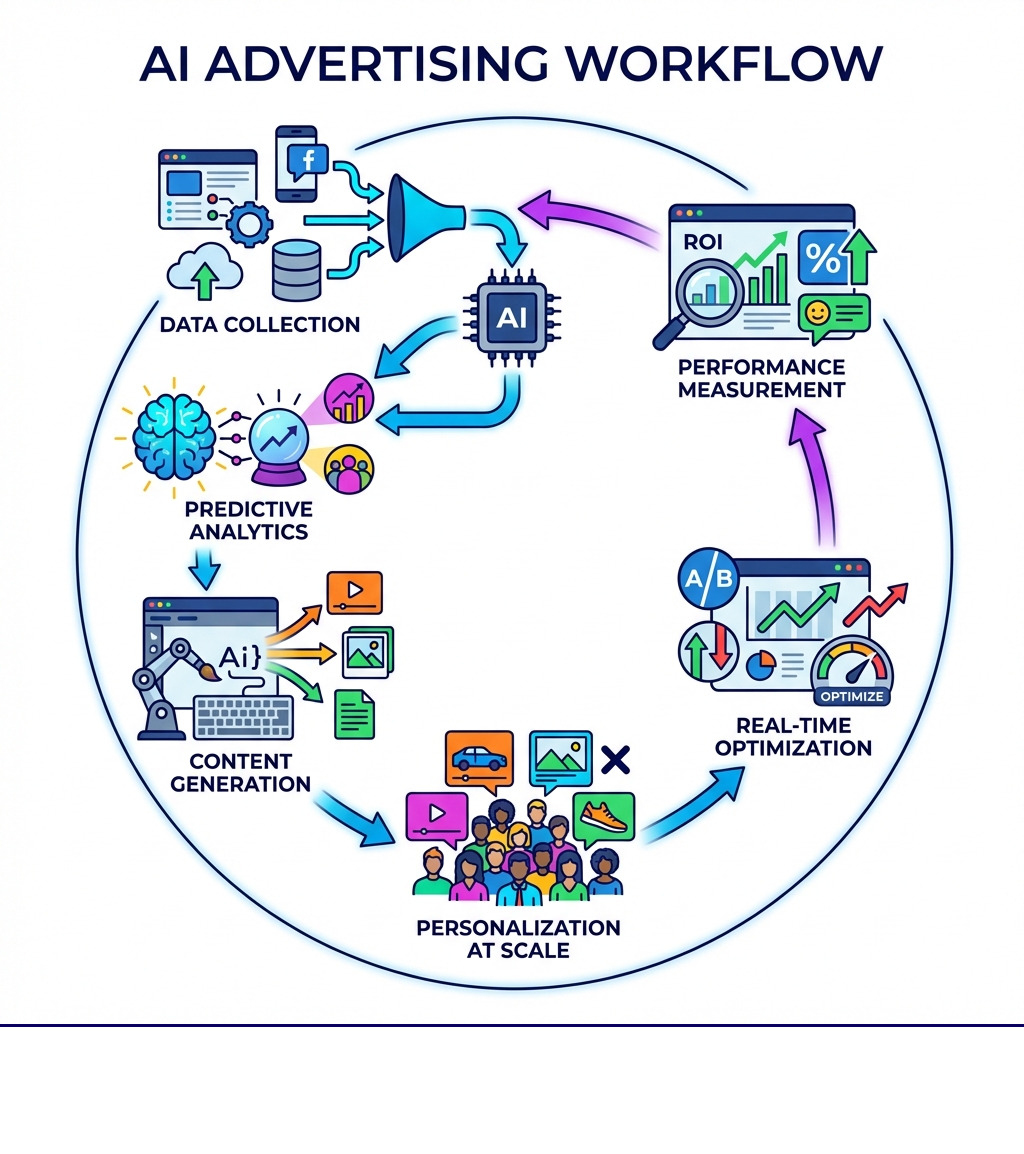
Why Brands are Pivoting to AI Advertising in 2025
The shift toward artificial intelligence isn’t just a trend; it’s a fundamental change in the marketing operating system. Brands are moving away from “one-size-fits-all” creative and toward Data-Driven Marketing strategies that prioritize efficiency and hyper-personalization.
One of the biggest drivers is the sheer speed of production. For instance, creative teams at companies like Superside have reported producing video content 40% to 60% faster using AI tools. This allows brands to test more ideas in a week than they previously could in a quarter. When you can fail fast and iterate instantly, finding the “winning” ad becomes a matter of data, not just guesswork.
Furthermore, the global AI market growth has provided companies with more accessible tools than ever before. Small businesses and startups can now access enterprise-level creative capabilities. By leveraging Automated Content Marketing, brands can scale their output without a linear increase in headcount.
Comparing Production: Traditional vs. AI
| Feature | Traditional Production | AI-Powered Production |
|---|---|---|
| Turnaround Time | Weeks to Months | Hours to Days |
| Average Cost | High (Crews, Studios, Talent) | Low (Software Subscriptions, Prompt Engineering) |
| Scalability | Limited by Physical Assets | Infinite (Digital Twins, Generative Backgrounds) |
| Personalization | Hard to do at scale | 1.3M+ unique versions possible |
The ability to achieve massive cost reduction while increasing output is why 84% of marketers planned to increase their marketing investments for 2024 and 2025, with a heavy focus on brand building through these new technologies.
The Best AI Advertising Campaigns of 2025: A Deep Dive
In 2025, the best ai advertising campaigns aren’t just technical demos—they are emotional, engaging, and highly profitable. They represent a blend of brand innovation and consumer engagement that was previously impossible. By partnering with a Performance Marketing Company, brands are now able to track these AI efforts directly to their bottom line.
Nike: “Never Done Evolving” with Serena Williams
Nike has always been at the forefront of sports storytelling, but the “Never Done Evolving” campaign took things to a new level. To celebrate their 50th anniversary, Nike used machine learning to do the impossible: pit the 1999 version of Serena Williams against her 2017 self.
Using Nike’s AI evolution technology, researchers analyzed 20 years of game footage to recreate Serena’s form, skill, and evolution over time. This wasn’t just a video edit; it was a simulation of two different eras of an athlete’s life.
- The Result: The campaign garnered over 50 million views and a 34% increase in engagement.
- The Lesson: AI can be used to tell “impossible” stories that resonate deeply with a brand’s history and its fans.
How Coca-Cola Built One of the Best AI Advertising Campaigns
Coca-Cola’s “Create Real Magic” campaign is a masterclass in user-generated content (UGC) powered by AI. Through a Coca-Cola’s AI alliance with OpenAI and Bain & Company, the brand invited fans to use DALL-E and ChatGPT to create original artwork using iconic Coca-Cola assets.
The best submissions weren’t just kept on a website; they were featured on billboards in London’s Piccadilly Circus and New York’s Times Square. This turned every fan into a potential digital artist for the brand.
- The Result: A 156% increase in user engagement and a significant lift in brand sentiment.
- The Lesson: Give your audience the tools to play with your brand. When you let people join the fun, they become your most effective ambassadors.
Why Virgin Voyages Ranks Among the Best AI Advertising Campaigns
Virgin Voyages faced a challenge: how do you send a personalized video invite to every single potential traveler? Hiring a celebrity for 100,000 individual recordings is impossible. Their solution was “Jen AI.”
By creating a digital twin of Jennifer Lopez, Virgin Voyages allowed users to generate personalized video invitations. This Virgin Voyages Jen AI case study showed that users could enter their name and vacation details, and “Jen AI” would invite their friends on a cruise in a high-quality video format.
- The Result: A 28% increase in booking conversions and a 40% reduction in customer service friction.
- The Lesson: Scalable personalization is the “killer app” of AI. It makes every customer feel like they are getting a VIP experience.
Essential Tools Powering the Best AI Advertising Campaigns
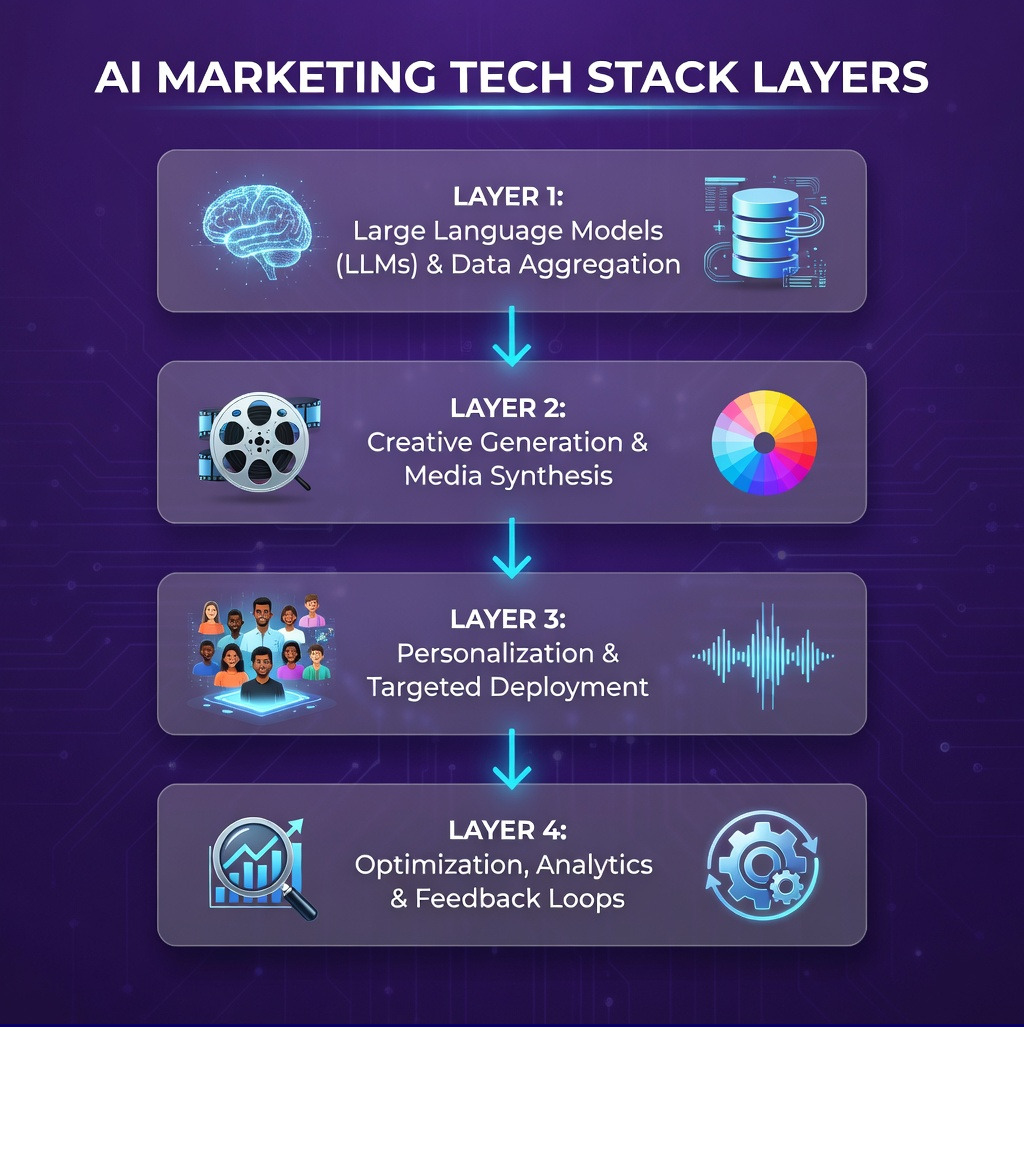
Behind every successful campaign is a robust “tech stack.” Marketers are no longer just using one tool; they are chaining multiple platforms together to create a seamless workflow.
For example, a team might use Automated Keyword Research to find trending topics, ChatGPT to draft the script, and ElevenLabs to create a professional voice-over.
Top Generative Video and Creative Tools:
- ChatGPT / Claude: For ideation, scriptwriting, and ad copy.
- Midjourney / DALL-E: For high-fidelity brand imagery and storyboards.
- Runway / Pika / Sora: For changing text or images into cinematic video.
- ElevenLabs: For ultra-realistic voice cloning and narration.
- Synthesia / HeyGen: For creating AI avatars and virtual spokespeople.
- Persado: For AI-generated ad copy that specifically targets emotional triggers (JPMorgan Chase saw a 450% CTR increase using this).
Navigating the Challenges and Ethics of AI in Ads
While the successes are brilliant, the road to the best ai advertising campaigns is paved with lessons learned from failures. One of the most common pitfalls is the “uncanny valley”—where AI-generated humans look just “off” enough to be creepy rather than engaging.
A notable example was the Coca-Cola holiday ad backlash. While the brand intended to show a magical AI-generated winter wonderland, some viewers found the visuals unsettling and “creepy,” claiming they lacked the emotional warmth of traditional holiday ads.
There is also the critical issue of algorithmic bias. Generative AI often reflects the biases present in its training data. Dove tackled this head-on with their Dove’s “The Code” campaign. The campaign exposed how AI-generated images of “beautiful women” often defaulted to narrow, harmful beauty standards. Dove pledged to never use AI to represent “real” women in their ads, using the technology instead to critique these very biases.
To avoid these traps, brands should:
- Maintain Human Oversight: Always have a human creative director review AI outputs for brand consistency and emotional resonance.
- Prioritize Transparency: Disclose when AI is used, especially in “deepfake” or avatar-based campaigns.
- Focus on Utility: The best tools solve a problem, like Sephora’s skin diagnostic tool, rather than just being a “cool” gimmick.
- Invest in Automated SEO Optimization: Ensure that while your creative is high-tech, your backend is still optimized for how AI search engines (like Google’s SGE) read your content.
Frequently Asked Questions about AI Advertising
What are the most successful AI advertising campaigns of 2025?
The most successful campaigns include Nike’s “Never Done Evolving” (50M views), Coca-Cola’s “Create Real Magic” (156% engagement boost), and Nutella’s unique jar labels (7 million jars sold). These campaigns succeeded because they used AI to improve a human story or allow for massive personalization that wasn’t possible before.
How much do AI-generated ads cost compared to traditional ads?
AI-generated ads can cost significantly less—sometimes under 1% of a traditional budget. For example, the financial exchange Kalshi produced a high-impact NBA Finals commercial for just $2,000 using generative AI, whereas a traditional spot of that caliber would typically cost between $1 million and $2 million.
Will AI replace human creative teams in advertising?
The consensus among industry leaders is “no.” AI is a “creativity amplifier,” not a replacement. It handles repetitive production tasks (like resizing 1,000 ad banners or generating basic storyboards), which frees up human creatives to focus on high-level strategy, storytelling, and emotional connection. The future is a hybrid model of human + AI collaboration.
Conclusion
The era of AI in advertising is no longer on the horizon—it is here. The best ai advertising campaigns of 2025 have shown us that when you combine the speed of machine learning with the heart of human creativity, the results are nothing short of transformative. From local businesses in Canton, OH, to global giants like Nike, the playbook for growth now involves using these tools to work smarter, not just harder.
Whether you are looking to scale your creative output, improve your ROI, or future-proof your brand against the changing search landscape, MDM Marketing is here to help. Our data-driven strategies are custom to your specific goals, ensuring that every AI tool in your arsenal is working toward a measurable outcome.
Ready to transform your online presence and achieve sustainable growth? Connect with our team today or explore our services to see how we can help you build your own “impossible” campaign.
About Jay McCullough
This author hasn't written a bio yet.