
Why Data-Driven Customer Profiles Are Essential for Modern Marketing
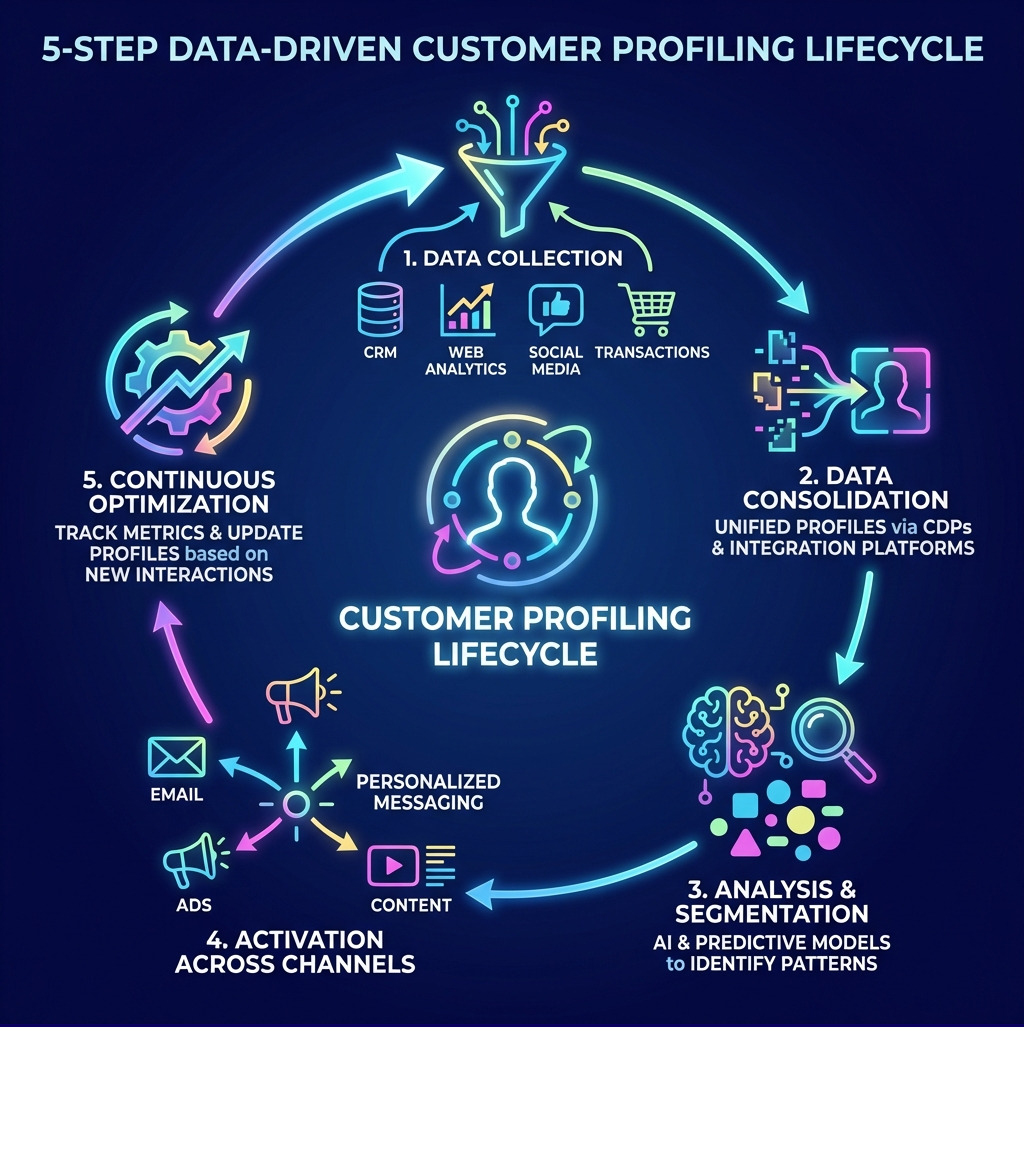
How marketing teams create data-driven customer profiles is a question that separates marketing guesswork from marketing growth. If you’re looking for a clear process, here’s the core framework:
The 5-Step Customer Profiling Process:
- Consolidate data sources – Pull together information from your CRM, website analytics, social media, email platforms, and transaction systems into a unified view
- Identify key data points – Collect demographics, behavioral data (browsing history, purchase patterns), psychographics (interests, values), and transactional history
- Segment and analyze – Use segmentation analysis and predictive modeling to identify patterns and group customers by shared attributes
- Personalize across channels – Create custom messaging and content for each segment across email, ads, website, and other touchpoints
- Measure and refine – Track performance metrics like conversion rates and customer lifetime value, then continuously update profiles based on new interactions
Here’s the reality: 74% of customers are irritated by irrelevant content from brands. Yet only 60% of customers agree that brands are doing personalization well, even though 95% of marketers think they’re nailing it.
That gap? That’s the difference between having customer data and actually using it to build profiles that drive results.
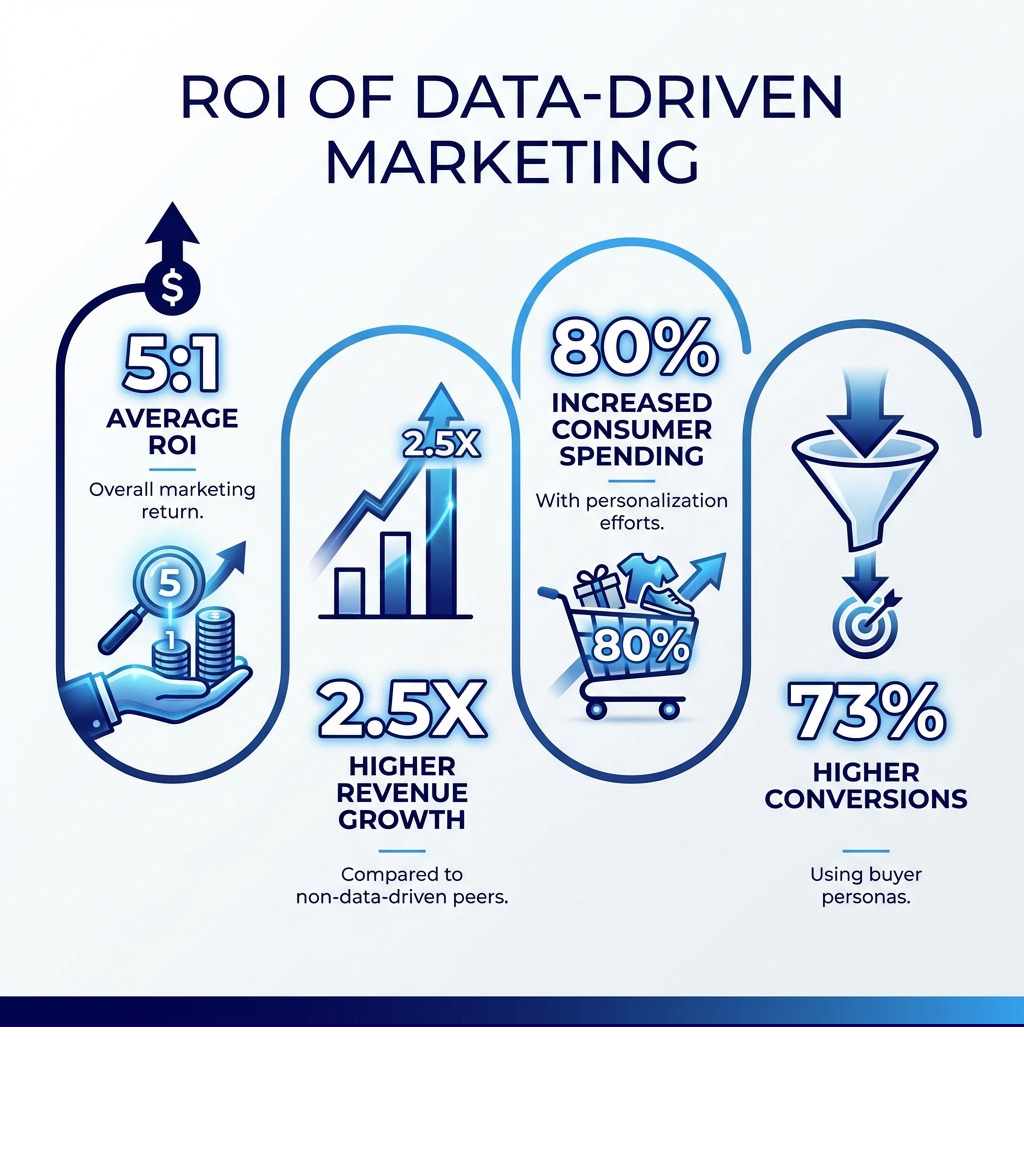
The average ROI of a data-driven marketing campaign is about five to one. Companies using data to drive decisions achieved 2.5x higher revenue growth than those without. And 80% of businesses report increased consumer spending when they deliver personalized experiences.
But here’s what most marketing teams miss: a customer profile isn’t just a demographic snapshot. It’s a living, breathing representation of a real person’s journey with your brand – built from real data, updated in real-time, and used to deliver experiences that actually matter to them.
Think of it like meeting someone new. You start with basic information – where they live, what they do. But the real connection happens when you understand what keeps them up at night, what they’re trying to achieve, and how they prefer to communicate. Data-driven customer profiles do exactly that, at scale.
The Foundation: What is a Data-Driven Customer Profile?
At its core, a data-driven customer profile is a comprehensive, dynamic representation of an individual customer, constructed from real-world interactions and data points. Unlike traditional, static customer segmentation, which groups customers into broad categories, a data-driven profile aggregates behavioral, demographic, and transactional data into a 360-degree view. This unified customer profile acts as a single source of truth, evolving with every customer interaction to provide a real-time, nuanced understanding of their preferences, habits, and engagement with a brand.
Why is this essential for modern marketing? In today’s digital landscape, customers expect brands to understand them deeply and respond to their needs in real-time. Personalization is no longer a “nice-to-have” feature; it’s a competitive necessity. As highlighted by Statista, there’s a significant disconnect: while 95% of senior marketers consider their personalization strategies successful, only 60% of customers agree. This gap often stems from outdated data, fragmented insights, and a lack of real-time adaptation—precisely the issues a data-driven customer profile aims to solve.
A unified customer profile allows marketing teams to move beyond basic segmentation to deliver highly relevant, timely, and meaningful experiences. It transforms marketing from generic to truly personal by providing clarity on the target audience, identifying the best channels for promotion, and enabling relevant messaging. This deeper understanding leads to higher customer acquisition, stronger brand loyalty, and increased ROI. It’s about building authentic connections that resonate with individual customers, fostering engagement and driving long-term growth.
To dive deeper into the strategic advantages of leveraging customer data, you can learn more about Data-Driven Marketing.
How Marketing Teams Create Data-Driven Customer Profiles
Creating effective data-driven customer profiles involves a structured approach to data collection, integration, analysis, and ongoing refinement. It’s a continuous process that empowers marketing teams to make informed decisions rather than relying on guesswork.

The journey begins with clear objectives. Before collecting any data, marketing teams must define what they aim to achieve with their profiles. Are they looking to boost brand awareness, secure high-quality leads, or improve customer retention? These SMART (Specific, Measurable, Achievable, Relevant, Time-bound) objectives will guide the data collection process, ensuring that every piece of information gathered contributes meaningfully to the customer picture.
Once objectives are set, the focus shifts to data consolidation. In today’s complex digital ecosystem, customer data often resides in disparate systems—CRMs, website analytics platforms, email marketing tools, social media channels, and transaction databases. Marketing teams must unify this fragmented data into a single, cohesive view. This involves ensuring they have the right tools to meet data collection objectives, tracking customer interactions in near-real time, and integrating existing systems with newer marketing tools to overcome data silos. Poor-quality data or fragmented insights can lead to an inaccurate or outdated picture of the customer, undermining personalization efforts. Therefore, maintaining good data hygiene—monitoring quality standards, defining data lifespan, and regularly checking sources for aberrations—is crucial.
Building customer profiles isn’t a one-and-done task; it requires building a dedicated team (or partnering with experts) to analyze and act on the data. Whether it’s a distributed model, a center of excellence, or a hub-and-spoke approach, having the right people with the right skills to interpret data and translate insights into actionable strategies is paramount. This strategic approach to data management and analysis is key to changing raw data into competitive advantage and is vital for more info on Business Scaling Solutions.
The Role of Identity Resolution in how marketing teams create data-driven customer profiles
Imagine a customer interacting with your brand across multiple touchpoints: browsing your website on a laptop, adding items to a cart on their phone, clicking an email on a tablet, and finally making an in-store purchase. Without identity resolution, each of these interactions might be treated as a separate, anonymous event, leading to a fragmented and incomplete understanding of that individual.
Identity resolution is the indispensable process that stitches together these disparate data points—ranging from email addresses and website visits to in-store purchases—and matches them to a single, unified customer profile. It’s about recognizing that the laptop browser, the phone shopper, and the in-store buyer are all the same person. This cross-device and cross-channel tracking is fundamental to overcoming data silos and creating a true 360-degree view of the customer.
By accurately identifying customers across various platforms, marketing teams can:
- Avoid redundant messaging: No one wants to receive an ad for a product they just purchased.
- Deliver consistent experiences: Ensure that personalized offers and content reflect the customer’s most recent interactions.
- Improve attribution: Understand which touchpoints truly influenced a conversion, optimizing marketing spend.
A leading British supermarket chain, for example, leveraged identity resolution to revolutionize its customer engagement. They boosted their match rate by over 2.8 times, enhancing customer recognition from 20% to a robust 30-40%. This allowed them to deliver highly personalized offers in real time, often within 50 milliseconds, demonstrating the power of a unified customer view. Building strong first-party data foundations and investing in identity resolution tools are critical steps for marketing teams committed to mastering how marketing teams create data-driven customer profiles. For more insights on this, refer to industry-leading resources on customer profile best practices.
Utilizing AI and Machine Learning for how marketing teams create data-driven customer profiles
The sheer volume and velocity of customer data generated today make manual analysis virtually impossible. This is where Artificial Intelligence (AI) and Machine Learning (ML) step in, playing a transformative role in creating and enhancing customer profiles. AI is no longer a futuristic concept; it’s marketers’ #1 priority and challenge, enabling them to move beyond reactive personalization to proactive, predictive engagement.
AI and ML algorithms can process vast datasets to uncover patterns and insights that human analysts might miss. Here’s how they improve customer profiling:
- Predictive Insights: AI can analyze past behavior to forecast future customer needs, purchase likelihood, and even potential churn. For instance, it can predict which customers are at risk of leaving and proactively trigger retention campaigns.
- Sentiment Analysis: By analyzing customer feedback from reviews, social media, and support interactions, AI can gauge customer sentiment, helping brands understand how customers feel about products, services, or brand experiences. This allows for more empathetic and targeted communication.
- Next-Best-Action Recommendations: AI can suggest the most effective next step for each customer in their journey, whether it’s a specific product recommendation, a personalized content piece, or a timely offer.
- Automated A/B Testing: Machine learning can continuously optimize marketing campaigns by automating A/B testing across various elements like ad creatives, subject lines, and calls-to-action, identifying what resonates best with different customer segments.
- Optimizing Communication Channels: AI can recommend the best communication channels and times for engagement, ensuring messages reach customers when and where they are most receptive.
These AI-improved profiles enable hyper-personalization at scale, improving customer journeys across every touchpoint. From dynamically updated product recommendations on e-commerce sites to personalized financial advice triggered by recent transactions, AI transforms how brands interact with their audience. The result is a more intuitive, relevant, and satisfying customer experience. For more on how AI is revolutionizing customer engagement, industry research highlights the transformative power of AI-driven engagement.
Key Components of an Effective Customer Profile
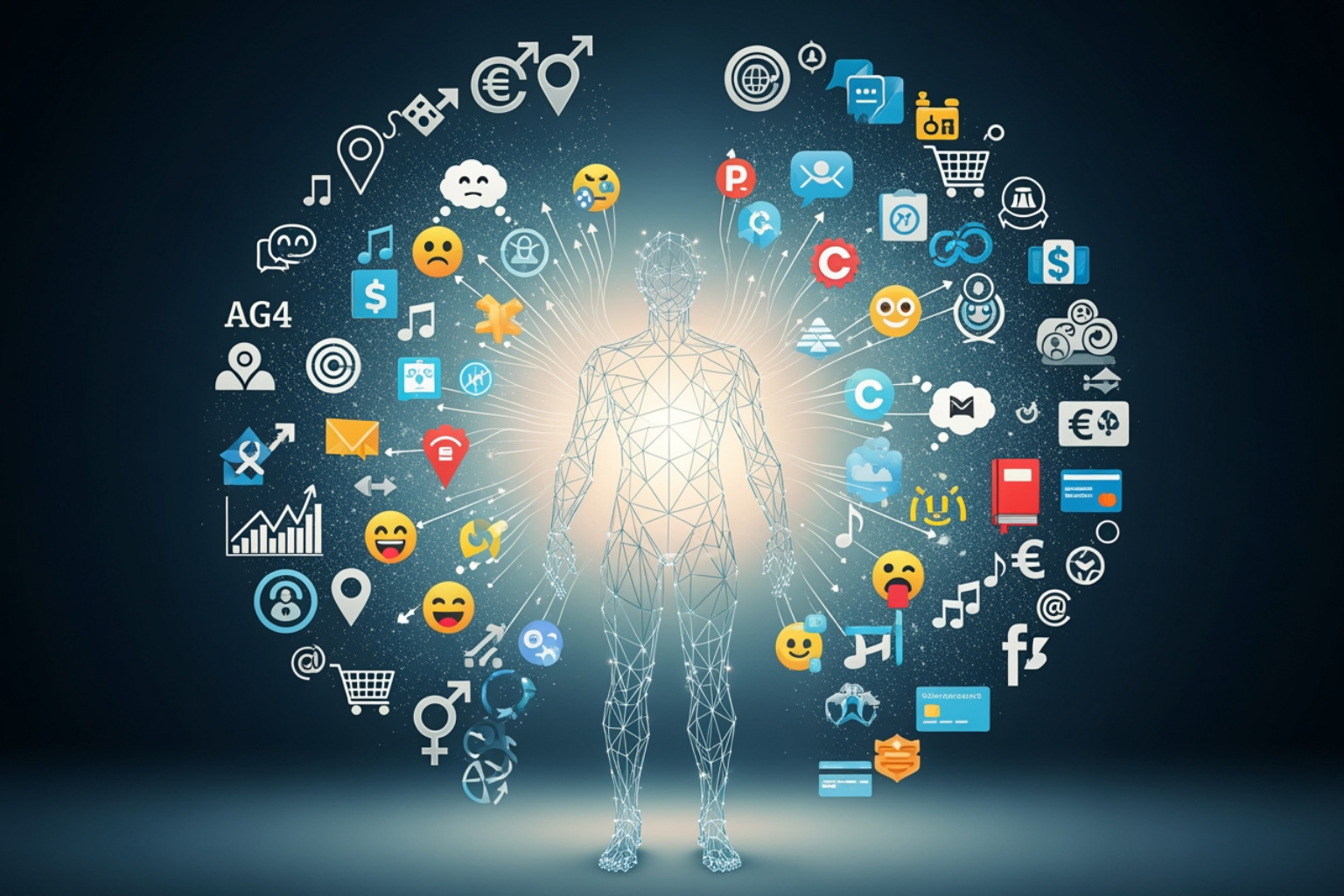
An effective customer profile is a rich mix woven from various data points, providing a holistic understanding of who your customers are, what they value, and how they interact with your brand. These data points can generally be categorized into demographics, psychographics, behavioral patterns, and transactional history.
- Demographics: These are the basic, quantifiable characteristics of your customers.
- B2C: Age, gender, income, education level, marital status, location, occupation.
- B2B: Company size, industry, annual revenue, geographic location, number of employees, organizational structure.
- Psychographics: These dig into the psychological attributes that influence purchasing decisions.
- B2C: Interests, hobbies, values, attitudes, lifestyle, motivations, concerns, personality traits.
- B2B: Company culture, business philosophy, strategic priorities, pain points (e.g., scalability, cybersecurity), innovation focus.
- Behavioral Patterns: This category captures how customers interact with your brand and the wider digital world.
- B2C: Browsing history, website engagement (pages visited, time on site, bounce rate), social media activity, app usage, content consumption habits, preferred communication channels (email, social, phone), loyalty program engagement.
- B2B: Website visits (specific product/solution pages), content downloads (whitepapers, case studies), webinar attendance, email engagement, communication preferences (phone, email, professional networking), decision-making processes, buying cycle stage.
- Transactional History: This provides insights into past purchases and financial interactions.
- B2C: Purchase frequency, average order value, product categories purchased, last purchase date, returns history, preferred payment methods.
- B2B: Contract value, service subscriptions, renewal history, product/solution adoption, contract terms, budget cycles.
Here’s a simplified comparison of B2B vs. B2C profile data points:
| Data Point Category | B2C Customer Profile Example | B2B Customer Profile Example |
|---|---|---|
| Demographics | Sarah, 32, Marketing Manager, $80k salary, married with 2 kids, urban | TechSolutions Inc., IT Industry, $10-50M annual revenue, 50-250 employees, US-based |
| Psychographics | Values convenience, quality, lifestyle alignment; interested in fitness, healthy cooking, travel. | Prioritizes scalability, cybersecurity, efficiency, cost-effectiveness; innovation-focused. |
| Behavioral | Browses Lululemon, HelloFresh, Nordstrom; active on Instagram, reads email newsletters, checks online reviews. | Downloads whitepapers on cloud security, attends industry webinars, engages with LinkedIn posts about IT solutions. |
| Transactional | Buys fitness apparel, meal kits, travel packages; frequent purchases, high average order value. | Subscribes to enterprise software, renews security contracts, invests in consulting services. |
Gathering and harmonizing these diverse data points is crucial. As 84% of customer service leaders believe, customer data and analytics are very important for achieving customer service and support goals. By combining these elements, marketing teams can build a detailed, actionable portrait of their target audience, enabling precision targeting, personalized messaging, and ultimately, improved customer satisfaction. To learn how to leverage these insights for optimal campaign performance, explore our Performance Marketing Company services.
Ethical Data Gathering and Privacy Compliance
While the power of data-driven customer profiles is undeniable, it comes with a significant responsibility: ensuring ethical data gathering and strict privacy compliance. Customers expect brands to know them, but not in an intrusive or “creepy” way. Research shows that 63% of customers would stop purchasing from companies that take “creepy” marketing too far. This highlights the delicate balance between personalization and privacy.
To steer this landscape, marketing teams must prioritize transparency and user control. Key strategies include:
-
Focus on Zero-Party and First-Party Data:
- Zero-party data is information customers intentionally and proactively share with a brand (e.g., preferences, interests, communication preferences).
- First-party data is collected directly by the brand from its own sources (e.g., website behavior, purchase history, CRM data).
These data types build trust because the customer is aware of the data exchange or has directly provided it. They also become increasingly crucial as data protection regulations tighten and browsers block third-party cookies.
-
Transparency and Consent: Businesses must be crystal clear about what data they collect, why they collect it, and how they intend to use it. Obtaining explicit consent, especially for sensitive data, is non-negotiable. Privacy policies should be easily accessible and understandable, avoiding legal jargon.
-
User Control: Empowering customers to manage their own data is vital. This includes allowing them to view, modify, or delete their information, as well as opting in or out of specific marketing communications. Giving customers control fosters trust and strengthens the relationship.
-
Compliance with Regulations: Adhering to data protection regulations like GDPR is paramount. This involves implementing robust protocols for data collection, storage, processing, and permissible use, ensuring data handling is conducted within a compliant framework. This proactive approach not only avoids legal repercussions but also reinforces customer confidence.
By embracing these ethical practices, marketing teams can build richer, more accurate customer profiles that drive personalization without sacrificing trust. It’s about creating value for the customer through relevant experiences, while respecting their privacy and autonomy. This careful balance is a cornerstone of Mastering Effective Web Marketing Strategies for Modern Needs.
Measuring Success and ROI of Profiling Initiatives
Building data-driven customer profiles is an investment, and like any investment, its success must be measured to understand its impact and justify its continued development. The benefits extend far beyond just “feeling” more personalized; they translate into tangible business growth and a significant return on investment (ROI).
Here’s how marketing teams can measure the success and ROI of their data-driven customer profiling efforts:
- Increased Conversion Rates: One of the most direct impacts of effective profiling is improved conversion. By tailoring messages and offers to specific customer segments identified through profiles, businesses can see a noticeable uplift in lead-to-customer conversion rates. Companies that effectively use buyer personas, a close cousin to customer profiles, enjoy 73% higher conversions than those without.
- Improved Customer Lifetime Value (CLV): Personalized experiences, driven by deep customer insights, strengthen loyalty and encourage repeat purchases. This leads to a higher CLV, as customers stay longer and spend more over their engagement with the brand.
- Higher Revenue Growth: Companies using data to drive their decisions achieved 2.5x higher revenue growth than those without. Data-driven customer profiles enable more effective marketing campaigns, which directly contribute to top-line revenue increases.
- Optimized Marketing Spend: By understanding which channels and messages resonate with specific customer profiles, marketing teams can allocate their budgets more efficiently. This reduces wasted ad spend on irrelevant audiences and campaigns, leading to a better ROI on marketing efforts (the average ROI of a data-driven marketing campaign is about five to one).
- Improved Customer Satisfaction and Loyalty: When customers feel understood and receive relevant communications, their satisfaction increases. This fosters loyalty, as evidenced by 80% of businesses reporting increased consumer spending with personalized experiences, and 56% of consumers being more likely to return to a website that recommends products.
- Reduced Customer Acquisition Costs (CAC): By precisely targeting high-value prospects identified through profiling, businesses can lower their CAC. Predictive analysis, in particular, can help acquire high-value users more efficiently.
To measure these outcomes, marketing teams should track Key Performance Indicators (KPIs) such as click-through rates, website engagement, customer retention rates, sales lift per channel, and overall revenue growth. Regular analysis of these metrics, coupled with continuous refinement of customer profiles, creates a powerful feedback loop that drives sustainable growth. Industry research on personalization ROI further underscores the significant financial benefits of investing in personalized experiences. For strategies to improve your digital presence and measure success, view our SEO services.
Frequently Asked Questions about Data-Driven Profiling
What is the difference between a customer profile and a buyer persona?
While often used interchangeably, customer profiles and buyer personas serve distinct but complementary purposes in marketing.
A customer profile is a dynamic, data-driven representation of an actual individual’s interactions, preferences, and behaviors with your brand. It aggregates real behavioral, demographic, and transactional data from various sources to create a 360-degree view of a specific customer. It’s based on facts and is continuously updated, making it ideal for real-time personalization, segmentation, and individual-level targeting. Think of it as a detailed, living dossier on a specific person.
A buyer persona, on the other hand, is a semi-fictional, generalized representation of your ideal customer segment, created through market research and data analysis. It describes a typical customer within a segment, including their motivations, pain points, goals, decision-making processes, and demographic details. Buyer personas are more qualitative and narrative-driven, helping marketers craft broader messaging, content strategies, and brand positioning that resonate with a group of similar customers.
Customer profiles focus on the “who” and “what” of individual customers, driven by real data for precise personalization. Buyer personas focus on the “why” and “how” of customer segments, guiding strategic marketing and content development. Both are invaluable for understanding your audience, and companies that effectively use buyer personas enjoy 73% higher conversions.
How often should marketing teams update their customer profiles?
Customer profiles should never be considered static documents. Customer behaviors, preferences, and needs are constantly evolving, influenced by new technologies, market trends, and life events. Therefore, marketing teams should update their customer profiles regularly to ensure they remain relevant and accurate.
While there’s no universal “perfect” frequency, a good practice is to review and refresh profiles at least annually, semi-annually, or even quarterly. The ideal frequency often depends on:
- Industry Dynamics: Fast-paced industries with rapid product cycles or changing consumer trends might require more frequent updates.
- Customer Interaction Volume: Brands with high volumes of customer interactions and data generation can benefit from more continuous, real-time updates.
- Business Objectives: If a business is launching a new product, entering a new market, or undergoing a significant strategic shift, a more immediate review of profiles might be necessary.
The goal is to ensure that the data informing your personalization efforts is always timely and reflects the current state of your customer relationships. Leveraging automated data integration and AI tools can significantly streamline this ongoing maintenance, making it less of a manual burden and more of a continuous, data-driven process.
What role does a Customer Data Platform (CDP) play in profiling?
A Customer Data Platform (CDP) plays a pivotal role in enabling scalable personalization through customer profiles, acting as the technological backbone for modern data-driven marketing. In simple terms, a CDP is a packaged software that creates a persistent, unified customer database that is accessible to other systems.
Here’s why a CDP is crucial for effective customer profiling:
- Data Unification: CDPs are designed to collect and integrate customer data from all sources—online (website, mobile apps, social media, email) and offline (CRM, POS systems, call centers)—into a single, cohesive view. This overcomes the challenge of fragmented data silos, creating a true unified customer profile for every individual.
- Persistent Profiles: Unlike other systems that might offer transient views, a CDP builds persistent, long-term customer profiles. This means it continuously updates each profile with new interactions, ensuring a real-time and always-current understanding of the customer.
- Identity Resolution: A core function of CDPs is identity resolution, which stitches together disparate data points (e.g., different email addresses, device IDs) to accurately identify a single customer across various touchpoints.
- Audience Segmentation and Activation: With a unified view, CDPs enable marketers to create highly granular audience segments based on a rich set of demographic, psychographic, and behavioral attributes. These segments can then be activated across various marketing channels (email, ads, website personalization) for targeted campaigns.
- Real-time Analytics and Personalization: CDPs provide real-time access to customer data, allowing for immediate insights and the ability to trigger personalized experiences instantly. This is essential for meeting customer expectations for timely and relevant interactions.
A CDP empowers marketing teams to move beyond data collection to data activation, changing raw information into actionable insights that drive hyper-personalization at scale. It provides the foundation necessary for truly mastering how marketing teams create data-driven customer profiles.
Conclusion
Mastering how marketing teams create data-driven customer profiles is no longer a luxury—it’s a fundamental requirement for sustainable business growth in today’s competitive landscape. By changing scattered data into unified, dynamic customer profiles, marketing teams can open up unparalleled insights into their audience’s needs, preferences, and behaviors. This deep understanding fuels hyper-personalization, enabling businesses to deliver relevant, timely, and meaningful experiences across every touchpoint.
The benefits are clear and measurable: from increased conversion rates and higher customer lifetime value to optimized marketing spend and significant revenue growth. Embracing ethical data practices, leveraging the power of AI and machine learning, and adopting robust platforms like CDPs are all critical steps in this transformative journey.
At MDM Marketing, we understand the power of data-driven strategies. Our expertise in Search Engine Optimization, content marketing, social media marketing, and other digital services is built on a foundation of rigorous data analysis and a commitment to helping businesses in Canton, OH, and beyond, achieve their growth objectives. We help brands transform their online presence and achieve sustainable growth through customized solutions aligned to audience and market position.
Ready to turn your customer data into your most powerful competitive edge?
Contact us for a free assessment today and find how MDM Marketing can help you build and leverage data-driven customer profiles to open up your full potential.

About Jay McCullough
This author hasn't written a bio yet.