
Why AI Based Digital Marketing is Changing How Businesses Grow
AI based digital marketing uses machine learning, natural language processing, and predictive analytics to automate tasks, personalize customer experiences, and optimize campaigns in real time. Here’s what you need to know:
| What It Is | How It Helps | Key Applications |
|---|---|---|
| Machine learning algorithms that learn from customer data | Automates repetitive tasks and predicts customer behavior | SEO optimization, content creation, ad targeting |
| Natural language processing for content and chatbots | Personalizes messaging at scale | Email campaigns, customer service, social media |
| Predictive analytics for forecasting | Improves ROI by optimizing spend and strategy | Campaign forecasting, dynamic pricing, lead scoring |
If you’re still managing your digital marketing manually, you’re leaving money on the table. Over 60% of Google searches now end in zero clicks, and nearly one-third of consumers start their research with AI search tools instead of traditional search engines. The shift isn’t coming—it’s already here.
AI doesn’t just make marketing faster. It makes it smarter. The research is clear: 95% of decision-makers using AI report time and cost savings, while 80% of marketers using generative AI report positive ROI. One fitness brand tested AI-powered video campaigns and saw 561% more sign-ups at 72% lower cost per trial in just four weeks.
But speed without strategy is just risk arriving sooner. 71% of consumers expect personalized interactions, yet the same AI tools that enable personalization also raise serious privacy concerns. The privacy paradox is real: users want custom experiences but feel uneasy about the data collection that makes them possible.
The edge won’t come from AI alone. It will come from how you design the loop between insight and action—combining automation with clear guardrails, data-driven decisions with human oversight, and efficiency gains with ethical data usage.
This guide will show you how to master that balance.
Core Technologies Powering AI Based Digital Marketing
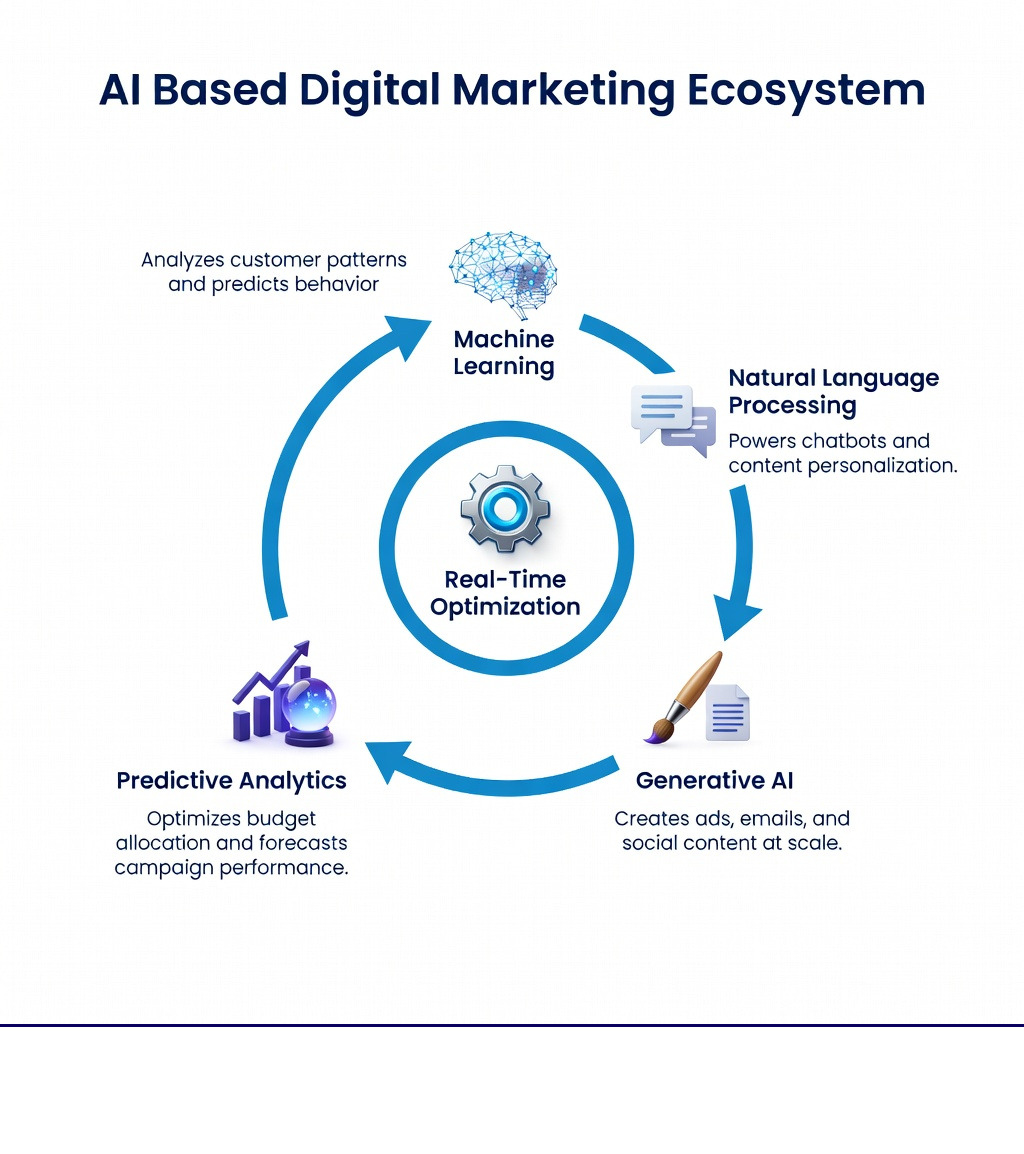
To understand why ai based digital marketing is so revolutionary, we have to look under the hood. It isn’t just one “robot” doing all the work; it is a sophisticated engine built on several pillars of technology. These technologies allow businesses in Canton, OH, and beyond to transition from reactive marketing to proactive, Data-Driven Marketing.
The primary drivers are Machine Learning (ML), Generative AI, and Natural Language Processing (NLP). Together, they enable “datafication”—the process of turning every customer interaction, click, and hover into a data point that can be analyzed. This leads to predictive modeling, where software can actually anticipate what a customer wants before they even type it into a search bar.
However, as these technologies become more powerful, they also become more invasive. This has led to significant Scientific research on AI ethics and data privacy to ensure that as we optimize for profit, we don’t lose sight of the human on the other side of the screen.
How Machine Learning Drives AI Based Digital Marketing
Machine learning is the “brain” of the operation. It uses pattern recognition to look at massive datasets and find trends that a human eye would miss. For a Performance Marketing Company, this is the secret sauce for algorithm optimization.
When you use ML, the system learns from every success and failure. If a specific ad performs well with suburban homeowners in Canton, the ML algorithm notices the pattern and automatically shifts the budget to show that ad to more people in that demographic. This is known as predictive analytics—using historical data to forecast future outcomes. For those looking to dive deeper into these mechanics, you can Access AI marketing resources to stay ahead of the curve.
Changing Initiatives with Generative AI and NLP
While ML handles the “thinking,” Generative AI and NLP handle the “creating” and “communicating.”
- Generative AI: This tech creates new content from scratch, including blog posts, images, and even videos. It allows teams to scale content production without a massive increase in headcount.
- Natural Language Processing (NLP): This allows machines to understand and mimic human speech. It is what powers sentiment analysis—the ability to tell if a customer’s review is happy, frustrated, or sarcastic—and the sophisticated chatbots that manage customer service 24/7.
Marketers are now using these tools for everything from language translation to automated lead qualification. If you want to master these specific skills, you can View professional AI courses to future-proof your career.

Essential AI Tools and Investment Costs for Marketers
One of the most common questions marketers ask is: “How much is this going to cost me?” The answer depends on your goals, but the good news is that ai based digital marketing is more accessible than ever. You don’t need a Silicon Valley budget to build a high-performing tech stack.
Building an Affordable AI Based Digital Marketing Stack
For small businesses or those just starting, an affordable stack usually centers around a few “heavy lifters.”
- Large Language Models: These serve as your primary assistants for research and drafting.
- AI Design Platforms: Use AI to help non-designers create professional graphics.
- Automated Email Systems: AI-powered email tools that automate segmentation.
- SEO Tracking Software: Essential for Automated Keyword Research and SEO tracking.
AI copywriting assistants are also popular for content creation, while automated execution platforms can help generate entire execution plans automatically. The goal here is cost-efficiency—getting the most “leverage” out of every dollar spent. You can Explore digital marketing tools to find the right fit for your specific budget.
High-Performance Stacks for Senior Marketers
Senior marketers and larger agencies often require more specialized tools. This might include advanced backlink analysis tools for deep research, real-time content optimization software, and high-end visual generation engines.
For outbound sales and data orchestration, specialized data platforms are becoming industry standards. These high-performance stacks allow for enterprise-level scaling, where thousands of personalized touchpoints are managed simultaneously across multiple channels.
Enhancing Key Marketing Channels with Artificial Intelligence
AI doesn’t just sit in a corner; it integrates into every single marketing channel you use. Whether it’s SEO, social media, or email, ai based digital marketing changes the game by making every interaction more relevant. For a comprehensive look at how this fits into a broader strategy, check out this Research on digital transformation and opportunities.
SEO and Content Marketing
AI has completely transformed search. We’ve moved from simple keyword stuffing to Automated SEO Optimization. Tools now analyze top-ranking pages in seconds, telling you exactly what topics to cover and how long your content should be. However, there are still Limitations of Automated SEO Content Optimization Tools that require a human touch to ensure brand voice and accuracy.
Social Media and Paid Ads
On social platforms, AI is the engine behind the “For You” page. It analyzes user behavior to serve the right content at the right time. For paid ads, AI handles “bid shading” and “win-rate prediction,” ensuring you don’t overpay for an ad impression while still reaching your target audience.
Email Marketing
Email is no longer about “blast” campaigns. With AI, you can achieve Automated Content Marketing within your emails, where the products shown to a customer are based on their specific browsing history.
Personalization vs. User Surveillance Risks
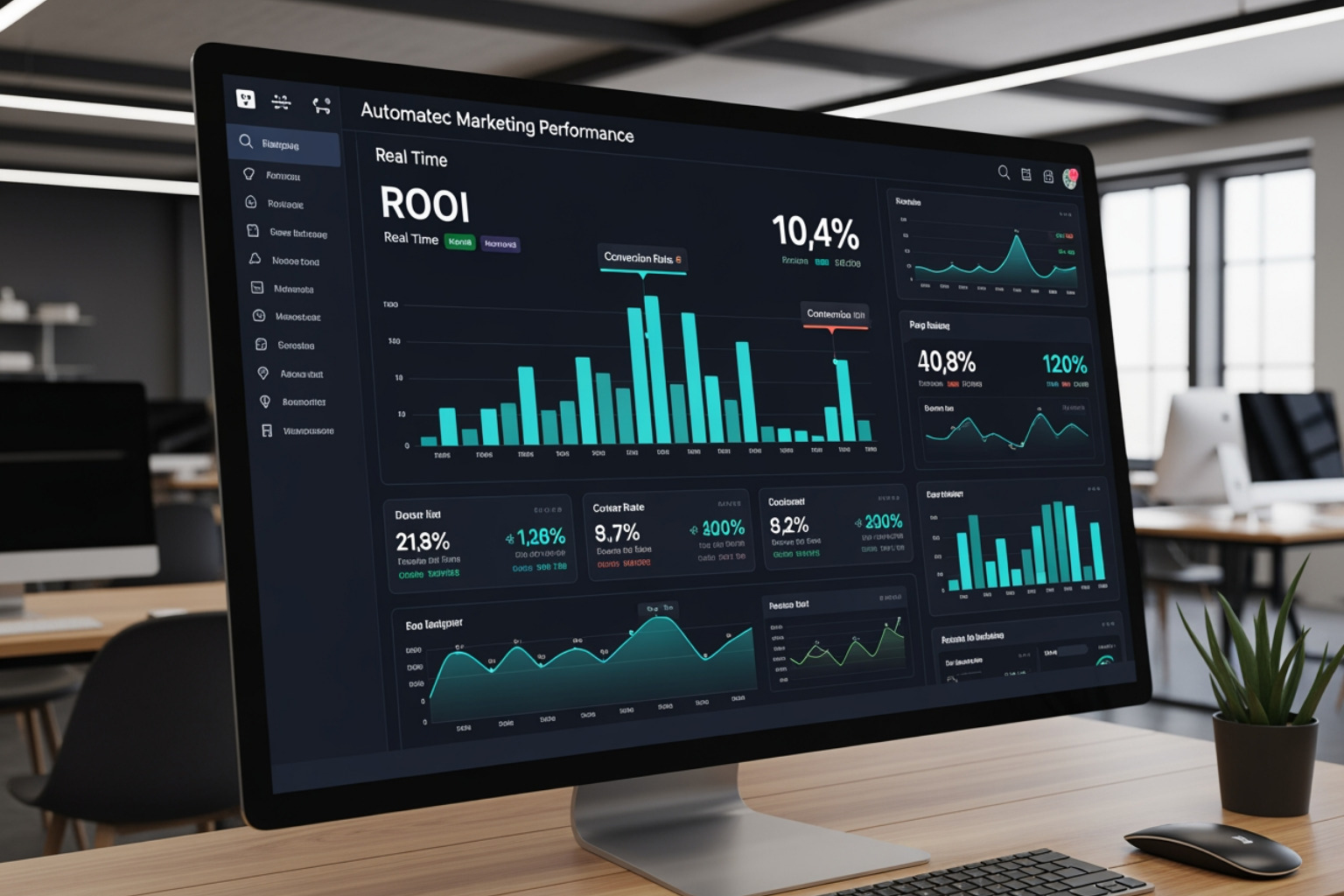
Here is where it gets tricky. To provide the high level of personalization that 71% of consumers demand, marketers need data. Lots of it. This often involves user profiling and behavioral tracking across multiple devices.
This creates the “Privacy Paradox.” Users say they want privacy, but their behavior shows they are willing to trade data for convenience or a better experience. This Study on online privacy and security behaviors highlights how even tech-savvy users struggle to balance these two needs.
Balancing Efficiency with Ethical Data Usage
The key to long-term success is transparency. Marketers must move toward “Privacy by Design.” This means:
- Consent Management: Making it easy for users to opt in or out.
- GDPR Compliance: Following strict regulations on how data is stored and used.
- Data Protection: Ensuring that the data you do collect is secure from exfiltration.
By focusing on ethical implementation, you build consumer trust, which is the most valuable currency in the digital age. You can Learn more about AI in marketing ethics to ensure your business stays on the right side of the law and public opinion.
Navigating the Ethics and Privacy Paradox in the AI Era
As we lean further into ai based digital marketing, we must confront “Surveillance Capitalism”—the idea that our personal data is the primary commodity of the internet. This isn’t just a philosophical debate; it has real-world consequences like algorithmic bias, where AI might inadvertently discriminate against certain groups based on flawed data.
To steer this, marketers should follow these ethical steps:
- Audit Your Algorithms: Regularly check for bias in your targeting and lead scoring.
- Prioritize Data Dignity: Treat customer data as an extension of their identity, not just a row in a spreadsheet.
- Disclose AI Usage: Be honest with your audience when they are interacting with a chatbot or reading AI-assisted content.
- Stay Informed on Regulation: Keep up with Research on the general data protection regulation to ensure your strategies remain compliant as laws evolve.
Frequently Asked Questions about AI Marketing
What are the primary learning outcomes for marketers adopting AI?
Marketers who accept AI don’t just learn how to use a new tool; they gain strategic oversight. Key outcomes include:
- Data Literacy: Understanding how to interpret AI-generated insights.
- Technical Proficiency: Mastering the prompt engineering and tool integration needed for automation.
- Strategic Growth: Learning how to use predictive analytics to shift from “guessing” to “knowing.”
Who is the target audience for AI in digital marketing?
While everyone can benefit, the most immediate impact is seen by:
- Performance Professionals: Those who need to hit specific ROI and conversion targets.
- Senior Marketers: Leaders who need to scale operations without ballooning costs.
- Agency Owners: Who want to provide Automated SEO Services to their clients.
What real-world examples show AI’s impact on marketing?
The impact is visible across every industry. Reddit discussions are filled with practitioners sharing how they use AI for lead automation and content scaling. For instance, a New York dealership used predictive analytics to lift leads by a staggering 2,930% during a trial period. Another example is the use of dynamic pricing by airlines and ride-sharing apps, which adjusts costs in real-time based on demand data.
Conclusion
The rise of ai based digital marketing is indeed the best thing since sliced bread—but only if you know how to use the knife. It offers a path to sustainable growth, allowing businesses to compete at a scale that was previously impossible.
At MDM Marketing, we help businesses in Canton, OH, steer this transition. With over 5 years of experience and a 93% client retention rate, we specialize in combining the efficiency of AI with the strategic insight of human experts. Our clients see an average 280% ROI increase because we don’t just “use AI”—we integrate it into a comprehensive, data-driven strategy.
Whether you need help with Automated SEO Solutions or want to scale your paid acquisition, the future of marketing is here. It’s time to stop leaving money on the table and start leveraging the power of artificial intelligence.
Ready to future-proof your business? Sign in for more resources and let’s start building your AI-driven growth engine today.
About Jay McCullough
This author hasn't written a bio yet.