
Why Customer Retention Marketing is the Key to Sustainable Growth
Customer retention marketing is the strategic practice of keeping your existing customers engaged, satisfied, and buying from your business over time. It focuses on nurturing relationships through personalized communication, loyalty rewards, proactive support, and continuous value delivery to reduce churn and maximize customer lifetime value.
Quick Answer: Boost Customer Retention with These Core Strategies
- Personalize every interaction using customer data and behavioral triggers
- Build loyalty programs with tiered rewards and exclusive benefits
- Communicate across channels through email, SMS, and push notifications
- Respond proactively to customer feedback and early churn signals
- Measure consistently using retention rate, churn rate, and CLV metrics
Attracting a customer is no small feat. You invest time, effort, and resources into earning their trust and making a strong first impression.
But what happens after they buy from you once?
That’s where the real challenge—and opportunity—lies. Increasing customer retention by just 5% can boost profits by 25% to 95%, according to research from Bain & Company. Yet many businesses pour their energy into customer acquisition while neglecting the gold mine sitting in their existing customer base.
The math is simple. Acquiring a new customer costs five to 25 times more than retaining an existing one. Repeat customers spend 67% more than new customers. And you have a 60% to 70% chance of selling to an existing customer compared to just 5% to 20% for a new prospect.
It’s more valuable to have 10 brand fanatics than 100 loosey-goosey customers who might vanish after one purchase.
Customer retention marketing isn’t just about preventing churn. It’s about building lasting relationships that create predictable revenue, organic word-of-mouth growth, and customers who actively champion your brand. In today’s market—where consumers expect personalized experiences and can switch to competitors with a single click—retention has become the lifeblood of sustainable business growth.
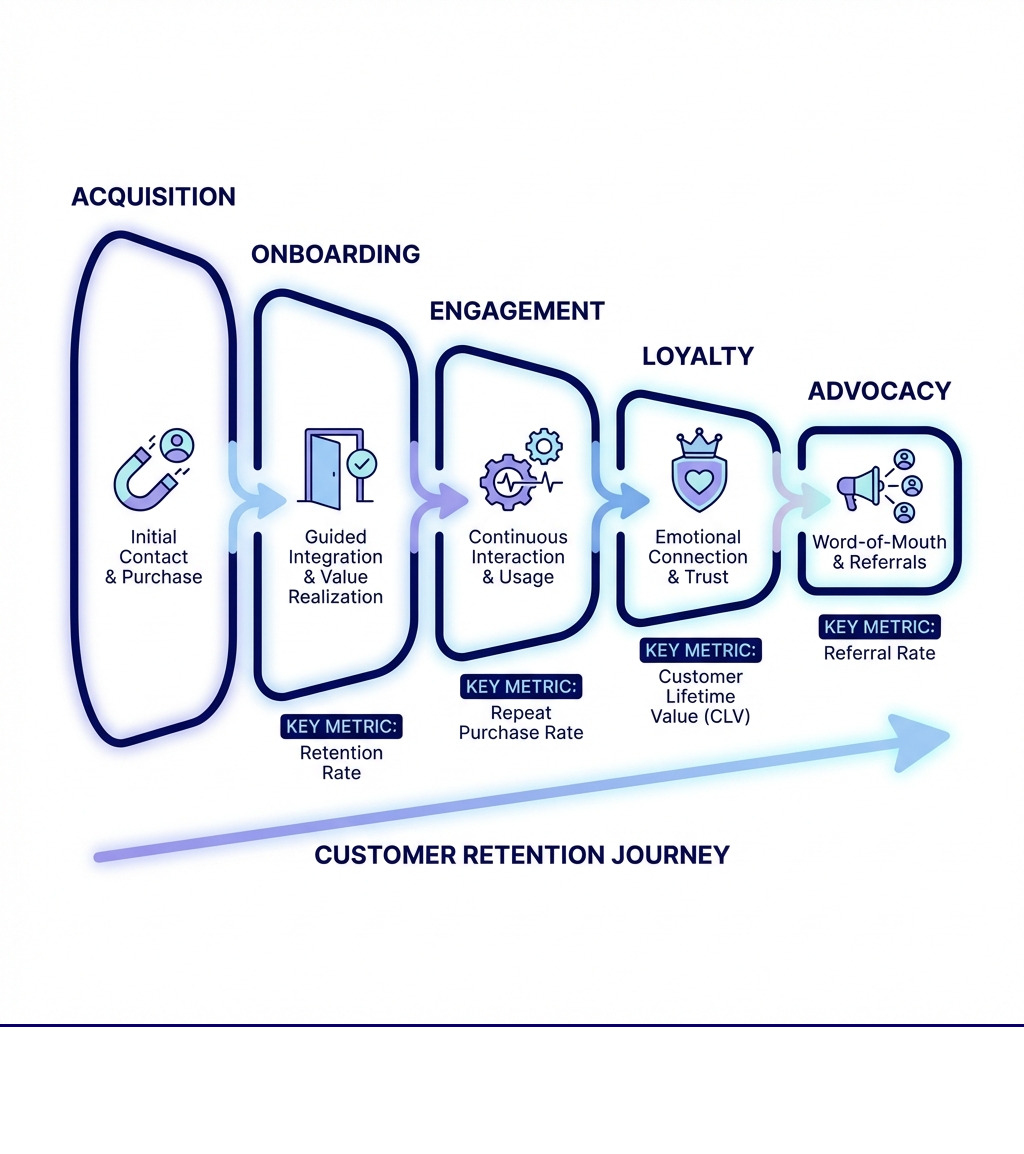
Understanding Customer Retention Marketing and Its Business Impact

At its core, customer retention marketing is the shift from a “transactional” mindset to a “relational” one. Many businesses treat the sale as the finish line, but in data-driven marketing, the sale is actually the starting block. It’s the moment a brand earns the right to talk to the customer again.
Retention marketing involves all the strategies and tactics used to keep customers coming back. This isn’t just about being “nice”; it’s about business survival. Research by Bain & Company famously highlighted that a tiny 5% improvement in retention can lead to a staggering 95% increase in profits. Why? Because loyal customers are less price-sensitive, have a higher average order value, and require significantly lower marketing overhead to “convince” them to buy again.
When a brand focuses on long-term value, they aren’t just selling a product; they are building a community. This relationship-centric approach transforms a one-time buyer into a brand advocate who will market the business for free.
The Three R’s of Retention
To simplify the impact of customer retention marketing, think of the “Three R’s”:
- Retention: This is the baseline—keeping the customers you already have. It involves preventing them from switching to a competitor by providing a seamless experience.
- Related Sales: Once trust is established, it is much easier to cross-sell or upsell. If they love your coffee, they’ll likely try your mugs or your subscription service.
- Referrals: Happy, retained customers are your best salesforce. They recommend your products to friends and family, effectively reducing your acquisition costs through organic growth.
Industry Benchmarks for Success
While every business wants a 100% retention rate, reality looks a bit different depending on your sector. Scientific research on industry retention rates shows that for most industries, an average retention rate of below 20% over an eight-week period is common. However, “elite” performers often see much higher numbers.
- SaaS and Software: High-performing SaaS companies often aim for a retention rate of 77% to 90%+. Because these are subscription-based, keeping customers is the only way to stay in the black.
- E-commerce: This industry faces a steeper hill, often seeing an average retention rate of around 30%. However, e-commerce brands that use high-tier loyalty programs can see over 35% retention in just two months.
- Finance and Professional Services: These sectors enjoy some of the highest loyalty, with professional services hitting 84% and finance hovering around 78%.
Understanding where your business stands against these benchmarks is the first step toward optimization.
Retention vs. Acquisition: Why Keeping Customers is More Profitable
The battle between acquisition and retention is an old one, but the data is increasingly leaning toward the latter. Acquisition is like trying to fill a bucket with a hole in the bottom—no matter how much water you pour in, you’ll never get ahead if you don’t plug the leak.
| Feature | Customer Acquisition | Customer Retention |
|---|---|---|
| Primary Goal | Finding new customers | Keeping existing customers |
| Relative Cost | 5x to 25x more expensive | Significantly cheaper |
| Conversion Probability | 5% – 20% | 60% – 70% |
| Focus | First-time purchase | Lifetime value (LTV) |
| Trust Level | Low (must be earned) | High (already established) |
Research on acquisition costs shows that while finding new leads is essential for growth, it is an inefficient way to sustain a business. By focusing on business scaling solutions that prioritize the existing base, brands can create a predictable revenue stream that isn’t dependent on the fluctuating costs of digital ads.
The Cost of Customer Churn
“Churn” is the silent killer of growth. When a customer leaves, you don’t just lose their next purchase; you lose their entire future value and any potential referrals they might have made.
The value of keeping customers becomes clear when you look at the macro impact. In the U.S. alone, customer switching costs add up to trillions of dollars in lost revenue. Furthermore, 61% of consumers say they would switch to a competitor after just one poor experience. This means your brand reputation is always one bad interaction away from taking a hit. Churn leads to marketing inefficiency, as you are forced to spend more just to stay in the same place.
Word-of-Mouth and Advocacy
One of the most beautiful side effects of customer retention marketing is the creation of brand ambassadors. According to research on consumer trust, word-of-mouth remains the most trusted marketing channel.
When you retain a customer for the long haul—77% of consumers say they’ve stayed with brands for 10 years or more—they become a source of social proof. They leave five-star reviews, post about your brand on social media, and defend you in the comments. This organic growth is the highest ROI marketing you can ever achieve.
Proven Strategies for Effective Customer Retention Marketing
Now that we know why it matters, how do we actually do it? Effective retention isn’t an accident; it’s a process.
A great place to start is with content marketing services that educate your customers. If they don’t know how to use your product to its full potential, they won’t see the value, and they will leave.
Building Loyalty and Referral Programs
Loyalty programs are the “gold standard” of retention. LoyaltyLion research shows that first-time customers who join a loyalty program spend 40% more on average than those who don’t.
- Tiered Rewards: Give customers a reason to reach the next level. Sephora does this brilliantly with their “Beauty Insider” tiers, offering exclusive products and early access to high-spending members.
- Incentivized Referrals: Reward your customers for bringing in their friends. This creates a win-win: the existing customer gets a discount, and you get a new lead with a built-in trust factor.
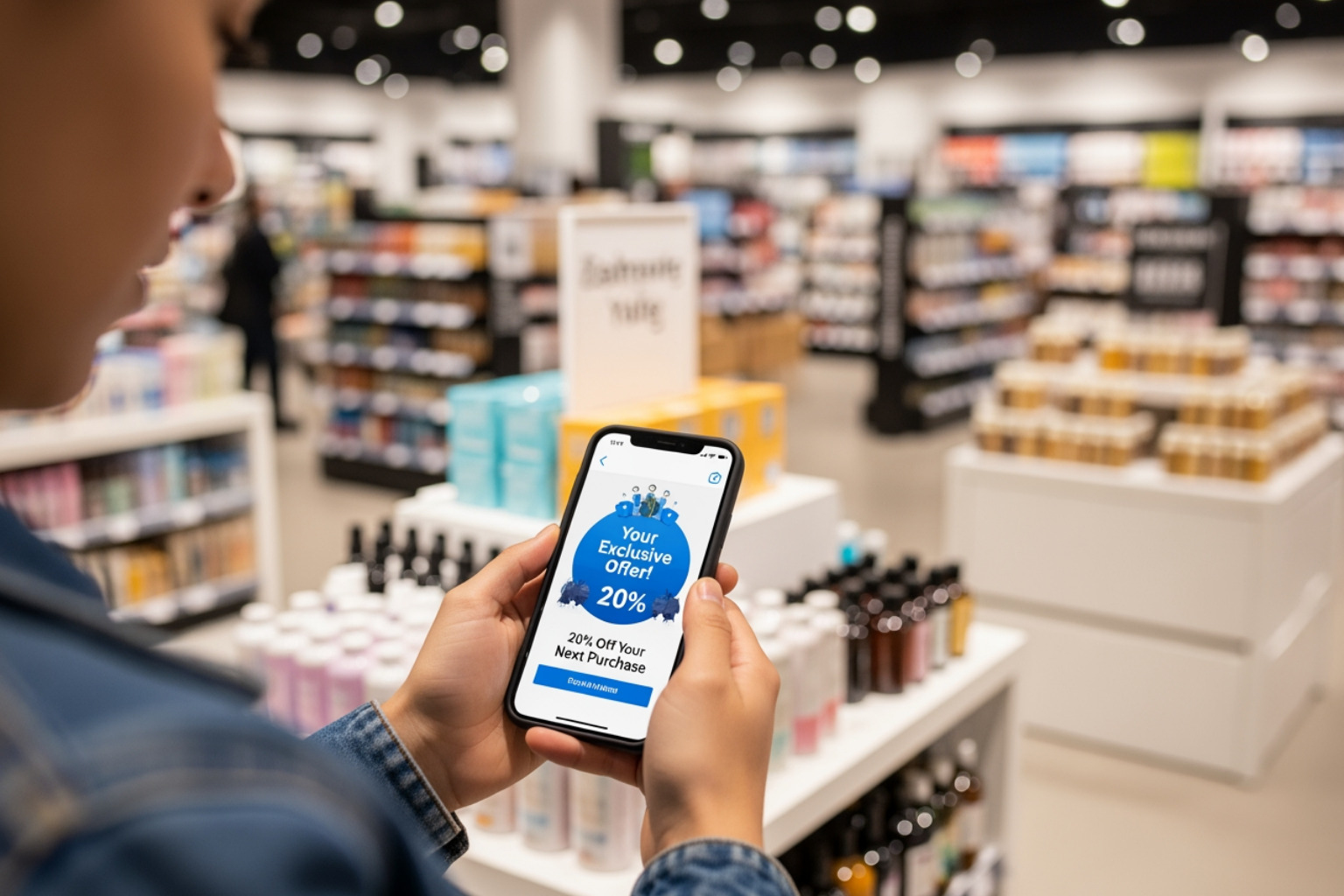
- VIP Offers: Everyone likes to feel special. Sending an “exclusive” offer to your top 10% of customers can solidify their loyalty for years.
Integrating these programs with social media marketing allows your customers to show off their status, further driving brand awareness.
Omnichannel Communication Tactics
You need to meet your customers where they are. This is known as omnichannel marketing.
- Email Marketing: This remains the king of ROI, with an average return of $42 for every $1 spent. Welcome email effectiveness is particularly high; a warm welcome with helpful resources sets the tone for the entire relationship. For more on this, check out MDM Marketing’s email marketing services.
- SMS Marketing: While it has higher open rates than email, it must be used respectfully. A well-timed text about a restocked favorite item can drive an immediate sale.
- Push Notifications: Use these sparingly. Uber uses them well to send $5 coupons to lapsed users, but overdoing it will lead to the dreaded “uninstall.”
Leveraging Data and Personalization in Customer Retention Marketing
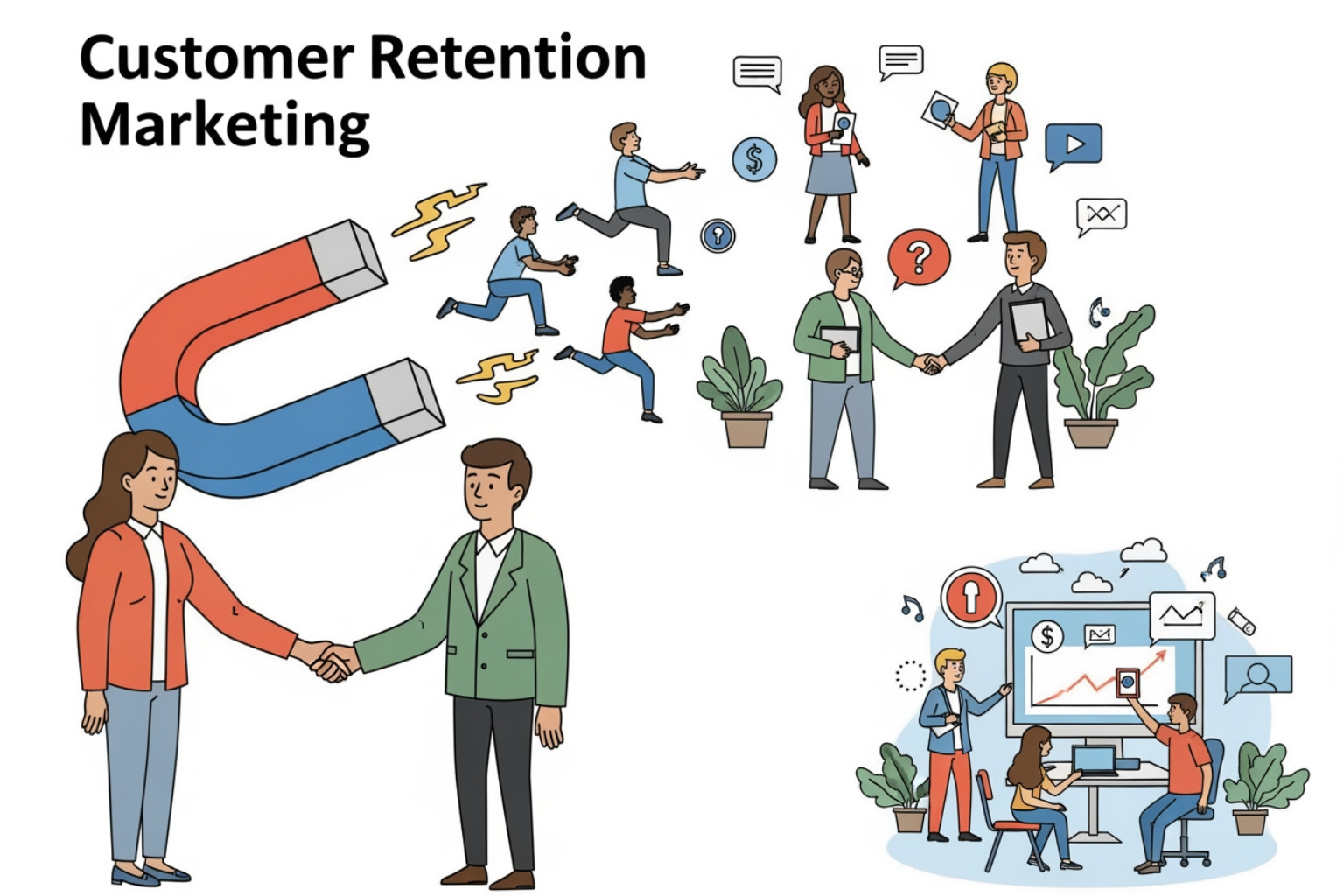
“Dear [First Name]” is no longer enough. True personalization is about understanding behavior. Research on personalized experiences indicates that 80% of consumers are more likely to buy when a brand offers a custom experience.
One powerful tool is RFM Analysis:
- Recency: When was their last purchase?
- Frequency: How often do they buy?
- Monetary: How much do they spend?
By segmenting customers into these buckets, you can send a “we miss you” discount to those with high monetary value but low recency, or a “thank you” gift to those with high frequency. This level of conversion rate optimization ensures your marketing dollars are always working toward the highest possible return.
Scaling Personalization with Technology
How do you personalize for 10,000 customers? You use technology. Unified data and CRM systems allow you to see the entire customer journey in one place.
A key (and often overlooked) tool is the email preference center. Instead of letting a customer unsubscribe entirely, let them choose what they want to hear about and how often. This keeps them in your ecosystem while respecting their inbox. Combined with AI integration, you can even predict which products a customer will want next before they even know it themselves.
Identifying and Mitigating Churn Risk
Playing defense is just as important as playing offense. You need to identify “at-risk” customers before they leave.
- Early Risk Detection: If a customer who usually logs in daily hasn’t logged in for a week, that’s a red flag.
- Win-Back Campaigns: Send a targeted offer to someone who is showing signs of leaving. Audible does this well—when you go to cancel, they often offer a free credit or a discounted rate to keep you around.
- Feedback Loops: Don’t just ask for feedback; act on it. If a customer has a poor experience, a quick response can save the relationship. 79% of consumers expect a quick response when they reach out to a brand, as noted in recent customer service expectations research.
Measuring Success: Key Metrics and Common Pitfalls
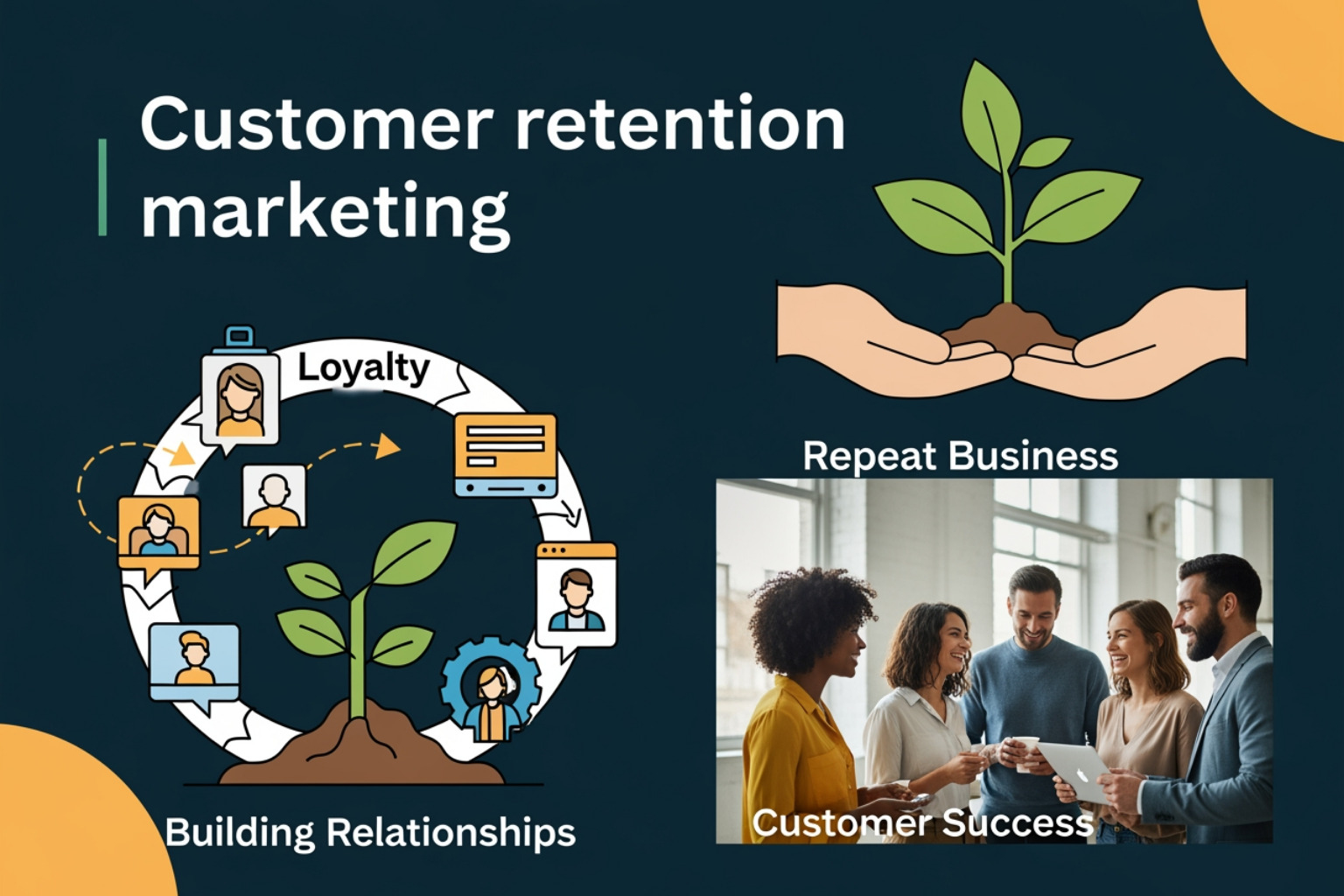
You can’t improve what you don’t measure. To truly master customer retention marketing, you need to keep a close eye on your marketing analytics.
Essential Retention Formulas
Here are the formulas every business owner in Canton, OH (and beyond!) should know:
- Customer Retention Rate (CRR):
((E - N) / S) * 100
E = Customers at end of period, N = New customers acquired, S = Customers at start of period. - Churn Rate:
(Customers lost during period / Total customers at start of period) * 100 - Customer Lifetime Value (CLV):
Average Purchase Value * Average Purchase Frequency * Average Customer Lifespan - Repeat Purchase Rate:
(Number of customers who have bought more than once / Total number of customers)
Tracking these metrics allows you to pivot from a “guess-and-check” method to a performance marketing strategy that delivers measurable growth.
Common Pitfalls to Avoid
Even the best intentions can go awry. Watch out for these common mistakes:
- Over-communication: If you email your customers every single day with “Buy Now!” they will hit the spam button faster than you can say “retention.”
- Ignoring Feedback: If customers tell you your checkout process is slow and you don’t fix it, you are essentially showing them the door.
- Poor Onboarding: If the first 30 days of a customer’s experience are confusing, they won’t stick around for day 31. Research on poor experiences shows that 61% of people will leave after just one bad encounter.
- Lack of Personalization: Sending a “Welcome back, [First Name]” email to a customer who has been buying from you for five years makes them feel like a number, not a partner.
Frequently Asked Questions about Customer Retention
What is a good customer retention rate?
It varies wildly! For a SaaS company, anything below 80% might be a cause for concern. For a local retail shop, 50-70% is considered healthy. The key is to benchmark against your own past performance and your specific industry averages.
How does customer experience impact retention?
Customer experience (CX) is retention. If the transaction is easy, the service is empathetic, and the product works as advertised, the customer has no reason to leave. Emotional connections—like when a brand remembers a customer’s birthday—are often more powerful than a 10% discount.
What are the most effective channels for retention?
Email marketing is still the heavyweight champion due to its high ROI and personalization capabilities. However, SMS and retargeting ads are excellent for “nudging” customers back, and community forums (like Discord or Slack) are perfect for building the “brand fanatic” culture.
Conclusion
Sustainable growth isn’t built on a revolving door of new customers; it’s built on a foundation of loyal ones. By shifting your focus toward customer retention marketing, you aren’t just protecting your revenue—you’re accelerating it.
At MDM Marketing, we specialize in these data-driven results. With a 93% client retention rate and an average 280% ROI increase, our team understands the delicate art of keeping customers engaged. Whether you’re looking for advanced SEO, personalized email workflows, or AI-integrated scaling solutions, we can help you transform your online presence.
Ready to plug the leaks in your bucket and start building a community of brand fanatics? Contact us for a strategy session today and let’s achieve sustainable growth together.
About Jay McCullough
This author hasn't written a bio yet.