
Why Customer Lifecycle Marketing Is the Key to Sustainable Growth
Customer lifecycle marketing is a strategic approach that delivers targeted, personalized messages to customers at every stage of their relationship with your brand—from their first interaction through years of loyalty and advocacy.
Quick Answer: The 5 Stages of Customer Lifecycle Marketing
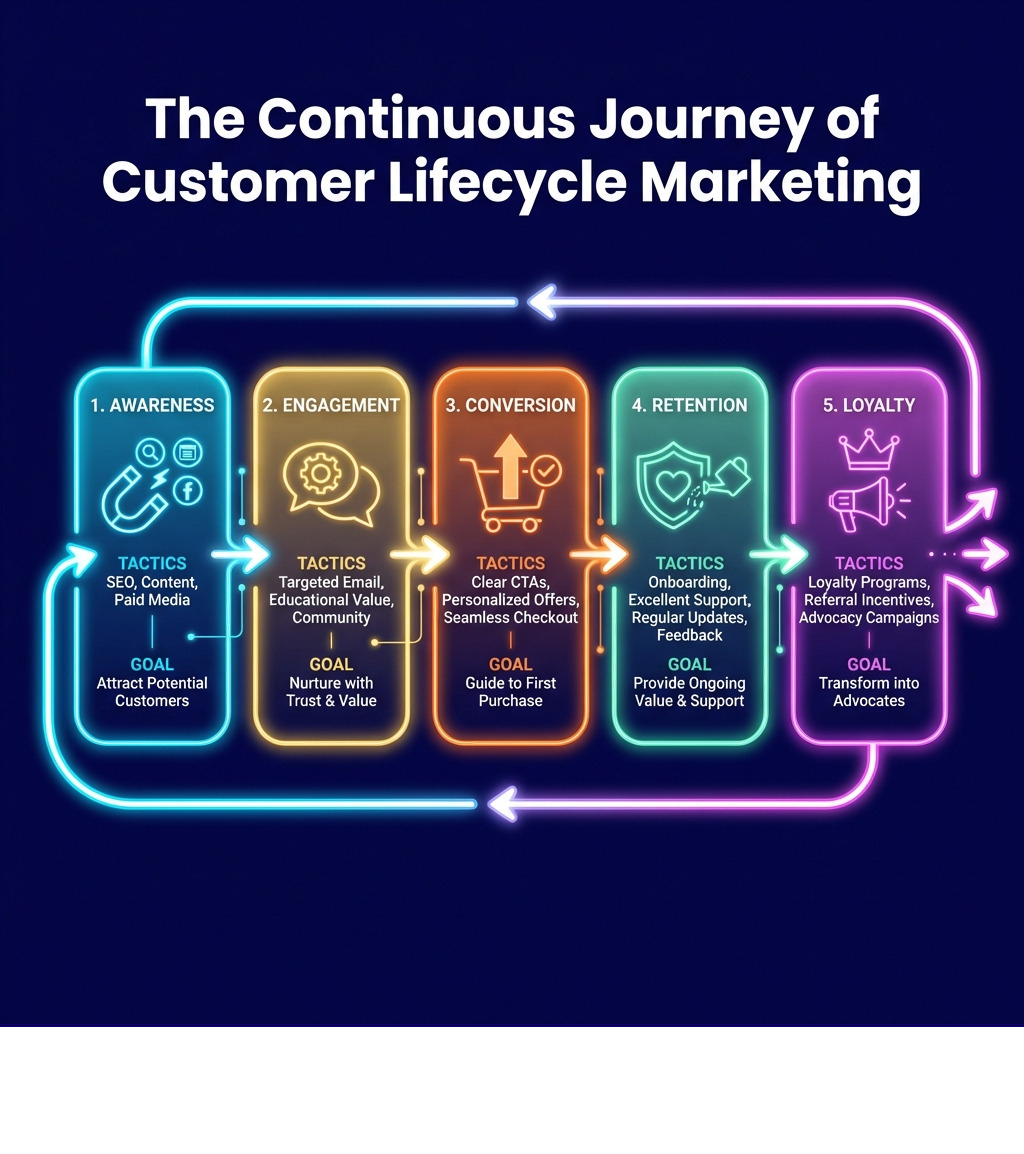
- Awareness – Attract potential customers through SEO, content, and paid media
- Engagement – Nurture leads with targeted messaging and education
- Conversion – Guide prospects to make their first purchase
- Retention – Keep customers satisfied and encourage repeat business
- Loyalty – Transform satisfied customers into brand advocates
Think about your favorite brands. The ones that consistently earn your business don’t just sell you a product and disappear. They stay connected, anticipate your needs, and make you feel valued at every step.
That’s customer lifecycle marketing in action.
Most businesses focus heavily on acquiring new customers, pouring resources into ads and lead generation. But here’s what the research shows: acquiring a new customer costs 5-25 times more than keeping an existing one. Even better, a 5% increase in customer retention can boost profits by 25-95%.
Yet only 44% of marketers use lifecycle emails to activate, engage, and retain customers. That’s a massive opportunity sitting on the table.
The truth is simple: what you do after someone becomes a customer matters just as much—if not more—than what you did to get them there. Customer lifecycle marketing ensures you’re delivering the right message at the right time, building relationships that last and turning one-time buyers into loyal advocates.
In this guide, we’ll break down the five essential stages of the customer lifecycle and show you practical strategies for each one. You’ll learn how to map customer touchpoints, leverage data for personalization, and measure what actually matters. Whether you’re a B2B service provider or an e-commerce brand, these principles work.
What is Customer Lifecycle Marketing and Why It Matters
Customer lifecycle marketing (CLM) is a sophisticated approach to communication that acknowledges customers are on a journey, and different stages of that journey require different marketing messages and strategies. It’s about designing a managed communications strategy that integrates various marketing channels to support prospects and customers from their initial discovery of your brand through to becoming a loyal advocate. Industry experts succinctly define CLM as “an approach to customer communication that recognises that different stages on the journey to becoming a loyal, active customer require different marketing messages and strategies.”
Why is this so crucial for businesses? Simply put, it drives sustainable growth and significantly impacts your bottom line. As industry research highlights, “There are some goals that just about every business strives to attain: attracting new customers, providing unparalleled services or goods, and building successful customer relationships that result in years of repeat business.”
CLM is deeply intertwined with Customer Relationship Management (CRM). It’s a process of assigning metrics to each stage of the consumer lifecycle and analyzing them to better understand performance. By nurturing customers through their journey, businesses can achieve several key benefits:
- Increased Revenue Growth: By focusing on retention, businesses can see significant profit increases. A 5% bump in retention can “increase profits by 25-95%” increase profits by 25-95%. This isn’t just theory; it’s a proven path to financial health.
- Optimized Customer Lifetime Value (CLV): CLM aims to maximize the total revenue a customer is expected to generate throughout their relationship with your brand. By keeping customers engaged and satisfied, you encourage repeat purchases and higher spending over time.
- Reduced Customer Acquisition Cost (CAC): Since it costs significantly more to acquire a new customer than to retain an existing one, effective CLM reduces the pressure and expense of constant new customer acquisition.
- Improved Customer Experience (CX): A well-executed CLM strategy ensures customers receive relevant, timely, and personalized communications, making them feel understood and valued. This proactive approach can significantly improve satisfaction. For example, research shows that 64% of customers spend more with a brand when issues get resolved on the channel they’re already using.
- Stronger Brand Advocacy: Loyal customers become brand evangelists, spreading positive word-of-mouth and attracting new customers organically.
Customer lifecycle marketing shifts the focus from transactional interactions to building lasting relationships. It’s about being proactive, understanding customer needs, and providing value at every turn, driven by Data-Driven Marketing insights.
The 5 Essential Stages of the Customer Lifecycle
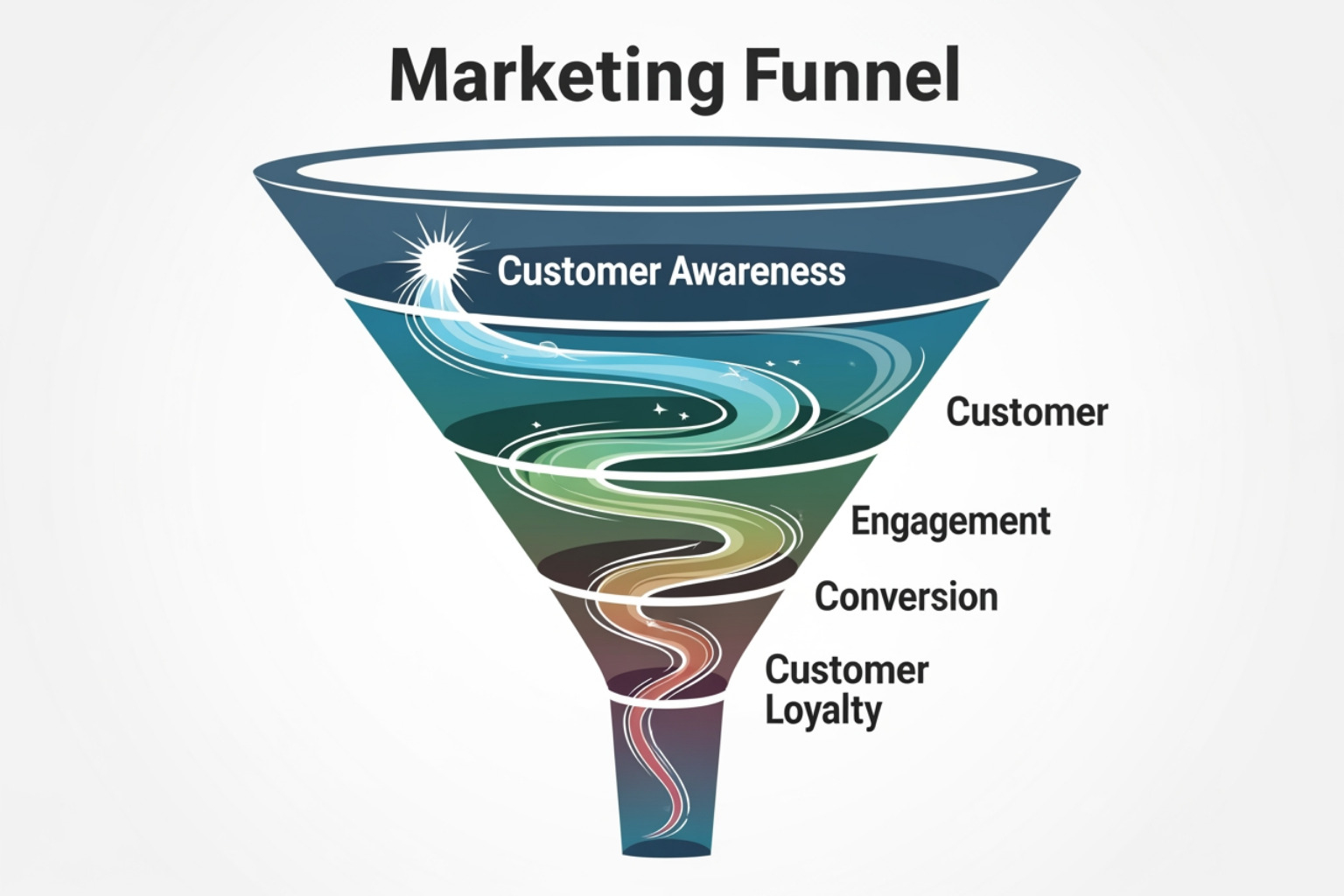
The customer lifecycle is often depicted as a journey with distinct stages, each requiring a custom approach. While the exact terminology can vary, a common and effective model breaks it down into five key phases: Awareness, Engagement, Conversion, Retention, and Loyalty. Sterne and Cutler, authors of “The Customer Life Cycle,” describe this continuum as where you “Claim someone’s attention, Bring them into your sphere of influence, Turn them into a registered and/or paying customer, Keep them as a customer, Turn them into a company advocate.” Sterne and Cutler
1. Awareness
This is the initial stage where potential customers first become aware of your brand, product, or service. They might be recognizing a problem they have and beginning to search for solutions.
- Goal: Attract new leads and capture their attention.
- Tactics: SEO, content marketing (blog posts, videos, infographics), social media presence, paid advertising (PPC, display ads), public relations, influencer marketing.
2. Engagement
Once aware, potential customers begin to interact with your brand. They might be researching, comparing options, or seeking more information. This stage is about building interest and trust.
- Goal: Nurture leads, educate them about your offerings, and build a relationship.
- Tactics: Email marketing (welcome series, newsletters), webinars, interactive content (quizzes, polls), social media engagement, retargeting ads, free trials or demos.
3. Conversion
This is the pivotal moment when a prospect decides to make their first purchase or commit to your service. It’s about making the buying process as smooth and appealing as possible.
- Goal: Turn prospects into paying customers.
- Tactics: Clear calls-to-action (CTAs), personalized offers, abandoned cart reminders, competitive pricing, social proof (reviews, testimonials), easy checkout processes, direct access to customer service.
4. Retention
After the first purchase, the focus shifts to keeping the customer happy and encouraging them to continue using your product or service. This is where the long-term relationship truly begins.
- Goal: Prioritize customer satisfaction, encourage repeat business, and reduce churn.
- Tactics: Onboarding programs, customer support, educational content, personalized product recommendations, feedback surveys, loyalty programs, proactive outreach.
5. Loyalty
The final stage is about changing satisfied, repeat customers into ardent brand advocates. These are the customers who not only stick with you but also actively promote your brand to others.
- Goal: Cultivate brand evangelists and maximize Customer Lifetime Value (CLV).
- Tactics: Exclusive offers, VIP programs, referral programs, community building, early access to new products, personalized thank-you messages, soliciting reviews and testimonials.
Tactics for Customer Lifecycle Marketing in Early Stages
In the early stages, the primary objective is to get noticed and spark interest.
- Awareness: This is where you cast a wide net to attract potential customers.
- SEO (Search Engine Optimization): Ensuring your website and content rank high in search engine results is fundamental. MDM Marketing specializes in Results-Driven SEO to help businesses in Canton, OH, increase their online visibility. By optimizing for relevant keywords, you can capture the attention of individuals actively searching for solutions.
- Content Marketing: Create valuable and informative content that addresses potential customers’ pain points. This could include blog posts, videos, infographics, or guides. For example, a business consultant could offer a free eBook on “10 Ways to Grow Your Brand” to capture leads.
- Social Media: Establish a strong presence on platforms where your target audience spends their time. Share engaging content, run contests, and interact with followers to build brand recognition.
- Paid Media: Use paid advertising channels like Google Ads and social media ads to reach new audiences. These can be particularly effective for Strategic Marketing Services for Visibility.
- Lead Capture: Once you’ve captured attention, it’s crucial to convert anonymous visitors into identifiable leads. This involves offering valuable incentives (lead magnets) like exclusive content, webinars, or free trials in exchange for contact information.
Driving Retention with Customer Lifecycle Marketing
The post-purchase journey is where many businesses falter, but it’s also where the greatest opportunities for long-term growth lie.
- Post-Purchase Communication: Once a customer buys, don’t go silent! Send order confirmations, shipping updates, and delivery notifications. This proactive communication builds trust. The Ridge, a brand known for wallets, keeps customers informed with tracking links in their emails and SMS. The Ridge
- Onboarding: For new customers, especially for complex products or services, a structured onboarding process is vital. This includes welcome email series with tutorials, setup guides, and tips to ensure they quickly find value. A SaaS business, for instance, might guide a new user to complete their first key action (e.g., creating a project) and then introduce related features.
- Personalization: Tailor communications based on purchase history, browsing behavior, and stated preferences. Personalized emails can lead to a “96% increase in revenue generated from emails.” This level of relevance makes customers feel understood and valued.
- Loyalty Programs: Reward regular customers with benefits like early access to new products, exclusive discounts, or points systems. These programs incentivize repeat purchases and foster a sense of belonging.
- Churn Reduction & Win-Back Campaigns: Identify customers showing signs of disengagement (e.g., declining activity, lack of purchases) and proactively reach out. Win-back emails with special offers can reignite interest. Printfresh, a sleepwear brand, uses win-back emails effectively. Printfresh For those who have already left, personalized win-back campaigns based on their reason for leaving can be highly effective. This comprehensive strategy is a hallmark of a strong Email Marketing Services approach and contributes to overall Performance Marketing Company goals.
Best Practices for Implementing a Successful Strategy
Implementing a successful customer lifecycle marketing strategy isn’t just about sending a few emails; it requires a holistic, data-driven approach.
- Map the Customer Journey and Identify Key Touchpoints: A customer journey map is a visual guide that helps sales, support, and marketing teams understand customer interactions at each stage. This involves setting business goals, building customer profiles, segmenting customers, and using data to pinpoint where and how customers interact with your brand. Think about every interaction point – from a social media ad to a support call, an email, or a website visit.
- Organize and Unify Customer Data: Data is the lifeblood of effective CLM. Businesses need to collect, organize, and unify customer data from various sources. This often involves using a CRM (Customer Relationship Management) system or a Customer Data Platform (CDP). A unified profile allows for a comprehensive view of each customer, enabling personalized interactions. This is crucial because “69% of marketers feel confident that their email service provider handles personalization well,” but scattered data can hinder true personalization.

- Leverage Personalization and Behavioral Data: Personalization goes beyond just using a customer’s first name. It means tailoring messages, offers, and experiences based on their past purchases, browsing behavior, interests, and real-time actions. “Subscribers are 76% more likely to click on content that speaks to them” 76% more likely. Using behavioral data to trigger automated campaigns ensures relevance and timeliness.
- Implement Omnichannel Support and Consistent Messaging: Customers expect to interact with brands seamlessly across multiple channels. Whether it’s email, SMS, push notifications, in-app messages, or social media, the message should be consistent and contextually relevant. Research indicates that 64 percent of customers spend more with a brand when issues get resolved on the channel they’re already using. This emphasizes the importance of an integrated approach.
- Integrate Your Tech Stack and Act on Data: Your marketing automation, CRM, and customer service platforms should all work together. This integration ensures that customer data flows freely, allowing every department to have a unified view of the customer and react in real-time. Without a robust framework, businesses struggle to activate data effectively. This seamless operation is key to Business Scaling Solutions.
- Test and Iterate Continuously: The customer journey is dynamic, and so should be your CLM strategy. Regularly track metrics, test different approaches (A/B testing, timing tests, holdout testing), and continually optimize your campaigns. A/B testing allows you to compare different versions of a message component (e.g., subject line, CTA) to see which performs better. Timing tests help you find the sweet spot for message delivery, and holdout testing measures the true impact of a message by comparing a test group to a control group that didn’t receive it.
- Focus on Proactive Engagement: Don’t wait for customers to come to you with problems. Proactive outreach can significantly improve satisfaction and loyalty. For instance, proactive engagement can make customers 60% more likely to purchase.
- Create Educational Resources and Self-Service Options: Empower customers with easily accessible information through a comprehensive help center or knowledge base. This not only improves customer experience but also reduces the burden on your support team.
By following these best practices, businesses can build a robust customer lifecycle marketing strategy that fosters strong relationships and drives long-term success.
Measuring Success: Key KPIs and Metrics
Measuring the effectiveness of your customer lifecycle marketing efforts is crucial for continuous improvement and demonstrating ROI. Different metrics are relevant at various stages of the customer journey, providing insights into performance and areas for optimization.
Here’s a breakdown of key performance indicators (KPIs) across the customer lifecycle stages:
| Lifecycle Stage | Key Performance Indicators (KPIs) |
|---|---|
| Awareness | Website Traffic (organic, direct, referral), Social Media Reach, Impressions, Mentions, Brand Mentions, Search Engine Rankings |
| Engagement | Social Media Engagement Rate (likes, comments, shares), Email Open Rates, Click-Through Rates (CTR), Time on Site, Bounce Rate, Net Promoter Score (NPS), Customer Effort Score (CES) |
| Conversion | Conversion Rate (e.g., free trial to paid, lead to customer), Average Order Value (AOV), Revenue per Visitor, Cost Per Acquisition (CPA) |
| Retention | Customer Retention Rate (CRR), Churn Rate, Repeat Purchase Rate (RPR), Customer Satisfaction Score (CSAT), Product Adoption Rate |
| Loyalty | Customer Lifetime Value (CLV), Referral Rate, Advocacy Score, Reviews and Testimonials, Upsell/Cross-sell Rates |
Let’s dig into some of the most critical KPIs:
- Customer Lifetime Value (CLV): This is arguably the most important metric for customer lifecycle marketing. It represents the total revenue a business can reasonably expect from a single customer account throughout their relationship. Increasing CLV is a primary goal of effective CLM.
- Churn Rate: The percentage of customers who stop doing business with your company over a given period. A high churn rate indicates issues in your retention or loyalty strategies. Over a third of marketers have improving customer retention as a top goal, emphasizing its importance.
- Net Promoter Score (NPS): A widely used metric that measures customer loyalty by asking customers how likely they are to recommend your product or service to others.
- Customer Retention Rate (CRR): The percentage of existing customers a business retains over a specific period. Maximizing CRR is a direct outcome of successful retention strategies.
- Conversion Rates: While important at the initial conversion stage, tracking conversion rates for various micro-conversions (e.g., email sign-ups, demo requests, feature adoption) throughout the lifecycle provides a granular view of customer progression.
- Return on Investment (ROI): All marketing efforts should demonstrate a positive ROI. Tracking the ROI of specific CLM campaigns helps in optimizing resource allocation and proving the value of your strategies.
To effectively track and analyze these metrics, robust Analytics Services are indispensable. They provide the insights needed to make informed, Data-Driven Marketing decisions, ensuring your customer lifecycle marketing strategy is constantly evolving and improving.
Frequently Asked Questions about Customer Lifecycle Marketing
How do B2B and B2C lifecycle marketing strategies differ?
While the core principles of customer lifecycle marketing remain consistent across B2B (Business-to-Business) and B2C (Business-to-Consumer) models, the execution and emphasis at each stage differ significantly due to fundamental differences in target audience, sales processes, and decision-making.
- Sales Cycles: B2B sales cycles are typically much longer and more complex, often involving multiple stakeholders and extensive evaluation periods. B2C cycles, on the other hand, tend to be shorter, more emotionally driven, and involve fewer decision-makers.
- Relationship Building: In B2B, relationships are built on trust, expertise, and long-term partnerships. Content marketing and thought leadership are crucial for demonstrating value and building credibility over time. B2C relationships are often built on brand affinity, emotional connection, and immediate gratification.
- Buyer Intent: B2B purchasing decisions are often driven by logical, ROI-focused considerations. Buyers are looking for solutions that solve specific business problems and contribute to their company’s goals. B2C purchases can be influenced by a wider range of factors, including personal desires, trends, and lifestyle.
- Decision-Making Complexity: B2B purchases often require consensus from a buying committee, involving various departments and approval layers. This means B2B lifecycle marketing needs to address the needs and concerns of different personas within the same account. B2C decisions are usually made by individuals or households, simplifying the communication path.
- Content Focus: B2B content marketing emphasizes educational resources, case studies, whitepapers, and webinars that address industry-specific challenges and showcase expertise. For B2C, content might focus more on lifestyle, entertainment, product features, and user-generated content. Copywriting for Businesses plays a vital role in crafting these custom messages.
For example, in B2B awareness might involve targeted LinkedIn ads and industry reports, while B2C might use social media influencers and viral campaigns. B2B conversion could involve detailed proposals and lengthy negotiations, whereas B2C might focus on a seamless e-commerce checkout.
What are common mistakes to avoid in lifecycle management?
Even with the best intentions, businesses can stumble when implementing customer lifecycle marketing. Avoiding these common pitfalls can save time, resources, and customer relationships.
- Data Silos and Fragmentation: One of the biggest enemies of effective CLM is scattered data. When customer information is held in separate systems (e.g., CRM, email platform, support desk) without integration, it’s impossible to get a unified view of the customer. This leads to inconsistent messaging, missed opportunities for personalization, and a disjointed customer experience.
- Lack of Personalization: Sending generic, one-size-fits-all messages to every customer is a surefire way to alienate them. Customers expect brands to understand their individual needs and preferences. Failing to personalize communications based on behavioral data or lifecycle stage makes messages irrelevant and easily ignored.
- Ignoring the Post-Purchase Stages: Many businesses put all their effort into acquisition and conversion, only to neglect customers once the sale is made. This is a critical mistake, as retention and loyalty are where the most profitable relationships are built. Without proper onboarding, support, and continued engagement, customers are likely to churn.
- Fragmented Messaging and Inconsistent Brand Voice: When different departments (marketing, sales, support) operate independently without a shared understanding of the customer journey, messaging can become inconsistent. This confuses customers and erodes trust. A unified brand voice and coordinated communication strategy are essential for a cohesive customer experience, which can be managed effectively with an Online Presence Manager.
- Failure to Measure and Optimize: Launching CLM campaigns without tracking relevant KPIs or analyzing performance is like flying blind. Without data, businesses can’t identify what’s working, what’s not, and where to improve. Continuous testing and iteration are vital for refining strategies.
- Over-Automation Without Human Touch: While automation is key to scaling CLM, relying solely on automated messages without any opportunity for human interaction can make the brand feel impersonal. Strategic points for human intervention (e.g., proactive support, personalized outreach during onboarding) can significantly improve the customer experience.
How does personalization impact lifecycle marketing results?
Personalization is not just a nice-to-have; it’s a critical driver of success in customer lifecycle marketing. Its impact is profound, leading to tangible improvements across various metrics.
- Increased Engagement and Click-Through Rates: When messages are custom to a customer’s specific interests, behaviors, or lifecycle stage, they are far more likely to grab attention. “Subscribers are 76% more likely to click on content that speaks to them” 76% more likely. This relevance cuts through the noise of generic marketing, making interactions more meaningful.
- Significant Revenue Increase: Personalization directly translates to higher revenue. Studies show that “personalization can lead to a 96% increase in revenue generated from emails.” This staggering figure highlights the financial power of delivering relevant content and offers. A Gartner study also showed that personalization can increase profits by 15%.
- Improved Conversion Rates: By presenting customers with offers and information that align with their current needs and stage in the journey, personalization can significantly boost conversion rates. This could be a personalized product recommendation, a timely abandoned cart reminder, or a custom upgrade offer.
- Improved Customer Loyalty and Retention: When customers feel understood and valued, their loyalty grows. Personalized experiences foster a deeper connection with the brand, making customers more likely to stay, repeat purchases, and even advocate for the brand. Accenture found that 75% of people are more likely to buy from a company that offers a personalized experience, and 74% are frustrated when businesses don’t personalize their experience.
- Effective Use of Real-Time Data: Advanced personalization leverages real-time data to deliver dynamic content and immediate, relevant responses to customer actions. This ensures that communications are always current and impactful, adapting as the customer’s journey evolves.
Personalization transforms generic marketing into a series of one-on-one conversations. It’s about recognizing customers as individuals and speaking to their unique needs, making every interaction count.
Conclusion
Customer lifecycle marketing is far more than a buzzword; it’s a fundamental strategy for building sustainable business growth and fostering deep, lasting relationships with your customers. By understanding each stage of the customer journey—from initial awareness to loyal advocacy—businesses can craft targeted, personalized experiences that resonate.
We’ve explored why CLM matters, breaking down the five essential stages and outlining practical tactics for each. From leveraging SEO and content in the early stages to driving retention through personalized emails and loyalty programs, the path to nurturing customers is clear. Best practices like unified data, omnichannel support, continuous testing, and personalization are not just recommendations but necessities in today’s competitive landscape. And by diligently tracking KPIs like CLV, churn rate, and conversion rates, businesses can measure their success and refine their strategies for optimal impact.
At MDM Marketing, we understand that mastering customer lifecycle marketing requires a blend of strategic insight, data-driven execution, and continuous optimization. Our expertise in Results-Driven SEO, Email Marketing Services, Analytics Services, and Copywriting for Businesses helps businesses in Canton, OH, and beyond, steer this complex journey. We’re dedicated to helping brands transform their online presence, improve customer engagement, and achieve measurable outcomes.
Ready to transform your customer relationships and drive sustainable growth? Connect with us today to find how MDM Marketing can tailor a customer lifecycle marketing strategy that works for you. Learn more about Why Us and how our data-driven approach delivers results.
About Jay McCullough
This author hasn't written a bio yet.