
Why Local Search Ranking Is Your Business’s Lifeline
Local search ranking determines where your business appears when customers search for nearby products or services. It’s the difference between a packed store and an empty one.
Quick Answer: The Three Pillars of Local Search Ranking
- Proximity – How close your business is to the searcher.
- Relevance – How well your business matches the search query.
- Prominence – How reputable your business is online.
The reality is that 46% of all Google searches have local intent. When someone searches for a local business, Google prioritizes those results. Appearing in the top three local results (the “local pack”) can lead to 126% more traffic and 93% more actions like calls and website clicks.
Google confirms that local rankings depend on proximity, relevance, and prominence. The impact is significant: over 75% of local mobile searches lead to a store visit within 24 hours, and 28% of those result in a purchase. If you’re not visible in local search, you’re missing customers ready to buy now.
Many business owners struggle with where to start, from optimizing their Google Business Profile to building a website for local search. This guide provides actionable strategies to improve your local search ranking.
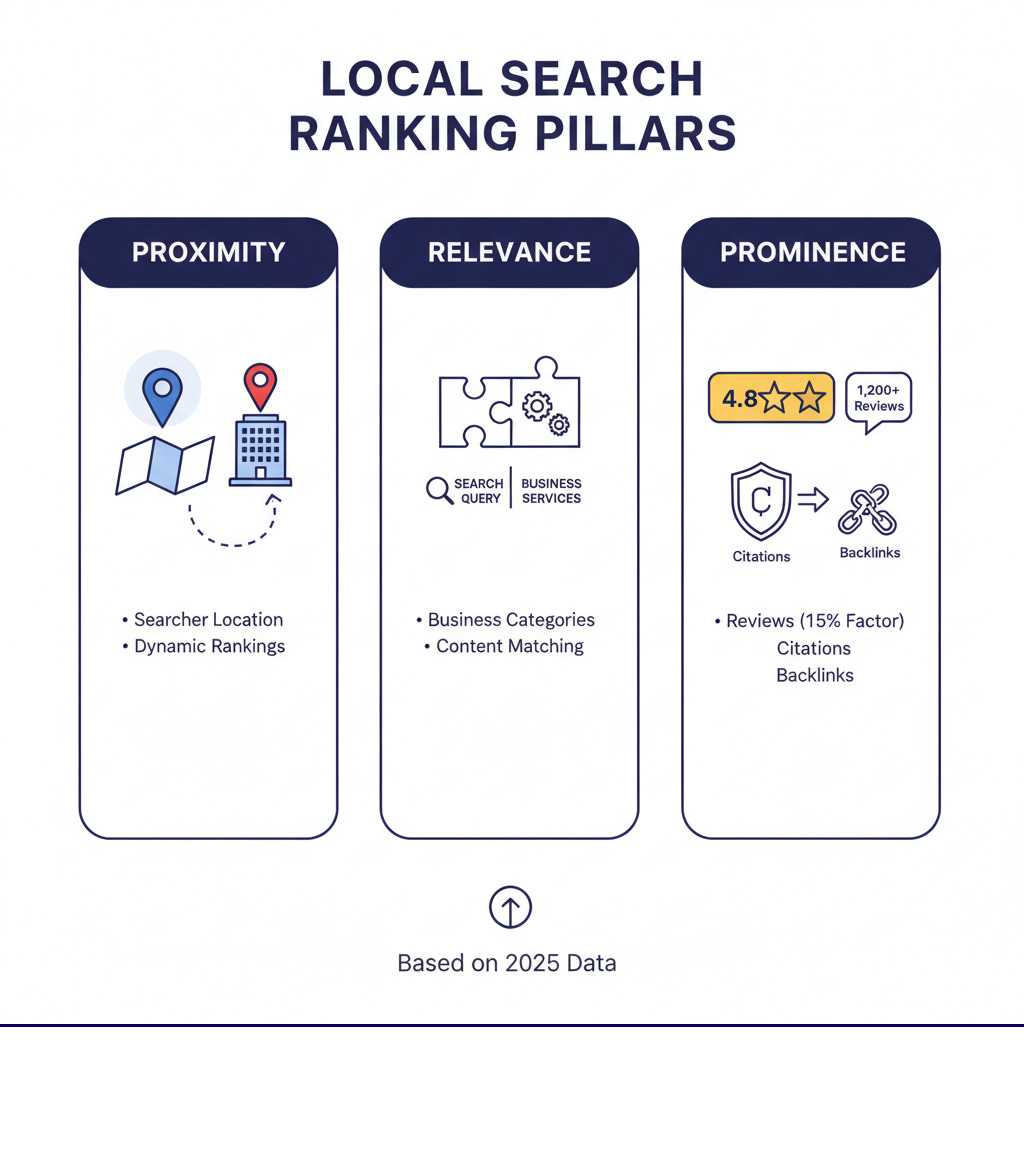
The Three Pillars of Local Search: Proximity, Relevance, and Prominence
Google’s local search algorithm is built on three principles: proximity, relevance, and prominence. Mastering these pillars is the key to improving your local search ranking and appearing in the local pack and Google Maps results.
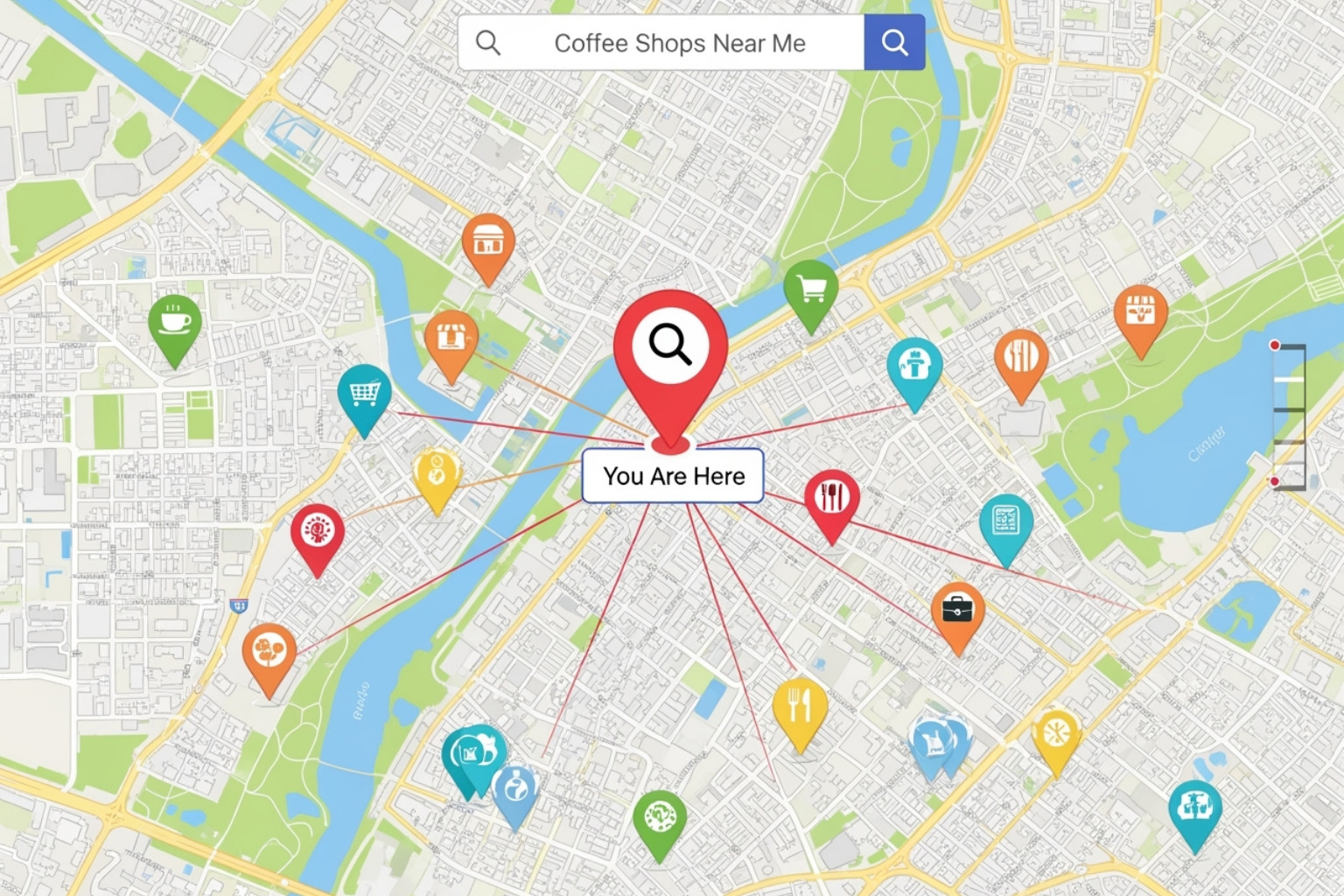
Proximity: Being There When It Counts
Proximity is how close your business is to the person searching. Using GPS data or an IP address, Google calculates this distance and prioritizes the closest businesses for most local searches. This factor can even outweigh better reviews from a business farther away.
Your physical address is crucial. You’ll rank strongest for searches happening near your storefront. Service area businesses can define a service radius in their Google Business Profile, but rankings are still strongest near the verified address. The farther a searcher is from your address, the harder it is to rank.
Relevance: Matching Searcher Intent
Relevance is about matching the searcher’s intent. Google needs to see that you offer what the customer wants. It determines this by analyzing signals from your Google Business Profile and website.
To improve relevance, choose the most specific primary business category possible (e.g., “Italian restaurant” instead of “restaurant”) and add secondary categories for your other offerings. Provide detailed service descriptions, breaking down general services into specifics like “water heater repair” and “drain cleaning.”
Your website content is also critical. It should reflect your services and use the language your customers use. MDM Marketing’s SEO services can help create content that aligns with both customer intent and Google’s algorithm. Retailers can further boost relevance by adding in-store products to their Google Business Profile.
Prominence: Building Your Digital Reputation
Prominence refers to how well-known and trusted your business is online. Google gauges this by looking at your digital footprint, including reviews, backlinks, and citations.
- Reviews are a major factor. Both the quantity and quality of reviews matter; a high volume of positive reviews signals trustworthiness.
- Backlinks from other reputable websites, like local news sites or industry directories, act as votes of confidence and build your authority.
- Citations—mentions of your business name, address, and phone number (NAP) on directories and other sites—reinforce your legitimacy. Consistency is key.
Brand recognition, measured by how often people search for your business by name, also contributes to prominence. Building prominence is a long-term effort based on excellent service and a strong online presence. As confirmed by Google’s own guidance, these three pillars are the foundation of local SEO.
Mastering Your Google Business Profile for a Higher Local Search Ranking
Your Google Business Profile (GBP) is the most powerful tool for improving your local search ranking. This free listing on Google Search and Maps is your digital storefront. A complete GBP makes customers 2.7 times more likely to see your business as reputable, 70% more likely to visit, and 50% more likely to make a purchase. A fully optimized profile directly drives business results.
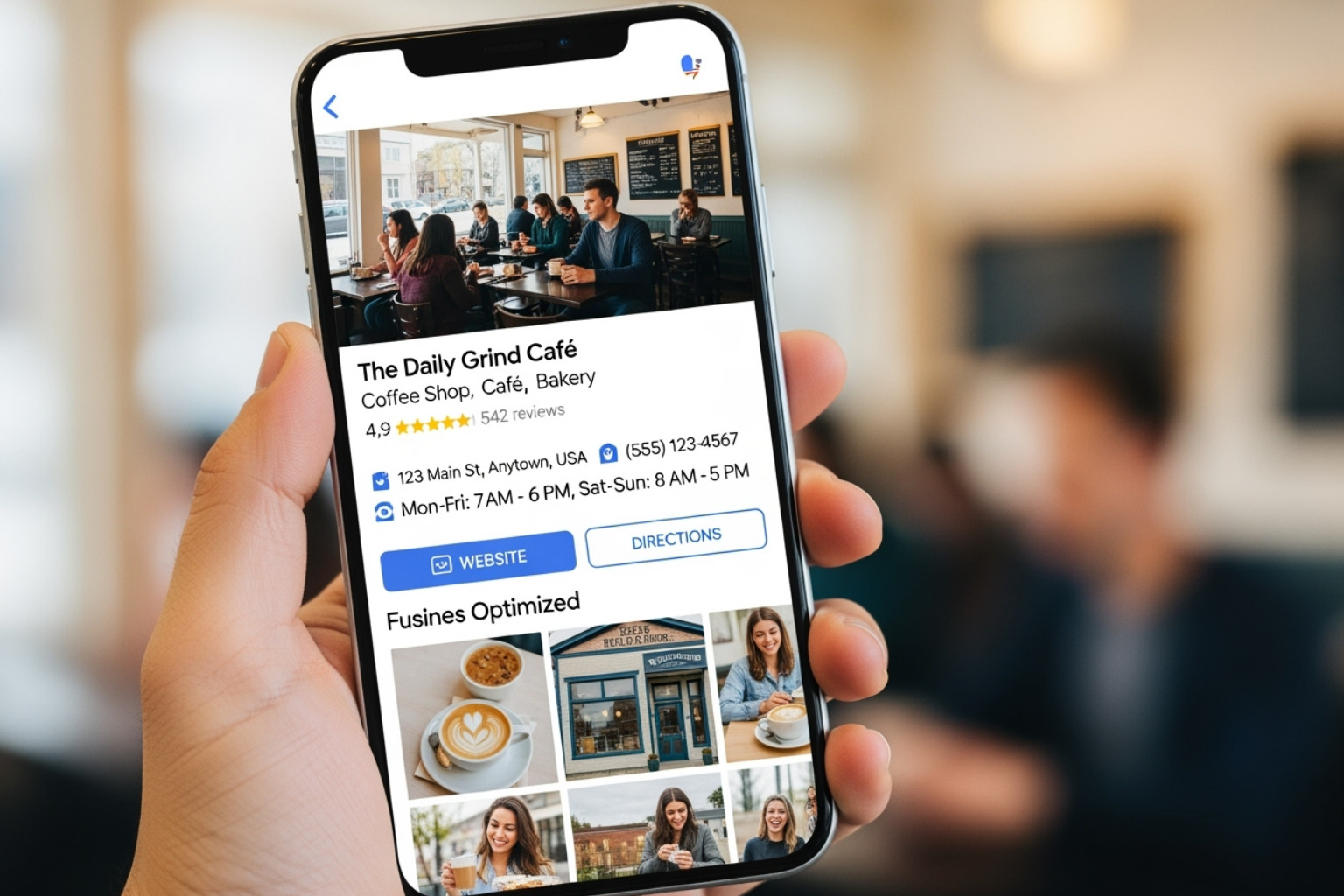
Core Profile Optimization: The Non-Negotiables
Getting the basics right is non-negotiable, as these elements are how Google understands your business.
- NAP Consistency: Your Name, Address, and Phone number must be identical everywhere online. Even minor variations like “Street” vs. “St.” can confuse Google and harm your ranking.
- Business Name: Use your real business name as it appears on your signage. Avoid adding keywords, as this violates Google’s guidelines and can lead to penalties.
- Categories: Select the most specific primary category for your business (e.g., “Pizza delivery” instead of “Restaurant”). Add secondary categories to cover all your services.
- Services & Attributes: List every service you offer. Use attributes like “free Wi-Fi” or “wheelchair accessible” to provide details that help customers and can influence your appearance in specific searches.
- Business Description: Use the 750 characters to tell your story and naturally include relevant keywords.
- Hours & Website: Keep your hours of operation accurate, especially for holidays. Ensure your website link is correct.
- Business Verification: Complete this step to prove you own the business and open up all GBP features.
Getting these details right is critical. MDM Marketing offers GMB Optimization Services to handle these foundational elements, which are tightly connected to your overall SEO strategy, as explained in this article on SEO and GMB.
Advanced GBP Features to Boost Engagement
With a solid foundation, use these advanced features to boost engagement and signal activity to Google.
- Google Posts: Share timely updates, offers, and events directly on your profile to catch a searcher’s eye.
- Q&A Section: Proactively answer customer questions. Answering promptly provides valuable information for all future visitors and shows you’re engaged.
- Photos and Videos: Upload high-quality, geo-tagged images of your business, products, and team. Profiles with photos get significantly more clicks and direction requests.
- Product Catalogs: For retail, display your inventory directly on your profile to appear in product-specific searches.
- Messaging: Enable direct messaging and respond quickly to build trust and capture leads.
Your GBP requires ongoing attention, but the investment pays off with higher visibility and a better local search ranking.
Beyond GBP: Website and Off-Page Ranking Factors
While your Google Business Profile is the star player, your local search ranking also depends on your website and off-page signals like reviews and backlinks. Your GBP tells Google you exist, while these other factors prove you’re worth recommending.
On-Page SEO: Your Website’s Role in Local Search Ranking
Your website is your digital headquarters and must be optimized for local search.
- Mobile Optimization & Page Speed: With nearly 9 in 10 people using their phone for local searches weekly, a fast, mobile-friendly site is essential. Slow loading times will cause potential customers to leave.
- Local Keyword Research: Identify the exact phrases customers use, including location-based terms (“plumber Canton OH”) and service-specific queries (“emergency drain cleaning”).
- Location-Specific Landing Pages: If you serve multiple areas, create a unique page for each one. Optimize it with local content and keywords.
- Title Tags & Meta Descriptions: These appear in search results. Craft compelling descriptions that include your target keywords and location to encourage clicks.
- Schema Markup: This structured data helps search engines understand your business information (NAP, hours, reviews) and can improve how you’re displayed in search results. MDM Marketing’s SEO services include technical optimizations like schema to give you a competitive edge.
The Power of Reviews and Citations
Reviews and citations are powerful trust signals. Review signals can make up 15% of local ranking factors, and 77% of consumers avoid businesses with ratings below three stars.
- Review Quantity, Quality, and Velocity: Aim for a steady stream of 4- to 5-star reviews. Increasing your average star rating by one star can improve GBP conversions by 44%.
- Responding to Reviews: Responding to reviews shows you’re engaged and can improve conversions. For every 25% of reviews you respond to, GBP conversion improves by 4.1%.
- Citations: These are mentions of your Name, Address, and Phone Number (NAP) online. Structured citations on business directories must be perfectly consistent. Unstructured citations on blogs or news sites also build prominence. MDM Marketing helps businesses manage Google Local Citations to ensure accuracy and impact.
Building Local Authority with Backlinks
Backlinks are links from other sites to yours, acting as votes of confidence. For local SEO, quality and relevance are more important than quantity.
- Local Links: Earn links from local news sites, blogs, and community partners to signal local authority.
- Industry Links: Get listed in reputable industry directories and associations.
- Sponsorships: Sponsoring local events or teams often results in valuable backlinks.
- Internal Linking: A smart internal linking strategy helps distribute authority across your site and guides users and search engines.
Building a strong backlink profile takes time but significantly boosts your local search ranking. Learn more about MDM Marketing’s link building services for a strategic approach.
Avoiding Pitfalls and Adapting to the Future
Local SEO is an ongoing strategy that requires avoiding common mistakes and adapting to changes in search algorithms and user behavior.

Common Mistakes That Hurt Your Local Search Ranking
Many avoidable errors can hurt your local search ranking. Be sure to avoid these common pitfalls:
- Inconsistent NAP Information: Even small variations in your Name, Address, or Phone number across different websites can confuse Google and weaken your authority.
- Keyword Stuffing: Adding keywords to your business name violates Google’s guidelines and can lead to penalties or suspension.
- Fake Reviews: Buying reviews or soliciting biased testimonials is a violation that can result in review removal and damage your reputation.
- Incorrect Business Categories: Choosing categories that don’t accurately represent your core business dilutes your relevance for the searches that matter most.
- Ignoring Negative Feedback: Failing to respond to negative reviews signals to customers and Google that you don’t care about customer satisfaction.
Always adhere to Google’s guidelines for representing your business to avoid penalties.
The Impact of AI and Behavioral Signals
The future of search is driven by AI and user behavior, making it essential to adapt.
- AI Overviews: These AI-generated summaries at the top of search results pull information directly from sources like your GBP. A comprehensive and accurate profile is crucial to be included.
- Behavioral Signals: Google increasingly uses user actions to gauge your quality. Important signals include:
- Click-Through Rate (CTR): A high CTR on your listing indicates relevance.
- Clicks-to-Call & Clicks-for-Directions: These high-intent actions are strong positive signals.
- Dwell Time: How long users stay on your website after clicking indicates content value.
- Social Media Signals: While not a direct ranking factor, an active social presence drives traffic, increases brand searches, and can be a primary findy tool for younger audiences, all of which indirectly send positive signals to Google.
Navigating these changes requires an adaptive strategy. MDM Marketing offers outsourced SEO services to keep your business ahead of the curve.
Frequently Asked Questions about Local Search Rankings
What’s the difference between local SEO and traditional organic SEO?
Local SEO aims to make your business visible to customers in a specific geographic area. It prioritizes factors like proximity to the searcher and your Google Business Profile for searches like “plumber Canton OH.” In contrast, traditional organic SEO targets a broader, non-geographic audience for queries like “how to fix a leaky faucet,” focusing more on content authority and backlinks. While both share some best practices, local SEO’s success hinges on location-based signals.
How long does it take to improve my local search ranking?
While not instant, improvements can often be seen within a few weeks to a few months of consistent effort. The exact timeline depends on your market’s competitiveness. Quick wins come from optimizing your Google Business Profile, generating new reviews, and building consistent citations. However, achieving and maintaining top rankings requires ongoing work. It’s a long-term strategy, not a one-time fix.
Can my business rank in a city where I don’t have a physical address?
It is very difficult. Google’s local algorithm heavily favors businesses with a verified physical address within the city being searched. For service area businesses, you can define a service area in your GBP, but your ranking will still be strongest near your verified address and weaken with distance. The best strategy for ranking in other cities is to focus on traditional organic SEO. Create location-specific landing pages on your website for each city, optimized with local keywords and content. This can help you appear in the standard organic results, even if you don’t make it into the local pack.
Conclusion
Success in local search ranking isn’t magic; it’s a strategy built on proximity, relevance, and prominence. Mastering these pillars—through an optimized Google Business Profile, a fast and mobile-friendly website, a strong review profile, and quality backlinks—is how you show up where and when customers are looking.
Improving your local ranking requires consistent effort, especially as AI and user behavior continue to reshape search. The opportunity is massive, with nearly half of all Google searches having local intent from customers ready to buy.
Based in North Canton, OH, MDM Marketing combines data-driven technical SEO with compelling content to deliver results. We create custom strategies to keep your business visible and growing as search evolves. It’s time to turn local searches into sales.
Contact MDM Marketing today for a custom local SEO strategy and put your business at the top of local results.
About Jay McCullough
This author hasn't written a bio yet.