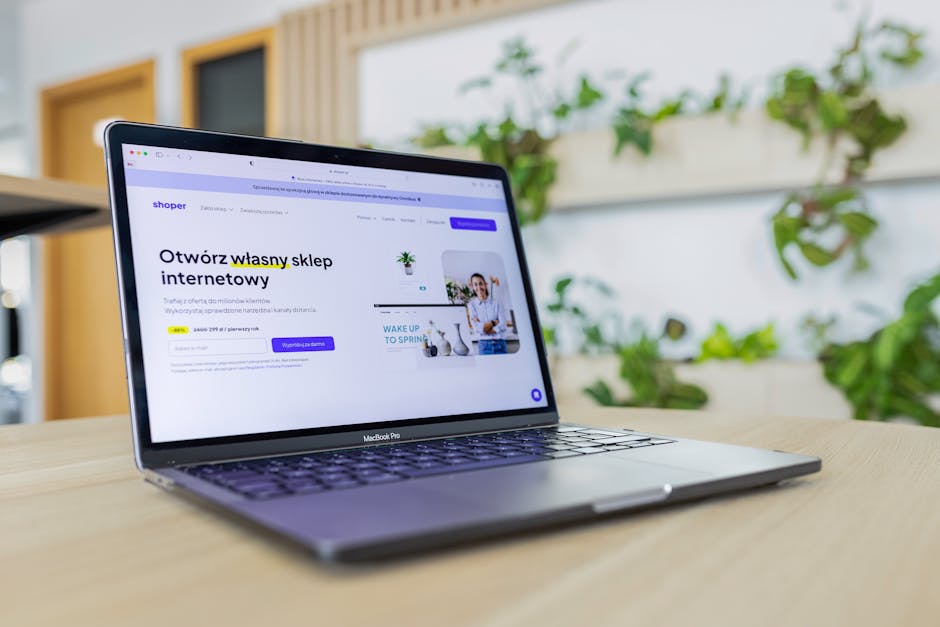
When Your Website Looks Good But Doesn’t Perform — Here’s What’s Missing
Online marketing web design is the practice of building websites that are both visually compelling and engineered to drive real business results — traffic, leads, and sales.
Here’s the quick version of what that means in practice:
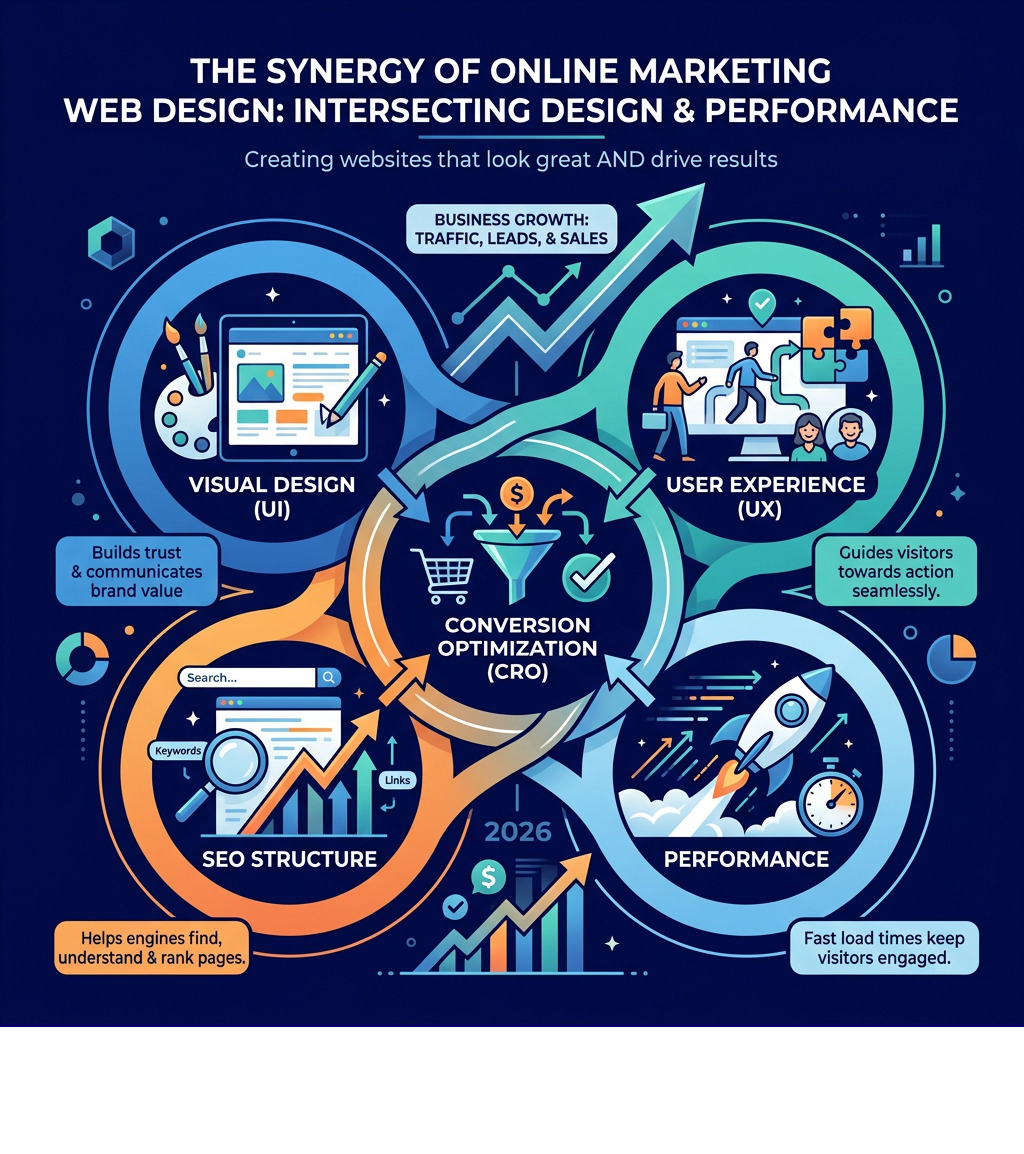
| Element | What It Does |
|---|---|
| Visual Design (UI) | Builds trust and communicates brand value at a glance |
| User Experience (UX) | Guides visitors toward the action you want them to take |
| SEO Structure | Helps Google find, understand, and rank your pages |
| Performance | Fast load times keep visitors engaged and improve rankings |
| Conversion Optimization | Turns browsers into buyers or leads |
Think of your website as a 24/7 salesperson. If it looks great but confuses visitors, they leave. If it ranks well but feels untrustworthy, they don’t convert. Both sides have to work together.
Here’s the tension most businesses run into: design teams optimize for beauty, marketing teams optimize for performance — and those goals rarely meet in the middle without a clear strategy.
The data makes this problem concrete. 94% of people say web design is the main reason they mistrust or reject a website. But a beautiful site with no marketing foundation is, as one web agency put it, like a Ferrari kept in a garage — impressive, but going nowhere.
The businesses that win online are the ones that treat their website as a growth system — not just a digital brochure.
This guide breaks down exactly how to balance aesthetics with marketing goals, so your site earns attention and converts it.
The Synergy of Online Marketing Web Design
In the modern digital landscape, treating web design and marketing as separate silos is a recipe for mediocrity. True success comes from a synergistic approach where every visual choice supports a marketing objective. Online marketing web design is not just about choosing the right hex codes; it is about creating a cohesive brand identity that lives across every digital touchpoint.
An effective omnichannel strategy ensures that whether a customer finds you through a social media ad, a Google search, or an email campaign, the experience remains seamless. This consistency builds a corporate identity that feels professional and reliable. When a user moves through their customer journey—from the initial “problem awareness” phase to the final “decision” phase—the website must act as the anchor that holds the entire strategy together.
For businesses in Canton, OH, and beyond, Mastering Effective Web Marketing Strategies for Modern Needs involves understanding that the website is the “central cog” of the machine. Working with Online Marketing Experts allows a business to align its aesthetic vision with data-driven growth tactics.
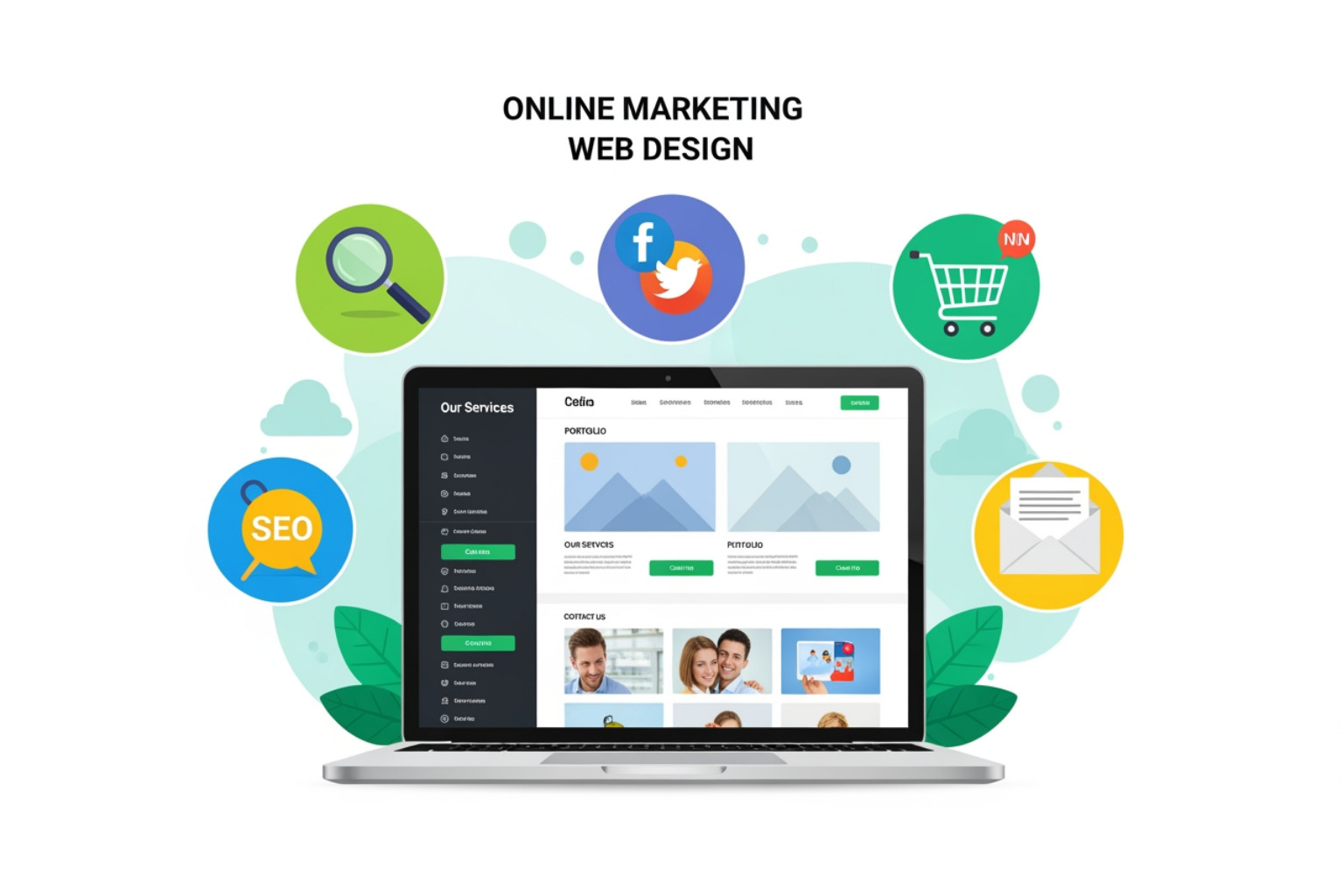
Why Aesthetics Alone Fail in Online Marketing Web Design
We have all visited a website that looked like a piece of modern art but was impossible to navigate. High bounce rates—where users leave almost immediately—are often the result of “over-designing” at the expense of clarity. When a page is too cluttered or the navigation is unconventional, it increases the cognitive load on the visitor. If they have to think too hard to find your phone number or service list, they will simply click away.
User empathy is the secret ingredient here. Designers must ask: “What is the visitor trying to achieve in the first five seconds?” Research on visual information retention shows that people can recall up to 65% of information that is visually depicted for three days, compared to only 10% of what they hear. This means your message must be visually clear and immediate. If the “pretty” elements distract from the “profitable” message, the design has failed its primary marketing purpose.
Integrating SEO into Online Marketing Web Design
A website that no one can find is essentially invisible. This is why SEO must be baked into the design process from day one, rather than “added on” after the site is built. Technical crawlability is the foundation; if search engine bots cannot easily navigate your site structure, you won’t rank.
Integrating online marketing web design with SEO involves:
- Heading Hierarchy: Using a single H1 for the main topic and H2s/H3s for subtopics to help Google understand the page’s outline.
- Semantic Search: Designing content layouts that answer user intent rather than just repeating keywords.
- Internal Linking: Designing the layout so that core pages are reachable in 1-2 clicks, which distributes “link juice” and keeps users on the site longer.
By focusing on On-Page SEO for Website and SEO On-Page Optimization Techniques, you create a site that is as attractive to Google as it is to humans. Tools like the Google Keyword Tool for strategic planning should guide the information architecture before the first pixel is even drawn.
Performance-Driven Architecture: SEO and Core Web Vitals
Google has made it very clear: speed is a ranking factor. Core Web Vitals are a set of specific factors that Google considers important in a webpage’s overall user experience. If your design choices—like massive unoptimized images or heavy background videos—slow down the site, your marketing ROI will suffer.
| Core Web Vital | Marketing Impact | SEO Impact |
|---|---|---|
| Largest Contentful Paint (LCP) | Users see the main content fast, reducing frustration. | High correlation with better rankings. |
| First Input Delay (FID) | The site feels responsive and “snappy” to clicks. | Improves user engagement signals. |
| Cumulative Layout Shift (CLS) | Prevents buttons from moving while loading (no accidental clicks). | Essential for passing Google’s UX audit. |
To Improve Page Speed, designers should use modern image formats like WebP and compress files by 20%–50% without sacrificing quality. Furthermore, security is non-negotiable. An HTTPS Secure Website is not just a best practice; it is a trust signal that both Google and users demand.
Mobile-First and Responsive Design Essentials
With mobile traffic exceeding 60% of all web visits, “mobile-friendly” is no longer enough—you must be mobile-first. This means designing for the “thumb zone”—the areas of a smartphone screen that are easiest to reach with one hand.
Responsive design uses fluid grids to ensure the site looks perfect on a 5-inch phone and a 27-inch monitor. Navigation patterns must change on mobile; for example, a standard menu bar might become a “hamburger” menu, and tap targets (buttons) must be large enough to be clicked without zooming. Failing to optimize for mobile means losing out on the 8 out of 10 consumers who will stop engaging with a site if its content doesn’t display properly on their device. Learn more about maintaining a Mobile-Friendly Website to capture this massive audience.
Accessibility as a Marketing Advantage
Accessibility is often viewed as a “compliance box,” but it is actually a powerful marketing advantage. When you follow Web Content Accessibility Guidelines (WCAG), you open your business to a wider audience, including those with visual or motor impairments.
Inclusive design features like high color contrast, keyboard-friendly navigation, and semantic HTML (which helps screen readers) make the site easier for everyone to use. From an SEO perspective, many accessibility best practices—like adding descriptive alt text to images—directly help search engines understand your content. It is a win-win for both social responsibility and search visibility.
Designing for the Click: UI/UX and Conversion Optimization
The ultimate test of online marketing web design is the conversion rate. A “pretty” site is a vanity project; a “profitable” site is a lead-generation machine. Conversion Rate Optimization (CRO) involves strategically placing elements to guide the user toward a specific goal.
Key elements of a high-converting layout include:
- Microcopy: Small bits of text, like “Get your free quote in 24 hours” instead of a generic “Submit” button.
- Frictionless Forms: Asking only for essential information. If a form feels like an interrogation, users will bail.
- Social Proof: 93% of users consider reviews before making a purchase. Integrating Google ratings and influencer recommendations directly into the design builds instant credibility.
For service-based businesses, such as Digital Marketing for Contractors, the layout must clearly answer “Why choose us?” within seconds of the page loading.
Visual Storytelling and Immersive Media
We are living in a visual-first era. Statistics show that 72% of consumers prefer video over text when learning about a product. Integrating video SEO and motion design into your web presence can drastically increase engagement.
Interactive elements, like 3D configurators or animated progress bars, keep users on the page longer, which sends positive signals to search engines. For those looking for inspiration, you can Iscriviti al canale Youtube for visual marketing examples to see how video content can be leveraged to tell a brand’s story more vividly.
Trust Signals and Credibility Elements
Trust is the currency of the internet. Because users cannot meet you in person, they look for “visual trust” signals. These include:
- Google Ratings: Displaying a 4.9/5 star rating can significantly boost click-through rates.
- Professional Photography: Stock photos can feel “fake.” Real photos of your team or Canton, OH office build authenticity.
- Security Badges: Showing that your site is secure encourages users to share their contact information.
- Cookie Transparency: Providing clear information, such as Per saperne di più su questi scopi, shows respect for user privacy.
Future-Proofing Your Presence: Trends for 2025 and 2026
As we look toward 2026, online marketing web design is becoming increasingly personalized. AI-driven personalization allows a website to change its headlines, images, or offers based on the visitor’s past behavior. Imagine a returning customer seeing a “Welcome back” message with a discount for the exact service they were browsing last week.
Sustainability is also becoming a differentiator. Brands are moving toward “green” web design—using lightweight code and optimized images to reduce the energy required to load a page. This not only helps the planet but also makes the site incredibly fast. Voice search optimization is another rising trend; by 2026, half of all searches are projected to be voice-based, requiring web content that is written in a natural, conversational tone.
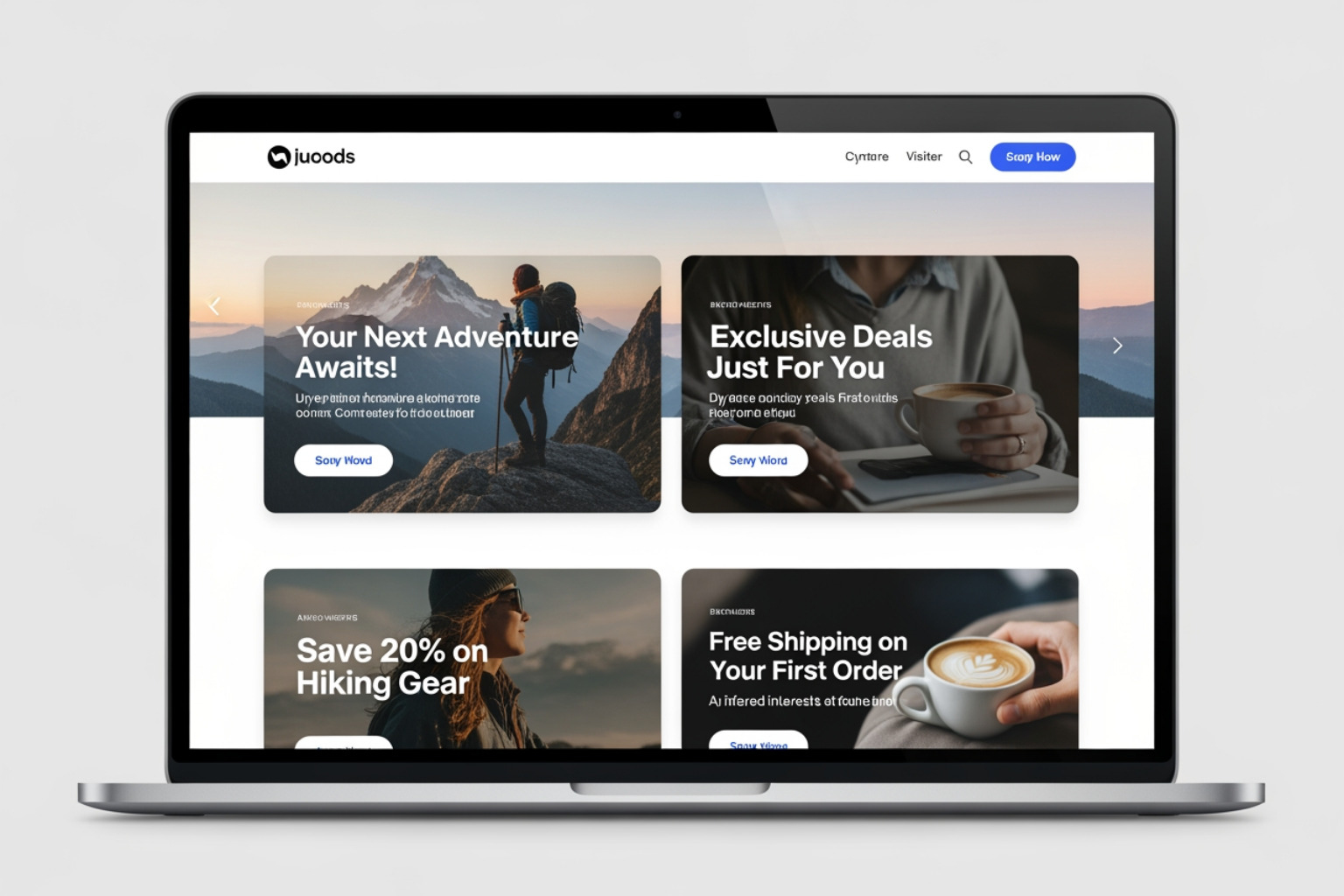
The Step-by-Step Redesign Process
Redesigning a website is a major undertaking that should always be guided by marketing goals. A structured process prevents the “pretty but useless” trap:
- Discovery: Define business goals and user personas. Who are you talking to?
- Audit: Analyze current site performance, SEO rankings, and bounce rates.
- Strategy: Create a sitemap and wireframes that prioritize the user journey.
- Development: Build the site using clean code and mobile-first principles.
- Test & Learn: Launch and then use heatmaps and analytics to see how users actually behave.
The MDM Marketing Process emphasizes this “Test & Learn” phase, ensuring that the website evolves as your business grows.
Frequently Asked Questions about Online Marketing Web Design
What is the difference between web design and web development?
Think of web design as the architect and interior designer—it covers the visual layout, color schemes, and how the user interface (UI) feels. Web development is the structural engineering and construction—it involves the backend code, programming, and functionality that makes the buttons actually work. You need both to have a successful site.
How much does a marketing-optimized website cost?
While prices vary based on complexity, most professional marketing-optimized websites range between $2,500 and $7,500. This investment covers not just the “look” of the site, but the SEO research, conversion strategy, and technical performance optimization that ensure a high ROI. A cheaper site often costs more in the long run through lost leads and poor search rankings.
What metrics track the success of design and marketing integration?
To see if your online marketing web design is working, track these key metrics:
- Conversion Rate: Are visitors taking the desired action?
- Organic Traffic: Is the SEO-friendly structure helping you rank?
- Bounce Rate: Are people staying to read your content?
- Lead Quality: Are the inquiries coming in actually a good fit for your business?
- ROI: Is the revenue generated by the site outweighing the cost of the build and maintenance?
Conclusion
At the end of the day, your website is your most valuable digital asset. Balancing “the pretty” with “the profitable” is not an optional luxury—it is a requirement for survival in a competitive market.
MDM Marketing, based in Canton, OH, specializes in this exact balance. By combining a data-driven strategy with high-end design, they help businesses achieve an average 280% ROI increase. Whether you need a complete overhaul or a strategic tune-up, your website should be a growth asset that works as hard as you do.
Ready to transform your online presence into a high-performing lead machine? Connect with MDM Marketing today to start building a website that is as profitable as it is beautiful.
About Jay McCullough
This author hasn't written a bio yet.