What Is SEO and How It Works in Digital Marketing
What is seo and how it works in digital marketing is one of the most important questions any business owner can ask. Here’s the short answer:
SEO (Search Engine Optimization) is the process of improving your website so it appears higher in search engine results — without paying for ads. It works by helping search engines like Google understand your content, trust your site, and show it to people searching for what you offer.
How SEO works in digital marketing — quick summary:
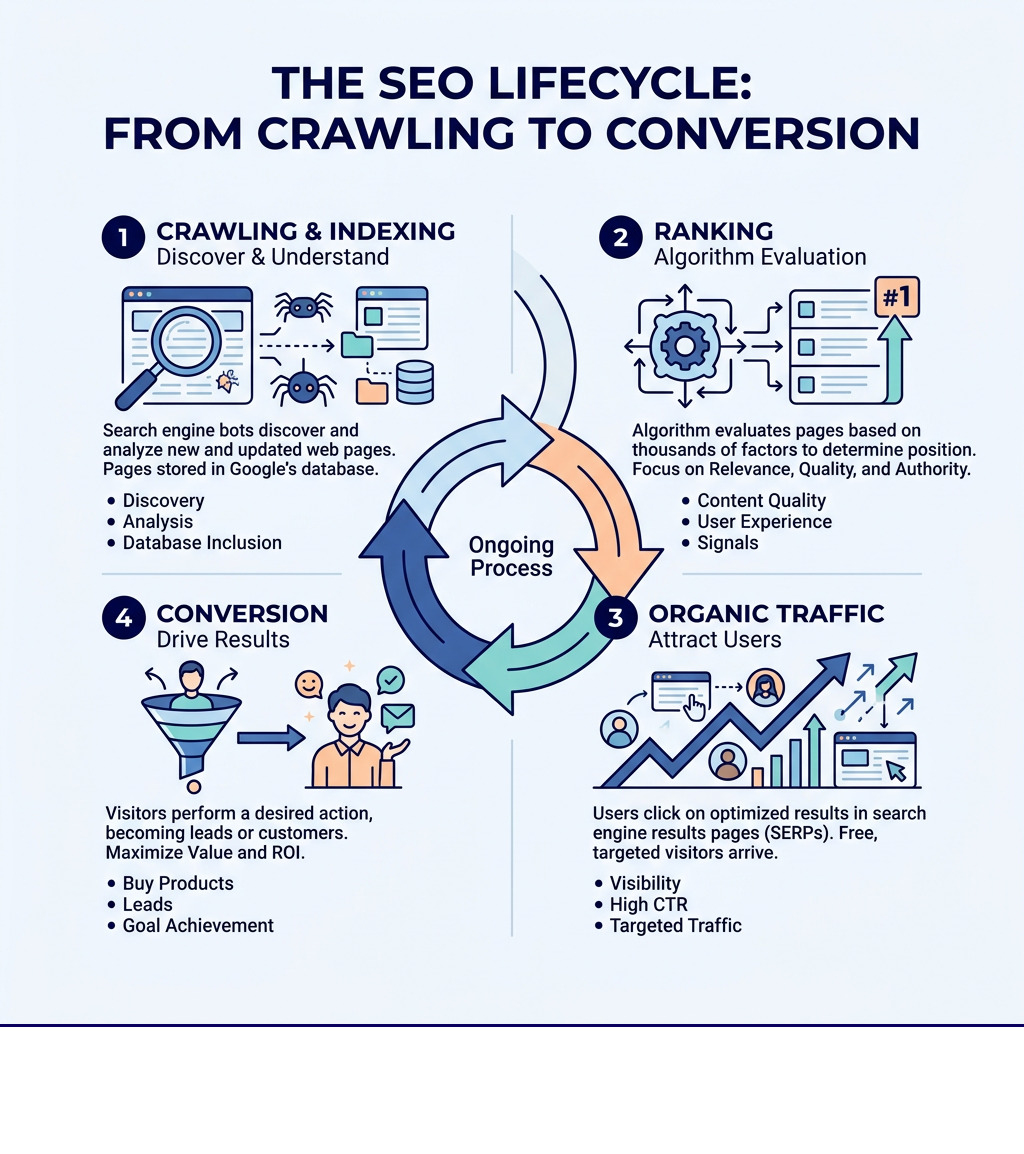
- Crawling — Google’s bots scan your website to discover your pages
- Indexing — Google stores and organizes those pages in its database
- Ranking — Google’s algorithm decides which pages to show, and in what order, based on relevance, quality, and trust
- Traffic — Users click your result, visit your site, and (ideally) become customers
That’s the core loop. Everything in SEO — your content, your links, your site speed — is designed to improve where you land in that ranking step.
Why does it matter? Consider this: 68% of all online experiences begin with a search engine. And the first organic result on Google captures around 27.6% of all clicks. Drop to page two, and fewer than 1% of searchers will ever find you.
For small businesses, e-commerce brands, and B2B teams alike, SEO is often the highest-return channel in the entire digital marketing mix. It builds visibility that compounds over time — unlike paid ads, which stop the moment your budget does.
This guide breaks down exactly how SEO works, why it matters, and how to use it to grow your brand in the real world.
What is SEO and how it works in digital marketing
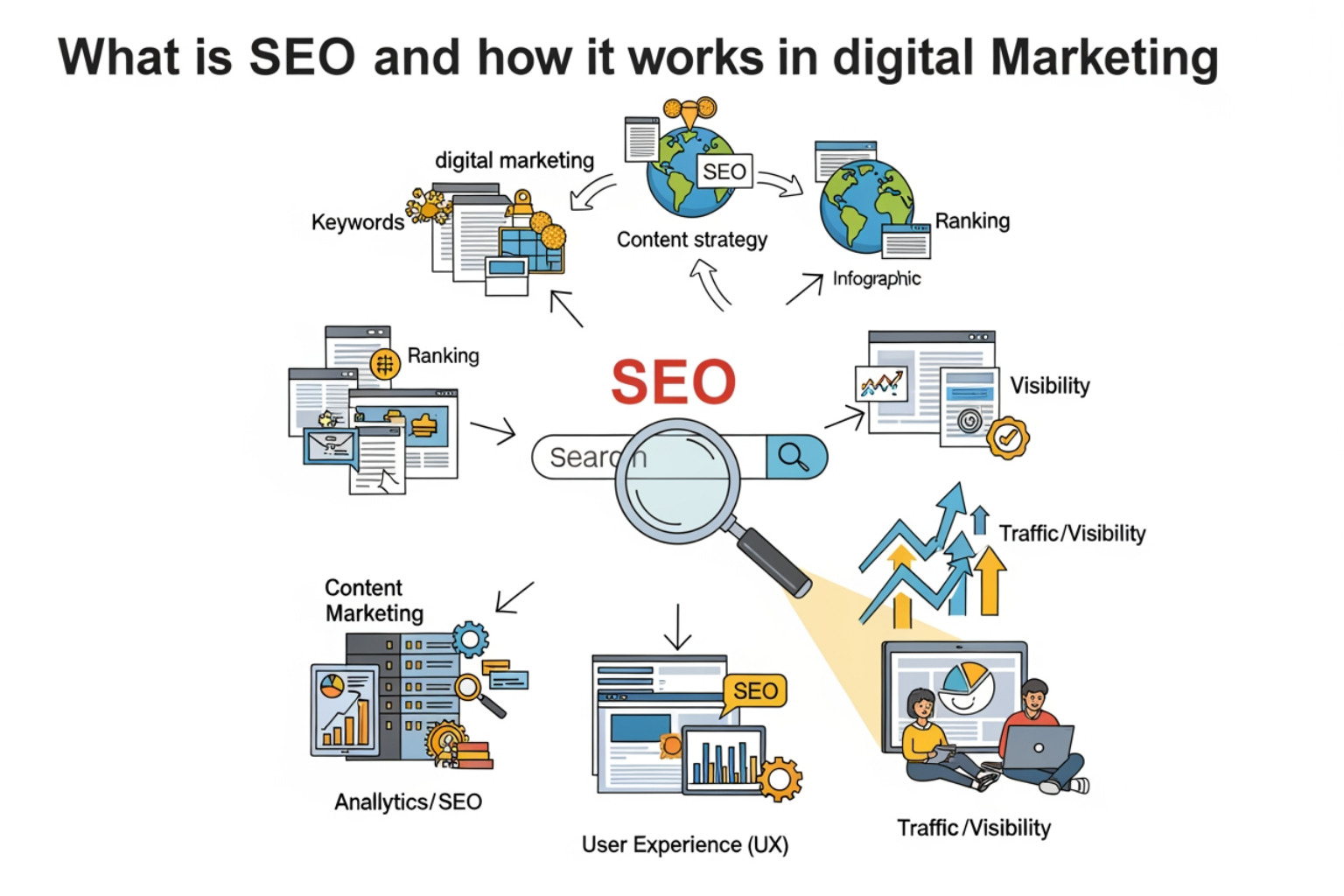
To truly grasp what is seo and how it works in digital marketing, one must look at it as the foundation of a brand’s online presence. While digital marketing includes social media, email, and paid ads, SEO is the “silent engine” that drives sustainable, long-term growth. It is the process of aligning a website with the complex algorithms search engines use to determine quality and relevance.
Unlike paid advertising, where a business pays for every click, SEO focuses on “organic” or “earned” results. These are the listings that appear because Google deems them the most helpful answer to a user’s query. Because these results aren’t labeled as “Ads,” users tend to trust them more. In fact, research shows that 70% of marketers believe SEO is more effective than pay-per-click (PPC) advertising for long-term growth.
The relationship between SEO and digital marketing is symbiotic. SEO provides the high-quality content and technical structure that other channels need to succeed. For instance, a great social media post might drive temporary traffic, but an SEO-optimized blog post can drive traffic for years. If a brand is just starting out, understanding Digital Marketing for Beginners: How to Get Started and Actually Succeed is a vital first step in seeing where SEO fits into the larger puzzle.
The Mechanics of Search: Crawling, Indexing, and Ranking
Search engines are not magic; they are massive, automated filing systems. To understand what is seo and how it works in digital marketing, you have to understand the three-step process Google uses to handle the billions of pages on the web.
- Crawling: Google uses software programs known as “spiders” or “crawlers” (like Googlebot) to scour the internet. They follow links from one page to another, discovering new content and updates. This is why site architecture and internal linking are so important—if the crawler can’t find a page, it can’t rank it. As Google’s trends analyst Gary Illyes said, “MAKE THAT DAMN SITE CRAWLABLE.”
- Indexing: Once a page is crawled, Google tries to understand what it’s about. It stores this information in a giant database called the Search Index. Think of this as a library that has existed in concept since the seventh century BC, but on a digital scale that encompasses hundreds of billions of webpages.
- Ranking: When someone types a query into the search bar, Google’s algorithm sifts through the index to find the most relevant, high-quality results. It looks at over 200 ranking factors to decide who gets the coveted top spot.
To ensure your site meets these requirements, you should follow the Google Search Essentials and technical requirements, which outline the “rules of the road” for being discovered and indexed properly.

Content Strategy: What is seo and how it works in digital marketing for on-page growth
On-page SEO is the art of “decorating your room” so that both guests (users) and the landlord (Google) find it appealing. It involves everything you do on your actual website to help it rank.
The process starts with Keyword Research. This is the act of finding the specific words and phrases your customers use. For example, if a company sells party supplies, they might find that 33,000 people search for “party supplies” every month. By targeting these terms, the business ensures they are speaking the same language as their audience.
Once keywords are identified, they must be placed strategically within:
- Title Tags: The headline that appears in search results (keep these under 70 characters).
- Meta Descriptions: The short summary under the title that acts as “ad copy” to entice clicks.
- Header Tags (H1, H2, H3): These structure your content and make it readable.
- Image Alt Text: This tells Google what an image is about, which is crucial for accessibility and image search.
Content must also match Searcher Intent. If someone searches for “how to fix a leak,” they want a tutorial, not a product page for a wrench. Providing the right type of content is just as important as the keywords themselves. For a deeper dive, check out this guide on On-Page SEO for Website optimization.
Professional marketers often use specialized SEO software to analyze keywords and track ranking progress over time.
Authority and Technical Health: Beyond the Content
If on-page SEO is the content of your book, technical and off-page SEO are the binding and the reviews.
Technical SEO ensures that your site is healthy and easy for search engines to use. Key factors include:
- Site Speed: A one-second delay in loading can reduce conversions by 20%. Google prefers sites that load in under three seconds.
- Mobile-First Indexing: Since over 60% of traffic comes from mobile devices, Google primarily uses the mobile version of your site for ranking.
- Security (HTTPS): Google gives a slight ranking edge to secure websites.
- Sitemaps: Submitting a sitemap to Google Search Console helps the “spiders” find all your pages.
Off-Page SEO is primarily about building authority through Off-Page SEO Backlinks. A backlink is a link from another website to yours. Google views these as “votes of confidence.” However, not all links are equal. A link from a major news outlet or a respected industry blog is worth significantly more than a link from an obscure, unrelated site.
Advanced SEO tools are industry standards for checking your “backlink profile” and seeing who is linking to your site.
Why SEO is Essential for Brand Success and ROI
In digital marketing, traffic is the lifeblood of business, but not all traffic is created equal. SEO is considered the highest ROI channel by 49% of marketers because it brings in “warm” leads—people who are actively looking for a solution at the exact moment they search.
One of the most staggering statistics in the industry is that improving organic search traffic can reduce customer acquisition costs (CAC) by as much as 87 percent. This is because, unlike paid ads, you aren’t paying for every individual visitor. Once you rank, the traffic is essentially free.
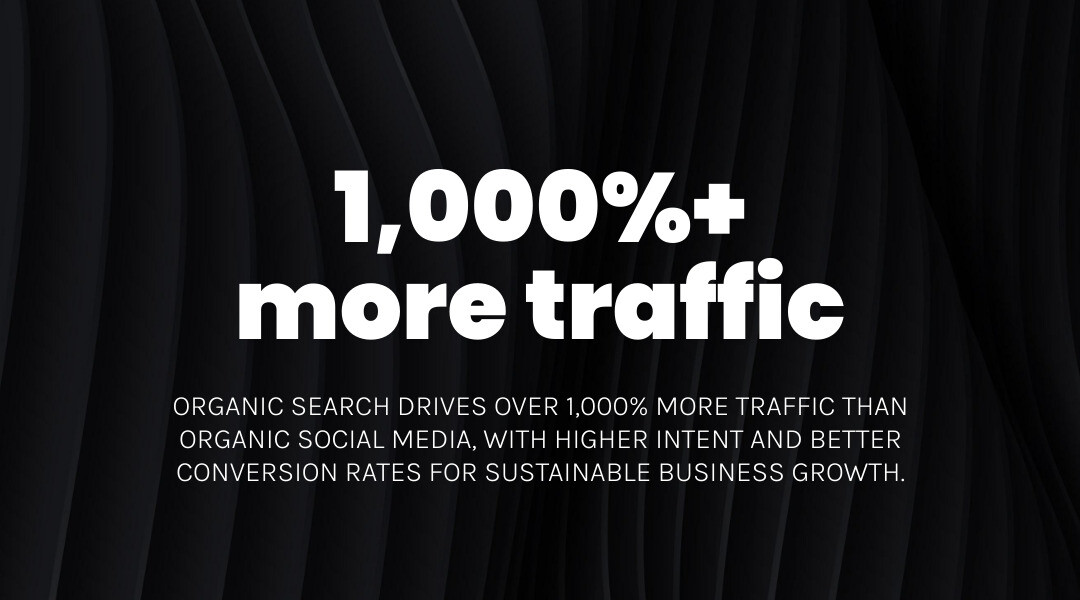
Furthermore, SEO drives over 1,000% more traffic than organic social media. While social media is great for brand awareness, it is often “interruptive.” People are on social media to see friends, not necessarily to buy a packaging machine or hire a lawyer. In contrast, searchers have high “intent.”
Investment Comparison: What is seo and how it works in digital marketing vs paid ads
A common question is whether a business should invest in SEO or paid advertising like Google Ads. The truth is that they often work best together, but they serve different purposes.
PPC (Pay-Per-Click) is like a light switch. You turn it on, and you get traffic immediately. You turn it off, and the traffic disappears. It is highly effective for short-term promotions or testing new products. However, it is becoming increasingly expensive. Worldwide search advertising spending is projected to reach $351.55 billion in 2025.
SEO is like planting a forest. It takes time to grow—often months before you see significant results—but once it’s established, it provides a permanent canopy of traffic. While search engines like Google make 76% of their revenue from ads, users still click on organic results more often. The first organic result gets 10x more clicks than the 10th result on the same page.
For a balanced strategy, many businesses use PPC to get immediate leads while building their SEO “equity” in the background for long-term sustainability.
Future-Proofing: SEO Trends and Best Practices for 2025
The world of SEO is constantly evolving. What worked in 2015 (like stuffing keywords into the bottom of a page) will get you penalized today. As we head toward 2025, several major trends are reshaping what is seo and how it works in digital marketing.
- AI Overviews and Generative Search: Google is increasingly using AI to provide direct answers at the top of the search results. By late 2024, AI summaries appeared on nearly 20% of all queries. To rank here, content needs to be highly structured, using bullet points, FAQs, and clear headings.
- E-E-A-T: This stands for Experience, Expertise, Authoritativeness, and Trustworthiness. Google wants to see that content is written by people with real-world experience, especially in “Your Money or Your Life” (YMYL) topics like health and finance.
- Voice and Video SEO: With the rise of smart speakers and TikTok, search is no longer just about text. YouTube is now the second-largest search engine in the world. Optimizing video transcripts and answering natural-language questions is becoming essential.
- Local Search: For businesses with physical locations, Local SEO Optimization Guide strategies are critical. This involves managing your Google Business Profile and ensuring your name, address, and phone number (NAP) are consistent across the web.
Frequently Asked Questions about SEO
Can I do SEO for my business by myself?
Yes, you absolutely can. There are many free resources and browser extensions available that help you analyze keywords and site performance directly. However, SEO has a steep learning curve and requires a significant time investment. Many business owners find that while they can do it themselves, their time is better spent running their business while experts handle the technical heavy lifting.
How long does it take to see results from SEO?
SEO is not an overnight fix. Depending on how competitive your industry is, it can take anywhere from three to six months to start seeing significant movement in rankings. Google needs time to crawl your changes, index them, and see how users interact with your “new and improved” site before it fully trusts you enough to move you to page one.
Is SEO better than paid advertising?
Neither is strictly “better,” but they have different strengths. SEO is superior for long-term ROI, brand credibility, and sustainable growth. Paid advertising is better for immediate results, specific targeting, and temporary sales pushes. Most successful digital marketing strategies use a combination of both.
Conclusion
Understanding what is seo and how it works in digital marketing is the first step toward transforming your brand’s online presence. It is a complex, ever-changing field, but the core principles remain the same: provide value to the user, make your site easy for search engines to understand, and build authority through high-quality relationships.
In the real world, SEO is about more than just rankings; it’s about building a digital asset that grows in value every single day. For businesses in Canton, OH, and beyond, a data-driven SEO strategy is the difference between being a hidden gem and a market leader.
MDM Marketing helps businesses navigate this landscape with a 93% client retention rate and an average 280% ROI increase. By combining technical expertise with custom content strategies, the team ensures that your brand doesn’t just show up—it stands out. If you are ready to stop guessing and start growing, you can Scale your brand with professional SEO services and turn search engines into your most powerful sales tool.
About Jay McCullough
This author hasn't written a bio yet.