
Why Knowing the Best Way for Digital Marketing Can Change Everything
The best way for digital marketing is to combine the right channels, clear goals, and consistent execution — starting with the strategies that match where your audience already spends time online.
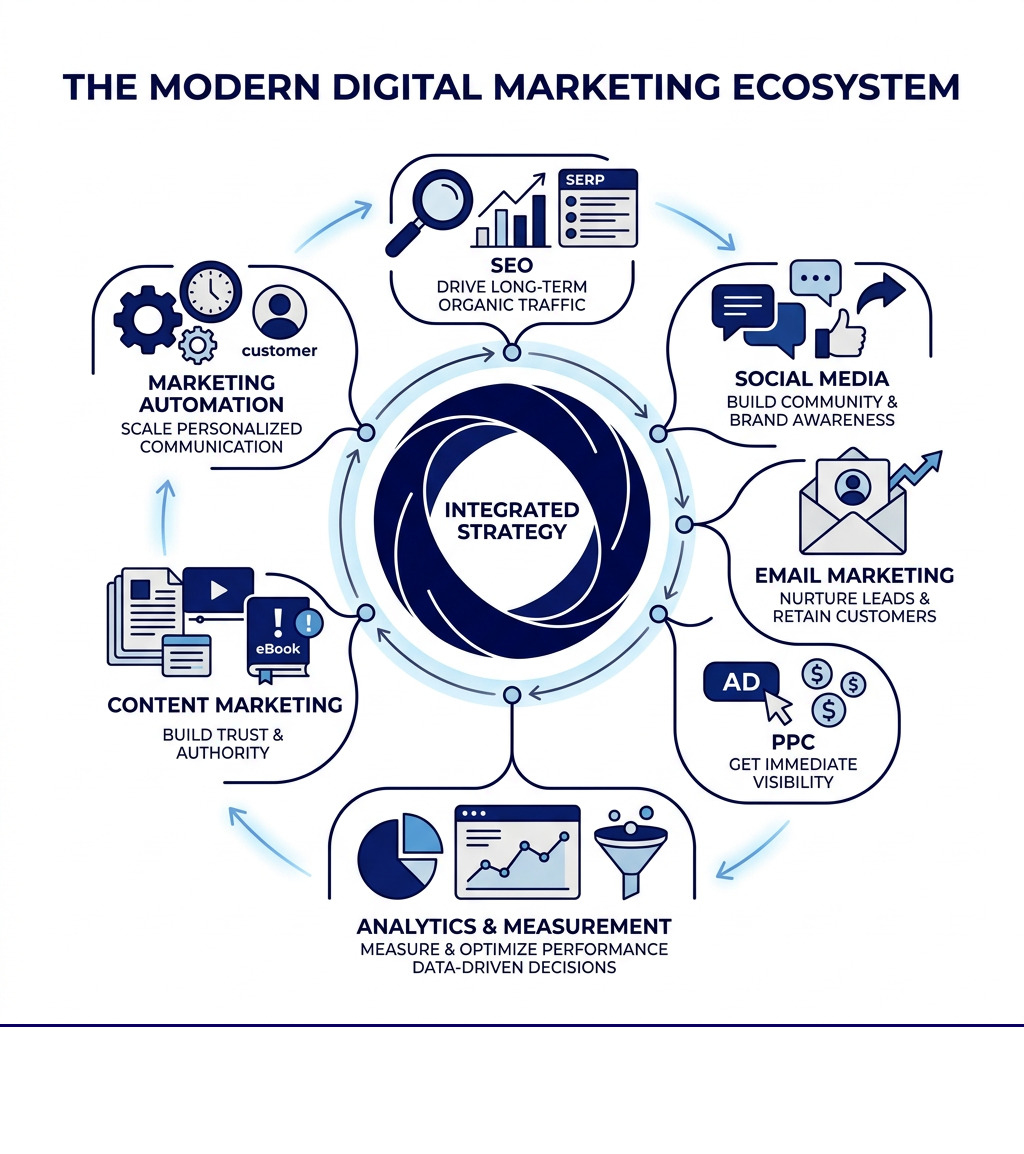
Here’s a quick overview of the most effective digital marketing methods:
- SEO (Search Engine Optimization) – Drive long-term organic traffic by ranking in search results
- Content Marketing – Build trust and authority through valuable blog posts, videos, and guides
- Email Marketing – Nurture leads and retain customers (average ROI: $36–$42 per $1 spent)
- Social Media Marketing – Build community and brand awareness on platforms your audience uses
- PPC Advertising – Get immediate visibility through paid search and social ads
- Marketing Automation – Scale personalized communication without manual effort
Whether you’re a business owner trying to grow online or someone starting a digital marketing career, the learning curve can feel steep. There are dozens of channels, tools, tactics, and trends competing for your attention.
Here’s the honest truth: most beginners fail not because they lack effort, but because they lack direction.
They try everything at once. They skip the strategy. They chase trends instead of building fundamentals.
Digital marketing is no longer optional for businesses — it’s the foundation of growth. With global digital advertising spending projected to reach $870 billion by 2027, and 68% of all online experiences starting with a search engine, the opportunity is massive. But so is the noise.
This guide cuts through that noise. You’ll learn the best way to get started, which channels matter most, and how to build real skills that lead to real results.
Best way for digital marketing glossary:
Why Digital Marketing is the Best Way for Digital Marketing Success Today
In the modern landscape, traditional advertising like billboards and print ads often feels like shouting into a void. Digital marketing, however, allows a brand to speak directly to the person most likely to buy. It is the best way for digital marketing success because it meets consumers where they spend their time: online. Statistics show that people spend more than six hours online every day, making the digital realm the primary marketplace of the 21st century.
Unlike traditional methods, digital marketing offers a global reach. A small business in Canton, OH, can theoretically reach a customer in another country with the click of a button. Furthermore, it is incredibly cost-efficient. You don’t need a million-dollar budget to start a social media page or write a blog post.
Perhaps the most significant advantage is that results are measurable. With traditional marketing, it is hard to know exactly how many people looked at a newspaper ad and then bought a product. In the digital world, 68% of online experiences start with a search, and every one of those clicks can be tracked, analyzed, and optimized. This real-time data allows marketers to pivot quickly if a campaign isn’t working, ensuring that every dollar spent is working toward a goal. For those looking to dive deeper into these concepts, Mastering Effective Web Marketing Strategies for Modern Needs provides a comprehensive look at how these strategies have evolved.
The Core Benefits for Beginners
For those just starting out, digital marketing has remarkably low barriers to entry. You don’t need an expensive degree to start learning SEO or social media management. The field rewards curiosity and hands-on experimentation. Beginners can start by building brand awareness for a personal project or a local non-profit, gaining experience in targeted advertising and customer engagement along the way. As skills grow, these efforts are highly scalable; a strategy that works for ten customers can often be adjusted to work for ten thousand.
Digital vs. Traditional Marketing
Understanding the shift from traditional to digital is vital for any beginner. While traditional marketing is often “one-way” communication (the brand talks, the audience listens), digital marketing is a conversation.
| Feature | Traditional Marketing | Digital Marketing |
|---|---|---|
| Audience Reach | Local/Limited | Global/Hyper-targeted |
| Cost | High (Print, TV, Billboard) | Scalable (Free to Paid) |
| Interaction | Passive/Static | Active/Two-way Engagement |
| Tracking | Delayed/Estimates | Real-time/Precise Analytics |
| Flexibility | Hard to change once published | Easy to edit and optimize |
Digital marketing offers unmatched budget flexibility and longevity. A well-written blog post can continue to drive traffic for years, whereas a TV commercial disappears the moment the airtime ends.
Building Your Foundation: Goals, Audience, and Strategy
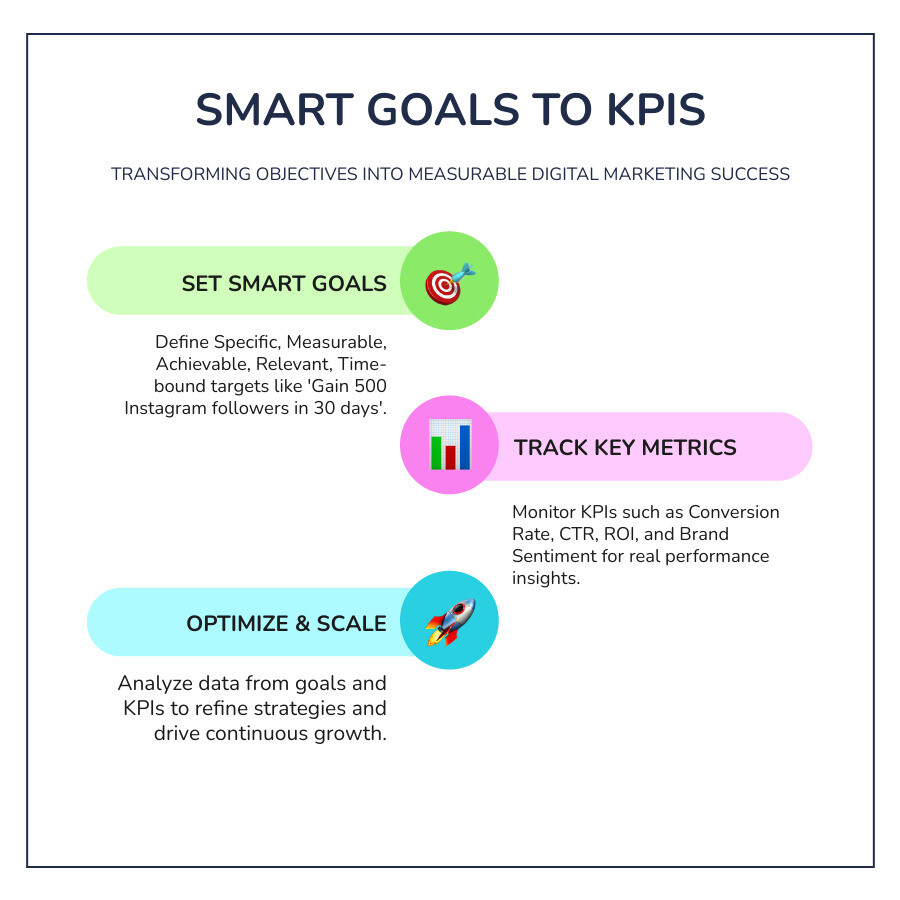
Before jumping into tools and platforms, a beginner must establish a solid foundation. The best way for digital marketing to actually work is to have a plan. This starts with setting SMART goals—Specific, Measurable, Achievable, Relevant, and Time-bound. Instead of saying “I want more followers,” a SMART goal would be “I want to gain 500 new Instagram followers in the next 30 days to increase brand awareness.”
Market research and competitor analysis are also non-negotiable. You need to know what your competitors are doing well and where they are failing. This allows you to find “content gaps” where you can provide more value. To help structure this phase, refer to Mastering the Art of Digital Campaign Planning for a step-by-step framework.
Identifying Your Target Audience as the Best Way for Digital Marketing Personalization
If you try to market to everyone, you end up marketing to no one. Personalization is the heart of modern digital success. You must identify your target audience by looking at:
- Demographics: Age, location, gender, income level.
- Psychographics: Interests, values, lifestyle, and personality traits.
- Pain Points: What problems are they trying to solve?
- Customer Journey: How do they go from discovering a brand to making a purchase?
Creating a “Buyer Persona” is a great way to visualize this. Tools like makemypersona.com can help you build a fictional representation of your ideal customer, making it much easier to write content that resonates with them.
Defining Clear Goals and KPIs
Once you have your audience, you need to know how to measure success. Key Performance Indicators (KPIs) act as your North Star. Common metrics include:
- Conversion Rate: The percentage of visitors who take a desired action (like buying a product).
- Click-Through Rate (CTR): How many people click your ad or link out of the total who saw it.
- ROI (Return on Investment): The profit made compared to the cost of the campaign.
- Brand Sentiment: How people feel about your brand based on social interactions.
Learning to interpret these numbers is a core skill. You can learn more about this in Mastering Marketing Analytics: The Data You Need, The Skills You’ll Learn.
Core Channels: Execution and Best Practices
A multi-channel approach is often the best way for digital marketing to achieve high returns. In fact, marketers using three or more channels in a single campaign see a 287% higher purchase rate than those using just one. Let’s break down the primary pillars.
Search Engine Optimization (SEO) and Content Marketing
SEO is the process of optimizing your website so it appears at the top of search engine results. It’s a long-term game, but it’s incredibly powerful because it captures “intent.” When someone searches for “best plumber in Canton,” they are ready to buy.
There are three main types of SEO:
- On-Page SEO: Optimizing individual pages with the right keywords and high-quality content.
- Technical SEO: Ensuring your site is fast, mobile-friendly, and easy for Google to crawl.
- Off-Page SEO: Building authority through backlinks (links from other reputable sites to yours).
Content marketing fuels SEO. By creating valuable blog posts, videos, and infographics, you give people a reason to visit your site. Research shows that 56% of people have made a purchase after reading a blog post. For a deeper dive into how to use content to drive results, check out this SEO guide and explore Unlocking the Power of Data-Driven Content Marketing.
Social Media and Influencer Engagement
Social media is where you build a community. It isn’t just about posting ads; it’s about engagement. Beginners should focus on one or two platforms where their audience is most active (e.g., LinkedIn for B2B, TikTok or Instagram for B2C).
Influencer marketing has also become a staple. You don’t need a celebrity; “micro-influencers” (those with 10k to 100k followers) often have much higher engagement rates because their audience trusts them. For instance, TikTok influencers can see an 16% engagement on TikTok, which is massive compared to traditional ads. If you need help managing these platforms, you can find more info about social media services on our dedicated page.
Email Marketing and Automation
Email marketing remains one of the most effective channels, boasting an average $36 to $42 ROI for every dollar spent. The key is personalization and automation. Instead of sending the same “blast” to everyone, use list segmentation to send relevant content to specific groups.
Automation allows you to set up “flows”—like a welcome sequence for new subscribers or a reminder for someone who left an item in their shopping cart. This ensures you are nurturing leads at every stage of their journey. To master this, read Mastering Customer Lifecycle Marketing: Strategies for Every Stage.
How to Launch Your Career and Gain Experience

Starting a career in this field requires a mix of theoretical knowledge and practical application. The best way for digital marketing beginners to get hired is to show, not just tell. You need a portfolio that proves you can drive results.
Continuous learning is essential because the industry changes every week. Following Online Marketing Experts and subscribing to industry newsletters will keep you updated on the latest algorithm changes and trends.
Essential Tools and Free Certifications
You don’t need to spend a fortune on education. Many of the best resources are free:
- Google Analytics: The industry standard for tracking website traffic.
- HubSpot Academy: Offers excellent certifications in inbound marketing and content strategy.
- Semrush Academy: Great for learning the technical side of SEO and PPC.
- Google Search Console: Essential for monitoring how your site performs in Google search.
Getting a Google Analytics Certification is a fantastic first step to adding credibility to your resume.
Building a Portfolio through Real-World Projects
Theory is great, but real-world projects are better. Here is how to build a portfolio from scratch:
- Start a Personal Blog: Pick a topic you love and practice SEO and content marketing on it.
- Offer Freelance Services: Help a local business in Canton, OH, with their social media or email list.
- Internships: Even a remote internship can provide invaluable hands-on experience.
- Case Studies: Document your process. Show the “before,” the “after,” and the “how.”
By showing that you can take a project from planning to execution, you’ll Outsmart the Competition: A Marketer’s Blueprint for Success.
Frequently Asked Questions about Digital Marketing
How long does it take to see results from digital marketing?
It depends on the channel. PPC (Pay-Per-Click) can drive traffic almost immediately after you launch an ad. However, SEO and content marketing are long-term assets that typically take 3 to 6 months to show significant results. The best way for digital marketing to provide sustainable growth is to use PPC for short-term wins while the SEO momentum builds in the background.
What is the best way for digital marketing beginners to avoid common mistakes?
The biggest mistake is trying to do everything at once. Focus on 2-3 core channels and master them before expanding. Other common pitfalls include:
- Ignoring Data: Don’t rely on gut feelings; let the analytics guide your decisions.
- Lack of Consistency: Posting once a month won’t build an audience.
- Forgetting the Audience: Always focus on the customer’s benefits, not just your company’s features.
Do I need a degree to start a career in digital marketing?
While a degree in marketing or communications can be helpful, it is not a requirement. Most agencies and companies value skills, certifications, and a strong portfolio over a diploma. Practical experience and a “can-do” attitude toward learning new tools are often the most important factors in getting hired.
Conclusion
Digital marketing is a journey of constant adaptation. The best way for digital marketing success is to stay curious, remain data-driven, and never stop testing. Whether you are looking to build a career or grow a business, the fundamentals remain the same: understand your audience, set clear goals, and provide genuine value.
At MDM Marketing, we specialize in helping businesses navigate this complex landscape. From our base in Canton, OH, we provide data-driven strategies that turn online presence into sustainable growth. If you’re ready to take your marketing to the next level, we invite you to explore our Strategic Marketing Services Visibility or Contact us for expert growth today. Let’s build something great together.
About Jay McCullough
This author hasn't written a bio yet.