
Why AI Based Advertising is Changing Modern Marketing
AI based advertising uses machine learning and data analysis to automate, personalize, and optimize marketing campaigns in real time. It differs from traditional advertising by targeting specific audiences with precision, adapting campaigns dynamically, and delivering measurable ROI improvements—often at lower costs.
Key advantages of AI-powered advertising:
- Personalization at scale – Delivers unique messages to individual users based on behavior and preferences
- Real-time optimization – Adjusts bids, placements, and creative automatically during campaigns
- Predictive targeting – Uses historical data to forecast which audiences will convert
- Cost efficiency – Reduces wasted ad spend through precise audience matching
- Cross-channel orchestration – Manages campaigns across search, social, display, and video simultaneously
The numbers tell the story. 61.4% of marketers have already incorporated AI into their strategies, and the global AI market has surpassed 184 billion USD as of 2025. Companies using AI-powered search ads see an average of 12% more conversions when they optimize properly. Even more striking: JPMorgan Chase achieved a 450% increase in click-through rates using AI-generated ad copy.
But here’s what matters most for your business: AI advertising isn’t just for enterprise brands anymore. Small and mid-sized businesses now have access to tools that were science fiction five years ago—tools that can multiply your marketing results without multiplying your budget.
The shift from traditional broad messaging to intelligent, data-driven campaigns is happening right now. Whether you’re running a local service business or scaling an e-commerce brand, understanding how AI transforms advertising will determine whether you lead your market or watch competitors pull ahead.
The Evolution of AI Based Advertising
The journey of ai based advertising began with simple rule-based systems, but it has evolved into a powerhouse of machine learning and predictive analytics. In the early days, digital marketing was a manual slog. Marketers had to guess which keywords might work and wait weeks to see results. Today, algorithms analyze billions of data points in milliseconds to determine exactly where your next customer is hiding.
According to research, 61.4% of marketers have incorporated AI into their marketing strategies, marking a massive shift toward data-driven marketing. This isn’t just a trend; it’s a financial revolution. As of early 2025, the global AI market has surpassed 184 billion USD, and it is on a trajectory to exceed 826 billion USD by 2030.
Why is this happening so fast? Because AI understands consumer behavior better than humans do. It can identify patterns in how people shop, browse, and interact with content. Currently, 44% of marketers have implemented AI for content production alone, ensuring that the “creative” side of advertising is just as data-backed as the technical side. By moving away from guesswork, businesses can treat every ad impression as a calculated investment rather than a shot in the dark.
AI vs. Traditional Advertising: A Head-to-Head Comparison
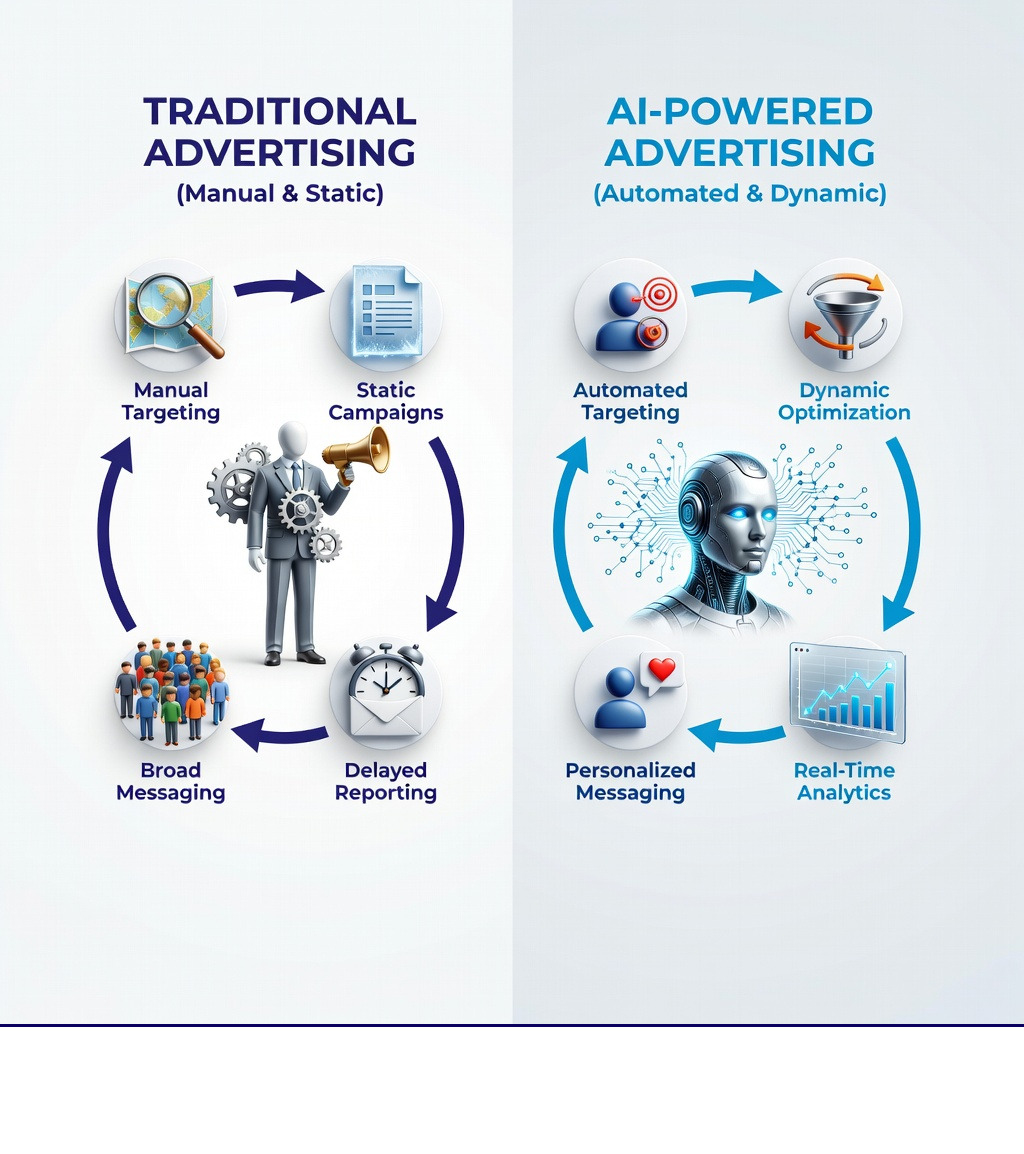
To understand why robots “love” your brand, we have to look at what they do differently than the traditional advertising methods of the past. Traditional advertising is like a megaphone—it’s loud, broad, and hopes the right person hears it. AI based advertising is like a laser-guided conversation.
| Feature | Traditional Advertising | AI Based Advertising |
|---|---|---|
| Targeting | Broad segments (TV, Radio, Print) | Hyper-individualized precision |
| Optimization | Manual, slow, periodic updates | Real-time, autonomous adjustments |
| Personalization | One-size-fits-all messaging | Dynamic content custom to user intent |
| Scalability | Limited by manual labor and budget | High scalability with automated systems |
| Data Usage | Static surveys and historical reports | Live, streaming big data analytics |
Traditional methods often result in “fragmentation”—where your message is scattered across platforms with no central brain connecting them. AI allows for “orchestration,” ensuring your search ads, social media, and emails all work together. This is crucial because 73% of consumers now expect brands to cater to their unique needs and expectations.
Furthermore, while traditional agencies might offer broad reach, they lack the agility of automated seo services. AI ads excel in e-commerce environments because they can perform A/B testing at a scale impossible for humans. If a customer browses for a yellow floral dress, AI doesn’t just show them a generic clothing ad; it shows them that exact dress with a personalized discount, significantly boosting the likelihood of a sale.
7 Key Benefits of AI-Powered Marketing Campaigns
When you switch to an AI-native approach, you aren’t just “doing digital marketing”—you’re supercharging your growth. Here are seven ways ai based advertising changes the game:
- Hyper-Personalization: AI analyzes past purchases and browsing history to serve ads that feel like a recommendation from a friend.
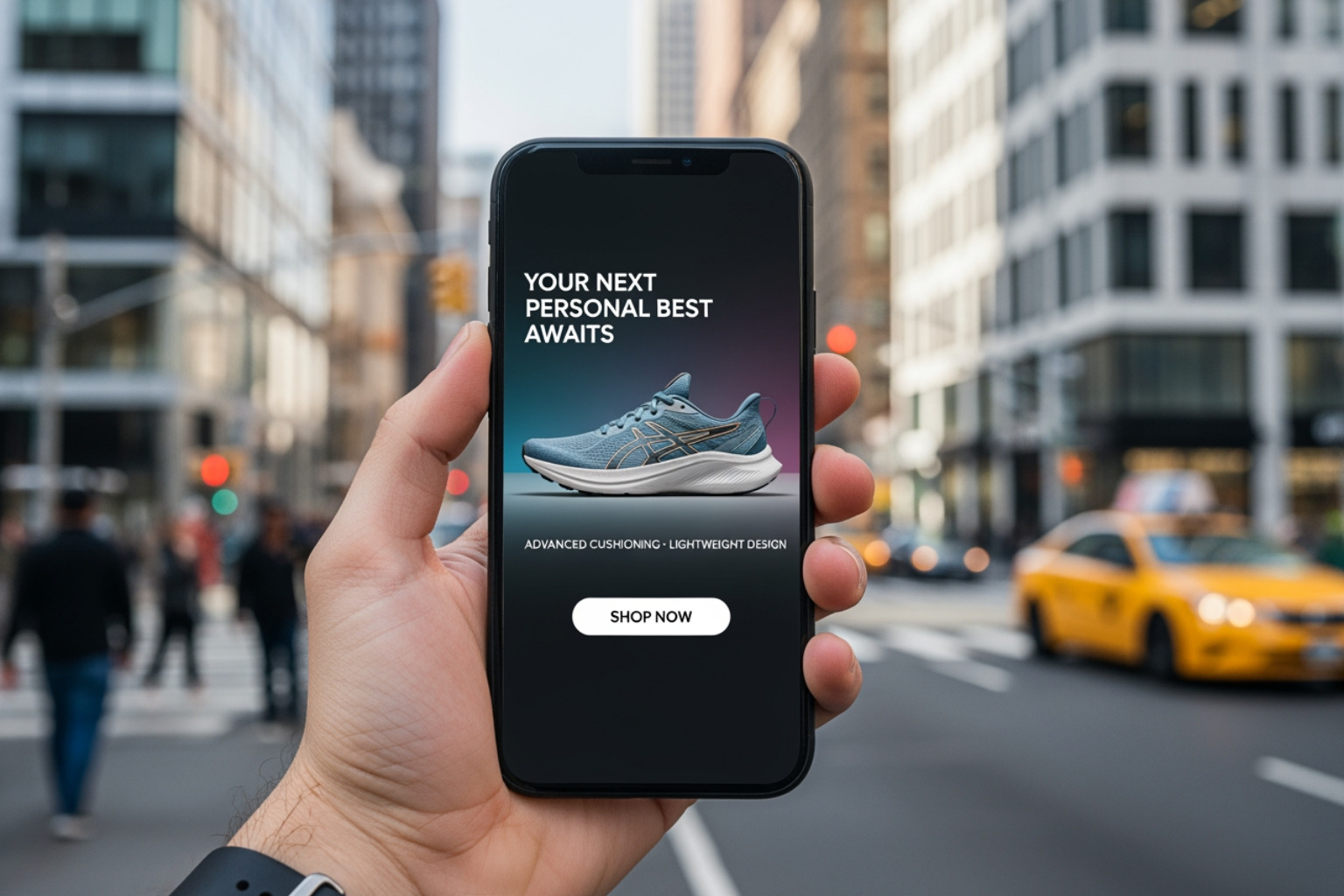
- Best Targeting Precision: Instead of targeting “males aged 25-40,” AI targets “individuals who recently searched for running shoes and live within 5 miles of a park.”
- Explosive ROI Growth: By eliminating spend on uninterested users, your Return on Investment naturally climbs.
- Effortless Campaign Management: AI handles the “busy work” of bidding and placement, allowing your team to focus on high-level strategy.
- Infinite Scalability: Whether you’re spending $500 or $500,000, AI systems can manage the load without needing a massive increase in headcount.
- Improved Ad Strength: Google data shows that advertisers who improve their Ad Strength from ‘Poor’ to ‘Excellent’ can observe 12% more conversions on average.
- Predictive Insights: Use automated seo solutions to understand which keywords will trend before they actually do.
By utilizing automated keyword research, businesses can stay ahead of the competition, capturing traffic that others haven’t even noticed yet.
Core Components of AI Based Advertising
To make these benefits possible, several “gears” turn inside the AI engine:
- Machine Learning: The “brain” that gets smarter with every ad click.
- Data Analysis: The backbone that processes vast datasets to find winning strategies.
- Predictive Analytics: Forecasting future consumer actions based on past data.
- Automation: The hands that execute bids and placements in milliseconds.
- Sentiment Analysis: Understanding the “mood” of the public to adjust messaging.
- Real-Time Bidding (RTB): Entering auctions for ad space instantly.
- Natural Language Processing (NLP): Powering voice search and conversational ads.
Real-World Success and Future Trends in Conversational Media
The biggest brands on the planet are already proving that ai based advertising works. Meta has been innovating with the announcement of their AI Sandbox, allowing advertisers to generate multiple versions of ad copy and background images instantly.
Major global brands like Coca-Cola have already begun integrating AI into their marketing to drive engagement. Nike used AI to create a “Never Done Evolving” campaign that featured a digital match between a younger and older version of Serena Williams, creating deep emotional resonance.
Even your Friday night movie choice is driven by AI; Netflix uses hyper-personalized thumbnails to show you images they know will make you click. JPMorgan Chase saw a 450% increase in click-through rates simply by letting AI write their ad copy.
The Future: Conversational and Search-Embedded AI
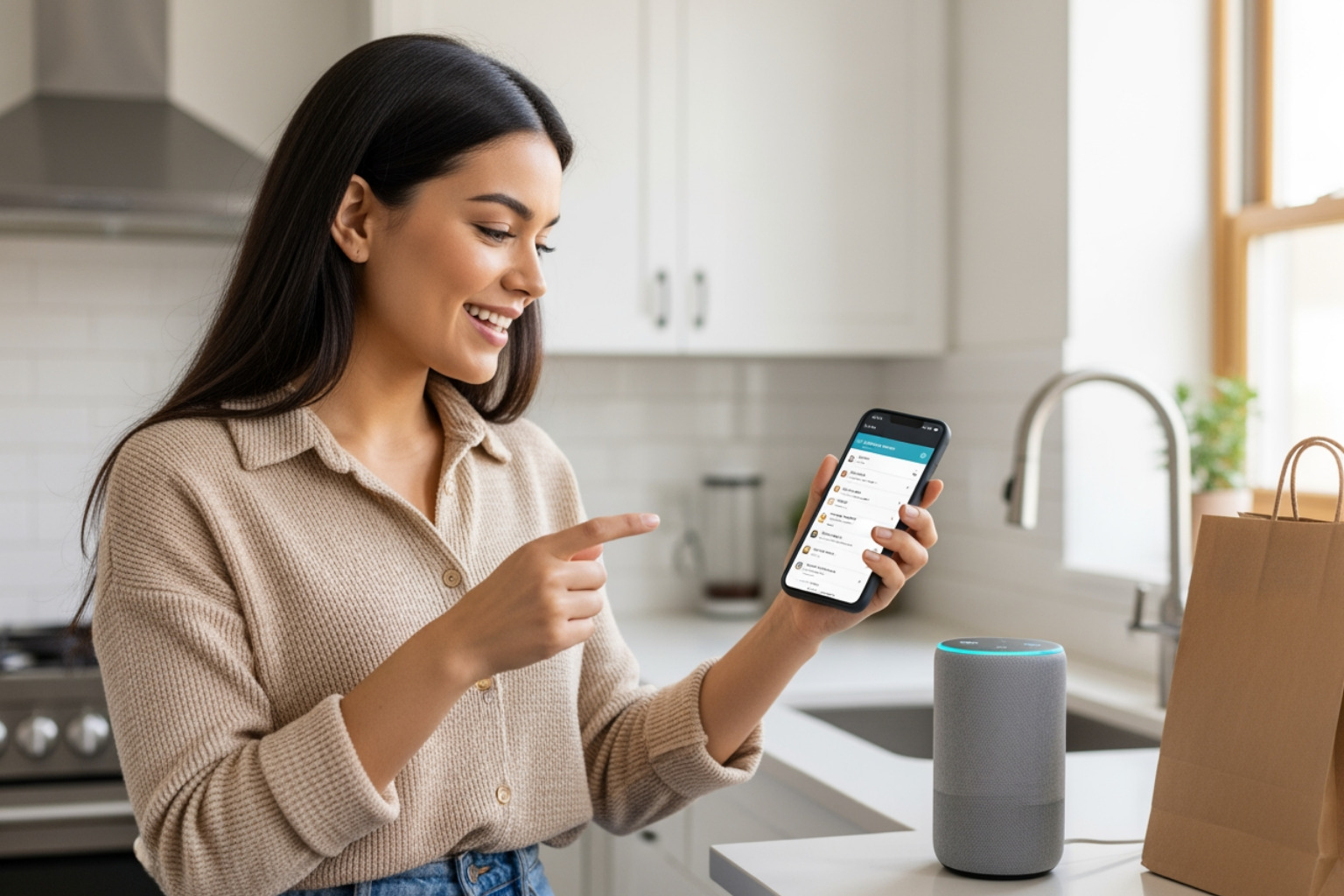
We are moving toward “Agentic Commerce.” About 45% of Americans now use voice search during their shopping journeys. Google is changing search with AI Overviews (SGE), where ads appear directly inside AI-generated responses. This shifts the focus from “keywords” to “conversational relevance.” However, this new frontier brings a recent study to light: 69% of consumers feel manipulated when brands use AI for advertising without disclosing it. Transparency and data privacy will be the “trust currency” of the future.
How to Get Started with Intelligent Campaigns
Starting with ai based advertising doesn’t require a Ph.D. in computer science. As a performance marketing company, MDM Marketing recommends a structured approach to integration.
First, you must choose the right tools. You can utilize AI-driven diagnostic tools to get a free health checkup on your current campaigns. Once set up, connect your ad platforms (like Google and Meta) to allow the AI to begin its discovery phase.
It is also vital to build a “culture of experimentation.” AI thrives on data, which means you need to test, learn, and scale. While automated content marketing can save hours of work, it is important to understand the limitations of automated seo content optimization tools—human oversight is still necessary to ensure brand voice and ethical standards are met.
Practical Steps to Launch AI Based Advertising
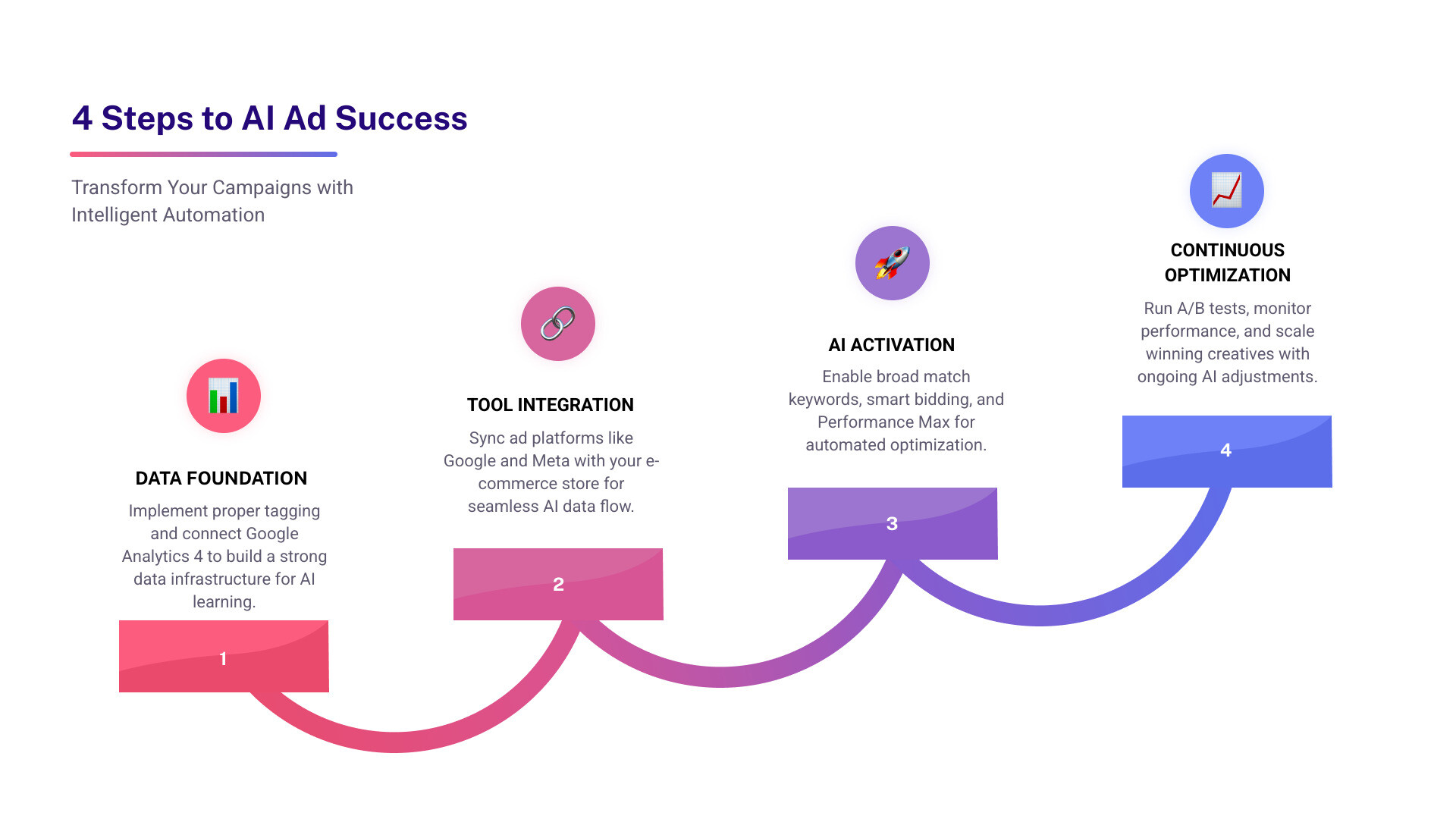
- Run an Ad Health Checkup: Use diagnostic tools to see where you are wasting money.
- Platform Connection: Sync your Shopify or e-commerce store directly with your ad accounts.
- Automated Optimization: Let the AI select the best-performing creatives.
- Accept Broad Match: In Google Search, use broad match paired with Smart Bidding to find new, high-converting search queries.
- Performance Max: Use these “all-in-one” campaigns to reach customers across YouTube, Display, Search, and Gmail.
- Responsive Search Ads: Provide multiple headlines and descriptions, and let the AI mix and match them for the best result.
Frequently Asked Questions about AI Advertising
How does AI advertising improve customer engagement?
Engagement improves because the ads are finally relevant. By using behavioral analysis and real-time interaction, AI ensures that the user sees what they want, when they want it. Since 73% of consumers expect personalization, meeting that expectation leads to higher click rates and brand loyalty.
What are the main challenges of integrating AI into advertising?
The biggest problems are data quality and consumer trust. If your data is “messy,” the AI will learn the wrong things. Additionally, privacy regulations (like GDPR) require strict compliance. Perhaps most importantly, research shows that 69% of consumers feel manipulated by undisclosed AI. Brands must be transparent about how they use data to maintain trust.
Is traditional advertising still relevant in the age of AI?
Yes! Traditional advertising is still excellent for broad brand awareness and high-level storytelling. Many successful brands use a “hybrid” strategy—using TV or billboards for mass reach, and ai based advertising for the precision follow-up and conversion.
Conclusion
The future of marketing is no longer about who has the biggest megaphone; it’s about who has the smartest engine. MDM Marketing helps businesses in Canton, OH, and beyond steer this shift with automated seo optimization and data-driven growth strategies.
By focusing on measurable outcomes and strategic integration, you can future-proof your brand against the changing search landscape. AI isn’t here to replace the marketer; it’s here to free the marketer from the mundane, allowing for a 280% average ROI increase and sustainable growth. The robots are ready to love your brand—are you ready to let them?
About Jay McCullough
This author hasn't written a bio yet.