
What “CRO” Actually Means in Business (And Why It Matters)
What is cro in business is a question with more than one answer — and that’s exactly where the confusion starts.
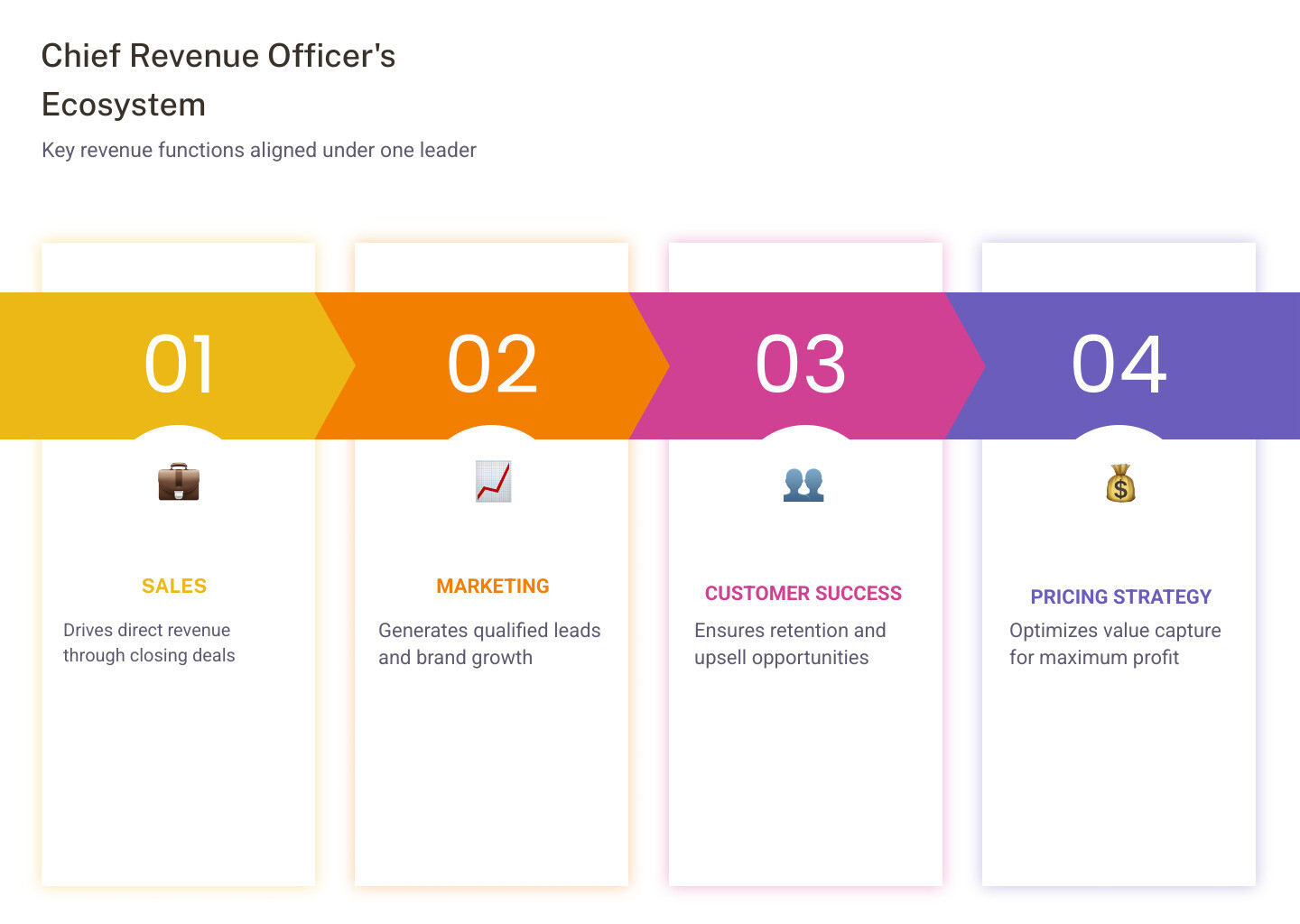
The most common meaning in a corporate context is Chief Revenue Officer — a C-suite executive responsible for overseeing every process that generates revenue in a company. That includes sales, marketing, customer success, pricing, and more.
But “CRO” also shows up in two other major contexts:
| Acronym | Full Name | Context |
|---|---|---|
| CRO | Chief Revenue Officer | Corporate leadership / C-suite |
| CRO | Conversion Rate Optimization | Digital marketing / websites |
| CRO | Contract Research Organization | Pharmaceutical / clinical trials |
This article focuses on the Chief Revenue Officer — the executive version — and what that role means for your business.
Here’s the short version if you’re in a hurry:
A Chief Revenue Officer (CRO) is a corporate executive who owns all revenue-generating functions across an organization. They align sales, marketing, and customer success under one unified strategy — with one goal: sustainable revenue growth.
The role is relatively new to the C-suite, but it’s growing fast. Businesses are realizing that having separate leaders for sales and marketing — without anyone connecting the dots — leaves serious money on the table. Research shows that 78% of companies with year-over-year revenue growth have executive teams that actively encourage sales and marketing alignment.
The CRO is the person who makes that alignment happen.
What is CRO in Business? (The Executive Definition)
At its core, a Chief Revenue Officer is a corporate officer accountable for every single process that brings money into the organization. While a CEO focuses on the overall vision and a CFO manages the purse strings, the CRO is the architect of the engine that generates the funds in the first place.
This role is increasingly referred to as The CEO’s New Secret Weapon: The Chief Revenue Officer because it breaks down the traditional walls between departments. In many legacy companies, marketing generates leads, sales tries to close them, and customer service handles the fallout—often with very little communication between them. A CRO steps in to drive integration across these functions, ensuring that the entire “revenue stack” is working toward the same KPIs.
For modern organizations, especially those utilizing More info about SEO services to drive digital growth, the CRO ensures that the traffic coming from search engines isn’t just a vanity metric, but a predictable source of qualified leads that the sales team is equipped to handle.
The Core Responsibilities of a Chief Revenue Officer
The day-to-day life of a CRO isn’t just about looking at spreadsheets. It is about architectural design—designing a system where revenue is a repeatable, scalable outcome. Their primary responsibilities include:
- Sales and Marketing Alignment: This is the CRO’s “bread and butter.” They ensure that marketing isn’t just passing over “junk” leads and that sales isn’t ignoring high-quality opportunities.
- Customer Success Integration: In a subscription-based or service-heavy economy, keeping a customer is just as important as getting one. The CRO oversees the transition from “closed-won” to “long-term partner.”
- Pricing and Revenue Management: They often have a heavy hand in determining how products are priced to maximize profit margins while remaining competitive in the market.
- Go-to-Market (GTM) Strategy: The CRO helps decide which customer segments to target, which products to push, and which channels (like SEO or PPC) deserve the most investment.

To succeed, the CRO must accurately Calculate your content marketing ROI to understand which content is actually moving the needle. By viewing revenue through a holistic lens, they can identify “friction points”—places where potential money is leaking out of the funnel due to poor communication or inefficient processes.
CRO vs. CMO and VP of Sales: Understanding the Hierarchy
One of the most common questions when discussing what is cro in business is: “Don’t we already have a VP of Sales for this?”
The answer lies in the scope. A VP of Sales is typically focused on the current quarter—hitting the immediate numbers and managing the sales reps. A Chief Marketing Officer (CMO) is focused on brand awareness and lead generation.
The CRO sits above or alongside these roles to provide a Gestalt approach—the idea that the whole of the revenue engine is greater than the sum of its departmental parts.
| Feature | VP of Sales | Chief Marketing Officer | Chief Revenue Officer |
|---|---|---|---|
| Primary Focus | New customer acquisition | Brand, leads, and awareness | Total revenue and lifetime value |
| Time Horizon | Short-term (Quarterly) | Medium-term (Campaign-based) | Long-term (Sustainable growth) |
| Department | Sales only | Marketing only | Sales, Marketing, and Success |
| Key Metric | Monthly/Quarterly Quota | MQLs and Brand Sentiment | Annual Recurring Revenue (ARR) / EBITDA |
By having a single executive oversee the entire lifecycle of a customer, the company avoids “turf wars.” Marketing no longer blames Sales for not closing, and Sales no longer blames Marketing for bad leads. Everyone reports to the CRO, who cares only about the bottom line.
The “Other” CRO: Conversion Rate Optimization in Marketing
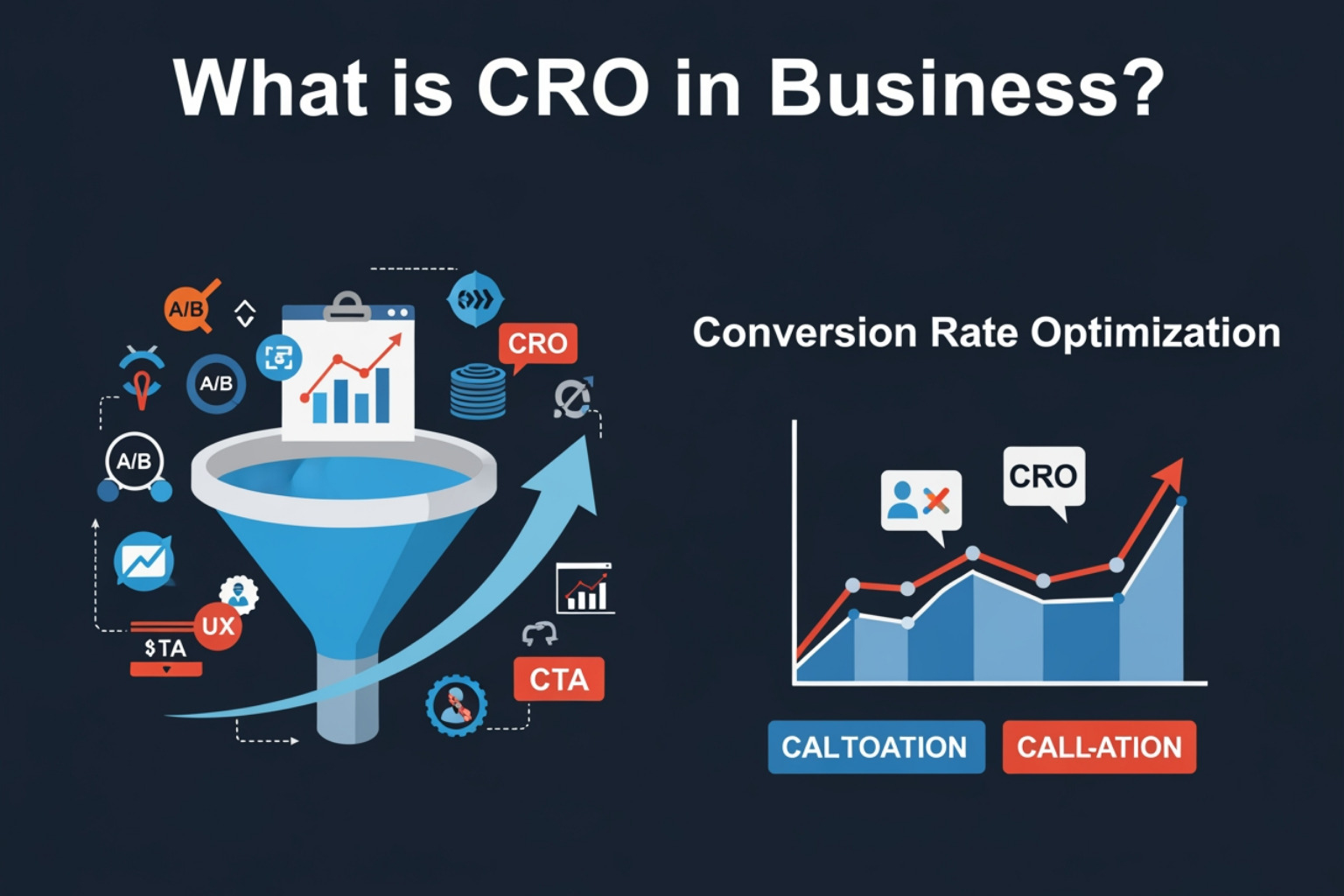
While we have spent most of this guide talking about the executive, it would be a mistake to ignore the other “CRO” that digital businesses care about: Conversion Rate Optimization.
In marketing, CRO is the systematic process of increasing the percentage of website visitors who take a specific action—whether that’s making a purchase, signing up for a newsletter, or filling out a contact form.

This technical side of CRO is a major driver for the executive CRO’s success. If the Chief Revenue Officer wants to increase revenue without doubling the advertising budget, they look to conversion optimization.
For example, page speed is a critical factor. Research shows that each additional full-second lag on page load causes a 7% decrease in conversions. If your site takes 4 seconds to load instead of 2, you are essentially throwing away 14% of your potential revenue before the customer even sees your offer. This is why 7% decrease in conversions per second lag is a statistic every business leader should memorize.
To learn more about the technical side, check out More info about conversion rate optimization.

What is the difference between CRO in business and marketing?
The confusion between these two terms is real, but the relationship is simple:
- The Chief Revenue Officer (Executive) is the person who sets the goal.
- Conversion Rate Optimization (Marketing Strategy) is the tactic used to reach that goal.
The executive CRO uses data-driven advertising and website optimization to ensure the company’s digital presence is as efficient as possible. By Beyond the hype: mastering data-driven advertising, the CRO can ensure that the money spent on ads actually results in a positive ROI.
Why “what is cro in business” is often confused with clinical research?
If you search for “CRO” in a business context, you might also stumble upon Contract Research Organizations. These are companies that provide support to the pharmaceutical, biotechnology, and medical device industries in the form of outsourced research services.
While they share the same acronym, they couldn’t be more different. A Contract Research Organization handles clinical trials and complex regulatory compliance for drug development. Unless you are in the healthcare or pharma space, you are likely looking for the Revenue executive or the Marketing strategy.
What skills does a successful CRO need?
A successful Chief Revenue Officer isn’t just a “super salesperson.” They are a hybrid of a data scientist, a psychologist, and a general. Key skills include:
- Advanced Data Analysis: They must be able to look at a GA4 dashboard and understand exactly where the revenue leaks are.
- Strategic Vision: They need to see two years into the future to predict market shifts.
- Team Building: They must be able to unite disparate departments that traditionally don’t get along.
- Customer-Centric Mindset: They understand that revenue comes from solving customer problems, not just “pushing product.”
- Tech Stack Mastery: They need to know which tools (CRMs, AI appointment schedulers, and analytics platforms) will actually drive growth.
Conclusion
The rise of the Chief Revenue Officer marks a shift in how modern businesses operate. No longer can companies afford to let sales, marketing, and customer success operate in silos. By appointing a single leader to oversee the entire revenue process, organizations can achieve a level of alignment that drives massive growth.
At MDM Marketing, we specialize in the data-driven strategies that a CRO relies on to succeed. From Search Engine Optimization and content marketing to technical conversion rate optimization, our mission is to help businesses in Canton, OH, and beyond transform their online presence into a high-performance revenue engine.
With an average 280% ROI increase and a 93% client retention rate, we understand exactly what it takes to move the needle. Whether you are a CEO looking to align your teams or a marketing manager tasked with boosting conversions, we can help you navigate the complexities of modern digital growth.
Ready to turn your website visitors into a predictable stream of revenue? Connect with us for a strategy session and let’s build your revenue engine together.
About admin
This author hasn't written a bio yet.