
Why Data-Driven Content Marketing is Essential for Growth
What is data driven content marketing? It’s a strategic approach that uses measurable insights from customer behavior, website analytics, search trends, and performance metrics to guide every content decision—from topic selection and creation to distribution and optimization. Instead of relying on guesswork or gut feeling, you let real data tell you what your audience wants, where they spend time, and what drives them to convert.
Key characteristics of data-driven content marketing:
- Evidence-based decisions – Uses analytics and customer data instead of assumptions
- Continuous optimization – Tracks performance metrics to refine content over time
- Audience-focused – Creates content based on actual user behavior and preferences
- Measurable ROI – Connects content efforts directly to business outcomes like leads and revenue
- Personalized at scale – Segments audiences and tailors messaging using behavioral data
If you’re a small business owner or marketing leader, you understand priorities better than anyone. How you allocate resources determines whether you just stay afloat or actually grow. Yet 65 percent of marketers can’t quantitatively demonstrate the impact of their marketing—and that’s a problem when leadership needs to see a clear line from your work to revenue.
The digital landscape has transformed content marketing from a “hit or miss” practice into a predictable, scalable growth engine. With customers making up to 70% of purchase decisions online before ever talking to sales, your content needs to do more than exist—it needs to perform.
Data-driven content marketing removes the guesswork. It tells you which topics resonate, which formats convert, and where to invest your limited time and budget. It’s how small businesses compete with larger competitors without massive advertising budgets. And it’s how you prove ROI to stakeholders who need evidence, not just creative ideas.
The difference is simple: traditional content relies on intuition and broad assumptions. Data-driven content relies on patterns, trends, and measurable results that compound over time.
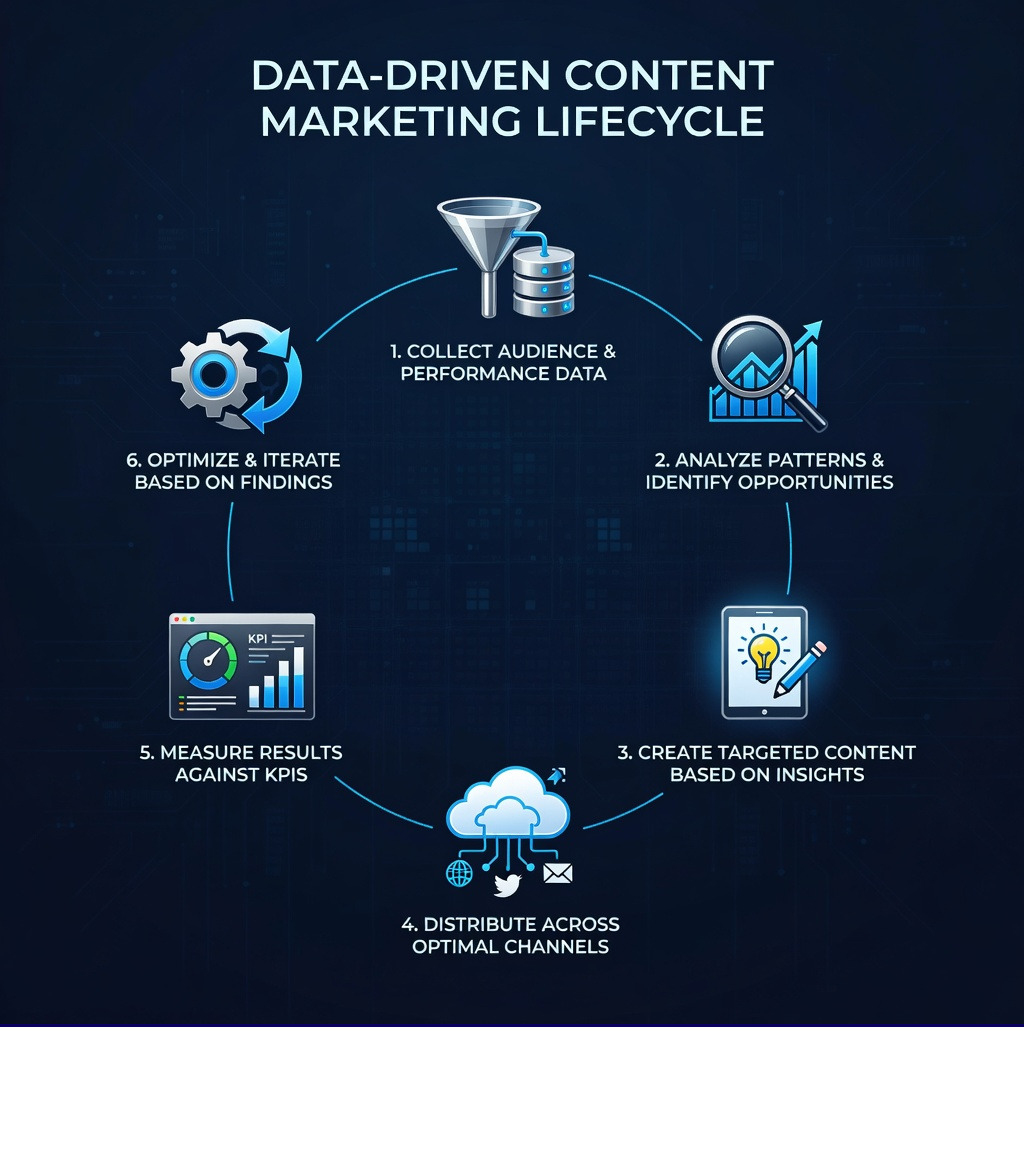
What is data driven content marketing terminology:
What is Data-Driven Content Marketing?
At its core, Data-driven content marketing is an analytic strategy used to bridge the gap between “what we think works” and “what actually works.” It involves using relevant data to inform every step of the content creation process. Instead of throwing spaghetti at the wall to see what sticks, marketers use descriptive, predictive, and prescriptive analytics to build a solid foundation.
Think of it like cooking with a recipe vs. just tossing ingredients in a pot. You might get lucky once with the “gut feeling” method, but a recipe (your data) ensures a delicious dish every single time. This approach is a core part of data-driven marketing services that help businesses move away from the “hit or miss” mentality.
| Feature | Traditional Content Marketing | Data-Driven Content Marketing |
|---|---|---|
| Decision Driver | Creative intuition & gut feeling | Analytics & audience behavior data |
| Audience View | Broad demographics (Age, Gender) | Deep segmentation (Behaviors, Interests) |
| Goal Setting | “Brand awareness” (vague) | SMART KPIs (measurable ROI) |
| Content Creation | Mass-market storytelling | Personalized, targeted messaging |
| Performance | Reactive (check after 6 months) | Proactive (real-time optimization) |
The Core Components of a Data-Informed Strategy
A successful strategy doesn’t just happen; it’s built on a foundation of high-quality information. Insight into consumer behavior is the most critical component. By understanding how people interact with your brand—what they click, how long they stay on a page, and what makes them leave—you can craft a journey that leads them naturally toward a purchase.
To get this right, businesses must prioritize first-party data. This is information you own, gathered directly from your website, email engagement, and CRM integration. When you combine this internal knowledge with results driven SEO practices, you create a powerhouse of information that tells you exactly where to point your creative energy. You can even learn about automated keyword research to see how modern tools find the exact phrases your future customers are typing into Google right now.
Identifying Your Audience with Data-Driven Content Marketing
One of the biggest mistakes in marketing is writing for a “faceless crowd.” As Joanna Wiebe of Copyhackers said, “Write for one person that needs your solution.” To find that one person, you need a broader view of customer preferences.
Data-driven audience identification involves:
- Building Buyer Personas: Using CRM data and surveys to identify real pain points.
- Audience Segmentation: Grouping your users by behavior (e.g., “first-time visitors” vs. “repeat buyers”).
- Social Listening: Monitoring Reddit, LinkedIn, and niche forums to see what questions people are asking.
By utilizing strategic marketing services for visibility, you can ensure your content reaches these specific segments where they are most active.
Building a Strategy for Data-Driven Content Marketing
Once you know who you are talking to, you need a plan for what to say. A HubSpot study found that publishing 5-10 articles per month leads to a good ROI and consistent site traffic. But those articles shouldn’t be random.
A data-driven strategy uses a content hierarchy. This means creating “pillar pages” (comprehensive guides) supported by “topic clusters” (shorter articles that link back to the pillar). This structure tells search engines you are an authority on the subject. For those looking to scale, automated content marketing solutions can help manage this hierarchy without losing the human touch. Mastering effective web marketing strategies means using these data-backed structures to guide users through the buying journey.
Leveraging AI and Automation for Scalable Personalization
The future of what is data driven content marketing is undoubtedly AI. AI-driven personalization is reshaping how brands connect with people. It allows a brand to anticipate a user’s needs before they even realize they have them.
According to McKinsey, 71 percent of people expect personalization in marketing. If you don’t provide it, they’ll find a brand that does. AI helps you maximize your marketing impact by analyzing massive amounts of data to deliver the right message at the right time. Whether it’s a personalized email subject line or a product recommendation, automation makes this possible at a scale that humans simply can’t match.
For SEO specifically, automated SEO solutions can track keyword shifts and algorithm updates in real-time, allowing you to pivot your content strategy instantly.
Measuring Success and Proving Content ROI
One of the most frustrating statistics in the industry is that 65 percent of marketers cannot demonstrate the impact of their work. In a data-driven world, this shouldn’t happen.
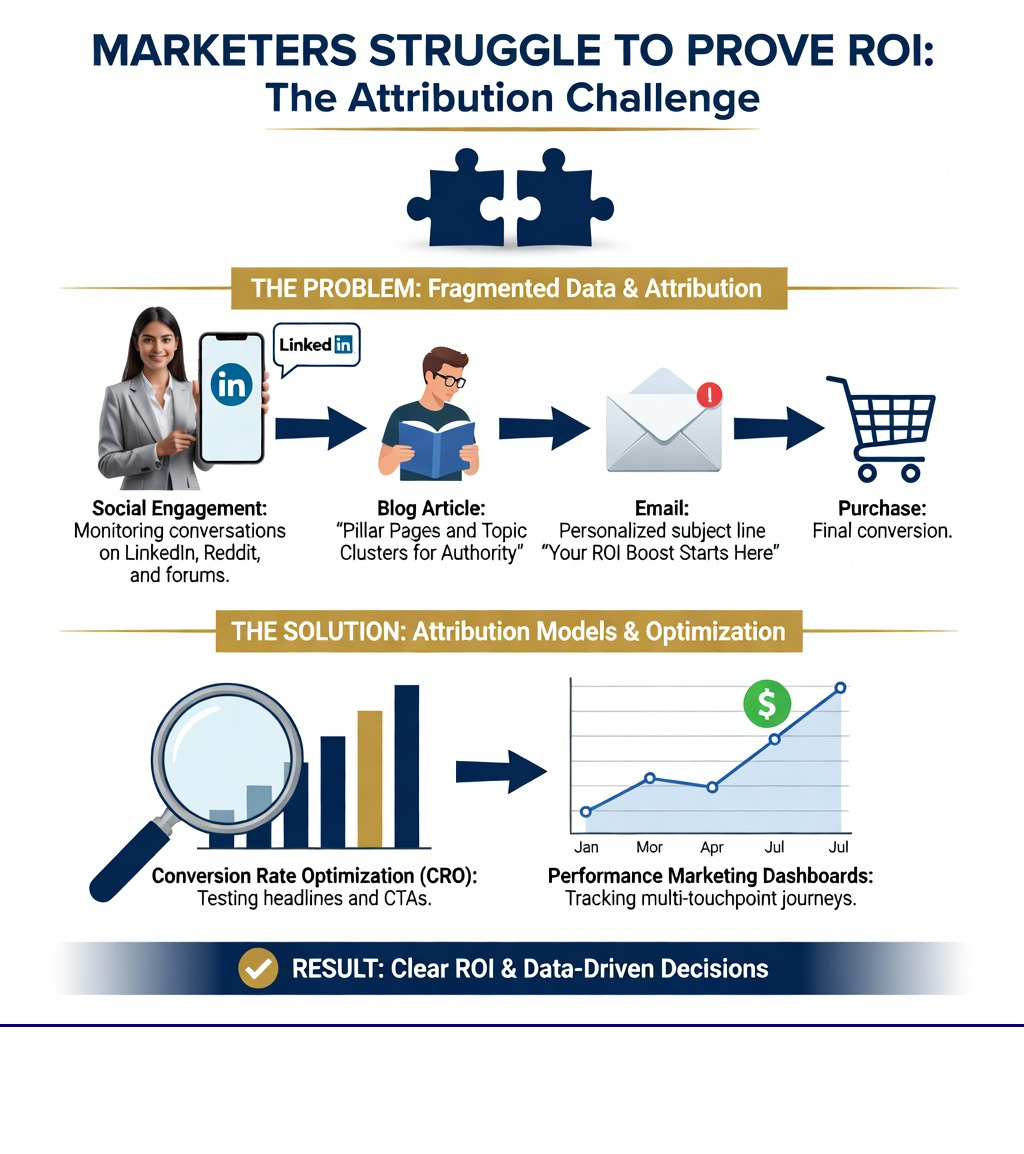
The challenge often lies in attribution. We know that customers need multiple touchpoints before they buy. A customer might see a LinkedIn post, read a blog article, receive an email, and then finally make a purchase. How much credit does the blog article get?
By using content marketing attribution models, you can assign value to every interaction. This is where conversion rate optimization SEO comes into play. By testing different headlines and CTAs, you can see exactly which elements drive the most revenue. Working with a performance marketing company can help you set up the dashboards needed to track these complex journeys from start to finish.
Overcoming Challenges in Data Implementation
Implementing a data-driven approach isn’t always easy. Data privacy concerns are at an all-time high, and ethical data collection is now a business imperative.
To stay compliant, businesses need a solid GDPR Solution and must be transparent with their audience about how their data is used. Beyond privacy, the biggest hurdle is often “data silos”—where the sales team has one set of data and the marketing team has another.
Breaking these silos requires a centralized system where everyone can see the same “truth.” This transparency leads to an online visibility boost because the entire company is aligned on what the customer actually needs.

Frequently Asked Questions about Data-Driven Content Marketing
How does data-driven marketing differ from traditional content marketing?
Traditional content marketing often relies on “creative sparks” or seasonal trends—essentially guessing what the audience might like. Data-driven marketing uses hard evidence from past performance and current search trends to know what the audience wants. It replaces “I think” with “The data shows.”
What types of data are most valuable for informing content strategies?
The most valuable data is first-party data (your own website analytics and CRM info) because it reflects your actual customers. Search data (keyword volume and difficulty) is also vital for reaching new audiences, while engagement data (time on page and social shares) tells you if your content is actually resonating.
How can businesses effectively collect and analyze content data?
Start by integrating your tools. Connect your website to Google Analytics and Search Console, and ensure your CRM (like HubSpot or Salesforce) is talking to your email marketing platform. Use content intelligence tools to run audits and identify “gaps” where your competitors are outperforming you.
Conclusion
Data-driven content marketing is no longer a luxury for big tech companies; it is a necessity for any business in Canton, OH, or beyond that wants to achieve sustainable growth. By moving away from guesswork and embracing a strategy rooted in evidence, you future-proof your brand against algorithm changes and shifting consumer habits.
At MDM Marketing, we specialize in turning these complex data points into actionable growth. With a 93% client retention rate and an average 280% ROI increase, we know how to make data work for you. Whether you need help with Local SEO, link building, or a full content overhaul, our team is ready to help you transform your online presence.
Ready to stop guessing and start growing? Contact MDM Marketing for a strategy session today!
About Jay McCullough
This author hasn't written a bio yet.