
Why Choosing the Right Content Marketing Agency Matters More Than Ever
When you choose a content marketing agency, you’re selecting a partner who will shape how your audience discovers, trusts, and buys from you. Here’s what to prioritize:
- Industry expertise – Does the agency understand your market, customers, and competitive landscape?
- Proven results – Look for case studies with measurable outcomes (traffic growth, lead generation, revenue impact)
- Strategic depth – Beyond content creation, can they develop a customer journey-aligned strategy?
- Technical SEO capability – Do they optimize for both traditional search and AI-powered discovery?
- Cultural fit – Will their communication style, values, and team structure mesh with yours?
- Transparency – Do they provide clear reporting, pricing, and access to your content deliverables?
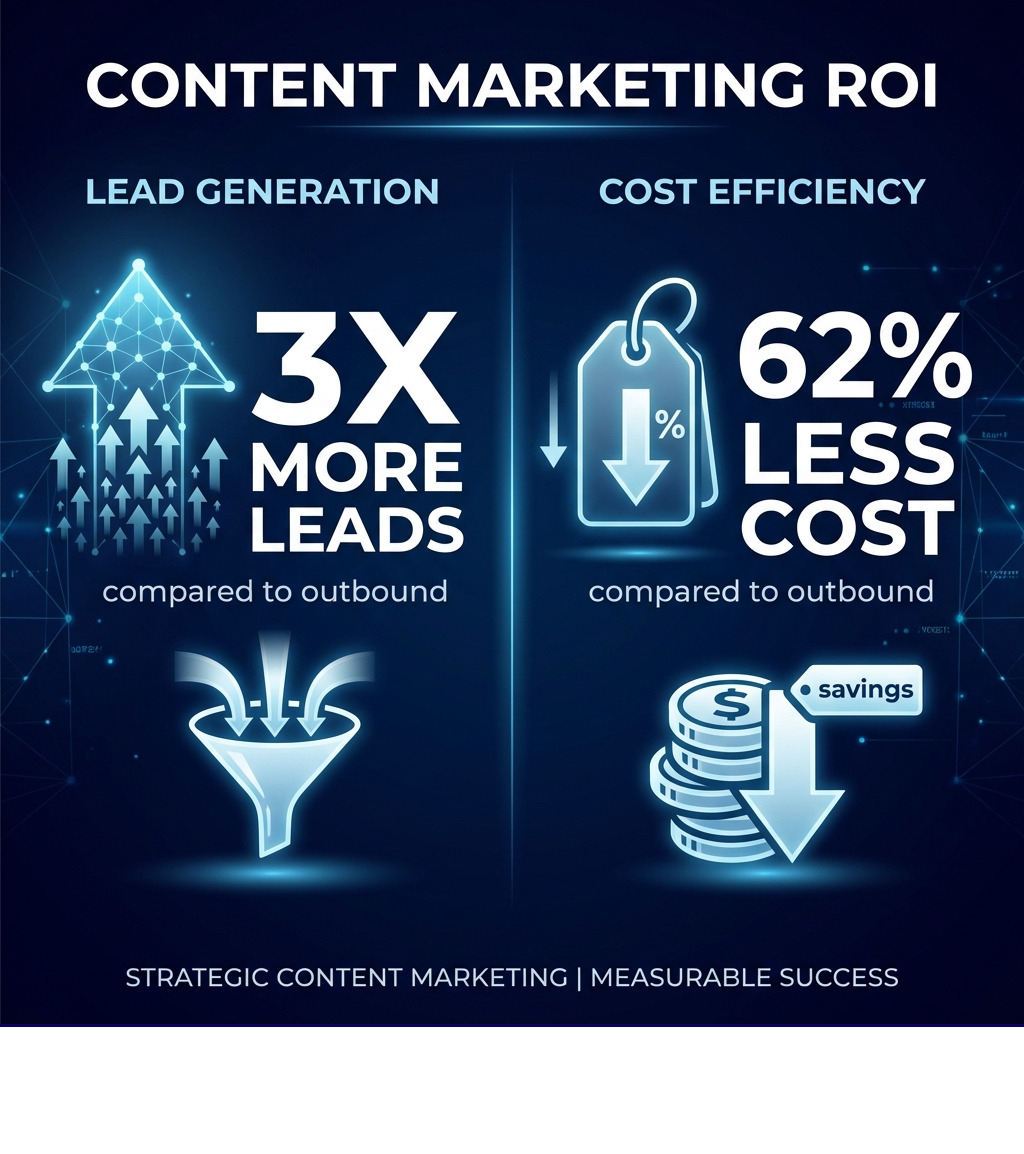
The stakes are high. According to research from Ahrefs, 67% of marketers report that content marketing generates leads, 72% say it educates audiences, and 63% confirm it builds customer loyalty. Yet the average agency-client relationship lasts less than three years, often ending in frustration.
Why the disconnect?
Most businesses hire an agency without first defining their goals, understanding their audience, or knowing what success looks like. They focus on deliverables (blog posts, videos, white papers) instead of outcomes (qualified leads, revenue growth, market authority).
The result? Content that ranks but doesn’t convert. Traffic that doesn’t turn into customers. Agencies that promise the world but deliver “autopilot mode” after the first few months.
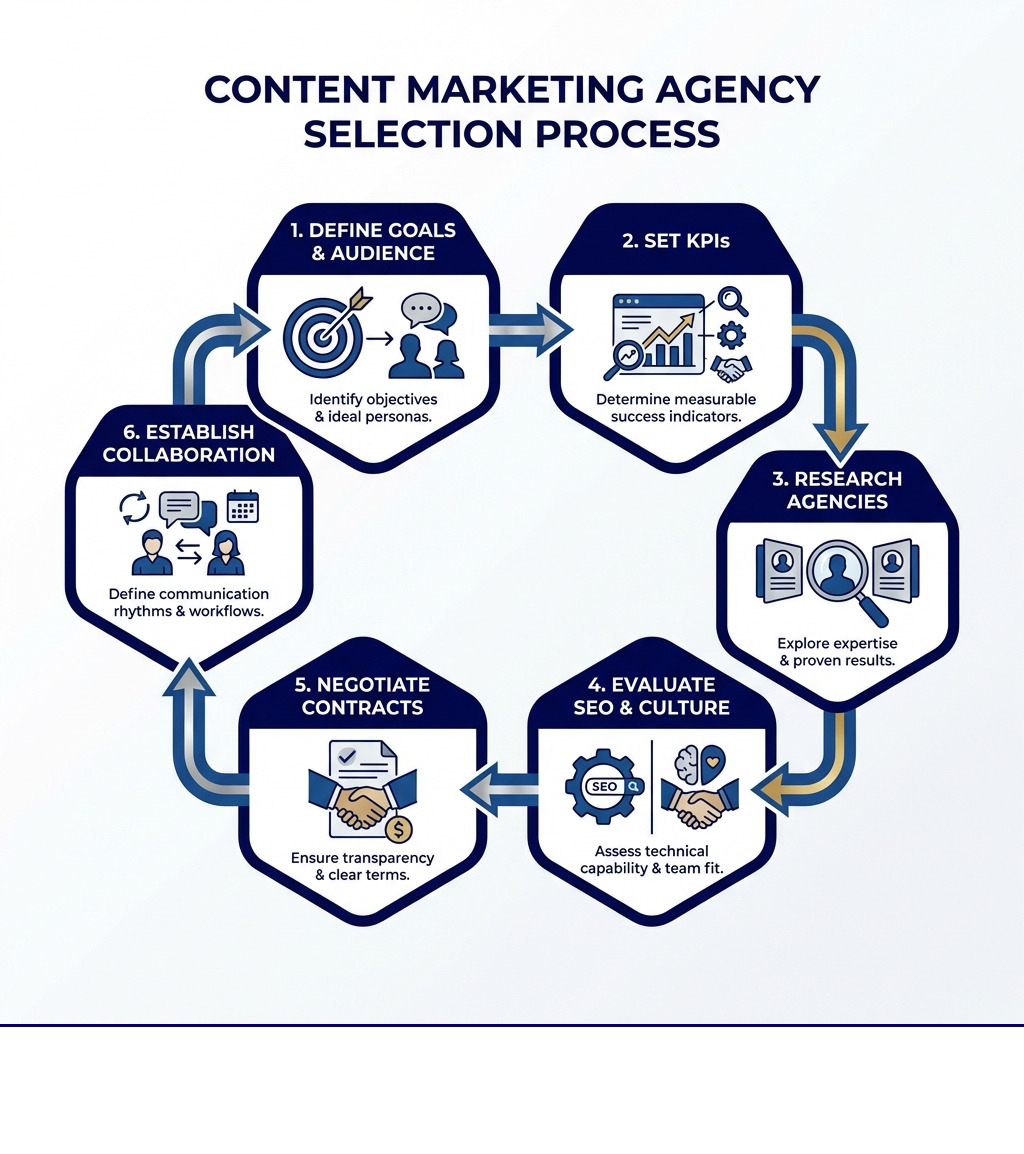
This guide walks you through the complete process—from defining your content marketing goals and identifying your ideal customer personas, to evaluating agency portfolios and negotiating contracts that protect your interests. You’ll learn which questions to ask, which red flags to avoid, and how to structure a partnership that drives measurable business growth.
Whether you’re a local service business seeking visibility, a B2B company building thought leadership, or an e-commerce brand scaling conversions, the right content marketing agency can become your most valuable growth partner.
Defining Your Goals Before You Choose a Content Marketing Agency
Before a business starts browsing directories or scheduling discovery calls, it must look inward. To choose a content marketing agency that actually moves the needle, one must first understand what “the needle” represents for their specific organization. Are they looking to fill the top of the funnel with fresh eyes, or are they trying to close complex B2B deals with high-authority white papers?
Setting SMART (Specific, Measurable, Achievable, Relevant, Time-bound) goals prevents the common pitfall of “spraying and praying” with content. When goals are vague, results are usually disappointing. Common objectives include:
- Lead Generation: Creating assets that encourage users to trade their contact information for value.
- Brand Awareness: Increasing the number of people who know the brand exists.
- Thought Leadership: Establishing the brand as the “go-to” expert in a specific niche.

According to a recent Ahrefs report on content marketing statistics, content marketing is a powerhouse for lead generation, but it only works when backed by strategic marketing services.
Beyond high-level goals, businesses must have a crystal-clear understanding of their target audience. This is where defining your ICPs (Ideal Customer Personas) becomes critical. An agency cannot write effectively for a “general audience.” They need to know the specific pain points, watering holes, and decision-making triggers of the person on the other side of the screen.
Finally, consider the budget and resources. Content marketing is a compounding investment, not a one-time expense. Businesses should determine how much they can realistically allocate to both content creation and its subsequent promotion before the first meeting.
Identifying Content Types and Customer Journeys
Not all content is created equal. A business in the construction industry might need construction website content that focuses on project galleries and safety certifications, while a SaaS company might prioritize technical SEO copywriting services.
When you choose a content marketing agency, you must ensure they can produce the specific formats your audience craves. This includes:
- Blog Posts: Great for SEO and answering common customer questions.
- Video Content: Essential for engagement on social media and YouTube.
- White Papers and Ebooks: Perfect for deep-dive education and lead capture.
- Case Studies: The “social proof” that proves a business can actually do what it claims.
Understanding these types is only half the battle. One must also map these assets to the customer journey. By documenting your customer journey, a business can identify gaps where content is missing—perhaps there is plenty of “awareness” content but nothing to help a customer in the “consideration” phase. A strong agency will help bridge these gaps across email marketing and social media platforms.
Setting Key Performance Indicators (KPIs)
If a business cannot measure it, they cannot improve it. Before signing a contract, define which metrics will determine success. Relying solely on “vanity metrics” like likes or shares can lead to a false sense of security. Instead, focus on data-driven marketing insights such as:
- Organic Traffic: Are more people finding the site via search engines?
- Conversion Rates: Is the content actually turning readers into leads or buyers?
- Lead Quality: Are the leads generated actually a good fit for the sales team?
- Revenue Attribution: Can the business trace a sale back to a specific piece of content?
Setting these KPIs early ensures that both the business and the agency are working toward the same definition of “winning.”
Key Criteria to Evaluate and Choose a Content Marketing Agency
With goals in hand, the search begins. The market is flooded with over 120,000 agencies in the U.S. alone, making the process feel like finding a needle in a haystack. To narrow it down, businesses should look for a combination of capability and chemistry.
Industry expertise is non-negotiable. If an agency specializes in B2C fashion but the business is a B2B industrial firm, the “learning curve” will be expensive. A B2B marketing agency understands that the buying cycle is longer and involves multiple stakeholders, which requires a much different strategic depth than selling a pair of shoes.

When reviewing an agency, look beyond the “About Us” page. Dig into their portfolio and look for:
- Quality and Diversity: Do they produce high-quality work across different formats?
- Measurable Results: Do their case studies show actual growth, or just pretty designs?
- Client Testimonials: What do current and former clients say about their reliability?
As noted by Forbes on the benefits of hiring an agency, the right partner brings tools and experience that are often too costly to build in-house.
| Feature | Full-Service Agency | Specialized Content Agency |
|---|---|---|
| Scope | SEO, PPC, Social, Content, Web | Deep focus on writing and strategy |
| Integration | High – all channels talk to each other | Medium – requires more internal coordination |
| Expertise | Broad “Jack of all trades” | Narrow and deep subject matter experts |
| Best For | Scaling entire digital presence | Businesses with an existing marketing team |
Assessing Technical SEO and AI Readiness When You Choose a Content Marketing Agency
The digital landscape is shifting. We are moving toward a world of “zero-click searches,” where users get their answers directly on the Google results page or through an AI assistant like ChatGPT. To stay relevant, a business must choose a content marketing agency that understands Generative Engine Optimization (GEO).
Traditional SEO is no longer enough. An agency must ensure that search engine crawlers and AI models can parse, understand, and cite your content. This involves:
- Technical SEO: Ensuring the site’s “under the hood” elements are perfect for an online visibility boost.
- AI-Powered Discovery: Optimizing content so it appears in AI overviews and chatbot recommendations.
- Automated Keyword Research: Using tools like Ahrefs or SEMrush for automated keyword research to find high-intent topics.
According to the Mordor Intelligence report on AI search impact, nearly 50% of searches now result in zero clicks. This means your content must be so authoritative that AI systems choose to highlight it as the definitive answer.
Communication and Cultural Fit Factors to Choose a Content Marketing Agency
Chemistry is just as important as capability. An agency could be the best in the world, but if their communication style clashes with the business’s internal culture, the partnership will fail.
Consider the agency’s team structure. Will there be a dedicated online presence manager or account manager? How often will they report on progress? Transparency is key—businesses should have full access to their deliverables and data at all times.
Forbes on cultural fit and values alignment emphasizes that a shared set of values leads to a more harmonious and long-term relationship. If a business values speed and agility, they shouldn’t partner with a slow-moving, bureaucratic agency.
Red Flags and Unhealthy Agency Behaviors to Avoid
Not every agency is a “growth partner.” Some are simply looking for a monthly retainer. To protect the business, one must keep an eye out for unhealthy behaviors.

Secrecy is a major red flag. If an agency refuses to explain their methods or “how the sausage is made,” they may be using unethical tactics that could lead to a Google penalty. Similarly, a lack of communication or “ghosting” after the contract is signed indicates they have moved the account to “autopilot mode.”
Other warning signs include:
- Unrealistic Promises: Anyone promising #1 rankings overnight is lying.
- No Project Access: The business should always own its accounts (Google Analytics, CMS, etc.).
- High Turnover: If the account manager changes every three months, the work quality will suffer.
- Over-reliance on AI: While AI is a tool, there are significant limitations of automated SEO content optimization tools. If an agency is just “spitting out” AI text without human editing, the brand voice will disappear.
A survey on marketer strategy effectiveness found that only 9% of marketers strongly agree their strategies are working. Don’t let your business become part of the 91% that are frustrated by a lack of results.
Negotiating Contracts and Establishing Collaboration
Once a business finds the right fit, it’s time to talk turkey. A well-structured contract protects both parties and sets clear expectations. When you choose a content marketing agency, ensure the following are discussed in detail:
- Pricing Models: Is it a monthly retainer, project-based, or performance-based?
- Deliverables: Exactly how many blog posts, videos, or emails are included each month?
- Timelines: What are the deadlines for drafts, reviews, and publishing?
- Intellectual Property: Who owns the content? (Hint: The business should always own the IP).
- Termination Clauses: How much notice is required to end the relationship?
Establishing a rhythm for collaboration is equally important. Regular check-ins and progress updates ensure that the strategy remains aligned with the business’s evolving goals. Many firms streamline SEO efforts using outsourced services to maintain consistency without overwhelming their internal teams.
A performance marketing company will prioritize ROI and transparency, ensuring that every dollar spent is an investment in future growth.
Frequently Asked Questions about Content Marketing Agencies
What are the primary KPIs for content marketing success?
While every business is unique, the core metrics usually include organic traffic, conversion rate (turning readers into leads), lead quality, and engagement. Advanced agencies will also look at revenue attribution to see exactly how content contributes to the bottom line. Utilizing conversion rate optimization SEO ensures that the traffic you do get isn’t wasted.
How much does it cost to hire a content marketing agency?
Pricing varies wildly based on scope and expertise. Entry-level packages often start around $3,500 per month, while full-service engagements for mid-market companies can range from $10,000 to $15,000+ per month. When you learn how to choose a white label SEO agency, you’ll find that pricing often reflects the depth of research and the seniority of the team involved.
How long does it take to see results from content marketing?
Content marketing is a marathon, not a sprint. While some “quick wins” can happen in the first three months, most businesses should expect to see significant compounding returns between 6 to 12 months. This time is needed for authority building and for search engines to recognize the brand as a leader. Mastering effective web marketing strategies requires patience and a long-term vision.
Conclusion: Finding Your Growth Partner
To choose a content marketing agency is to choose the future trajectory of your brand. It is an exercise in due diligence, requiring a balance of strategic goal-setting, technical vetting, and cultural assessment. The right agency doesn’t just deliver “content”—they deliver a growth engine that builds trust, educates your audience, and generates high-quality leads.
At MDM Marketing, the focus is always on data-driven strategies that are tailored to each client’s specific business goals. With a 93% client retention rate and an average 280% ROI increase, the team understands that measurable outcomes are the only metrics that truly matter. Whether you are looking for Local SEO to dominate the Canton, OH market or a comprehensive content marketing strategy to scale globally, MDM Marketing combines discovery, analysis, and precise implementation to ensure sustainable growth.
Ready to stop guessing and start growing? Contact MDM Marketing today to develop a custom strategy that transforms your online presence. You can also learn more about MDM Marketing and how five-plus years of experience can help your brand achieve results that matter.
About Jay McCullough
This author hasn't written a bio yet.