
What Every Business Needs to Know About a Digital Marketing Campaign
A digital marketing campaign is a coordinated, goal-driven effort to promote your brand online — using channels like search, social media, email, and content — to drive traffic, engagement, conversions, or revenue.
Quick answer:
- What it is: A strategic plan that uses digital channels to reach and convert your target audience
- How it works: Through paid and organic tactics — ads, SEO, email, social media, and content
- Why it matters: It’s measurable, targeted, and more cost-effective than traditional marketing
- Core goal: Drive a specific business outcome — awareness, leads, sales, or loyalty
Most digital ads get ignored. But every now and then, a campaign cuts through the noise and becomes something people actually talk about. Think Spotify Wrapped, Dove’s Real Beauty Sketches, or Apple’s Shot on iPhone. These weren’t accidents — they were the result of deliberate strategy, smart channel selection, and a deep understanding of the audience.
Whether you’re a local service business, an e-commerce brand, or a B2B company, building a well-structured digital marketing campaign is one of the highest-leverage things you can do for growth.
This guide breaks down exactly how campaigns work — from planning to execution to the metrics that actually matter.
Common a digital marketing campaign vocab:
What is a Digital Marketing Campaign?

At its heart, a digital marketing campaign is a strategic roadmap. While general “marketing” is the ongoing process of maintaining a brand, a campaign is a focused sprint with a specific start date, end date, and objective. It is about building brand loyalty among consumers and creating memorable experiences rather than just pushing for a one-time sale.
Digital marketing has evolved significantly over the last decade. It has shifted from simple banner ads to complex, multi-layered initiatives that prioritize Mastering the Art of Digital Campaign Planning. Unlike traditional marketing, which often casts a wide, unmeasurable net (like a billboard on a highway), digital campaigns allow for surgical precision.
Traditional vs. Digital Marketing
| Feature | Traditional Marketing | Digital Marketing Campaign |
|---|---|---|
| Targeting | Broad/Geographic | Granular/Behavioral |
| Cost | High (Print, TV, Radio) | Scalable (SEO, Social, PPC) |
| Interactivity | Static/One-way | Dynamic/Two-way |
| Measurement | Estimated Reach | Real-time Analytics |
| Flexibility | Hard to change once live | Instant adjustments possible |
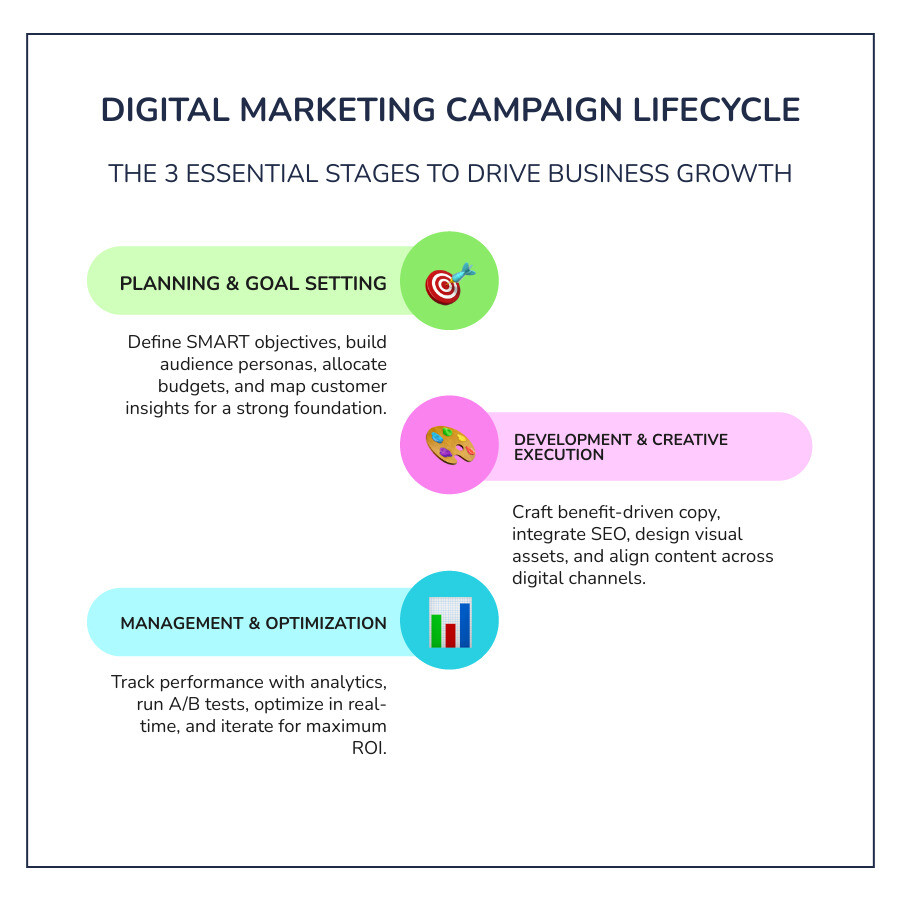
The 3 Essential Stages of a Digital Marketing Campaign
Launching a digital marketing campaign isn’t about throwing spaghetti at the wall to see what sticks. Success requires a disciplined workflow that maintains consistency across every platform your audience visits.
Stage 1: Planning and Goal Setting for a Digital Marketing Campaign
Before a single ad is designed, a brand must understand its target market and define the problem it aims to solve. This starts with gathering customer insights to create detailed buyer personas. Are you targeting “Steve,” a 27-year-old marketing professional in Canton, OH, who loves craft coffee, or a homeowner looking for emergency plumbing?
Key steps in this stage include:
- Setting SMART Objectives: Goals must be Specific, Measurable, Attainable, Relevant, and Timely.
- Budget Allocation: Marketers often work backward from conversion goals. If you need 10 sales a day and each lead costs $10, your budget must reflect that. Tools like the HubSpot Ad Calculator can help project these costs.
- Channel Selection: You don’t need to be everywhere; you need to be where your customers are.
Stage 2: Development and Creative Execution
This is where the campaign takes physical (or digital) shape. The focus here is on benefit-driven copy — telling the customer exactly how their life improves by choosing your service.
During development, SEO integration is vital. If your campaign includes a landing page or blog posts, they must be optimized so they continue to drive organic traffic long after the paid ads stop. Brands often use design platforms like Ceros to create interactive content that keeps users engaged longer than a standard static image.
Stage 3: Management and Real-Time Optimization
Once the campaign is live, the work has only just begun. Unlike a print ad that you “set and forget,” a digital marketing campaign requires active management. This involves Mastering Data-Driven Advertising for Maximum ROI by reviewing performance daily.
If an ad on Facebook is underperforming while a Google Search ad is thriving, a smart marketer shifts the budget in real-time. This iterative improvement — testing different headlines, images, and calls-to-action — ensures that every dollar spent is working as hard as possible.
7 Standout Examples of Successful Digital Marketing Campaigns
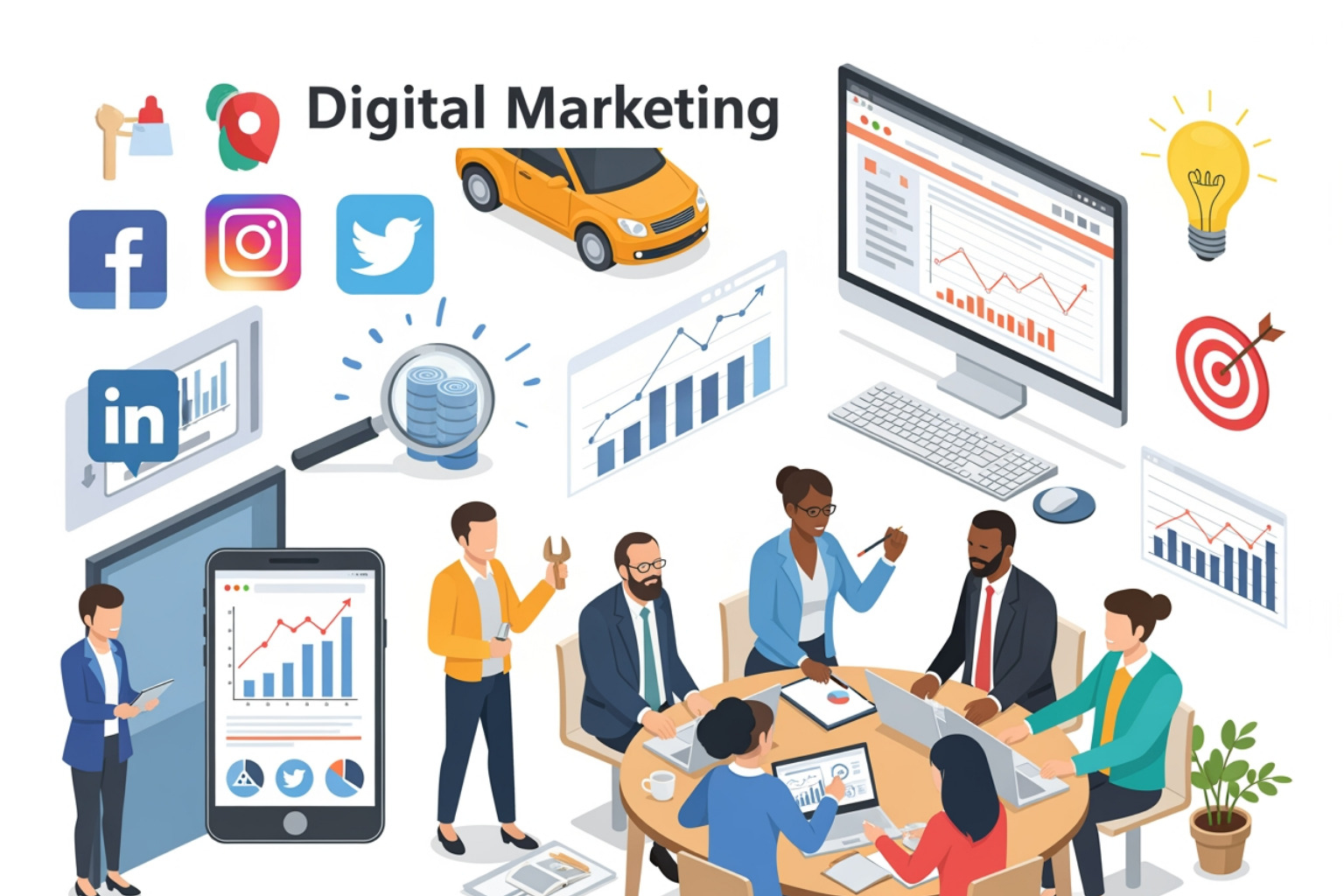
The best way to learn how to build a world-class campaign is to study the ones that “broke the internet.” These examples succeeded because they leveraged emotional storytelling, cultural relevance, and data in ways their competitors didn’t.
1. Personalization at Scale: Spotify Wrapped
Every December, social media feeds are flooded with neon-colored summaries of people’s music habits. Spotify’s “Wrapped” campaign is a masterclass in using data to create personalized experiences. By turning user data into a shareable “badge of honor,” Spotify generates massive organic reach through FOMO (Fear Of Missing Out). Users don’t feel like they are being marketed to; they feel like they are celebrating their own identity.
2. Purpose-Driven Messaging: Dove Real Beauty Sketches
Dove asked a powerful question: “When did 10 stop looking like 10?” In their Real Beauty Sketches campaign, an FBI-trained artist drew women based on their own descriptions and then again based on a stranger’s description. The emotional gap between the two sketches resonated globally, resulting in over 163 million views and 4.6 billion PR impressions. It succeeded because it took a stand on a social issue (self-esteem) rather than just selling soap.
3. User-Generated Content: Apple’s Shot on iPhone
Apple proved that your customers are your best content creators. By encouraging users to share their best photos with the #ShotoniPhone hashtag, they amassed over 16 million Instagram posts. Apple even curates a YouTube playlist of films shot entirely on mobile devices. This provides endless social proof — if a stranger can take a cinema-quality photo with that phone, so can you.
4. Real-Time Responsiveness: Oreo’s Dunk in the Dark
During the 2013 Super Bowl, a power outage darkened the stadium. Within minutes, Oreo tweeted: “You can still dunk in the dark.” That tweet was conceived and approved in minutes, proving that speed is a currency in digital marketing. While other brands were waiting for Monday morning meetings, Oreo ruled the cultural conversation by being agile.
5. Omnichannel Integration: UNIQLO Uncover
UNIQLO created an omnichannel experience to promote its HEATTECH clothing line. They used digital billboards that flashed unique codes. When shoppers captured a code and uploaded it to a campaign website, they received a free sample. This bridged the gap between online engagement and in-store foot traffic, resulting in 1.3 million video views and 35,000 new customers.
6. Anti-Advertising and Mystery: CeraVe’s Michael Cera
In one of the most creative campaigns in recent years, CeraVe leaned into a weird internet conspiracy: that actor Michael Cera actually created the brand. They planted “leaked” photos and influencer videos for four weeks before a Super Bowl reveal. This “anti-advertising” approach generated 32 billion earned impressions and led to the brand’s highest-ever week of sales. It worked because it rewarded the audience for being “in on the joke.”
7. The Future of Engagement: Heineken’s The Boring Phone
Recognizing that many people feel “doomscrolled” out, Heineken launched “The Boring Phone” — a limited-edition, transparent flip phone that couldn’t access social media. By positioning themselves as a brand that cares about real-life connection, they generated 9.5 billion impressions. It was a masterclass in cultural positioning: solving a modern problem (smartphone addiction) with a brand-led solution.
Key Ad Types and Tactics for a Digital Marketing Campaign
Choosing the right “vehicle” for your message is just as important as the message itself. Different ad types serve different stages of the customer journey.
Paid Search and Social Advertising
For businesses needing immediate results, PPC Marketing is the go-to tactic.
- Google Ads: Targets “high intent” users. If someone searches “emergency plumber in Canton,” they are ready to buy.
- Social Ads: Platforms like the Facebook ads manager allow brands to target people based on interests, not just keywords. You can use “Lookalike Audiences” to find people similar to your existing customers, or “Remarketing” to show ads to people who visited your site but didn’t buy.
Content and Email Marketing
Content marketing builds authority over time. American Express, for example, uses its Trends and Insights hub to provide expert advice to business owners, making the brand a trusted resource.
Email marketing remains one of the most cost-effective tools for improving customer retention rates. Using automation tools like Mailchimp, brands can trigger personalized messages based on customer behavior — like a “welcome” sequence for new subscribers or a “cart abandonment” reminder.
Emerging Tech: AI and AR
The future of a digital marketing campaign is hyper-personalized. Gartner predicts that 80% of marketers will be using AI by 2025. AI is moving beyond simple chatbots into predictive analytics and GenAI, allowing brands to generate thousands of versions of an ad, each tailored to a specific individual’s preferences in real-time.
Frequently Asked Questions about Digital Marketing Campaigns
What are the most important metrics to track?
Success is measured through Key Performance Indicators (KPIs). You should focus on:
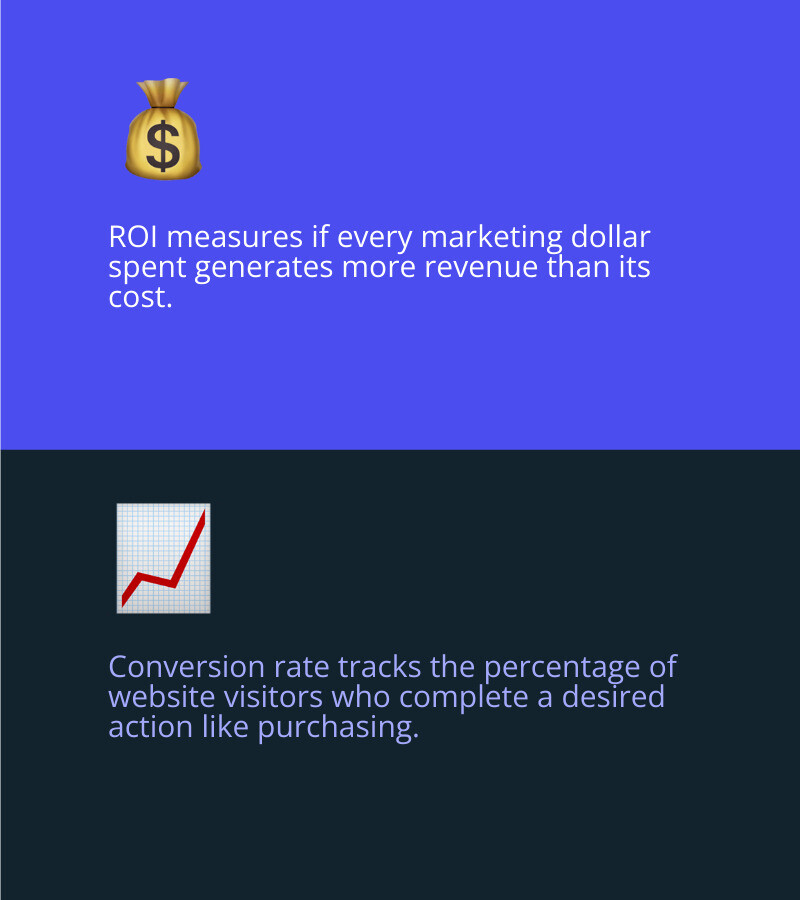
- ROI (Return on Investment): Are you making more money than you’re spending?
- Conversion Rate: What percentage of visitors actually take action?
- Attribution: Which channel (Search, Email, Social) actually gets the credit for the sale?
- Engagement: Likes, shares, and comments indicate how well your creative is resonating.
What common pitfalls should brands avoid?
Many businesses fail because they create fragmented experiences. If your Instagram ad looks fun and modern, but your website looks like it was built in 1998, you’ll lose trust. Other common mistakes include:
- Incomplete Customer Profiles: Not knowing who you are talking to.
- Ignoring Physical Channels: Forgetting to link online ads to in-store experiences.
- Poor Budgeting: Spreading a small budget too thin across too many platforms.
How long should a campaign run before making changes?
Patience is a virtue in digital marketing. Most ad algorithms (like Google and Meta) require a “learning phase.” It is generally recommended to wait 4 to 6 weeks before making major changes. This allows the data to reach statistical significance so you aren’t making decisions based on random fluctuations.
Conclusion

Building a digital marketing campaign that actually works requires a blend of data, creativity, and constant optimization. Whether it’s a viral social media stunt or a highly targeted search campaign, the goal is always the same: to build a lasting relationship with your audience.
At MDM Marketing, we specialize in taking the guesswork out of the equation. Our team uses a Marketer’s Blueprint for Success to help brands in Canton, OH, and beyond increase their visibility and achieve a measurable ROI.
Ready to transform your online presence? Contact MDM Marketing today for a custom strategy that drives real results.
About Jay McCullough
This author hasn't written a bio yet.